
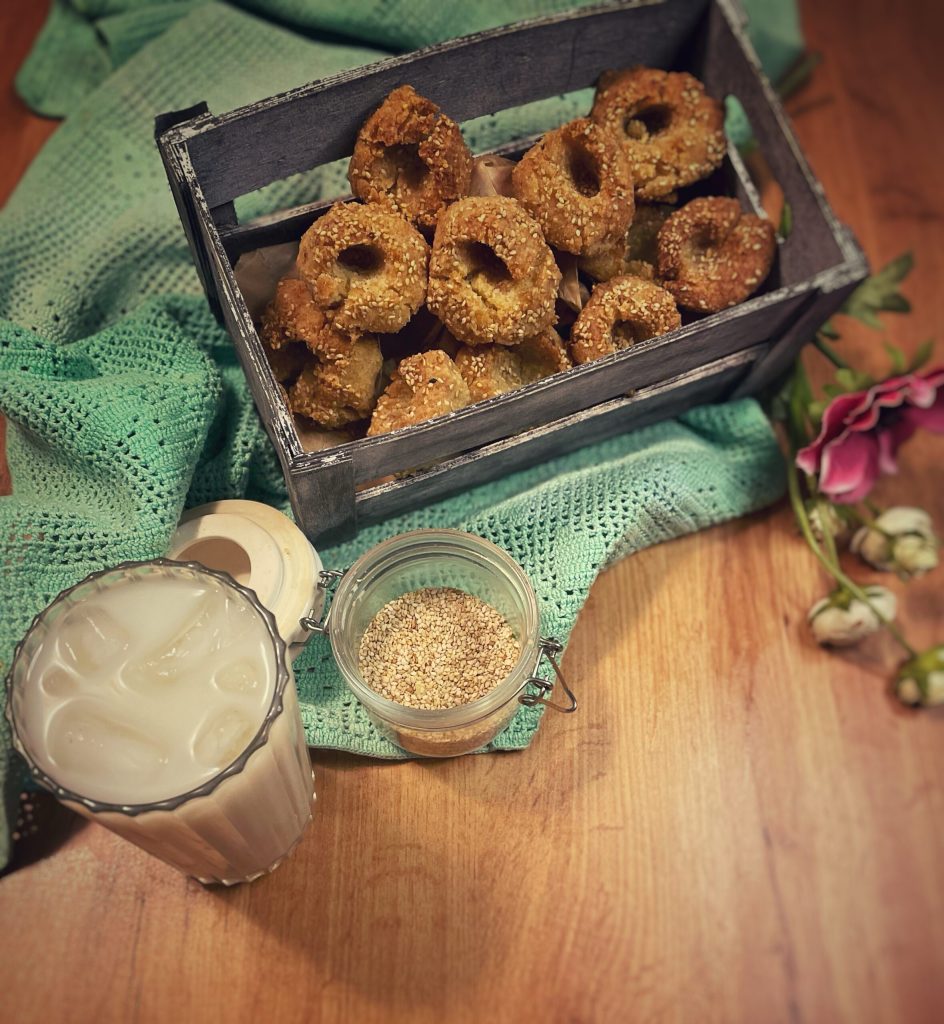
The Ladokouloura are traditional Greek biscuits made with olive oil, flavored with orange juice, cinnamon, and cloves. An ancient recipe passed down in villages as a symbol of simplicity and sharing, often prepared during fasting periods of the Orthodox tradition, as they are free of eggs and dairy.
➡️In this version, I made them gluten-free, using rice flour, cornstarch, and a pinch of xanthan and sugar-free, using erythritol. After forming the biscuits and coating them in sesame, I baked them until golden and fragrant.
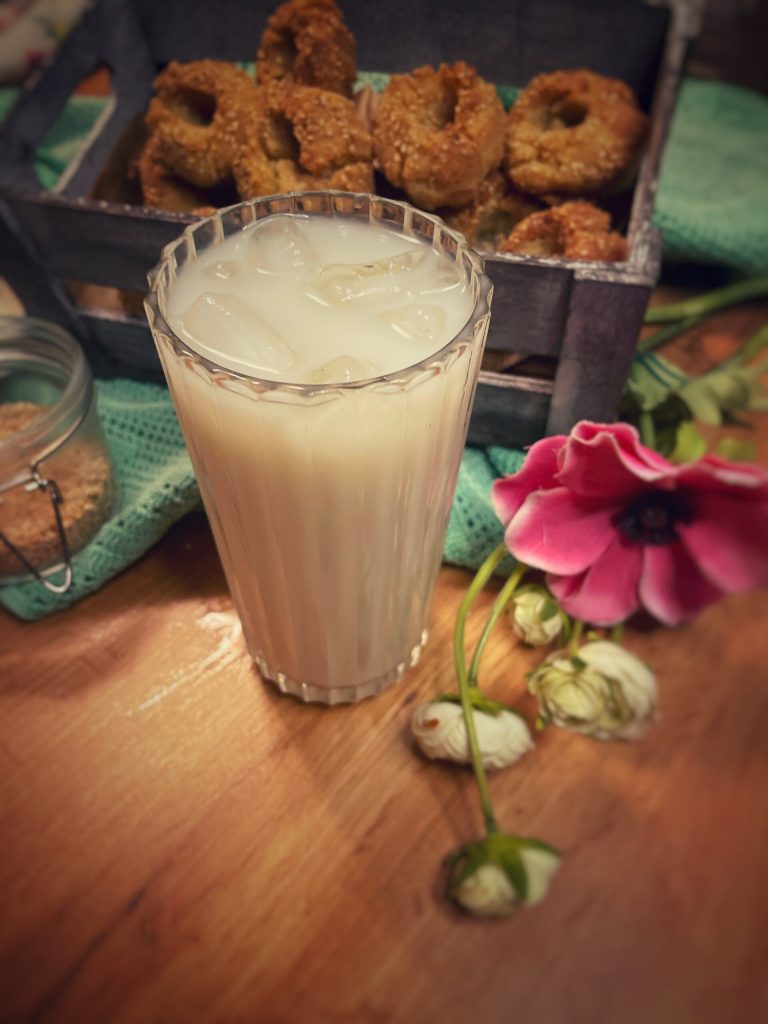
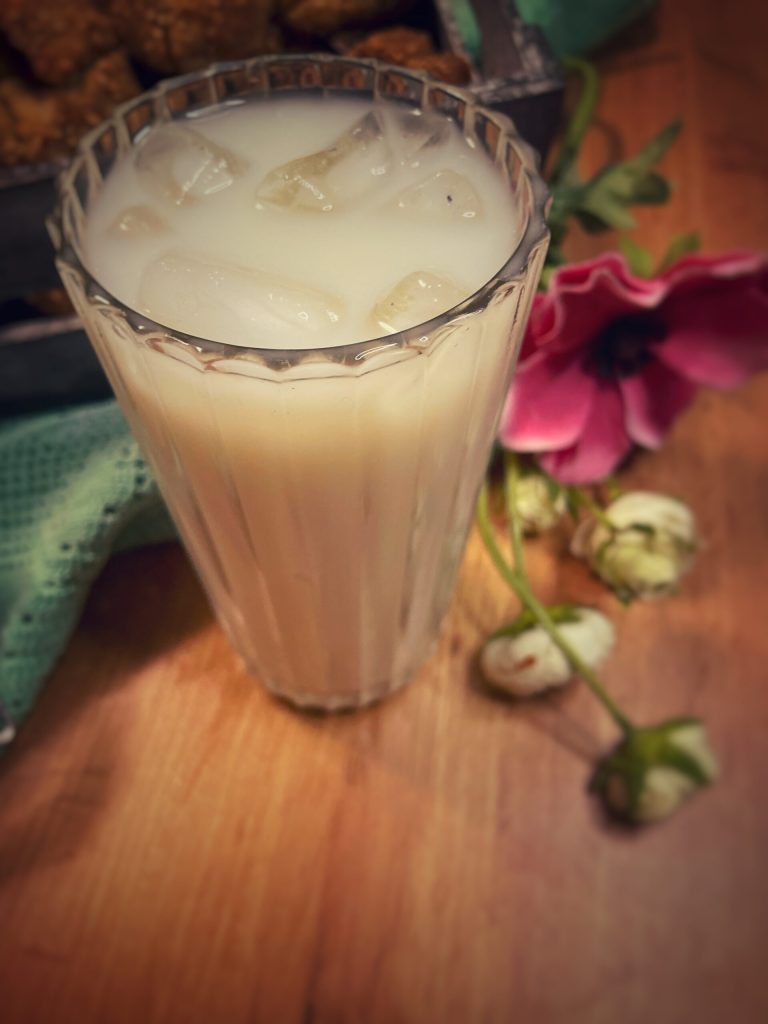
➡️I accompanied them with Soumada, a Greek almond-based drink, typical of the island of Lefkada, traditionally served on special occasions, such as weddings or baptisms.
- Difficulty: Medium
- Cost: Economical
- Preparation time: 10 Minutes
- Portions: 4 People
- Cooking methods: Oven
- Cuisine: Greek
- Seasonality: All Seasons
Ingredients
- 1 cup cup olive oil
- 4 oz oz erythritol
- 1/2 cup cup orange juice (+ orange zest)
- 1 teaspoon baking soda
- 16 g nutritional yeast
- to taste ground cinnamon
- 1/2 teaspoon ground cloves
- 3 1/2 cups cups rice flour
- 1/3 cup cup cornstarch
- 1 teaspoon xanthan
- 3.5 oz oz blanched almonds (preferably a mix of sweet and bitter)
- 9 oz oz erythritol
Tools
- 1 Glass tall tumbler
Steps
Emulsion: In a bowl, beat the olive oil with the erythritol until it lightens. Add the orange juice and zest, cinnamon, cloves, baking soda, and nutritional yeast.
Dough: Gradually add the sifted flour with xanthan and cornstarch. Mix briefly until you have a soft but not sticky dough.
Shaping: Create 1 oz cords, shape them into rings, and coat with sesame seeds.
Baking: Preheat the oven to 350°F and bake for about 20-25 minutes until golden. Let them cool completely for maximum crunchiness.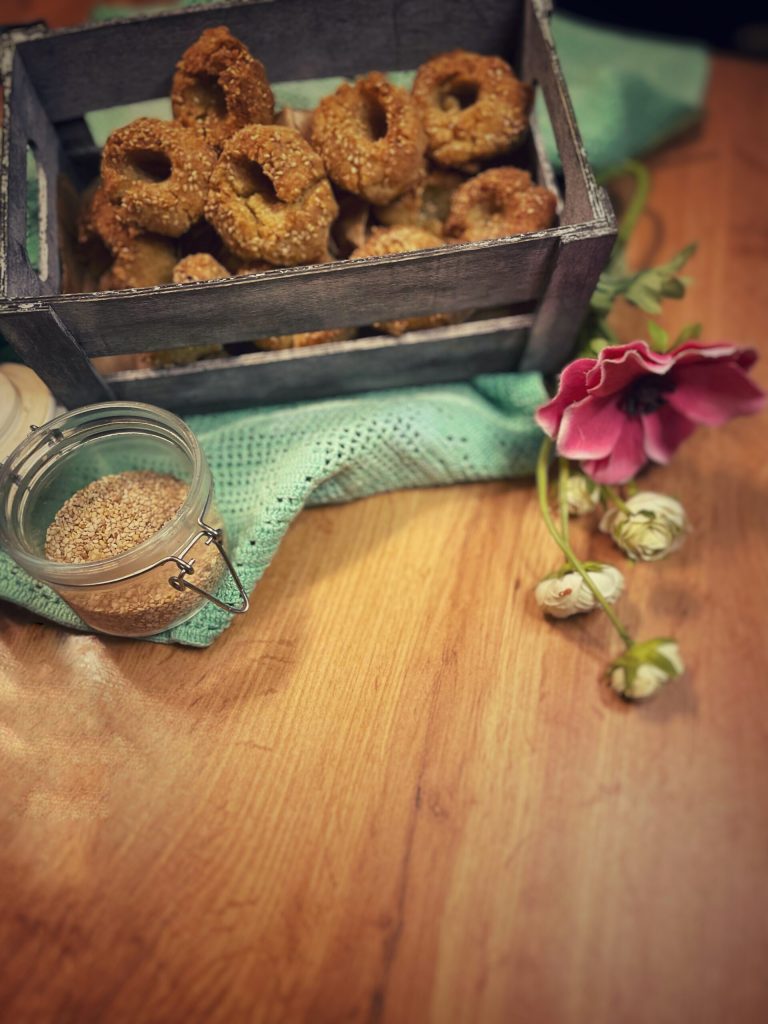
Extraction: Blend the blanched almonds with a small amount of water. Strain the liquid by squeezing tightly with a cloth (or gauze) to extract all the thick “milk.”
Cooking: In a saucepan, combine this concentrated almond milk with the rest of the water (between 7 oz and 8.5 oz) and erythritol. Bring to a boil and simmer gently until the liquid reduces and becomes slightly syrupy.Serving: Once cool, serve with water in a 1:4 ratio (typically 1 part syrup and 3–4 parts water), with ice.
Since erythritol does not have the same binding power as sugar and tends to recrystallize when it cools, the syrup will be less dense than the original. For this reason, I recommend storing the syrup in the refrigerator and shaking it well before diluting it with cold water.
FAQ
When is Orthodox fasting observed?
Fasting in the Orthodox Church is a pillar of spiritual life and occupies almost half of the liturgical year. It is mainly divided into four extended periods and fixed weekly days.
The 4 Major Fasting Periods
Great Lent: It is the most strict period, beginning seven weeks before Easter. In 2026, Orthodox Easter falls on April 12, so Lent will begin on February 23 (Clean Monday).
Nativity Fast (Christmas Lent): Lasts 40 days, from November 15 to December 24.
Apostles’ Fast: Begins the Monday after All Saints’ Sunday and ends on June 28 (eve of Saints Peter and Paul). Its duration varies based on the date of Easter.
Dormition Fast: From August 1 to 14, in preparation for the feast of the Dormition of the Theotokos (August 15).
Weekly Fasting
Except for exceptions (such as “free” weeks following major feasts), the faithful fast every Wednesday (in remembrance of Judas’ betrayal) and Friday (in remembrance of the Crucifixion).
What is eaten (and what is not)
Orthodox fasting is generally stricter than Catholic fasting. On “strict fasting” days:
Forbidden: Meat, eggs, dairy products (butter, milk, cheese) and often even fish, wine, and olive oil.
Allowed: Vegetables, fruits, grains, legumes, mollusks, and shellfish (considered “bloodless”).
Exceptions: On some feast days within the fasting periods, fish, wine, and oil are allowed.
Ladokouloura are perfect because, being made with vegetable oil and without dairy, they are allowed on days when oil is permitted!
