
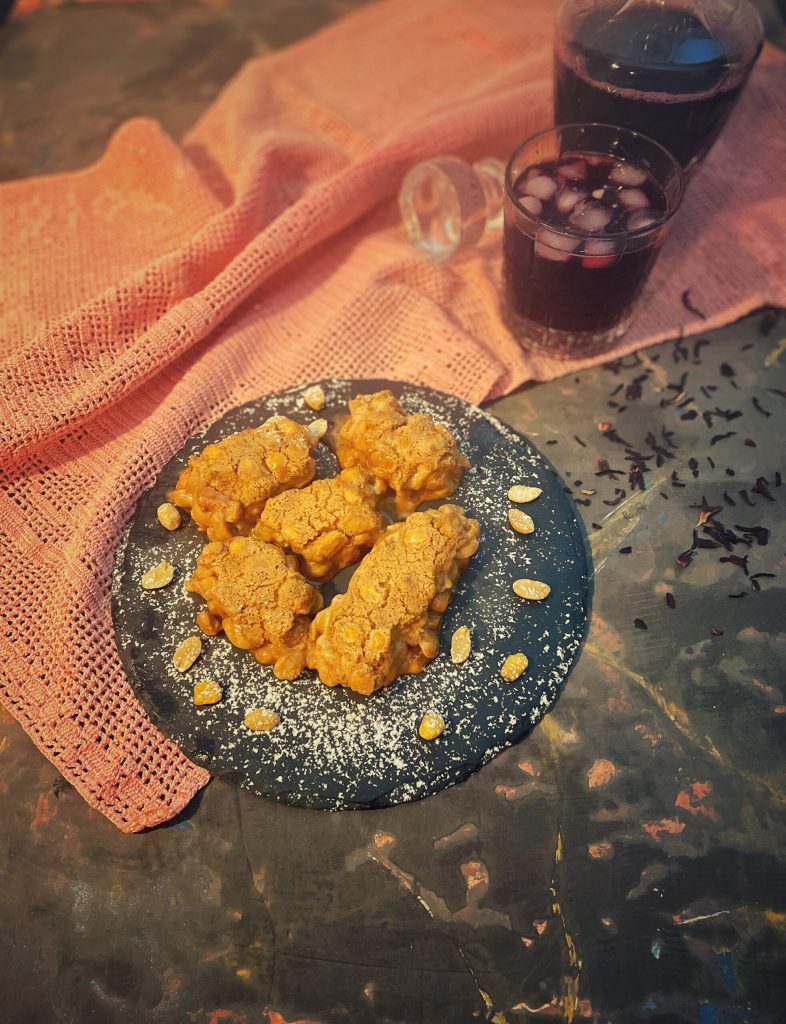
If you walk through the lively streets of Abidjan, among the scents of the markets and the warmth of the lagoon, there’s a flavor that everyone agrees on: that of roasted peanuts. But we’re not talking about a simple snack. We’re talking about the Ivory Coast Nougat, a confectionery that is the perfect meeting point between French colonial pastry and the soul of West Africa.
Simply calling it “nougat” would be an understatement.
Depending on where you find it, its name changes identity:
In elegant patisseries, it’s Nougat Tendre, a white, soft nougat scented with savannah honey.
For children and in popular markets, it becomes Bonbon Arachide, a daily treat.
If you look for it among street vendors, you’ll hear it called Caramel, especially in its crunchier and amber version.
Or Sira-Mani: in some northern areas (of Dioula influence), it refers to peanut and sugar-based sweets with terms that recall the artisanal processing of the seed.
Unlike Mediterranean nougat, here almonds give way to the queen of local crops: the peanut.
Often enriched with artisanal peanut paste, this sweet is traditionally cut into small, shiny diamonds, ready to be savored like a bonbon or given as a symbol of hospitality.
I paired the peanut nougat with Bissap, a hibiscus-based drink, the ultimate African refreshing beverage, whose recipe you can already find on the blog under the name:
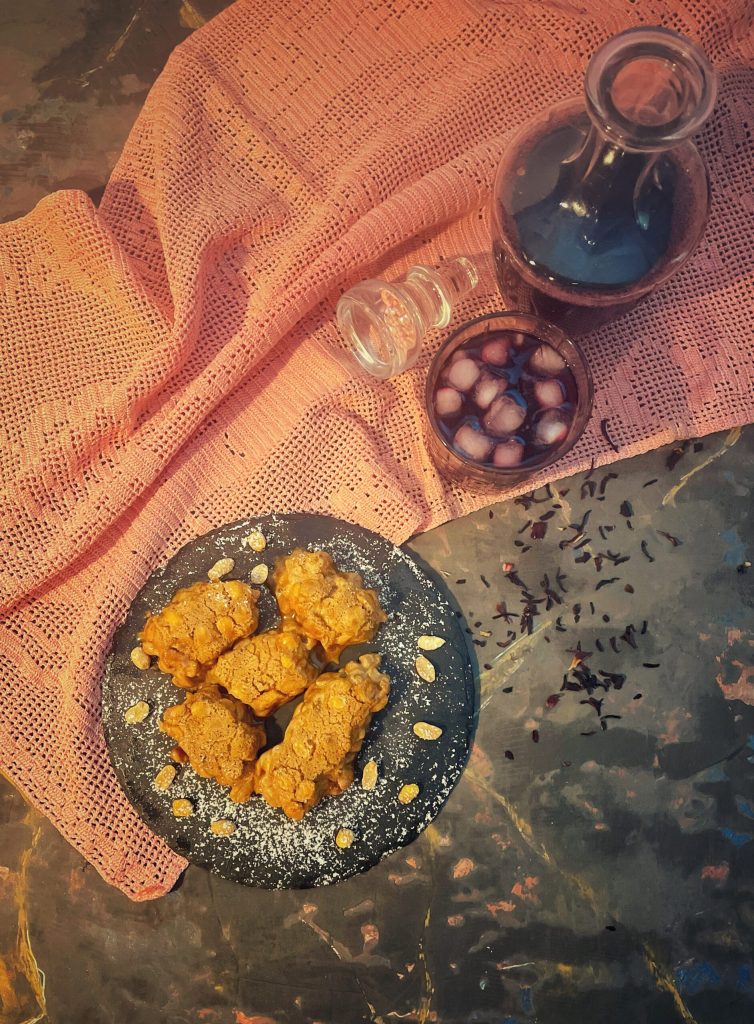
- Difficulty: Difficult
- Cost: Medium
- Rest time: 12 Hours
- Preparation time: 10 Minutes
- Portions: 6People
- Cooking methods: No-cook
- Cuisine: African
- Seasonality: All seasons
Ingredients
- 9 oz roasted peanuts (whole or coarsely chopped)
- 2 egg whites
- 1 cup honey
- 1 cup sugar
- 1 pinch salt
- 2 tablespoons peanut paste * (or 100% peanut butter)
Tools
- 1 Loaf pan 9 inches
- 1 Thermometer kitchen
Steps
Whip the egg whites: Start by whipping the egg whites until stiff peaks form with a pinch of salt.
Make the syrup: In a saucepan, heat the honey, sugar, and water. For a soft “French-style” nougat (common in Ivory Coast), the syrup should reach about 284°F. If you don’t have a thermometer, it should be very thick but not yet dark caramel.
Combine: Pour the hot syrup in a thin stream over the egg whites while continuing to beat at high speed. The heat will cook the egg, and the mixture will become white, glossy, and very thick.
Add peanuts: Fold in the roasted peanuts and peanut paste (or peanut butter) with a spatula, working quickly before it hardens.
Rest: Pour everything into the 7-inch loaf pan lined with greased parchment paper (slightly heat the mold first in the oven) and level well. Let it rest at room temperature for at least 12 hours in a dry place.Once solidified, cut it into rectangular bars. In Ivory Coast, it is common to wrap these bars in clear or thin aluminum foil.
Ivory Coast Peanut Paste
In Ivory Coast, the peanut paste (commonly called pâte d’arachide) is the soul of many preparations.
For nougat, preparing it in an artisanal way allows for a much richer consistency compared to industrial peanut butter, which often contains added vegetable oils or sugars.
Here’s how to prepare it following the traditional Ivorian method adapted to home cooking:
The Traditional Ivorian Method
The secret of true African peanut paste lies in the deep roasting and processing that allows the natural oils of the seed to emerge.
Selection and Roasting: Use raw peanuts with skins. Roast them in a dry pan (or in the oven at 356°F for about 10 minutes) until they are well golden and the skin easily comes off by rubbing them between your hands.
Cleaning: Remove all the skins. In Ivory Coast, the wind is often used, or you lightly blow while shaking the peanuts in a basket to let the skins fly away (winnowing technique).
Processing (Mortar vs Mixer): Traditional: Large wooden mortars are used. The peanuts are pounded until the heat from the friction releases the oil, turning the powder first into a lumpy mass and then into a thick cream.
At home: You can use a powerful mixer. Blend the roasted and still warm peanuts. Initially, you will get a flour, then a dense paste. Continue blending at intervals (to avoid overheating the motor) until it becomes a fluid and glossy cream.
No Additions: The true Ivorian paste for nougat contains no added oil or sugar; the creaminess comes solely from the natural fats of the peanuts.
FAQ (Frequently Asked Questions)
What is the history of peanut nougat in Ivory Coast?
The history of Ivory Coast Nougat is an intriguing example of cultural “cross-pollination” between West Africa and France.
1. The Meeting between Montélimar Nougat and Peanuts
During the colonial period, the French brought the recipe for the famous Montélimar Nougat (made with honey, egg white, and almonds) to Ivory Coast. However, almonds were rare and expensive. Ivorians began replacing them with the local “treasure”: the peanut (called cacahuète).
2. From the Colonists’ Table to the Street Market
Over time, the recipe split into two traditions:
The Elite Nougat: The soft one, prepared in the patisseries of large cities like Abidjan, which retains the use of egg white and very aromatic and dark savannah honey.
The Popular Nougat (the “Caramel”): A quicker and crunchier version, born in the markets to withstand the tropical heat without melting, sold by street vendors in small transparent bags.
3. The Role of the Peanut in Ivorian Culture
In Ivory Coast, the peanut is not just an ingredient, but a symbol of hospitality. Offering a piece of nougat or roasted peanuts is a common gesture of welcome. The fact that this sweet has become a “nougat” is a sign of Ivorian cuisine’s ability to absorb external influences and transform them into something unique, using peanut paste to give the depth of flavor that the European nougat lacks.
Today, the Ivorian nougat is the typical gift for those traveling within the country or abroad, representing the unbreakable bond between the land (the peanut) and the sweetness of tradition.For a vegan version of nougat, can I use maple syrup and aquafaba?
Substituting honey with maple syrup is possible, but it will radically change the essence of the recipe, making it less “Ivorian” and more “North American”.
Here’s what you need to consider to maintain the right consistency:
The flavor: The savannah honey used in Ivory Coast is intense, floral, and slightly bitter. Maple syrup will give a more woody and caramel flavor.
The temperature (Crucial): Maple syrup contains more water than honey. To achieve a soft nougat, you must boil it with the sugar until it reaches 302°F (a few degrees more than honey) to ensure the nougat “sets” and doesn’t remain a spreadable cream.
The texture: Honey helps keep the nougat moist due to its chemical composition. With maple syrup, your Nougat might tend to crystallize faster, becoming slightly more brittle or grainy over days.
Here’s how to adjust the quantities to maintain the correct structure:
Increase the sugar: Use 250g of sugar (instead of 200g) for every 250ml of maple syrup. The extra sugar gives “body” and stability to the nougat.
Remove the water: Do not add the tablespoon of water mentioned in the original recipe; maple syrup already has enough to dissolve the sugar.
Cooking point: The syrup must boil with the sugar until 302°F-308°F. If you don’t reach this temperature, the nougat will not set in the loaf pan.
An egg white is about 30-33g; replace it with the same amount of aquafaba, whipping it.
