
Dégué, also known as Thiakry, is a traditional dessert from Mali and West Africa, appreciated for its simplicity and refreshing taste.
It is made with millet semolina and fermented dairy products, like yogurt or curdled milk, sugar, and is often enriched with spices and dried fruits.
Traditionally prepared with curdled milk or yogurt, but it is also possible to use cow’s milk or sweetened condensed milk.
Dégué is often consumed during Ramadan to break the fast, thanks to its lightness and nutritional value: rich in nutrients and fiber.
Naturally gluten-free.

- Difficulty: Easy
- Rest time: 20 Minutes
- Preparation time: 10 Minutes
- Portions: 4 People
- Cooking methods: No cooking
- Cuisine: African
- Seasonality: Ramadan, All seasons
Ingredients
- 7 oz millet
- 2 cups plain natural yogurt
- 3 tablespoons sugar
- to taste nutmeg
Steps
Bring 200 ml of water to a boil.
Pour the millet semolina into a heatproof bowl.
Add the boiling water until it covers the semolina and cover the bowl with a lid or film.
Let it rest for about 15-20 minutes, until the semolina absorbs the water and becomes soft.
Fluff the semolina with a fork to separate the grains.In a large bowl, mix the yogurt with the sugar.
Add the cooked millet semolina and mix well until you get a homogeneous mixture.
If you wish, incorporate a pinch of nutmeg.
Cover the bowl and let it cool in the refrigerator for at least 1 hour.
When serving, distribute the dégué into individual bowls.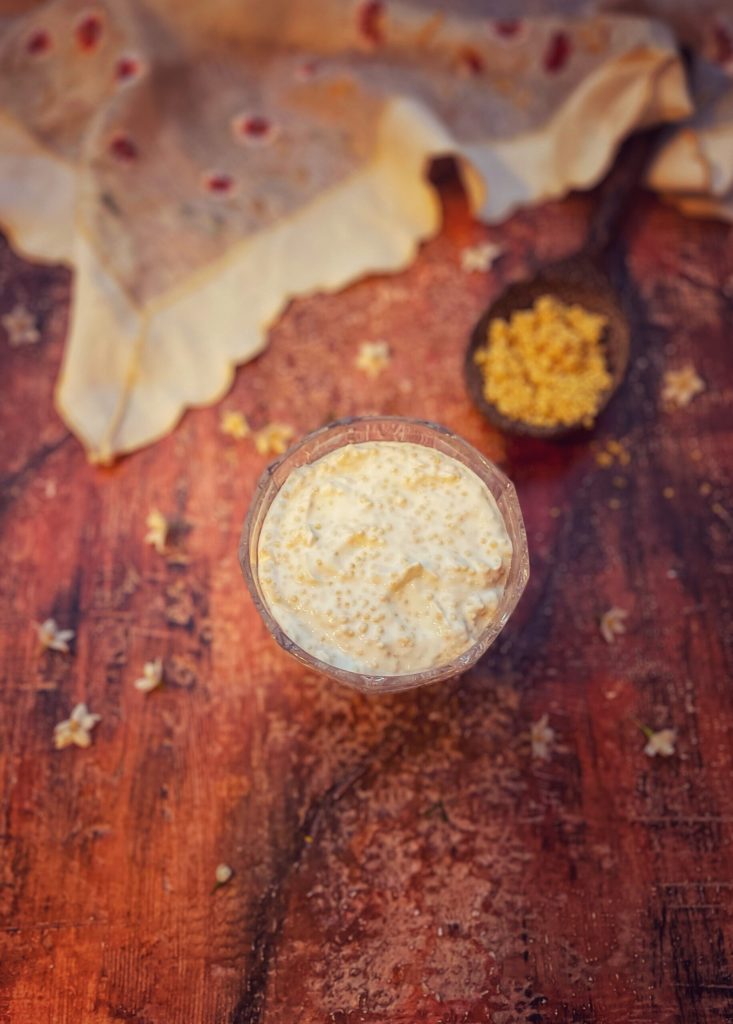
Dégué is also known by other names, depending on the West African country where it is prepared.
The most common are:
Dégué or Déguè (Mali, Burkina Faso, Ivory Coast)
Tiakri or Thiakry (Senegal, spelling variant)
Sawalo (in some parts of Niger)
All refer to a cold and creamy dessert made with millet (or sometimes semolina or fonio), mixed with yogurt, milk, sugar, and sometimes spices like vanilla or nutmeg. Sometimes fresh or dried fruits or raisins are also added.
FAQ (Questions and Answers)
Does the traditional Malian version of dégué require cream?
In the Malian version of dégué, cream is not used as an original ingredient.
The authentic recipe includes:
Cooked and cooled millet
Local fermented milk (similar to yogurt, often homemade)
Sugar
Nutmeg or vanilla (optional)
In many modern or urbanized versions (especially outside Africa), the following are added:
Liquid or whipped cream
Sweetened condensed milk
Creamy yogurt
This is to make it richer and sweeter, but they are not part of the traditional rural or homemade Malian version.
So: no, cream is not traditional, but it is often used today for creamier or “international” adaptations.
