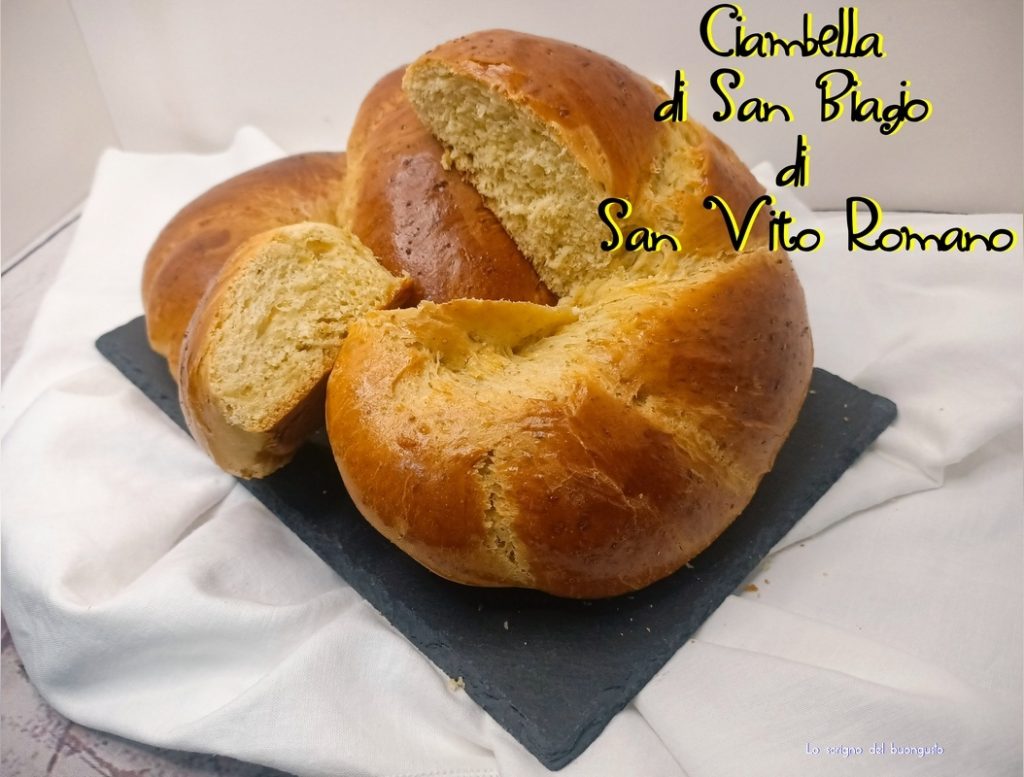
San Vito Romano Ring Cake, history, tradition, and flavors of a ritual cake.
In the panorama of traditional Italian desserts, the San Biagio Ring Cake of San Vito Romano holds a special place because it combines cuisine, popular devotion, and collective memory.
It is not just a baked preparation but a real ritual dessert, linked to the celebration of Saint Blaise, the patron saint of the throat, celebrated every year on February 3rd.
In San Vito Romano, a small town in Lazio rich in traditions, the day of Saint Blaise is marked by an ancient and evocative ritual.
In the church dedicated to the saint, the blessing of the oil and the ring cakes takes place, which are then distributed to the faithful as a gesture of protection against winter ailments, particularly sore throats.
The blessed oil is passed on the throats of the participants with a gauze, recalling the most famous miracle attributed to Saint Blaise, the healing of a boy who was at risk of choking on a fishbone.
But why a ring cake? There are no certain sources, however, popular tradition suggests that the compact shape and soft texture of the cake may have contributed to its choice.
The ring cake, soft and fluffy, was considered symbolically suitable to “soothe” and protect the throat, thus combining a ritual gesture and gastronomic culture.
From a culinary point of view, the San Biagio Ring Cake is a simple yet character-rich artisanal leavened dessert.
The flavor is delicately sweet, never excessive, and is enhanced by notes of anise that slowly release during chewing.
These balsamic hints give a fresh and clean sensation to the palate, making the ring cake particularly pleasant even some time after baking.
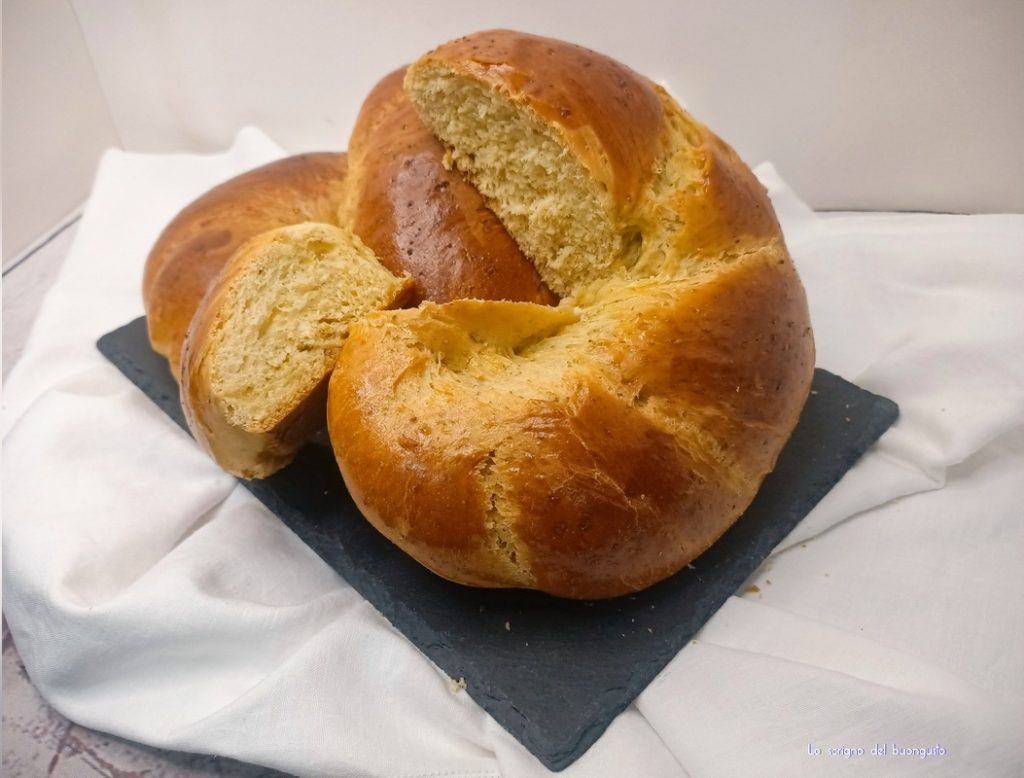
The surface, brushed with egg yolk before entering the oven, takes on a brown and shiny color, while the inside remains soft but compact.
With a diameter that can reach up to 8 inches and a height of about 2 inches, this ring cake still represents a niche product today, made in limited quantities by a single local bakery.
And it is precisely this artisanal production that makes it so precious, a dessert that tells the story of the territory, faith, and cuisine of a community, and that deserves to be known, tasted, and passed on.
1097 Kcal per ring cake
- Difficulty: Easy
- Cost: Economical
- Rest time: 5 Hours
- Preparation time: 20 Minutes
- Portions: 3 ring cakes
- Cooking methods: Electric oven
- Cuisine: Regional Italian
- Region: Lazio
- Seasonality: San Biagio
Ingredients for San Vito Romano Ring Cake
- 2 eggs (medium)
- 4.4 oz sugar
- 5 tbsp extra virgin olive oil
- 2 tsp whole milk
- 0.35 oz fresh yeast
- 0.5 oz anise seeds
- 1 tbsp anise liqueur (optional)
- Grated zest of 1 small lemon and 1 small orange
- 17.6 oz all-purpose flour
- 1 egg yolk
- 2 tbsp milk
Tools
- 1 Baking tray Non-stick baking tray
Preparation for San Vito Romano Ring Cake
Start by soaking the anise seeds in the warm milk (or liqueur) for at least 20 minutes. This step is crucial to release the “balsamic scents” of the anise.
Preparing the dough
In a large bowl (or in the mixer), dissolve the yeast in the milk, add the sugar, eggs, oil, and citrus zests.
Begin to gradually incorporate the flour.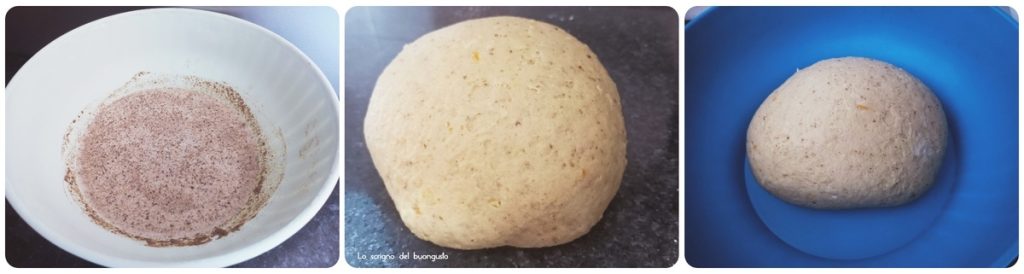
Knead the dough for at least 15-20 minutes, it should become very elastic and smooth to achieve good leavening.
Let rise in a bowl covered with plastic wrap until doubled, it will take at least 3 hours, but don’t rush.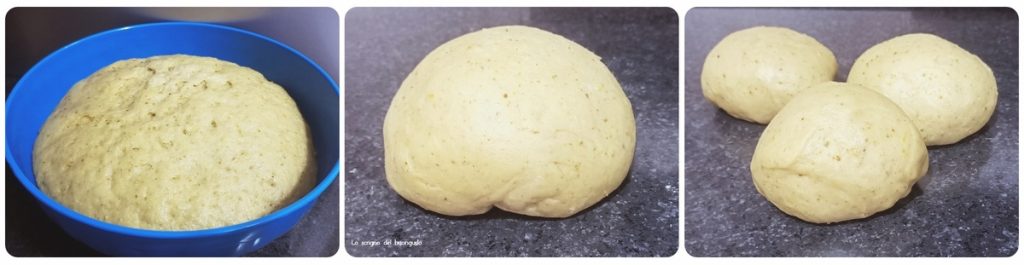
Once risen, pour the dough onto a work surface, form a ball, then divide it into 3 equal parts and form 3 balls.
With each ball, form long cords, then fold them in half and braid them, closing them into a ring.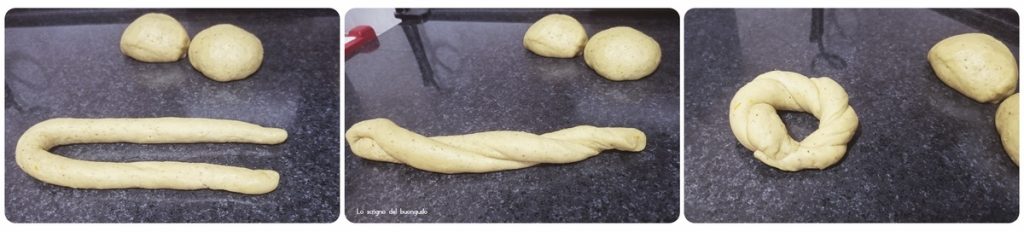
Place the rings on a baking tray lined with parchment paper and let rise for about 2 hours.
Once risen, prepare the yolk with the milk and brush the rings.Bake in a preheated oven at 338°F for about 30-35 minutes, checking the cooking.