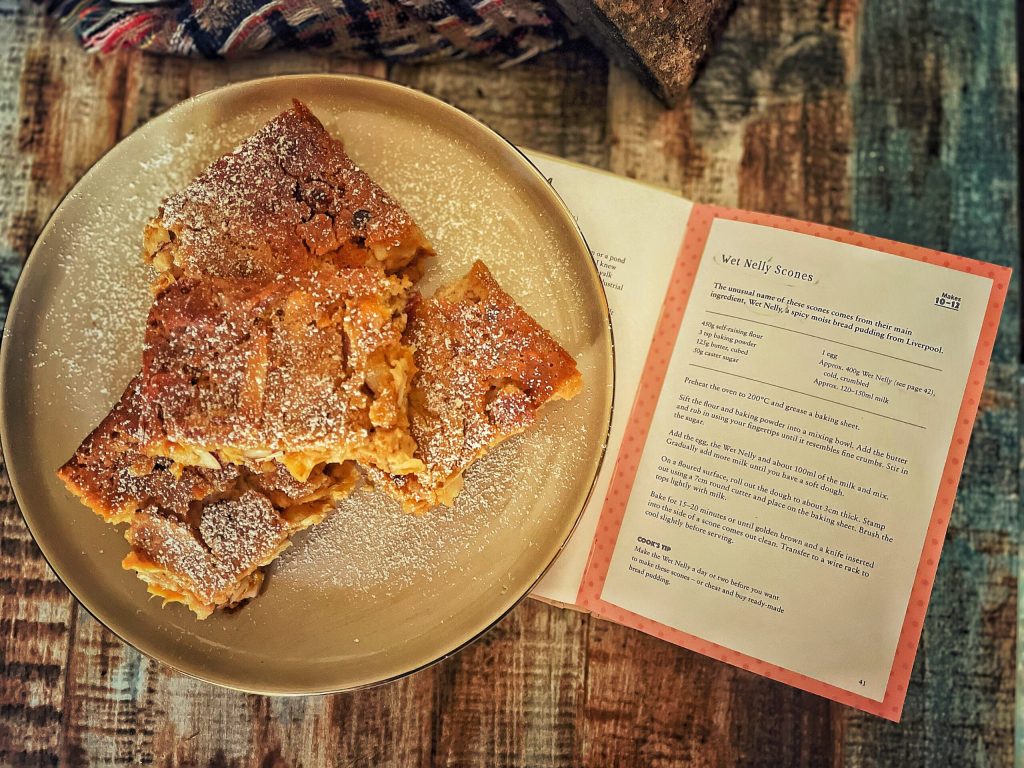
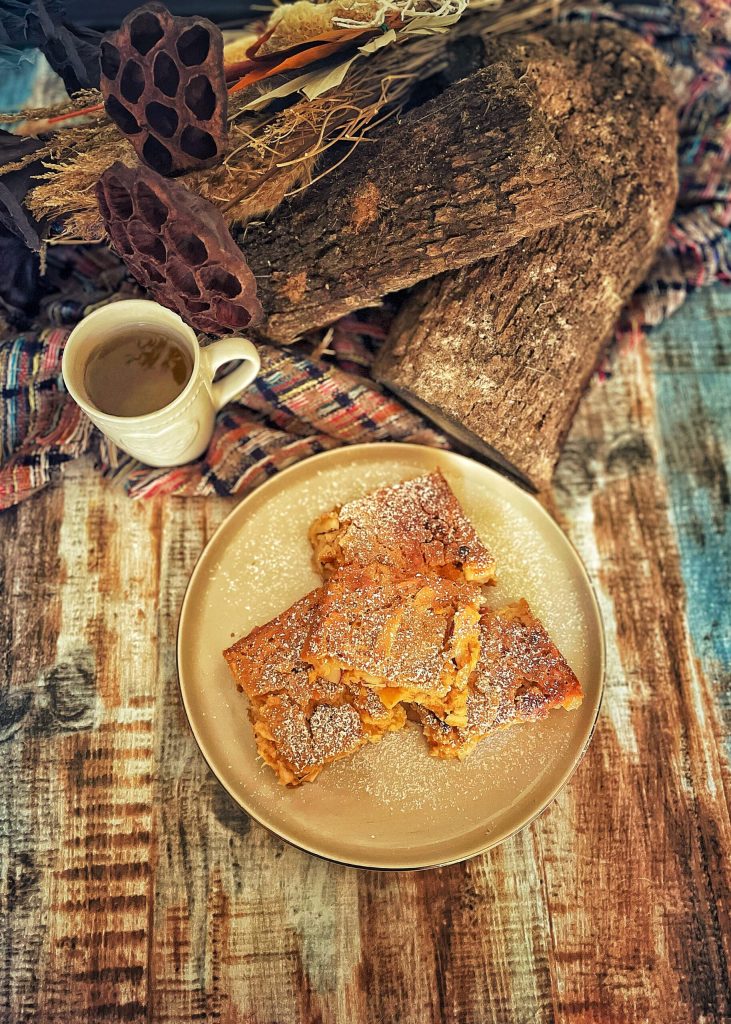
The Wet Nelly is a typical cake from Liverpool: it is not just a delicious “bread pudding” enriched with spices and dried fruits, but it is a real piece of Scouse culture.
Born as a variant of the drier Nelson cake from Lancashire, Wet Nelly owes its curious name to both the local trend of shortening names (Nelly as a diminutive of Nelson) and the old habit of bakers to display the cake in the window, allowing the molasses and heat to make it incredibly moist (wet).
To avoid wasting unsold bun loaves (sweet buns) that had become stale, bakers would put them in the window and soak them with molasses or sugar syrup.
The heat of the sun beating on the windows would melt the syrup, which penetrated the bread, making it extremely moist and dark.
The longer the cake remained in the window, the “wetter” it became, turning into a cheap and delicious treat.
Historically also known as the “Docker’s Wedding Cake”, it represented the ingenious solution of working-class families who, during times of austerity, glazed it to celebrate weddings with dignity and taste.
Today, Wet Nelly is a staple of gastronomic recovery: starting from simple stale bread and milk, dried fruits and spices, it becomes a dense, spicy, and comforting dessert that can compete with the finest pastries.
- Difficulty: Very easy
- Cost: Very cheap
- Rest time: 4 Hours
- Preparation time: 10 Minutes
- Portions: 8 People
- Cooking methods: Electric oven, Oven
- Cuisine: English
- Seasonality: All seasons
Ingredients
- 10.5 oz stale bread
- 375 dried fruit (raisins, currants, candied peels)
- 5 tbsp melted butter
- 2 3/4 cups milk (warm)
- 1/2 cup brown cane sugar
- 3 eggs
- to taste spices (cinnamon and nutmeg)
Tools
- 1 Baking dish square 7 inches
Steps
Soaking: Cut the bread into cubes, place it in a large bowl along with the dried fruit, and pour the warm milk over it. Let it sit for at least 4 hours (or overnight) until the bread has absorbed all the liquid and is reduced to mush.
Mix: Once soaked, mash the bread well with a fork. Add the melted butter, sugar, beaten eggs, and spices. Mix well to combine everything.
Baking: Pour the mixture into a greased baking dish (about 7×7 inches). Bake in a preheated oven at 320°F for about 1 hour – 1 hour and 15 minutes, until the surface is golden and firm but springy to the touch.
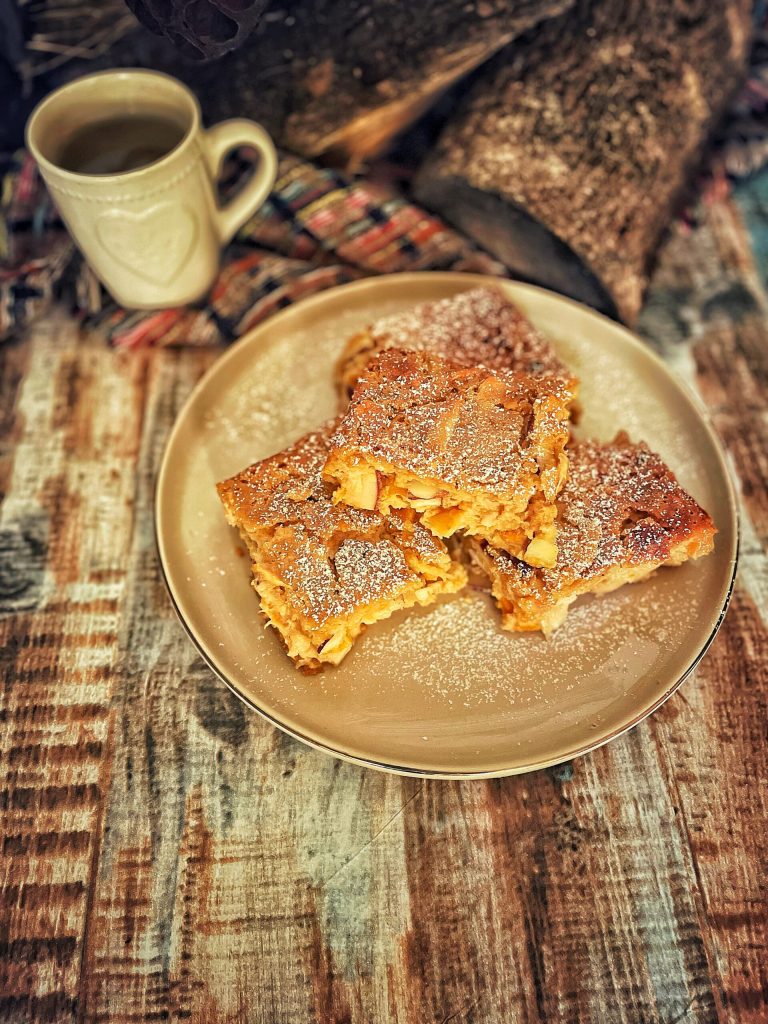
Serving: Allow to cool slightly in the pan before cutting into squares.For an authentic touch like at Speke Hall, serve it warm with a generous pour of custard.
National Trust Version
In the version of Wet Nelly considered the “gold standard” of Liverpool, the one served at Speke Hall (National Trust), the fruit is added after the bread has been reduced to mush.
This is to prevent the fruit from sinking to the bottom or breaking excessively during the phase where you “mash” the bread with a fork or whisk.
This is to prevent the fruit from sinking to the bottom or breaking excessively during the phase where you “mash” the bread with a fork or whisk.
The popularity of Wet Nelly is such that it has crossed the boundaries of the traditional recipe to inspire new gourmet creations.
The National Trust, the institution that preserves Britain’s historical heritage, has celebrated this cake by including an iconic variant in its famous “Book of Scones” .
(Book that I purchased during my trip to Cornwall in January 2025)
(Book that I purchased during my trip to Cornwall in January 2025)
In this version, the dense and spicy flavors of the Liverpool cake are reinterpreted in the form of a scone, creating a unique hybrid: moister and darker than usual, rich in raisins and imbued with the history that is still felt in the tea rooms of Speke Hall.
An acknowledgment that transforms a humble recovery recipe into a true pillar of UK patisserie.