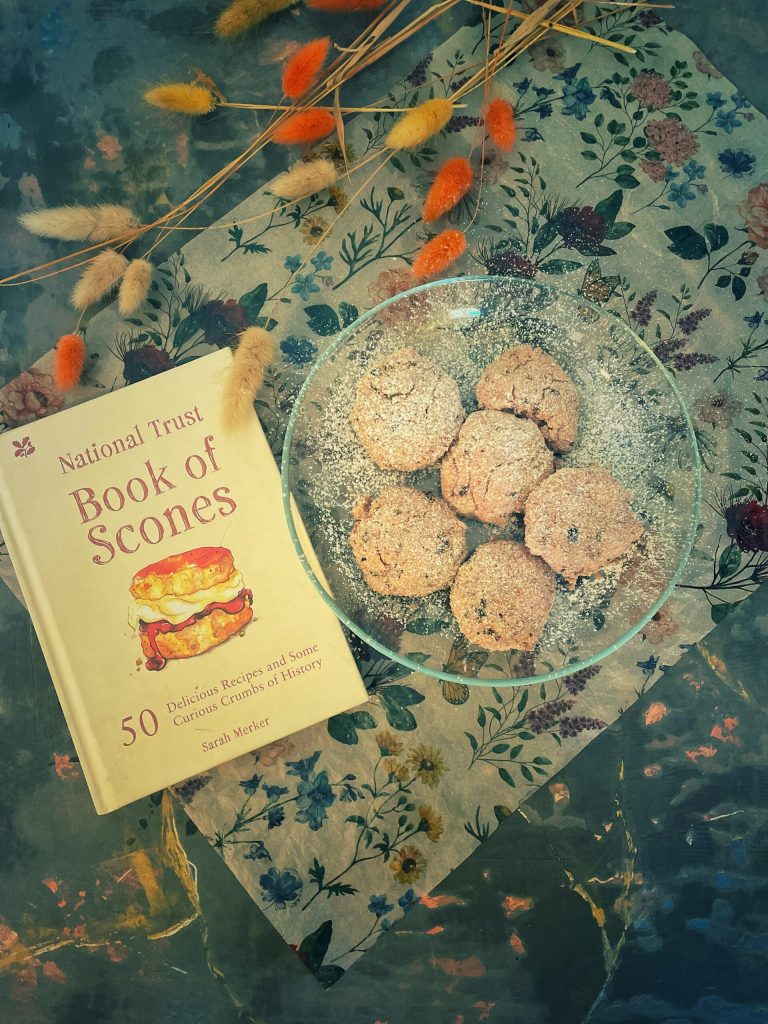
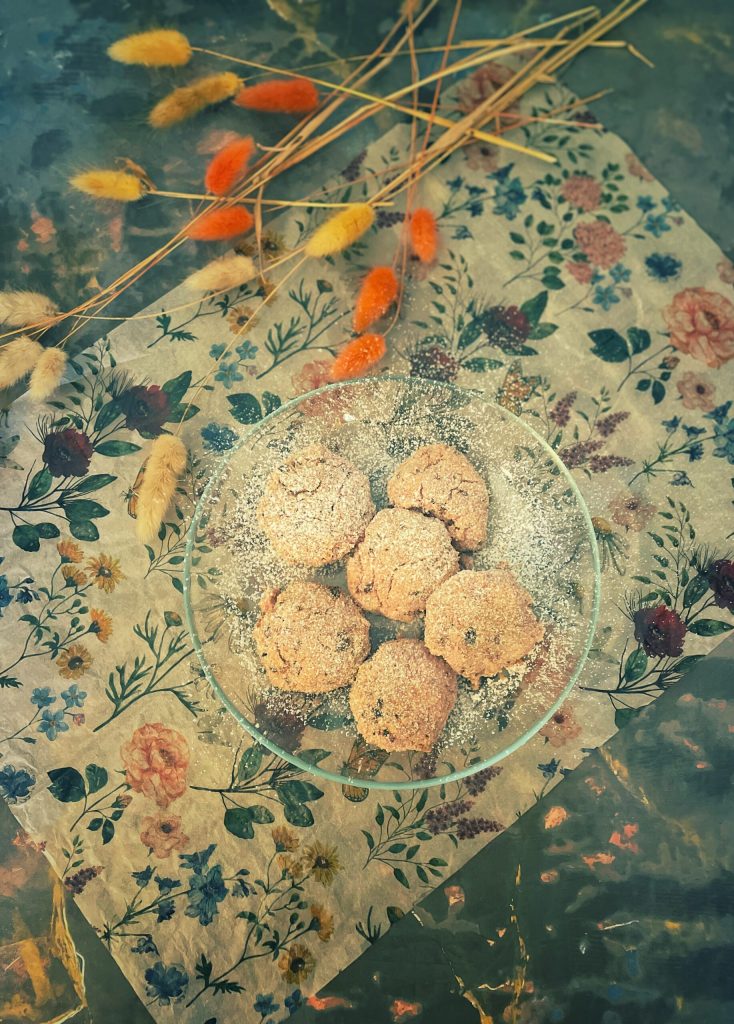
If there’s a dessert that encapsulates the authentic and resilient spirit of Northeast England, it is definitely the Singing Hinny.
Originating from Northumberland and the mining communities of Newcastle, this “griddle scone” was born out of historical necessity: a time when many miners’ homes did not have an oven, so women cooked these simple doughs directly on a cast iron plate (griddle) placed over an open fire.
Why are they called that?
The name evokes an almost poetic image: “Singing” refers to the rhythmic sizzle of the fats—traditionally butter and lard—that “sing” as soon as they hit the hot plate. “Hinny”, however, is a Geordie dialect term, an affectionate distortion of honey, commonly used to address loved ones.
For this recipe, I started with an authoritative source: the famous The National Trust Book of Scones, a staple for anyone who loves Anglo-Saxon baking. However, I wanted to adapt this classic to contemporary needs without sacrificing its magic.
In my gluten-free version you will find:
Rice Flour: for a crumbly texture.
Freeze-Dried Raspberries: a modern twist replacing the classic raisins.
Geometric Cooking: I chose to use a four-hole pan to ensure a perfectly round shape and even browning, echoing the precision of modern cooking applied to an ancestral cooking method.
The result is a rustic dessert, with a soft heart and a crunchy crust, perfect to serve hot with a layer of salted butter.
Traditionally, they can be cooked either in a pan or in an oven (392°F 8 minutes per side).
Very similar to other British traditional sweets like:
- Difficulty: Medium
- Cost: Economical
- Preparation time: 5 Minutes
- Portions: 6 Pieces
- Cooking methods: Stove, Oven, Electric oven
- Cuisine: English
- Seasonality: All seasons
Ingredients
- 1 3/4 cups rice flour
- 1 teaspoon gluten-free baking powder
- 4 oz butter (cold)
- 4 oz lard
- 1 pinch salt
- to taste freeze-dried raspberries
- 1/3 cup milk
Tools
- 1 Pan 4 holes
Steps
Crumb Work: In a bowl, sift flour, baking powder, and salt. Add the cold butter and lard and work them with your fingertips until you get a mixture similar to breadcrumbs.
Add Fruits: Mix in the freeze-dried raspberries or raisins (75 g for the traditional version).
Dough Formation: Add the milk one tablespoon at a time, stirring with a flat-blade knife until the dough comes together. It should be firm, not sticky.
Rolling Out: On a floured surface, roll out the dough with a rolling pin to a thickness of about 1-1.5 cm. Use a round cutter (about 6 cm) to cut out the scones.
The “Singing” Cooking: Heat a non-stick pan over medium-low heat (without oil, or with a layer of butter). Cook the Singing Hinnies for about 5-7 minutes per side. When you hear the sizzle of the melting fats, you’ll know why they’re called “singing”. They should be golden outside and well-cooked inside.
The Final Touch: Serve them hot, cut in half with a generous knob of salted butter that melts instantly.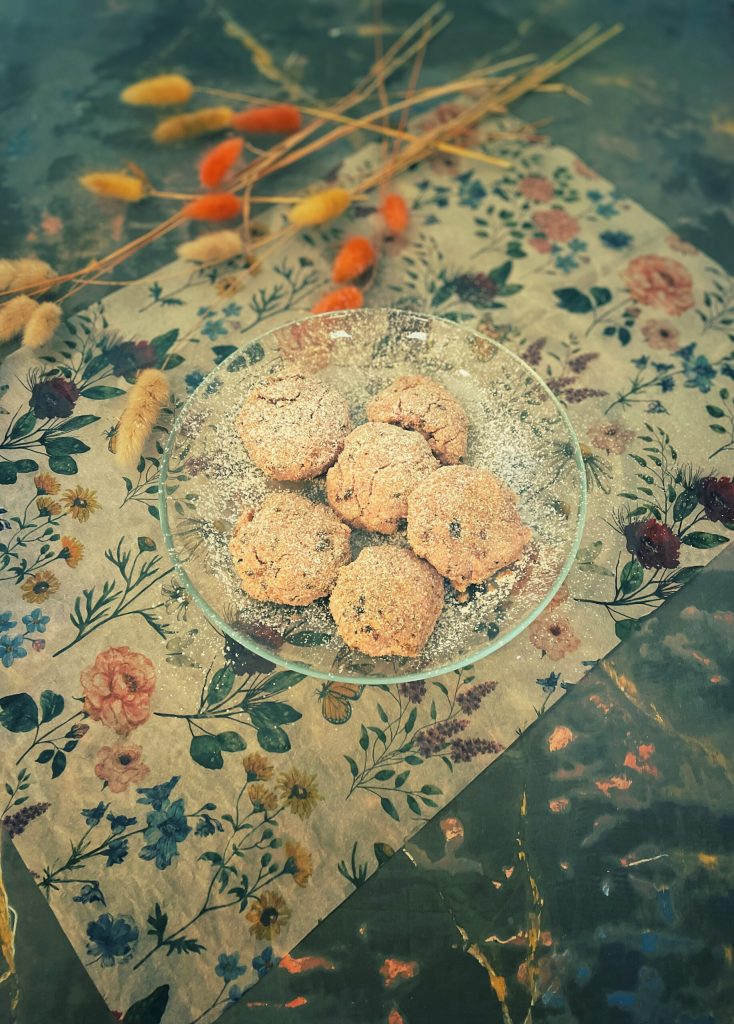
Why is the recipe included in a collection of recipes for Scones?
The Singing Hinnies are included in the National Trust Book of Scones because, although they have their own name and cooking method, they are technically considered “Griddle Scones”.
The book celebrates the regional variety of British tea culture and includes the Singing Hinnies for these reasons:
Gastronomic Kinship: The basic dough is almost identical to that of scones (flour, fats, milk, and dried fruit), making them an essential regional variant to complete the “history of the scone”.
Historical Heritage: The National Trust protects not only places but also culinary traditions. These pastries are a staple of the historic properties in the Northeast, like Cragside or Gibside, where they are served as a local alternative to the classic oven-baked scones.
Versatility of “Tea Time”: In the book, Singing Hinnies represent the “quick” and rustic option. Being thinner and crumblier, they offer a different texture that enriches the collection of 50 recipes in the volume.
In short, the National Trust sees them as the “miner” version of the scone, an indispensable piece of tradition that deserves a place of honor next to the more noble versions baked in the oven.
In the book, you will find another recipe that is also on the blog: Wet Nelly.