
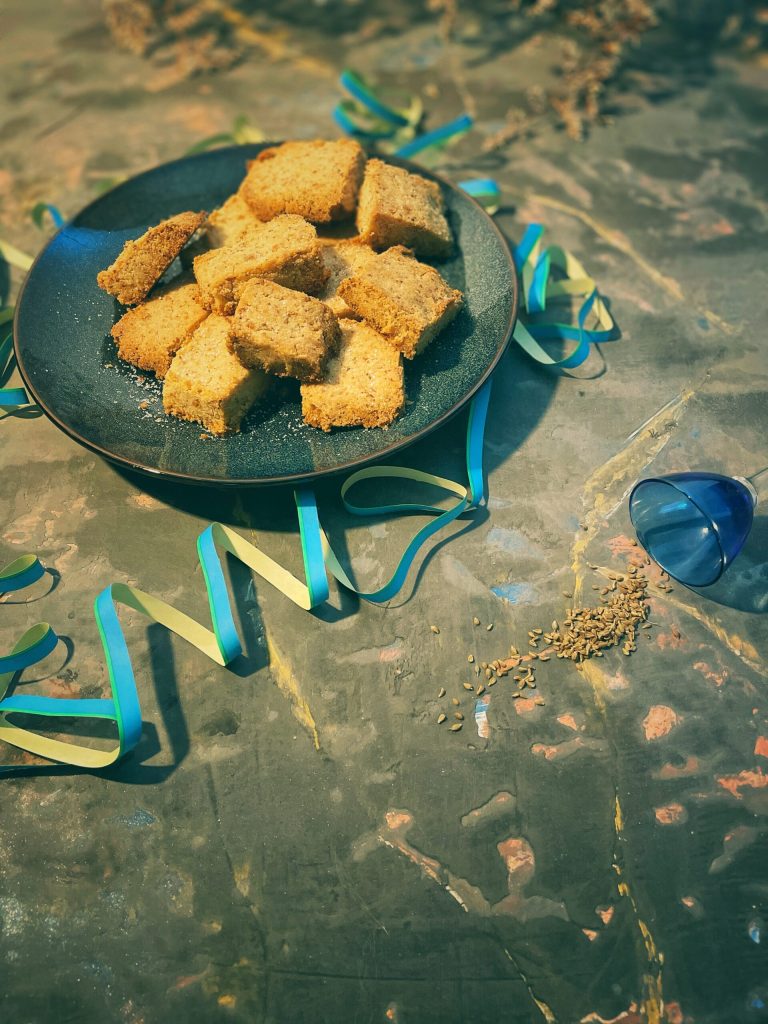
The Corsican Canistrelli are dry and crunchy cookies traditionally made without butter and eggs, representing the most authentic essence of Corsican pastry, a heritage deeply rooted in the ancient agropastoral traditions of the Mediterranean.
They were prepared to ensure long-lasting energy sustenance for shepherds and sailors, thanks to the complete absence of perishable animal fats and the skillful use of white wine and oil.
The aroma of anise seeds, a symbol of simplicity and freshness, gives this dry shortbread a distinctive olfactory signature that evokes the landscapes of the Mediterranean maquis.
Traditionally, a local dry white wine is used in Corsica. The most iconic and widespread grape variety for this preparation is Vermentinu (Corsican Vermentino), which imparts the canistrelli with their typical floral and mineral notes.
Historically born as “travel cookies” for shepherds and sailors, these sweets take on a fundamental celebratory significance during the Carnival period, but they are consumed all year round.
Canistrelli are linked to Maundy Thursday (Easter period), when they were blessed during religious processions.
The term Canestrello (or Canistrellu in Corsican) represents one of the most fascinating cases of “gastronomic migration” in the Mediterranean.
The name derives from the Latin canistrum, which referred to the wicker basket where these sweets were left to cool after cooking or brought as gifts during processions.
However, Corsican Canistrelli should not be confused with other namesakes, like the Sardinian ones.
This is my gluten-free version with a mix of rice and corn flour.
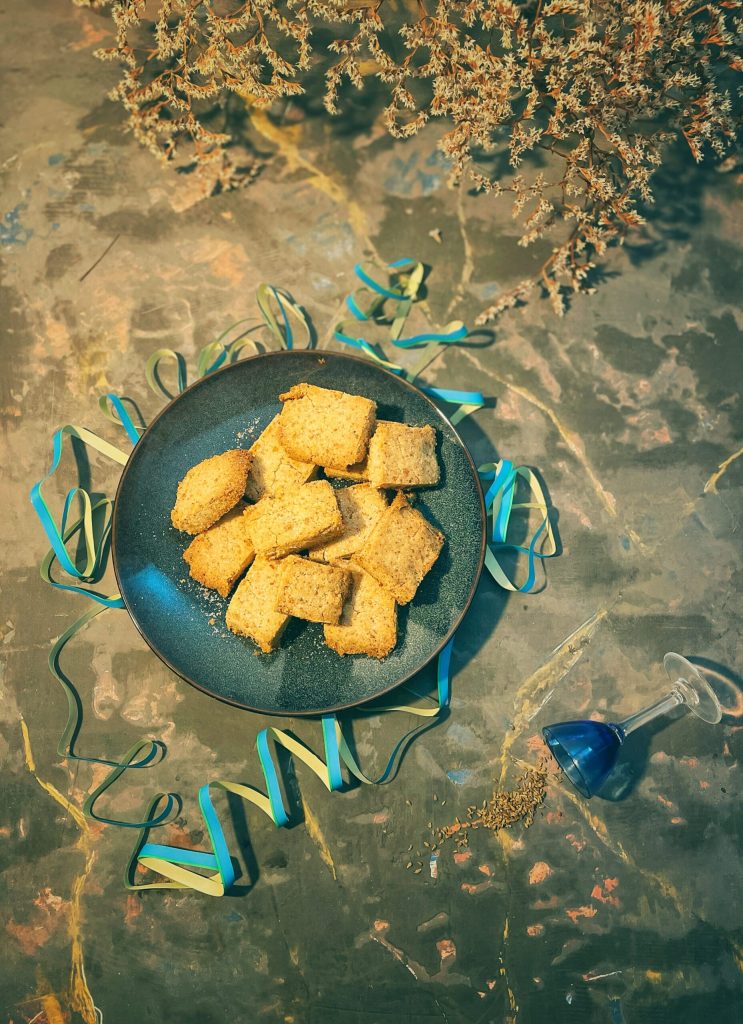
- Difficulty: Medium
- Cost: Economical
- Preparation time: 5 Minutes
- Portions: 45Pieces
- Cooking methods: Oven, Electric oven
- Cuisine: French
- Seasonality: Easter, Carnival
Ingredients
- 2 1/2 cups rice flour
- 2 cups corn flour
- 1/3 cup gluten-free potato starch
- 3/4 cup sugar (+ for finishing)
- 1 packet gluten-free baking powder
- 2 tbsps anise seeds
- 3/8 cup vegetable oil
- 3/8 cup white wine (Corsican or Sardinian Vermentino)
Steps
The dough: In a large bowl, mix the flour with the sugar, baking powder, salt, and anise seeds.
Liquids: Make a well in the center and pour in the oil and white wine. Start kneading by hand until you get a homogeneous ball (do not overwork it, it should remain a bit rustic).
Rolling out: Roll out the dough on parchment paper to a thickness of about 1/2 – 3/4 inch. Use the parchment paper to help.
Cutting: With a knife (or a rotary cutter), cut squares or rectangles about 1 1/2 – 2 inches.
Baking: Bake in a preheated static oven at 350°F for about 20-25 minutes. They should be well golden.Finishing: Sprinkle the surface with plenty of granulated sugar.
FAQ (Frequently Asked Questions)
What are the other canistrelli or canestrelli besides the Corsican ones?
1. Canestrelli from Carloforte (Sardinia)
Typical Carnival sweets, they are large soft donuts flavored with fennel. Their particularity is the double cooking (boiling and baking) and the rich white glaze (sàgapa) with colored sprinkles.
2. Ligurian Canestrelli (Genoa and Sassello)
Shortbread cookies shaped like a daisy with a hole in the center, made with a shortcrust rich in butter and hard-cooked yolks (ovis mollis). They are famous for their extreme friability and thick layer of powdered sugar.
3. Taggia Canestrelli (Liguria)
Unlike the others, these are savory. They are similar to twisted taralli, made with flour, water, and a lot of Taggiasca extra virgin olive oil, perfect for accompanying an aperitif.
4. Piedmont Canestrelli (Biella and Novara)
Thin and crispy wafers cooked between two hot iron plates that imprint a grid design. They are often made of two wafers joined by a layer of chocolate and hazelnuts.
5. Dorgali Canestrelli (Sardinia)
High school Sardinian pastry: disks of shortcrust finely decorated by hand with royal icing. They are ceremonial sweets served during weddings and religious festivals in Barbagia.
6. Canestrelli (Mollusks)
In the seafood field, the term refers to the mollusk Mimachlamys varia. Similar to a small scallop, it is a noble ingredient of Venetian cuisine, often served au gratin or with pasta.
The common root is the basket (from Greek kánastron).
Shape: Many variants resemble the basket weave or have scalloped edges reminiscent of wicker weaving.
Preservation: In the past, dry cookies were placed in straw baskets to allow air circulation and preserve them for a long time.
Linguistic Affinity: Corsican (Canistrellu), Ligurian (Canestrello), and Sardinian (Canestreddu) share the same Latin root, testifying to the millennia-old commercial and cultural exchanges between these regions.Do Corsican canestrelli with hazelnuts instead of anise exist?
The version with hazelnuts (canistrelli à la noisette) is one of the most loved and widespread variants, especially in the Castagniccia region, famous for its orchards.
Tradition dictates adding them coarsely chopped (not ground to flour), so you feel the crunchy piece under your teeth. Some even leave a few whole for aesthetics.
But anise wins the title of the “most traditional” version for several reasons.
The origin: Canistrelli were born as cheap food with a very long shelf life. Anise seeds were inexpensive, easy to find, and acted as a natural preservative, as well as providing freshness that “cleansed” the palate.
The distribution: While hazelnuts are typical of specific areas (like Castagniccia), anise is the universal ingredient found in every bakery on the island, from Bastia to Ajaccio.
The “historical” taste: The dry taste of white wine combined with anise is considered the original aromatic profile of the Corsican cookie.
Hazelnuts, although ancient in Corsican cuisine, arrived in canistrelli as a “rich” and indulgent variant. Today they are as popular as those with anise, but if you want to make the cookie that a Corsican shepherd from a hundred years ago would have carried in his bag, the correct choice is anise.
