
Schenkeli, or Schänggeli or Schänkeli, are a fried confectionery specialty originating from German-speaking Switzerland, historically also popular in Alsace and some parts of southern Germany.
Their name comes from the Swiss-German term Schenkel (thigh), a reference to the slightly tapered cylindrical shape reminiscent of a small leg.
The earliest written records of this preparation date back to the 18th century, although regional variants became established during the 1800s.
Traditionally, Schenkeli are associated with the Carnival period (Fasnacht).
Historically, frying was a practical way to use up animal fats (lard) and eggs before the start of the Lenten fast, during which these ingredients were prohibited by religious doctrine.
Initially considered a festive sweet for the common folk due to the simplicity of the ingredients (flour, sugar, and fat), over time the recipe was enriched with the introduction of almonds and more refined flavors like Kirsch, becoming a product available year-round in Swiss bakeries.
On the blog, you can find another Swiss carnival recipe:
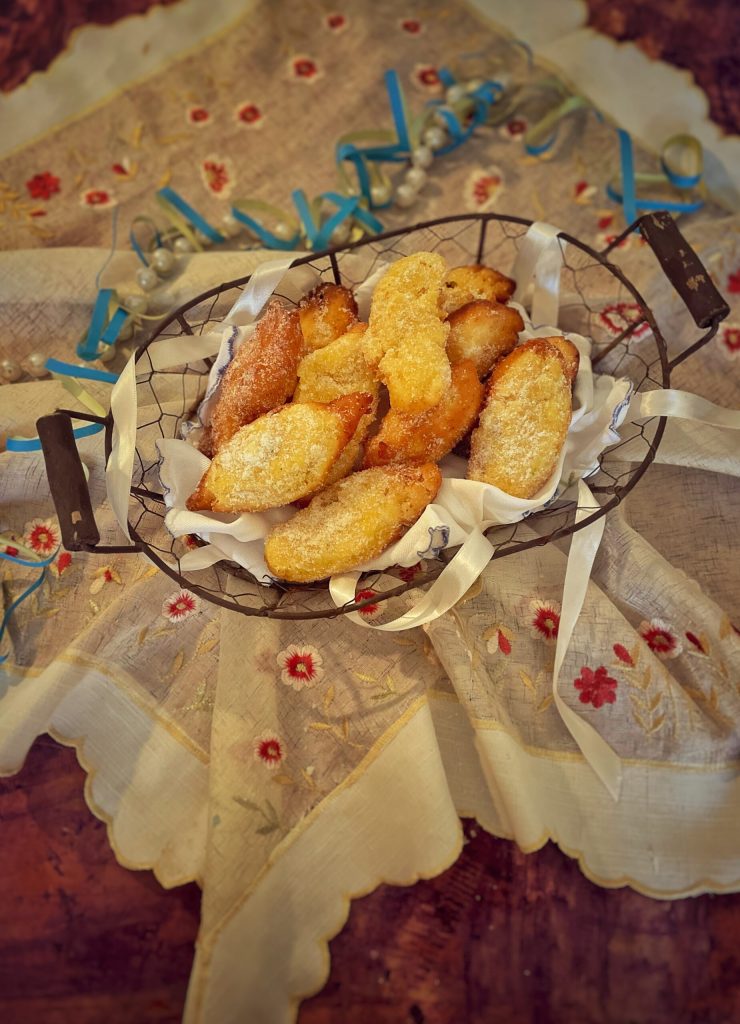
- Difficulty: Easy
- Cost: Very economical
- Rest time: 1 Hour
- Preparation time: 10 Minutes
- Portions: 20 Pieces
- Cooking methods: Frying
- Cuisine: Swiss
- Seasonality: Carnival, All seasons
Ingredients
- 2.65 oz butter
- 4.41 oz sugar
- 2 eggs
- to taste lemon and orange zest
- 1 tbsp kirsch
- 2.47 oz almonds (chopped)
- 8.82 oz flour
- 1 tsp baking powder for sweets
- 1 pinch salt
Steps
Preparation: In a bowl, work the butter with sugar and salt until creamy. Add the eggs one at a time, beating until the mixture lightens.
Dough: Add the citrus zest, Kirsch, and chopped almonds. Sift the flour with the baking powder and gradually incorporate it until you get a soft and pliable dough.
Rest: Cover the dough and let it rest in the refrigerator for at least 1 hour.
Shaping: Form small cylinders about 0.8 inches thick and 2-2.4 inches long, with slightly pointed ends. For the classic shape, slightly score the surface lengthwise with a knife.
Frying: Fry a few pieces at a time in oil at 320-338°F for about 2-4 minutes, until evenly golden and “cracked” along the incision.
Finishing: Drain on absorbent paper, and while still warm, roll them in granulated sugar (often mixed with cinnamon) or dust with powdered sugar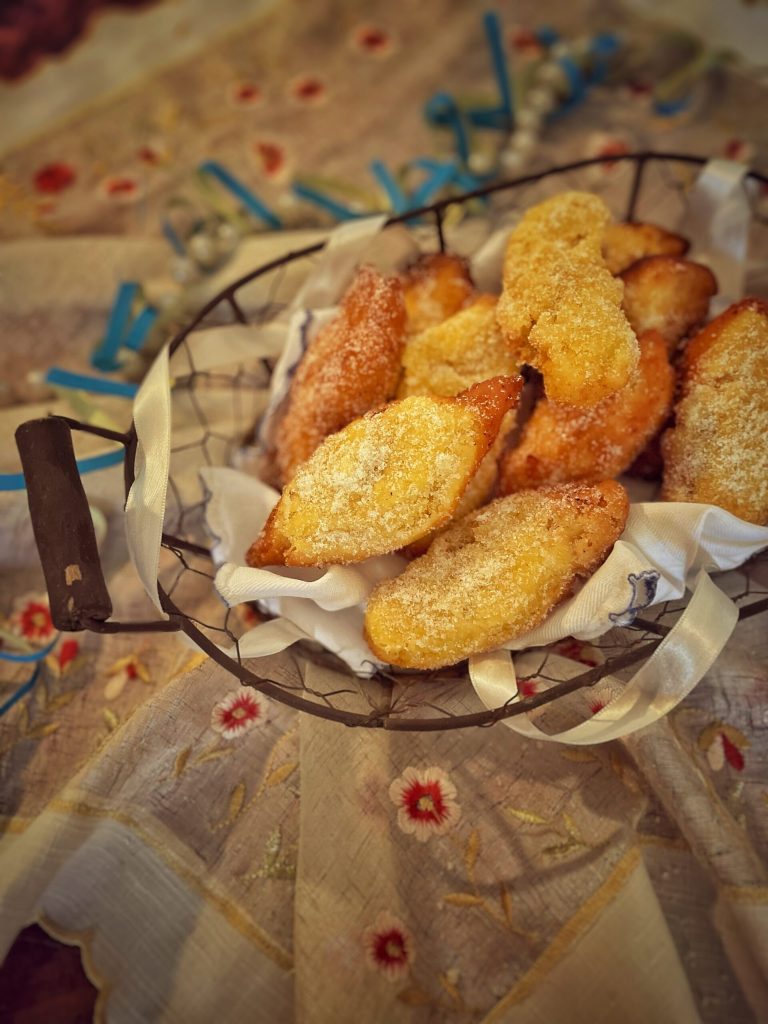
The Traditional Shape
The shape of Schenkeli is that of small cylinders or “cigars” about 2-3.5 inches long and about 0.8 inches thick.
Appearance: They resemble small tapered legs (hence the Swiss-German name Schenkel, “thigh”) or, in some French regional variants, goat hoofs (pieds de chèvre).
The “Crack”: The most distinctive feature is the longitudinal incision made on the surface before cooking. During frying, the heat causes the dough to puff up, opening the incision and creating a central “crack” that gives the sweet a rustic and irregular appearance.
Ends: Traditionally, the tips are slightly rounded or cut diagonally.
FAQ (Questions and Answers)
Does the recipe also include candied orange?
The use of candied orange (or candied citron) is not mandatory in the basic Swiss recipe, but it is considered a traditional ingredient in some regional variants, especially those with French influence (Alsace) where they are called Schenkela or Schenkele, or in richer and more aromatic versions.
What is the alternative to kirsch?
If you don’t have Kirsch (the cherry brandy typical of the original recipe) or prefer not to use it, you can easily substitute it depending on the result you wish to achieve:
1. Alcoholic Alternatives (To maintain the fragrance)
Cherry Grappa or Maraschino: These are the closest substitutes for aromatic profile.
Dark Rum or Brandy: They give a more intense and spicy aroma, very pleasant in fried goods.
Anise Liqueur : Although changing the flavor, anise is a classic Carnival sweet aroma and pairs well with frying.
2. Non-Alcoholic Alternatives (For children or teetotalers)
Clear apple juice: It is the best choice to replace Kirsch in terms of acidity and sweetness without altering the dough color.
Bitter almond extract: If your recipe includes almonds, 2-3 drops of extract (diluted in a tablespoon of water) will enhance the flavor.
Orange juice: Adds a citrus note that complements the grated zest present in the dough.
