
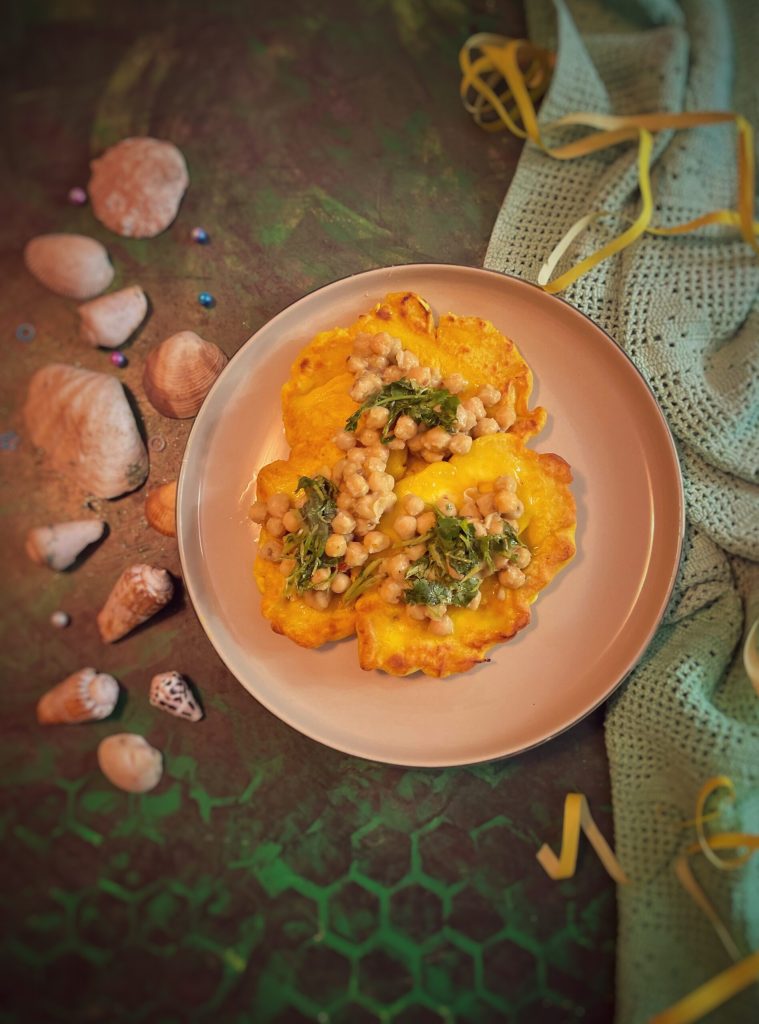
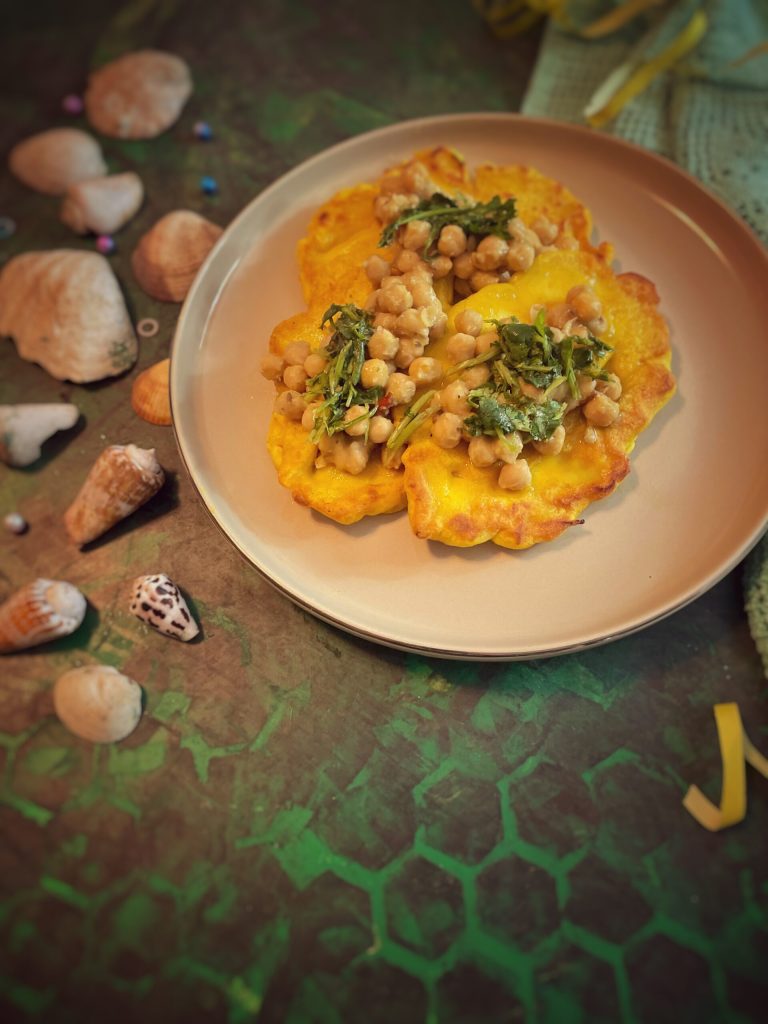
The Doubles are the unofficial national dish of Trinidad and Tobago, a symbol of conviviality that blends Indian roots and Caribbean flavors: soft fried dough called bara, enclosing a filling of curry-spiced Caribbean chickpeas, known as channa.
Originating from the Princes Town area in the 1930s, they owe their name to customers asking to “double” the bread portion, turning a simple snack into a substantial and iconic meal.
They are the absolute protagonists during the frenetic Trinidad Carnival, considered the perfect fuel for celebrations: cheap, nutritious, and naturally vegan.
They are the chosen remedy to recharge after J’ouvert (the night parade) or to face long hours of dancing to the rhythm of Soca music.
The heart of the recipe lies in the contrast between its two main components:
The Bara: A disk of leavened dough, turned yellow by turmeric and quickly fried to stay soft and flexible.
The Channa: A rich filling of slowly cooked chickpeas with Caribbean curry, cumin, and garlic, achieving a creamy and enveloping consistency.
It is traditionally completed with Chadon Beni (a fresh sauce made of long culantro and garlic); in Trinidad, the local herb culantro (more intense) is used, but it can be replaced with classic cilantro, and a touch of Scotch Bonnet chili, whose intensity defines the challenge for every palate.
They are served one on top of the other or slightly offset and eaten strictly with hands, directly from the wax paper: the only authentic way to honor this tradition.
On the blog, you can find other Trinidad and Tobago Carnival recipes:
- Difficulty: Medium
- Cost: Very cheap
- Rest time: 2 Hours
- Preparation time: 5 Minutes
- Portions: 12Pieces
- Cooking methods: Frying
- Cuisine: Caribbean
- Seasonality: Carnival
Ingredients
- 2 cups flour
- 1 teaspoon dry yeast
- 3/4 cup water (warm)
- to taste turmeric powder
- to taste salt
- 1 teaspoon sugar
- to taste vegetable oil
- 14 oz dried chickpeas (or 2 cans of pre-cooked chickpeas)
- 1 onion
- 1 clove garlic
- 1 teaspoon baking soda
- 1 tablespoon Caribbean curry (*)
- to taste cumin
- to taste crushed chili pepper (scotch bonnet)
- to taste salt and pepper
- 1 bunch culantro (or fresh cilantro)
- 2 cloves garlic
- 1 tablespoon lime juice
- to taste salt
Steps
For the bara:
Dissolve yeast and sugar in warm water and let it rest until it becomes foamy.
In a bowl, combine flour, turmeric, and salt. Add the yeast mix and knead until you get a very soft and slightly sticky dough.
Brush with a little oil, cover and let rise for about 1-2 hours in a warm place.
Form walnut-sized balls, flatten them with oiled fingers to create thin discs about 4-5 inches.
Fry them in hot oil for a few seconds on each side (maximum 5-10 seconds total): they should puff up but remain light and soft, not crispy. Place them immediately in a closed container or wrapped in a cloth to keep them warm and moist.For the channa:
If using dried chickpeas, soaking is mandatory (minimum 8-12 hours) in cold water with a pinch of baking soda.
Cooking: Slow (about 45-60 minutes). The baking soda helps break down the skin, making everything very creamy.If using pre-cooked chickpeas: rinse them very well to remove the preservative aftertaste.
Cooking: Very quick (15-20 minutes). You need to add water or a light broth to create the sauce.
In a pot, sauté chopped onion and garlic, add the curry mixed with a little water and let it toast briefly.
Add the chickpeas with some of their cooking water, cumin, and chili pepper.
Let it simmer until the sauce thickens.Tip: mash some chickpeas with a fork to make everything creamier.
For the Chadon Beni:
Wash and dry well the culantro or cilantro.
Blend everything in a mixer.
Adjust consistency: Add one tablespoon of water at a time until you get a thick but fluid sauce, similar to a coarse pesto.
Taste: Adjust salt, and if it’s too bitter, add a pinch of sugar.Place two bara on a plate (slightly overlapped), pour a generous tablespoon of hot channa in the center and complete with Chadon Beni.
International Doubles Day: The 30th of May is the world day dedicated to this dish, coinciding with Indian Arrival Day.
FAQ (Questions and Answers)
What are the toppings for Doubles?
The real magic lies in the sauces.
Classic options include:
Kuchela: A spicy green mango pickle.
Tamarind sauce: For a sweet-tangy note.
Grated cucumber: To refresh the palate.
Pepper sauce: Scotch Bonnet chili sauce (you can order them with “slight pepper” for a light touch or “heavy pepper” if you’re brave).
Chadon beni: A green sauce made with long coriander (culantro).How is Carnival in Trinidad and Tobago celebrated?
The Trinidad and Tobago Carnival 2026 will officially take place on Monday, February 16 and Tuesday, February 17, 2026.
Known as “The Greatest Show on Earth,” the carnival is the culmination of months of preparations, steelpan competitions, and parties (fetes) that start as early as January.
📅 Key Dates for 2026
The official calendar for the 2026 season includes the following main events:
January 9, 2026: Opening of the John Cupid Carnival Village.
January 18, 2026: Junior Panorama Finals.
February 1, 2026: National Steelband Semifinals (Pan Semis).
February 7, 2026: Calypso Fiesta and Red Cross Kiddies Carnival.
February 14, 2026: Large Conventional Band Finals and Chutney Soca Monarch.
February 15, 2026: Dimanche Gras (Carnival King and Queen Finals).
February 16, 2026 (Carnival Monday): Official start at 04:00 with J’ouvert, followed by costume parades.
February 17, 2026 (Carnival Tuesday): Grand parade of bands and final celebrations until midnight.
🎭 Main Experiences
J’ouvert: A pre-dawn parade on Monday where participants cover themselves in mud, paint, oil, and chocolate to celebrate freedom.
Parade of the Bands: Thousands of “masqueraders” march through the streets of Port of Spain wearing elaborate costumes made of feathers, beads, and sequins, dancing to the rhythm of soca and calypso music.
Panorama: The most prestigious steelband (steel drum) competition in the world, with orchestras featuring up to 100 musicians.
Fetes: Themed parties, cruises, and “all-inclusive” parties held all over the island in the weeks leading up to the parade days.*What kind of curry is Caribbean curry?
The Caribbean curry is profoundly different from the classic Indian curry (masala); it is the result of a historical fusion: when Indian workers arrived in the Caribbean in the 19th century, they adapted their spice blends to local ingredients.
1. The Aromatic Profile: Yellow and Earthy
Unlike Indian curry, which often focuses heavily on spiciness or sweet notes (cinnamon/cloves), Caribbean curry is:
Less spicy: The heat doesn’t come from the curry powder itself but from the addition of fresh peppers (Scotch Bonnet) during cooking.
More Yellow: It contains a very high proportion of turmeric, giving the iconic color to the Doubles.
Strong presence of Cumin (Geera): Toasted cumin is the earthy soul of this mix.
2. Key Ingredients
An authentic Caribbean blend (particularly the one from Trinidad) usually contains:
Turmeric: Base for color and benefits.
Coriander seeds: For a citrusy note.
Cumin (Geera): Fundamental, often extra toasted cumin is added at the end of cooking.
Fenugreek: For that slightly bitter aftertaste typical of the Channa.
Black pepper and mustard seeds: For constant aromatic depth.
3. The “Bughay” Technique (Toasting)
The secret of Doubles is not just the type of curry, but how it’s used. In Trinidad, curry powder is not poured directly over the chickpeas.
A paste is made: curry is mixed with some water, minced garlic, and onion.
This paste is “fried” in hot oil until it thickens and changes color (becoming almost dark brown). This process removes the “raw spice” taste and releases essential oils.
If you can’t find explicitly Caribbean curry, you can compose your mix as follows:
2 tablespoons of English curry.
1 extra teaspoon of Turmeric.
1 teaspoon of Cumin powder (better if toasted in a pan beforehand).
A pinch of black pepper.
If you use vegan Sri Lankan curry powder, you need to add a lot of extra turmeric (at least 1-2 teaspoons) both in the Bara dough and in the chickpeas, otherwise the dish will look like a dark meat stew, instead of the classic sunny street food of Port of Spain.
