
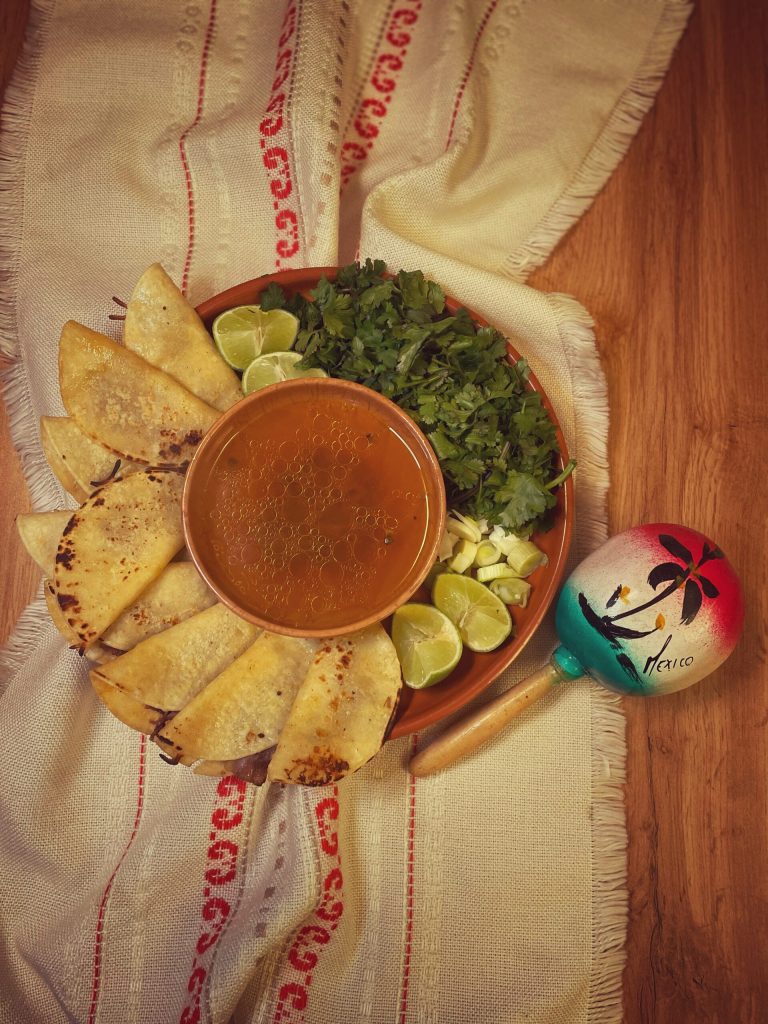
The Quesabirria de res represents the modern and “street” evolution of the Birria: a combination of tender shredded meat and melted cheese.
The secret of its preparation lies in the dual texture: the meat, slow-cooked—often in a Crock-Pot like in my case—until it falls apart, and the tortilla, which is dipped in the red fat from the surface of the broth (consommé) and then grilled until crispy.
Birria is one of the most iconic dishes of Mexican cuisine, originating from the state of Jalisco. Born in the colonial era as a solution to cook goat meat (made tender and flavorful by slow cooking and an intense mix of spices and chilies), it has evolved over time into the popular beef version (Birria de Res), typical of the Tijuana area.
Traditionally, quesabirria is considered the dish of great celebrations and Carnival.
Quesabirria is not just a taco but a true gastronomic ritual.
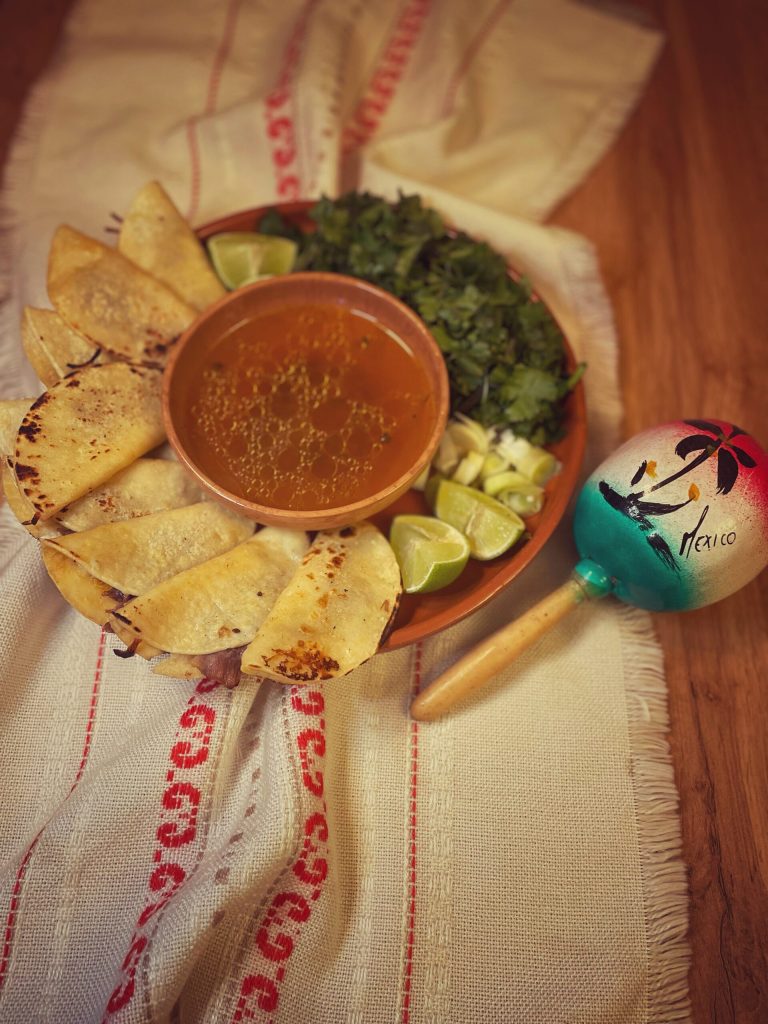
It is served strictly with a cup of hot consommé, enriched with raw onion and cilantro, in which the taco should be dipped before every bite.
This technique enhances the contrast between the spiciness of the seasoned meat, the creaminess of the cheese, and the aromatic note of the broth.
- Difficulty: Easy
- Cost: Medium
- Preparation time: 10 Minutes
- Portions: 6 People
- Cooking methods: Other
- Cuisine: Mexican
- Seasonality: All seasons
Ingredients
Adobo: 8 Guajillo chilies, 2 Ancho (seedless and hydrated), 100 ml apple cider vinegar, 6 garlic cloves.
- 3.3 lbs beef chuck roast (Chuck roast)
- 2 marrow bones
- 1 cinnamon stick
- 1 tsp cumin
- 4 cloves
- 1 tsp Mexican oregano
- 2 leaves bay leaves
- to taste salt and pepper
- 24 small corn tortillas (diameter 4-6 inches)
- 14 oz Oaxacan cheese (melty, also like mozzarella in block)
- to taste cilantro
- 1/2 onion
- 2 limes
Tools
- 1 crockpot
- 1 Pan
Steps
Adobo: Clean the chilies from the seeds, toast them for 1 minute in a pan, and then boil them in water for 10 minutes until they are soft.
Blending: Blend the chilies with vinegar, garlic, and all the spices (except bay leaves) using very little cooking water. You should get a thick and fragrant paste.
Crock-Pot: Place the meat, cover it with the adobo rubbing it in, add bones, bay leaves, and about 3-4 cups of water or bone broth. It’s not necessary to submerge it too much, the meat will release its juices.
Time: 8-10 hours on LOW or 4-6 hours on HIGH.Shredding: Once tender, remove the meat and use two forks to shred it
Heat a griddle or a large non-stick pan.
Take a corn tortilla and quickly dip it on the surface of the broth in the Crock-Pot, so it collects the red fat well.
Place the tortilla on the hot griddle.
Add a generous handful of melting cheese.
Distribute the shredded meat on one half of the tortilla.
When the cheese starts to melt, fold the tortilla in half (in a crescent shape).
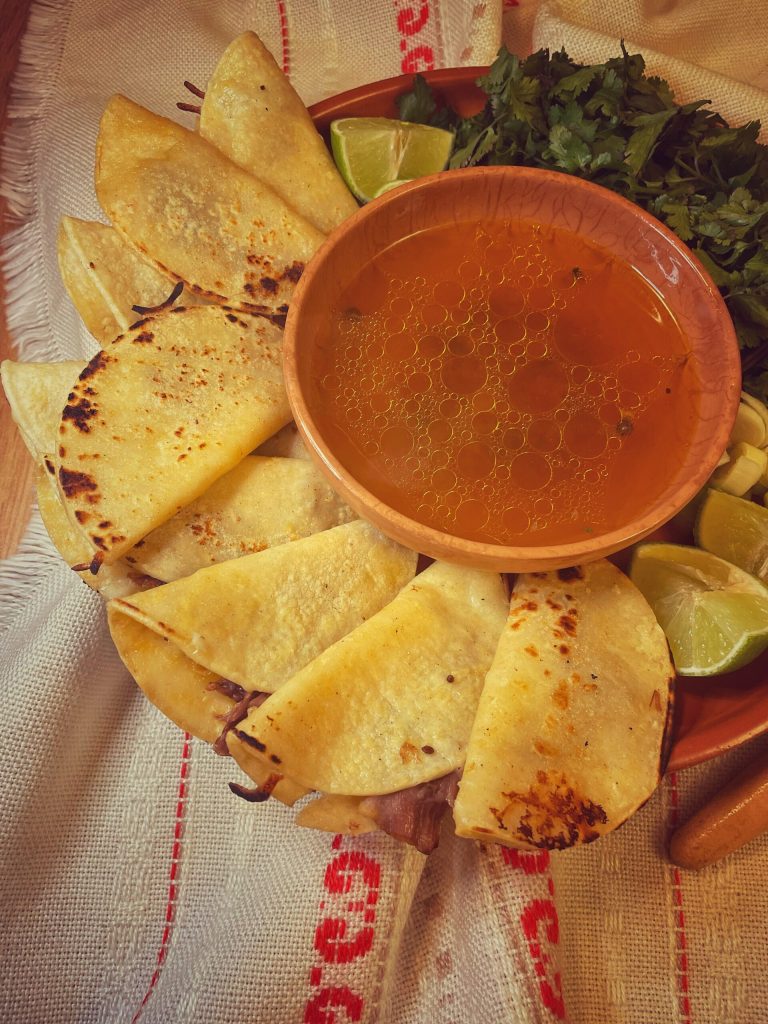
Press with a spatula and cook until the outside is golden and crispy. The birria fat will “fry” the tortilla making it very flavorful.
Pour the hot broth (consommé) into a small bowl.Add to the broth:
Raw chopped white onion.
Fresh cilantro.
A splash of lime.Take the crispy taco and dip it deeply into the broth before each bite, just like the tradition of the best Tijuana street food suggests.
Mexican Carnival
Carnival is one of the most celebrated and representative festivities in Mexico.
It is celebrated with enormous participation in the days leading up to Ash Wednesday, blending Catholic traditions and pre-Hispanic rituals in an explosive mix of parades, music, and dances.
The main celebrations take place in port cities, where the atmosphere resembles that of Rio de Janeiro.
Mazatlán (Sinaloa): Considered the third largest carnival in the world. It stands out for the banda music, the “Combate Naval” (a fireworks show reenacting a historical battle), and large cultural events along the Malecón.
Veracruz: Defined as “the happiest carnival in the world”. It begins with the symbolic rite of the “Quema del mal humor” (the burning of bad mood) and ends with the entertaining funeral of “Juan Carnaval”.
Campeche: Hosts the oldest carnival in Mexico. It is famous for the “Battle of the Flowers” and unique traditional dances.
Cozumel and Mérida: Offer celebrations more oriented toward families, with parades rich in local folklore.
Typical traditions
Mexican carnivals are famous for some recurring elements:
Coronations: Election of the King of Joy and the Queen of Carnival.
Live music: Rhythms like marimba, danzón, and salsa fill the streets.
Festive gastronomy: Traditional dishes such as tamales and buñuelos (crispy sweet fritters) are enjoyed.
FAQ (Frequently Asked Questions)
Is Birria made with beef or goat meat?
The history of Birria is fascinating because it originates from an “ecological problem” and a culinary rebellion in 16th century Mexico.
When the Spanish conquistadors arrived in Jalisco, they introduced European livestock, including goats. These animals reproduced so quickly that they destroyed indigenous crops, becoming a real plague. The Spaniards, however, considered goat meat too tough, leathery, and smelly (“of little value”), so they gave it to the local populations.
The indigenous people of Cocula (Jalisco) decided not to waste this resource. To make this “useless” meat edible, they used ancestral cooking techniques:
Slow cooking: They buried the meat in underground ovens (hornos de tierra) for hours.
Powerful spices: They marinated the meat with an intense mix of chilies, herbs, and local spices to mask the wild flavor of the goat.
The result was a meat so tender it melted in the mouth, which they ironically called Birria, a term in Old Spanish that meant something “ugly” or “worthless”.
Originally made only with goat (chivo), Birria has evolved over time:
In the 1950s, in Tijuana, street vendors began using beef (res) because it was cheaper and more palatable to the modern palate, creating the “Tijuana” style that now dominates the world.
Recently, Birria has become a global phenomenon thanks to Quesabirrias, tacos with melted cheese to be dipped in broth (consommé), which have become popular on Instagram and TikTok.
