
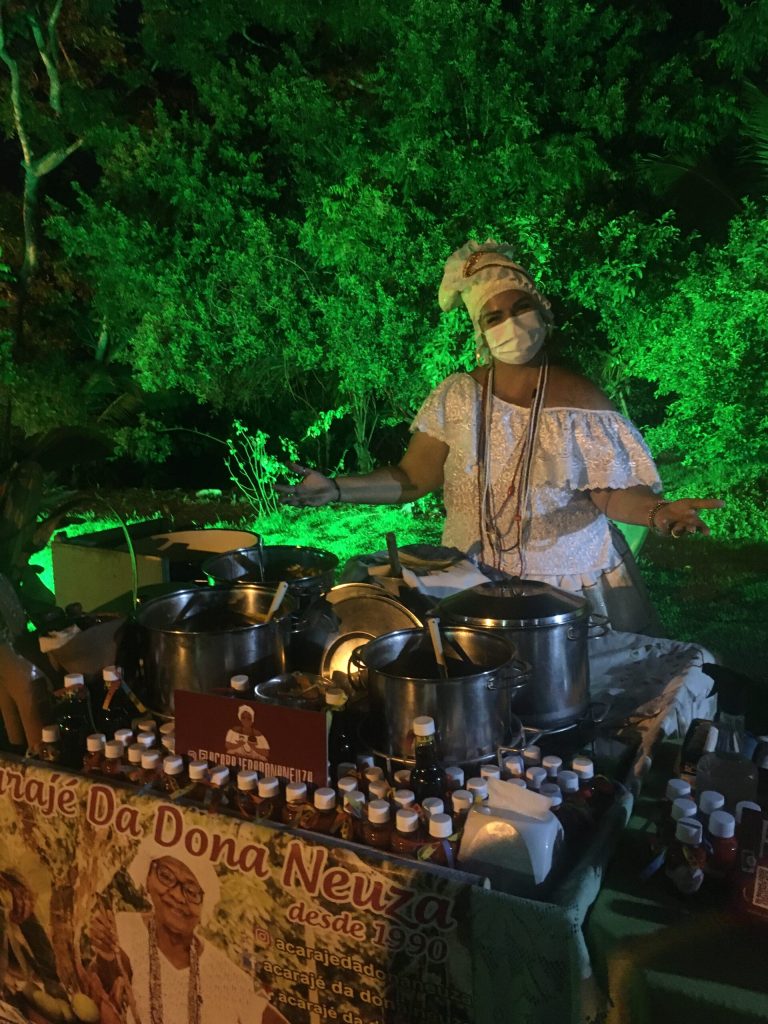
Acarajé is sold by Baianas dressed in the traditional white attire at a stall called the tabuleiro da baiana.
In Salvador da Bahia the activity is even regulated by a municipal decree.
It is a ritual dish in the Afro-Brazilian religion Candomblé; its recipe cannot be altered and may only be prepared by the “clergy” of Candomblé, called filhos-de-santo.
It is a kind of fried fritter made from a bean-based batter and then stuffed.
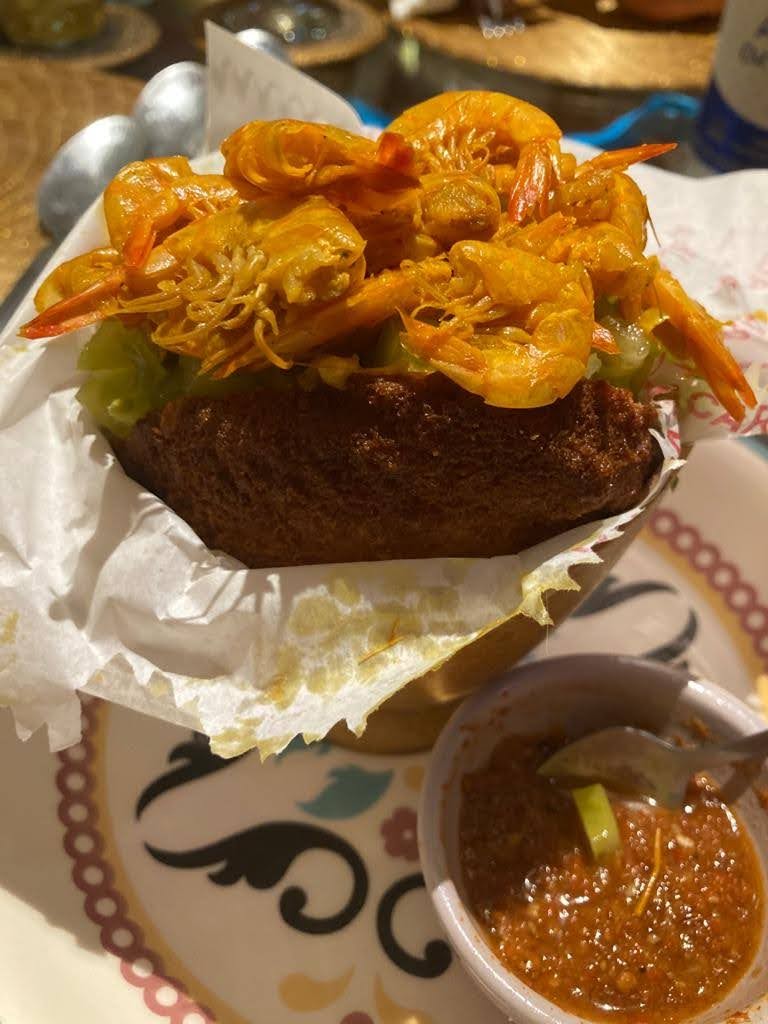
Acarajé is made with the feijão-fradinho bean (the one with the small black eye). The beans are coarsely pounded on a stone and soaked in water so the skins come off. They are then ground and onion is added; the mixture is fried in dendê oil and finally filled or served with chili, shrimp, vatapá, caruru, salad.
We tried it for the first time at Acarajé Gourmet, a well-known restaurant in Porto Seguro on the Passarela do Alcool during our April 2021 trip (photo).
In the video, the one tasted was during the trip to Salvador de Bahia in March 2026.
- Difficulty: Difficult
- Cost: Budget-friendly
- Rest time: 12 Hours
- Portions: 6 people
- Cooking methods: Frying
- Cuisine: Brazilian
- Seasonality: All seasons
Ingredients
- 2 3/4 cups black-eyed peas ((about 500 g))
- 1 onion
- 1 1/4 cups dendê oil (palm oil) (or peanut oil (about 300 ml))
- to taste salt
Preparation
Coarsely pound the beans and transfer them to a large bowl filled with water
Let them soak for at least 12 hours.
Rub the beans between your hands to remove the skins.
Blend the beans and the onion at low speed with a minimal amount of water until you obtain a homogeneous paste.
Add salt to taste.
Put the dendê oil in a pan and heat over medium heat.
Fry the batter by spoonfuls in the hot dendê oil. The balls should not be dry: they must be cooked inside and golden on the outside.
Drain and fill them with vatapá. Find the recipe HERE.
Or serve with fried shrimp and salad, or blended with chili, or with okra sliced and fried with various herbs: spring onion, chili, garlic and other spices.
The classic Bahian woman selling acarajé, here in the Historic Center area of Porto Seguro
National variations:
Acarajé is similar to another Bahian dish, abará, which is steamed and less caloric.
Video of the acarajé dinner:
To learn more about Afro-Brazilian religions I recommend the book: Afro-Brazilian religions in dialogue with the Catholic Church for €15.84
