
The Mexilhão ao Molho (mussels in sauce) represents one of the most authentic expressions of the cultural layering that defines Brazilian gastronomy.
Far from being a simple seafood preparation, this dish is the result of a historical process that unites ancient indigenous traditions, colonial influences and transoceanic exchanges.
The roots of shellfish consumption in Brazil date back millennia before the arrival of Europeans. Along the coast, particularly in the states of Santa Catarina and Rio de Janeiro, the archaeological remains known as Sambaquis — enormous mounds of bivalve shells — testify to how native peoples (Tupi-Guarani) relied on mussels as a primary source of sustenance.
With Portuguese colonization, the way of preparing them evolved. The introduction of Mediterranean ingredients such as garlic, onion and olive oil transformed the mollusk from a basic food into the protagonist of more elaborate preparations, inspired by Portuguese stewing techniques.
The tomato, although native to the Americas, was integrated into this recipe after being “rediscovered” and enhanced along European culinary routes, becoming the binding element that gives the dish its characteristic savor and intense color.
Finally, the identity of Mexilhão ao Molho was consolidated thanks to the addition of aromatic herbs like cilantro (fresh coriander), which defines its typically Brazilian sensory profile, clearly distinguishing it from Mediterranean versions.
Today, this dish is not only a classic at coastal kiosks, but a symbol of culinary adaptation, able to tell, through a rich and lingering sauce, the complex story of encounters among the peoples of Brazil.
The Portuguese term Mexilhão derives from the Latin musculum (little mouse, referring to the shape of the mollusk).
In Brazil, the word has taken on a popular nuance: eating mussels in tomato sauce is a social act, often done on the beach or at small bars (botecos), where the dish is served with bread so not a drop of that red sauce is wasted.
And this is indeed what we tasted on the beach of Cabrália during our trip in March 2026.
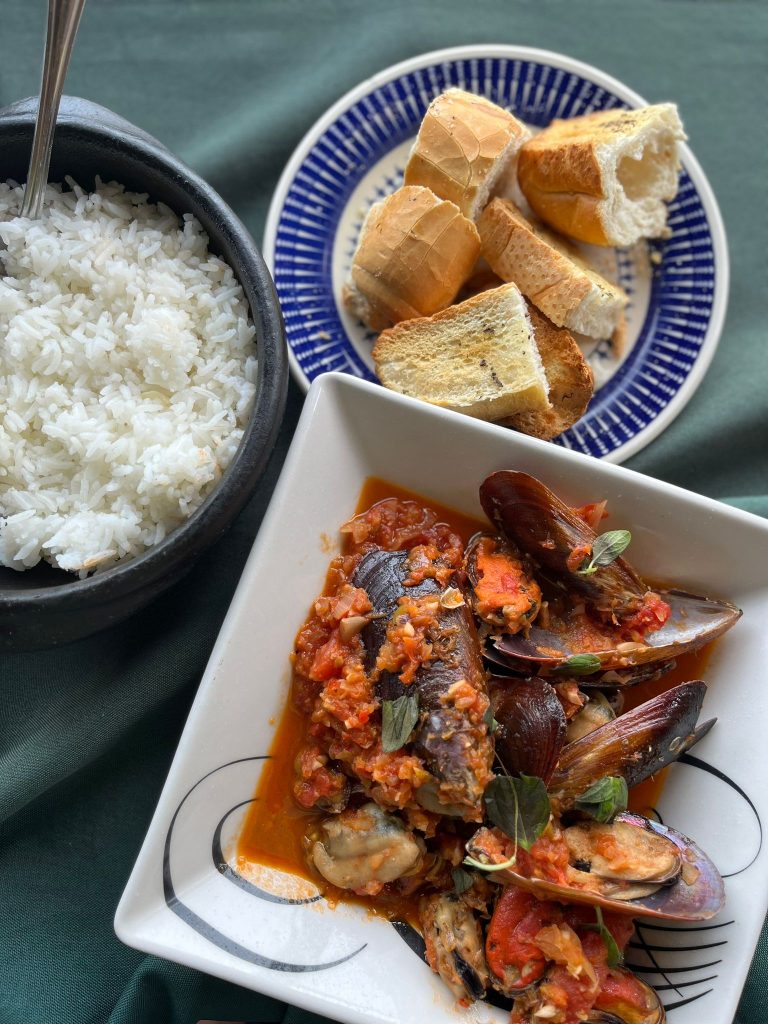
- Difficulty: Easy
- Cost: Medium
- Rest time: 15 Minutes
- Preparation time: 5 Minutes
- Cooking time: 15 Minutes
- Portions: 4
- Cooking methods: Boiling
- Cuisine: Brazilian
- Seasonality: All seasons
Ingredients
- 2.2 lb Mussels
- 4 Tomatoes (or 14 oz (400 g) tomato pulp)
- 1 Onion (sliced)
- 3 cloves Garlic (crushed)
- 1/2 Green bell pepper (diced)
- 1 Lime
- 1 bunch Cilantro
- a few Spring onion (chopped)
- as needed Vegetable oil
- to taste Salt and pepper
Steps
Marination: Place the cleaned mussels in a bowl with the lime juice and a pinch of salt. Let them rest for 10–15 minutes. This removes the strong sea smell and slightly “pre-cooks” the mollusk.
The Soffrito (Refogado): In a large pot, heat the olive oil. Sauté the onion until translucent, then add the garlic and green bell pepper. Let the pepper wilt well: it should become tender.
The Sauce: Add the diced tomatoes (and tomato paste if you use it). Cover the pot and cook over medium heat for about 10 minutes, until the tomatoes break down and create a nice thick sauce. If it becomes too dry, add a ladle of hot water.Cooking the Mussels: Add the mussels (with their lime juice) to the sauce. Stir gently. Cover and cook for only 5–7 minutes. Do not overcook them or they will become rubbery!
Finishing Touch: Turn off the heat and add plenty of chopped cilantro and spring onion. Give a final gentle stir.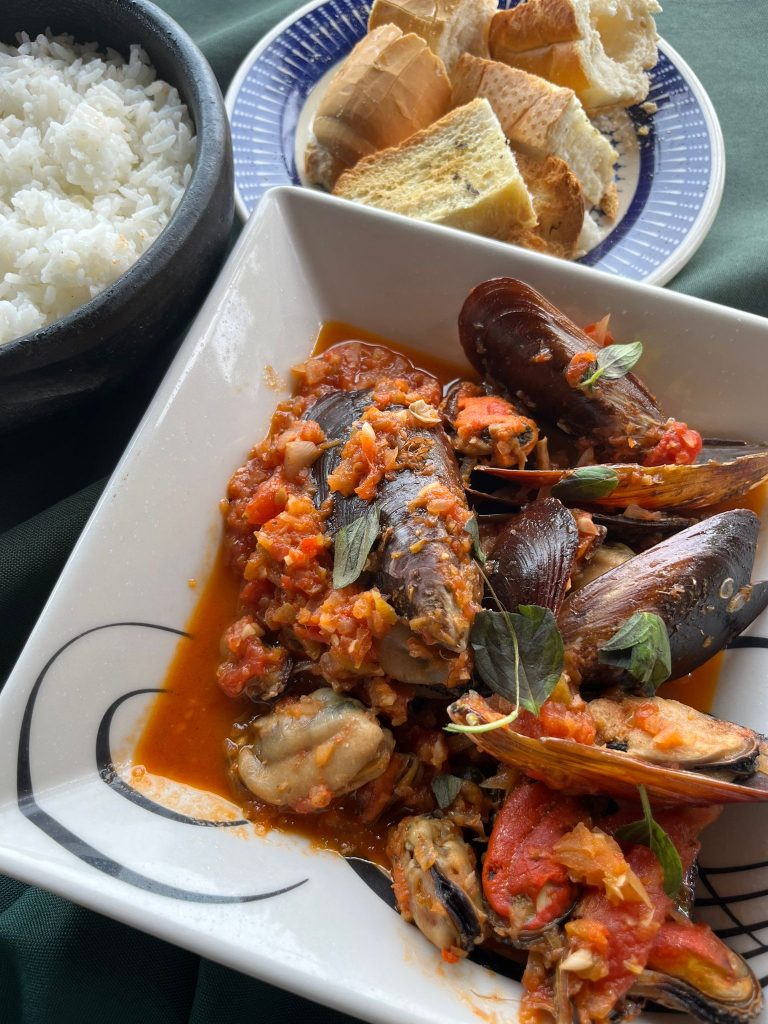
FAQ (Questions and Answers)
Are Guisado de Mexilhão and Mexilhão ao Molho the same recipe?
Yes, the base is exactly the same, but there is a small difference in
consistency and in the method that transforms the simple “sauce” into a true Guisado (stew).
While Mexilhão ao Molho can be quicker and lighter, the Brazilian Guisado follows these golden rules to be authentic:
The 3 differences of the Guisado:
Extended Soffrito: In the guisado, the onion, garlic and pepper must be sautéed until they become nearly a cream. The pepper should not be “felt” under the teeth, but should melt into the flavor.
Less Water, More Tomato: The guisado should not be a watery soup. Many peeled tomatoes (or fresh, skinless ones) are used and simmered slowly until the sauce becomes thick and dark.
Order of Adding the Mussels: Unlike the quick sauce, in the guisado the mussels are added only at the end for a few minutes, so they remain tender but completely coated by this tomato “glaze”.
A little Brazilian chef’s secret:
For a true Guisado de Mexilhão, many add a pinch of colorau (annatto extract) or sweet paprika. This gives that deep brick-red color typical of Brazilian clay pot dishes.
