
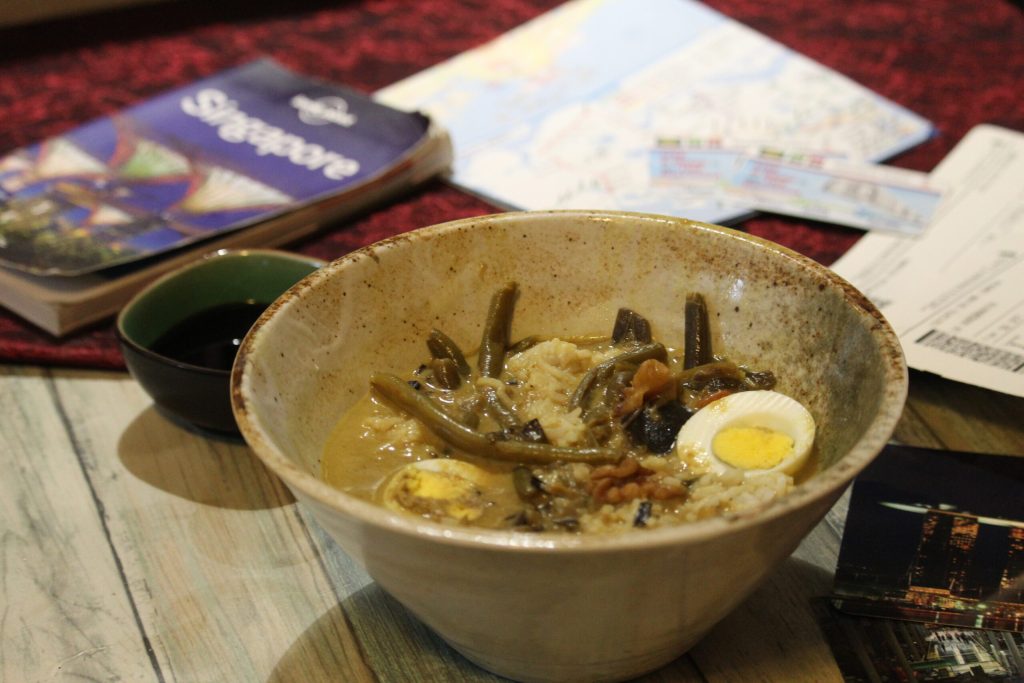
By the term “Lontong” people usually refer to a dish consisting of compressed rice cakes in a coconut-based soup, such as sayur lodeh, containing dried shrimp and vegetables, typical of Singapore.
Additional condiments added during cooking include tempeh and fried tofu, hard-boiled eggs, sambal made with dried squid, spicy toasted grated coconut and fried chicken.
The lontong, understood not as the whole dish but as the single preparation, is commonly called nasi himpit (literally “pressed rice”) in Malaysia; it is rice compacted and cooked in a banana leaf.
Below is the full recipe, with rice cooked in a rice cooker or in a pot instead of in banana leaf, and the sayur lodeh “yellow” because of the turmeric.
If you love the yellow coconut soup of Lontong… then you will also love…
- Difficulty: Medium
- Cost: Economical
- Rest time: 1 Hour
- Cooking time: 40 Minutes
- Portions: 4 Servings
- Cooking methods: Stovetop
- Cuisine: Asian
- Seasonality: All seasons
Lontong Ingredients:
- 2 cups jasmine rice
- 4 cups water
- 2 cups coconut milk (in can)
- 4 cups chicken broth
- 1 eggplant
- 2 large chayote – cut into cubes (optional)
- 7 oz snake beans – yardlong/asparagus beans (or green beans)
- 1 carrot
- 3 leaves bay leaves
- 1 tbsp galangal powder
- 1 tsp turmeric powder
- 1 tsp ground coriander
- 5 candlenuts or macadamia (ground)
- 5 cloves garlic (minced)
- 1 tbsp Sambal Oelek sauce (or 2 cayenne peppers chopped with 2 shallots)
- to taste dried shrimp paste (Udang Kering)
- to taste salt and sugar
- to taste tempeh, tofu and hard-boiled eggs (optional)
Tools
- 1 Rice cooker
Lontong Preparation:
For the rice cake:
Rinse the rice with several changes of water.
Transfer to the inner pot of the rice cooker or to a pot and add the water (rice/water ratio 1:2).
Once the absorption cooking of the rice is finished (about 10 minutes), immediately transfer it to a baking tray and use a rice paddle to spread it out.
Cover with parchment paper and use the palms of your hands to press it down to compact it, then cover with plastic wrap and refrigerate for at least 1 hour before cutting into squares or shaping into balls.
For the sayur lodeh:
Heat the oil in a pot/wok over medium-high heat.
Add the ground spices, Sambal sauce, powdered spices and bay leaves. Cook for about 5 minutes.
Add the chicken broth, and once boiling add the chopped vegetables.
(You can also add tempeh and/or fried tofu)
Once it boils again, reduce to a simmer and cook until the vegetables are fully cooked and tender (about 30 minutes).
Add the coconut milk.
Adjust the amount of salt and sugar as needed.
Cook for another 15 minutes or to your liking to achieve a thicker or thinner soup.
Turn off the heat, transfer to a bowl and serve immediately with the rice cake cut and placed into the soup, and if you like also with halved hard-boiled eggs.
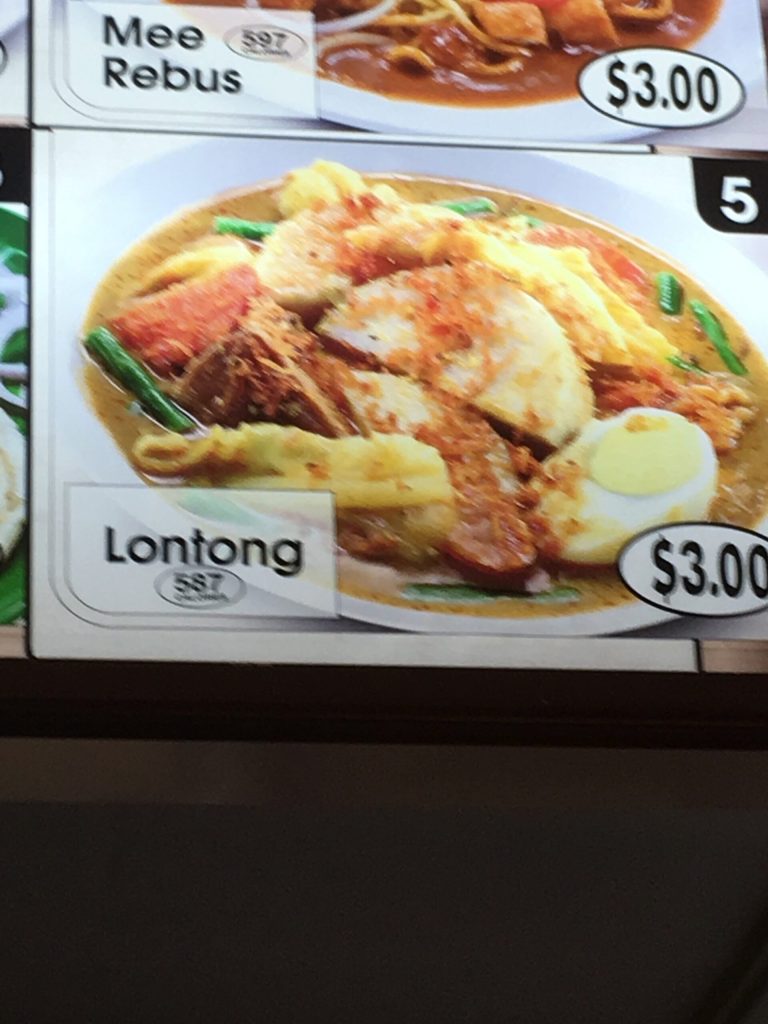
The photo above is the original one taken of the poster to remind us of the randomly chosen dish name during our trip to Singapore, and once back home we discovered what the ingredients were….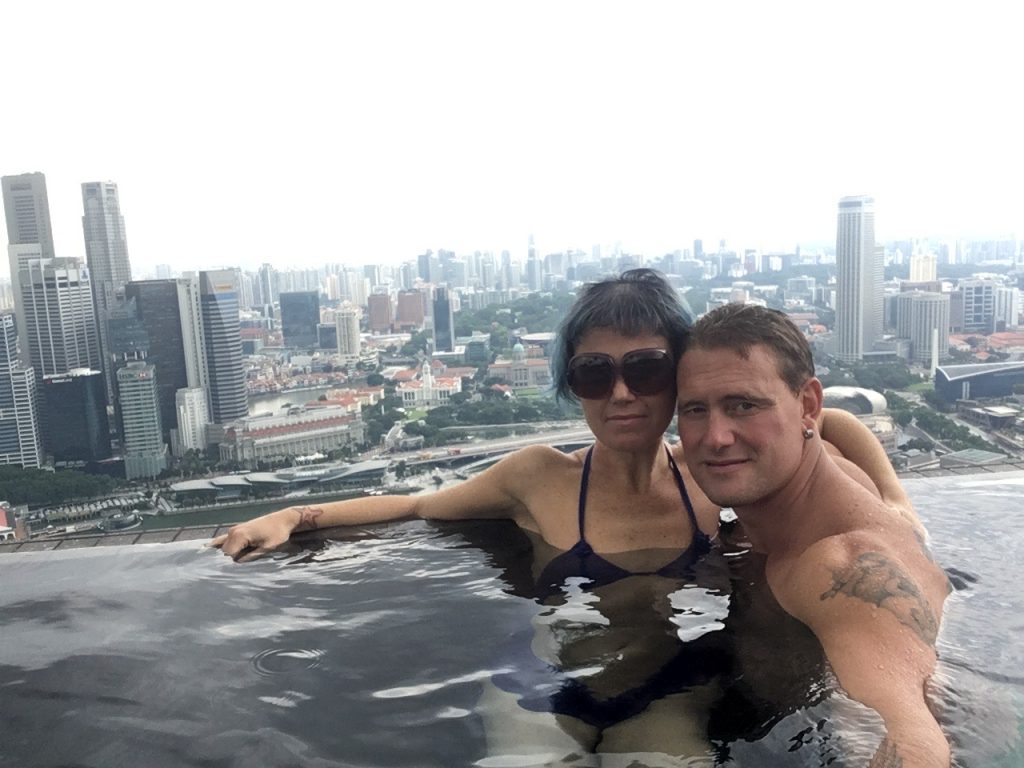
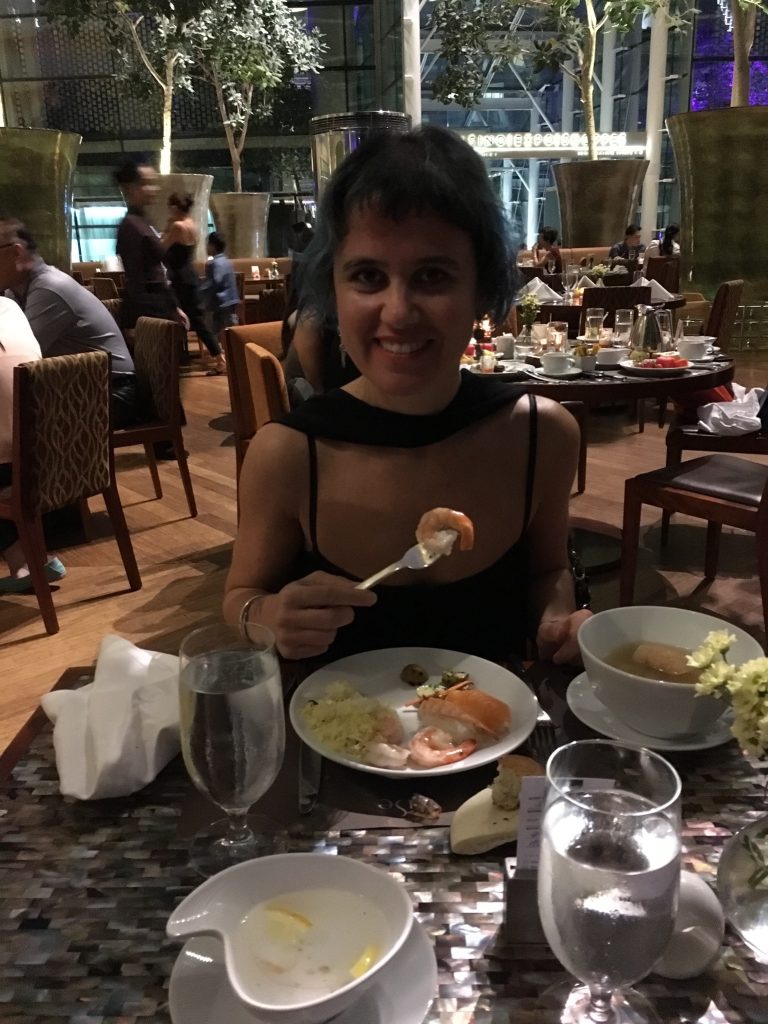
Some photos from the trip to Singapore from November 1 to 4, 2016: Marina Bay Sands Hotel, pool and restaurant.
Our Trip to Singapore November 2016
The Republic of Singapore is a city-state in Southeast Asia, located at the southern tip of the Malay Peninsula.
The Anglo-Dutch Treaty of 1824 granted the British control of the territories of Malacca and Singapore, in exchange the Dutch obtained the British evacuation from Sumatra, Java and adjacent islands.
During the Second World War, in February 1942 the island fell into the hands of the Japanese Imperial Army following a land invasion. British troops were defeated after a 6-day battle.
From November 1944 to May 1945, the Allies conducted bombing on the city of Singapore until the British regained the territory following Japan’s surrender.
In 1963 it joined the Federation of Malaysia under the Malayan Agreement, however the two governments disagreed on many political and economic issues, leading to unrest and the racial riots of 1964.
Singapore became independent as the “Republic of Singapore” (remaining within the Commonwealth) on August 9, 1965.
I was in Singapore in November 2016. An incredible city-state!
Modern, organized, elegant, wealthy and also extremely expensive. I remember that every time we left the super-efficient subway (where you cannot consume food or drinks), it felt like we were in a different place.
Its countless neighborhoods, each with a different style, make Singapore a kaleidoscope of cultures and ethnicities.
We stayed one night at the famous and luxurious Marina Bay Sands, the true symbol of Singapore’s modernity and design.
The well-known boat-shaped hotel whose rooftop pool offers a panoramic view of the entire city: magnificent
We had lunch at the pool bar (excessively expensive!) and dinner at the buffet restaurant, with international specialties though mostly Eastern in style.
It’s an experience worth having.
The hotel is like a city within a city, and although somewhat pricey, by booking in advance through the website you can find many advantageous offers.
We spent the following two nights in the Little India neighborhood, at the small “Wanderlust”, very welcoming and rather quirky.
Right next to the hotel we dined at an Indian restaurant where I tasted chocolate-and-blueberry naan: unforgettable!
Being in Singapore gives you the impression of being in the future, the kind portrayed in the movies…
Everything works impeccably.
Between luxury, history and convenience.
Singaporean cuisine is a blend of influences from the countries that once colonized Singapore and also from neighboring countries.
The only truly local dish I recall is the one tasted by chance, at the bar of the lush and colorful Botanic Garden, where Stefano chose lontong without fully understanding what it was, simply by pointing at the photo…
Many ingredients in the recipe are unknown and hard to find. Try online:
What is the difference between Singaporean and Indonesian lontong?
Indonesian lontong (Sayur, meaning vegetable) and the one from Singapore (Sayur Lodeh) are very similar, sharing the same fundamental base, but they can present variations in condiments and presentation due to local cultural influences.
They are basically the same product in both Indonesia and Singapore, but the main differences lie in the way it is served and in some regional nuances of the complete dish.
Common Base: Both use lontong as the main ingredient: pressed rice cooked inside banana leaves, which gives a characteristic aroma.
Lontong Sayur vs Sayur Lodeh (the differences)
Indonesia: Lontong sayur (lontong with vegetables) is very popular, often served with a spicy coconut soup, chayote, tofu and hard-boiled eggs. There are regional variants, such as lontong kikil (beef trotters soup).
Singapore/Malaysia: Here the term almost always refers to Sayur Lodeh. It is a Malay-origin dish consisting of the rice cake immersed in a milder, yellowish coconut-vegetable curry (thanks to turmeric), usually accompanied by serundeng (spiced toasted grated coconut), hard-boiled egg and sometimes a piece of fried chicken or squid sambal.
Use of Nasi Himpit: In Singapore and Malaysia, the term nasi himpit (pressed rice without banana leaf) is sometimes used interchangeably with lontong, although traditionally lontong is wrapped in banana leaf.
In short: if you ask for a “lontong” in Singapore, you will almost always receive a bowl of compressed rice in a vegetable soup.
In Indonesia, “lontong” is just the rice, and you must specify what you want it accompanied with (e.g. Lontong Cap Go Meh, Lontong Sayur, Lontong Balap)What is the difference between Singaporean and Malaysian lontong?
In Malaysia, the situation is very similar to Singapore, but with a small linguistic “nuance” and some interesting regional variants.
Here’s how lontong works in Malaysia:
1. Lontong vs Nasi Impit
While in Indonesia the term lontong is used almost exclusively for the cylinder of rice in banana leaf, in Malaysia you will often hear Nasi Impit.
Nasi Impit: It is pressed rice (literally “pressed rice”), but it is often cooked in plastic bags or pressed into rectangular shapes rather than banana leaves. The end result is the same (firm rice cubes), but traditional lontong has that slight banana-leaf aroma that modern nasi impit does not.
2. The typical dish: Lontong with Kuah Lodeh
In Malaysia, if you order “lontong” for breakfast, you will receive rice cubes immersed in a soup called Kuah Lodeh (or Sayur Lodeh).
Composition: It’s a yellow coconut-milk soup with vegetables like cabbage, green beans, carrots and tofu.
The Malaysian “extras”: Often served with Sambal Sotong (spicy squid), a hard-boiled egg and Serunding (spiced toasted grated coconut).
3. Regional variants
Lontong Johor: In southern Malaysia (near Singapore), lontong is an institution. It is very rich and is often accompanied by a peanut sauce (Kuah Kacang) poured over the coconut soup.
Lontong Goreng: This is a specialty more common in Malaysia and Singapore than in Indonesia. Instead of being served in soup, rice cubes are stir-fried with vegetables, eggs and spicy sauce, almost like Mie Goreng but made with compressed rice.
In summary, the Malaysian lontong is the “twin” of the Singaporean one: both focus on the creamy coconut-soup version (Sayur Lodeh), while Indonesia offers a much wider and spicier variety of broths.
