
The Sarapatel de Cordeiro (lamb) represents the closest link between aristocratic Portuguese cuisine and the Brazilian colonial adaptation.
While the pork version became the “popular” mass version, the lamb one retains an aura of rural nobility.
In Portugal, sarapatel originates in the inland regions of the Alentejo. There, lamb (or young goat) was the quintessential grazing animal.
Shepherds and Portuguese settlers brought to Brazil the technique of cooking internal organs (cozido), which ensured nothing of the slaughtered animal went to waste. The blood was collected and cooked immediately to thicken the sauce, a typically medieval European technique.
An intriguing historical detail is the use of spices. The Portuguese, masters of routes to the East, introduced into Brazilian sarapatel cumin, black pepper and cloves.
At the time, these ingredients were expensive and served not only to mask the strong flavor of the lamb offal, but as a social status symbol at the tables of Bahia’s large landowners.
On the big colonial fazendas, lamb sarapatel was considered a Sunday or religious-feast dish. Unlike the pork version (fattier and connected to leftover cuts), lamb was perceived as a more refined meat.
In the kitchens of the master’s houses (Casa-Grande), African cooks added the final touch: malagueta chili and fresh cilantro, transforming a heavy European stew into a vibrant dish suited to the tropical climate.
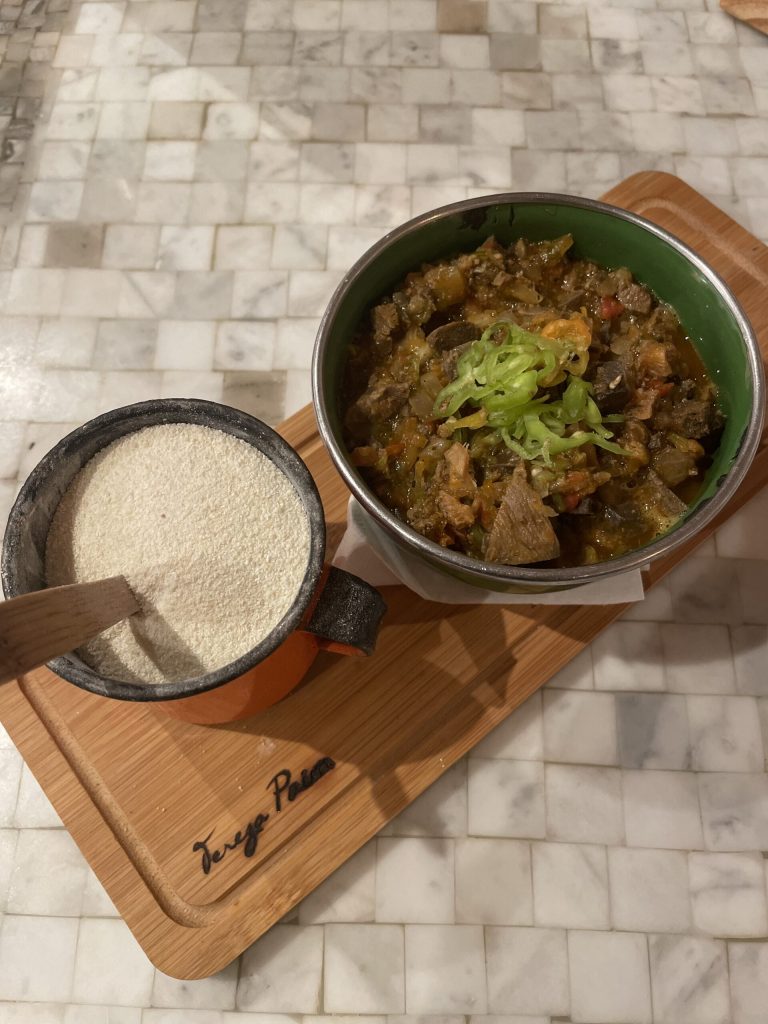
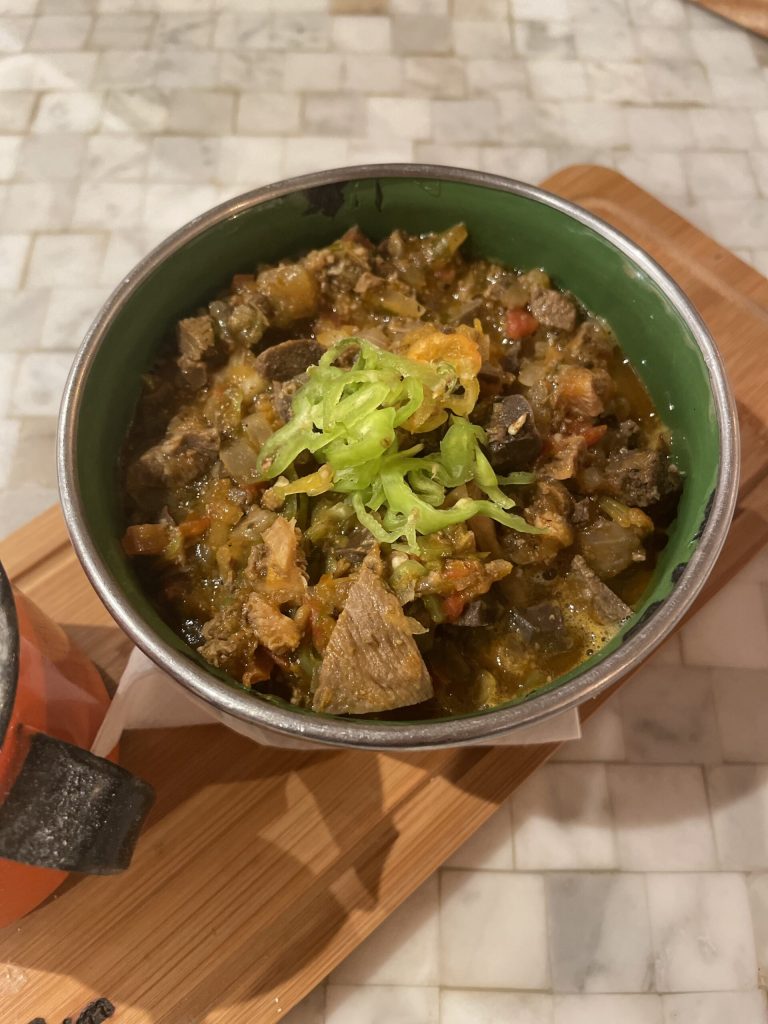
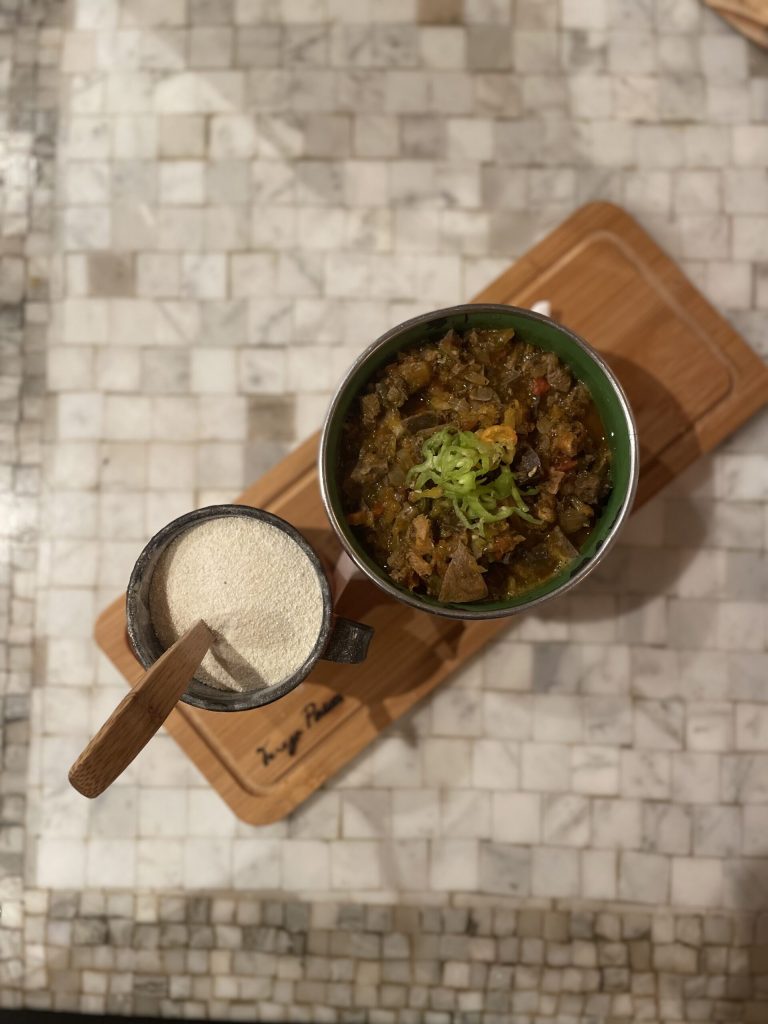
Today, finding a true Sarapatel de Cordeiro like the one at Casa de Tereza (in the photo) during our trip to Salvador in March 2026 means tasting the version most faithful to the 18th-century tradition.
It is a dish that resisted food industrialization, remaining tied to the skill of manual preparation (the millimetric cutting of the meats),
- Difficulty: Medium
- Cost: Inexpensive
- Rest time: 30 Minutes
- Preparation time: 15 Minutes
- Cooking time: 1 Hour 30 Minutes
- Portions: 4 People
- Cooking methods: Stovetop
- Cuisine: Brazilian
- Seasonality: All seasons
Ingredients
- 3.3 lbs lamb offal (liver, heart, lungs, kidneys)
- 2 1/8 cups lamb blood (already coagulated and cooked)
- 3 lemons
- 4 cloves garlic
- to taste salt and pepper
- 1 teaspoon ground cumin
- 1/2 teaspoon ground cloves
- 2 leaves bay leaves
- to taste Malagueta chili
- 3 tablespoons lard (or seed oil)
- 2 onions
- 3 tomatoes
- 1 green chilies
- to taste cilantro
- 1 fresh scallion
Steps
Cleaning (Essential): Cut all the offal into very small cubes (about 3/8 inch). Rinse them repeatedly with water and lemon juice. Blanche the meat in boiling water for 10 minutes, drain and rinse again. This removes the overly strong gamey flavor.
Marinating: Let the meat cubes rest for at least 30 minutes with garlic, salt, pepper and a little cumin.
The Sofrito: In a large pot (preferably terracotta, as per colonial tradition), heat the fat and sauté the onion until golden. Add the tomatoes, the green pepper and the spices (bay leaves, cumin, cloves).
Slow Cooking: Add the offal to the sofrito and let them absorb the flavors. Cover with hot water and simmer slowly for about 1 1/2 hours. The meat should become very tender and the sauce should begin to reduce.
Final Touch: Add the coagulated blood cut into small cubes (or crumbled) and cook for another 20 minutes. The blood will give the dish its characteristic dark color and thick texture.
Finishing: Turn off the heat and add plenty of chopped cilantro and fresh scallion.Serve the Sarapatel piping hot, accompanied by cassava flour (farofa) (which soaks up the sauce) and white rice. A side of malagueta chili sauce is mandatory.
FAQ (Questions & Answers)
What is the difference between haggis and sarapatel de cordeiro?
The Sarapatel and Haggis share the same rural philosophy: “nothing of the lamb is wasted.”
Here are the main differences you might present on your blog for an international audience:
1. Cooking Technique
Haggis (Scotland): It is a sausage. The offal is minced and mixed with kidney fat and oatmeal, stuffed into the animal’s stomach and boiled. The result is a dry, granular and compact texture.
Sarapatel (Brazil/Portugal): It is a wet stew. The meat is cut into tiny cubes and slowly cooked in a broth enriched with the animal’s blood. The texture is thick and velvety, almost like a reduced soup.
2. The “Binding” Element
Haggis: Uses oatmeal, a grain suited to the cold climates of Northern Europe that absorbs the meat juices.
Sarapatel: Uses coagulated blood and cassava flour (served on the side or on top), an ingredient the Portuguese colonists adopted from indigenous Brazilians to replace European cereals [1, 2].
3. Flavor Profile (The Colonial Touch)
Haggis: The seasoning profile is dominated by black pepper and nutmeg. It is a “warming” dish for the Highlands.
Sarapatel: An explosion of spices from colonial trade: cumin, cloves, bay leaves and the unmistakable tropical touch of fresh cilantro and malagueta chili. It’s a spicy, aromatic dish designed for the warm climate of Bahia [2].
4. How It’s Served
While haggis is traditionally served with mashed swede and potatoes (neeps and tatties), sarapatel is served with white rice and farofa, staples of the colonial Brazilian table.
