
Sautéed agretti: the trick to preventing them from becoming limp and watery
The main problem when cooking agretti (or monk’s beard) is their texture: being filamentous and delicate, one minute too many or too much residual water is enough to turn them into an undefined, mushy mass.
Many people make the mistake of boiling them for a long time before tossing them in the pan, thus losing not only their typical “iron-like” and slightly tangy note but also all their precious nutritional properties.
To solve this annoyance and bring a lively, crunchy side dish to the table, the direct pan-sautéing technique is the definitive solution.
In this recipe I’ll show you how to manage the cooking in just 5 minutes, using extra virgin olive oil as the heat conductor to seal in the flavor.
The addition of Taggiasca olives and fresh chili creates that salty and spicy contrast that enhances the vegetable’s natural sweetness. By following these small tips, your agretti will remain a bright green and have that “al dente” texture that makes them irresistible.
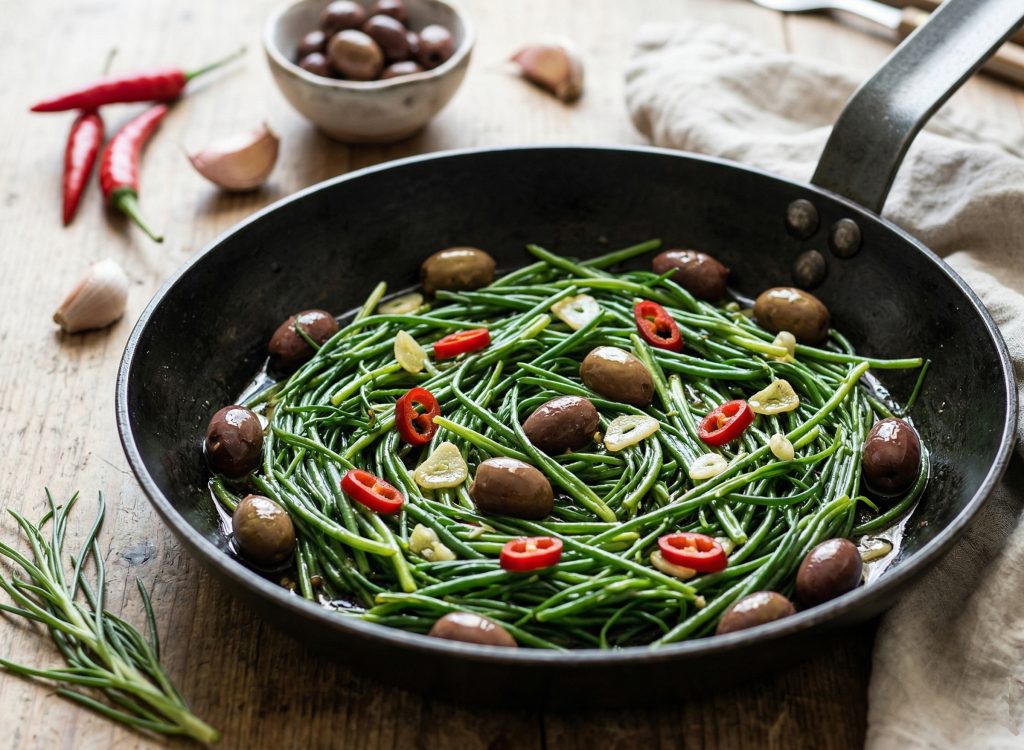
- Difficulty: Very easy
- Cost: Very inexpensive
- Preparation time: 15 Minutes
- Cooking time: 5 Minutes
- Portions: 4
- Cooking methods: Stove
- Cuisine: Italian
Ingredients — Agretti in a pan
- 14 oz agretti (monk's beard) (already cleaned of the roots)
- 1 clove garlic
- 2 oz Taggiasca olives (pitted)
- 1 fresh chili pepper
- to taste extra virgin olive oil
- to taste fine salt
Tools
- Pan
How to cook monk’s beard: quick recipe with olives and chili
In a large pan (preferably cast iron or stainless steel to distribute the heat well), heat a generous swirl of olive oil. Add the whole garlic clove (which you can remove afterwards) and the chopped fresh chili. Let them sauté for a few seconds until the garlic turns golden and releases its aroma.
When the pan is properly hot, add the agretti. It is essential that they are very dry! Salt immediately and toss them over medium heat for about 3–4 minutes. Do not cover with a lid: we want the moisture to evaporate quickly to keep the vegetable firm. Stir occasionally with tongs.
Add the Taggiasca olives and continue cooking for just one more minute. This time is enough for the olives to release their savory note and blend perfectly with the agretti without overcooking them.
Remove the garlic and serve the agretti immediately, piping hot, so they retain their brightness and springy texture.
Notes on ingredients and substitutions
The Agretti: Choose them with straight stems and an intense green color. If you can’t find them, the same technique can be applied to wild asparagus.
The Olives: Taggiasca olives are ideal for their sweetness and aroma, but you can substitute with Bari or Greek black olives if you prefer a stronger flavor.
The Chili: If you don’t like heat, replace it with grated lemon zest at the end of cooking to keep a fresh note.
Storage
Pan-fried agretti keep in an airtight container in the refrigerator for 1–2 days. I recommend quickly reheating them in a pan with a splash of oil to revive them; avoid the microwave, which would make them soft.
Recipe variations
Agretti and anchovies: Melt two anchovy fillets into the initial sauté for an extra savory boost.
Crispy version: Add toasted pine nuts or sliced almonds together with the olives.
Tea’s tips
The secret trick for a restaurant-quality result? After washing the agretti, dry them perfectly with a salad spinner or a kitchen towel. If they go into the pan wet, they’ll start to boil instead of sautéing, quickly turning dark and soft. Remember: the less time they spend on the heat, the better they will be!
FAQ (Questions & Answers)
Do I need to blanch agretti before putting them in the pan?
Absolutely not! If they are young and tender, direct pan cooking is preferable because it preserves their “mineral” flavor and crunchiness. Blanching them risks making them watery.
How do you properly clean agretti?
Cut off the reddish end (the root) and wash them repeatedly in cold water to remove all traces of soil, as they grow in sandy ground.
Can I use garlic powder?
In a pinch, yes, but a whole fresh garlic clove in the initial sauté gives a much more elegant and less persistent aroma, ideal so as not to overpower the delicate taste of monk’s beard.
