
Definitive guide to a balanced gourmet salad: the science of the dressing, ingredient order and chef secrets
Why your salad is boring (and how to fix it)
Let’s admit it: for many people a salad is either a post-binge punishment or a pile of unseasoned leaves we stare at resignedly. If your salad tastes like “bowl of sadness”, the problem isn’t the lettuce. The problem is the mechanics.
Building the perfect salad is an exercise in gastronomic architecture. It’s not just about putting vegetables together, but about balancing flavors, textures and, above all, managing the dressing correctly.
Many make trivial mistakes that ruin the final result, like leaving leaves wet or pouring oil by eye.
To solve these annoyances and turn a mediocre side into a dish you’ll want to photograph (and devour), I prepared this guide.
I will reveal the 3 cardinal mistakes to avoid and give you the magic formula for the perfect dressing. Finally, I’ll propose a balanced “gourmet” recipe, “The Rebirth Bowl”, which plays with contrasts for an unforgettable tasting experience.
Let’s get ready to give new life to your salad!
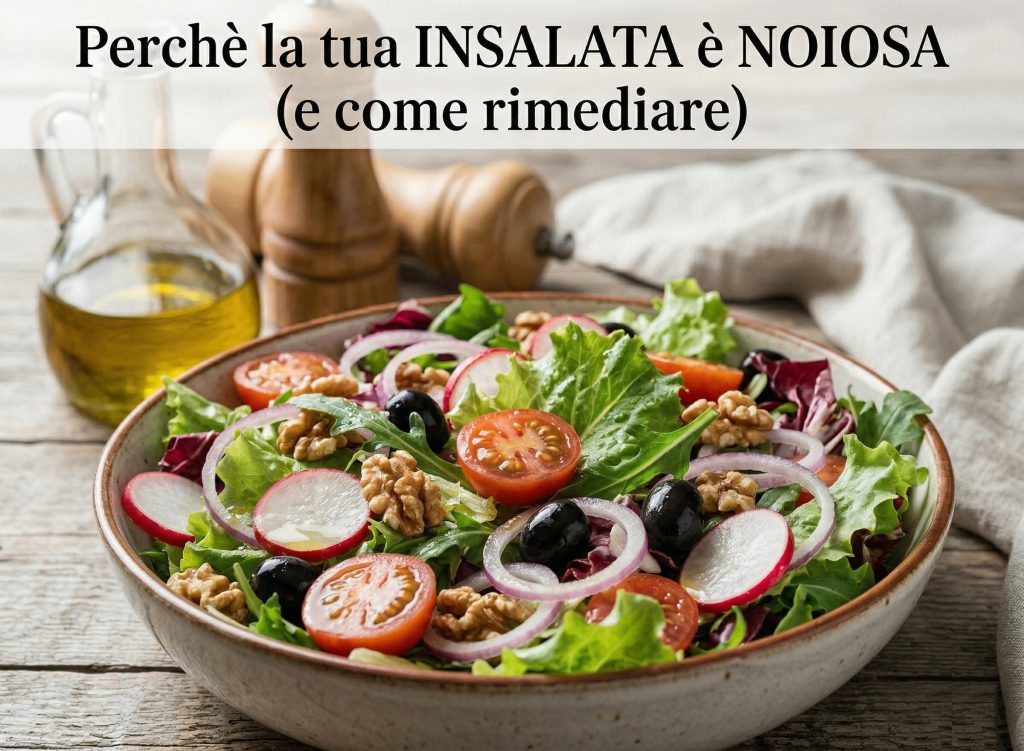
- Difficulty: Very easy
- Cost: Budget-friendly
- Preparation time: 15 Minutes
- Portions: 2
- Cooking methods: No-cook
- Cuisine: Italian
Ingredients (The Rebirth Bowl)
- 5 cups mixed salad greens (mix of fresh baby spinach and arugula for a bitter/sweet base)
- 2/3 cup cooked chickpeas (or spiced chicken strips)
- 1 orange
- Half green apple
- to taste pecan nuts (a handful, or sliced almonds)
- to taste Grana Padano shavings (or Sardinian Pecorino)
- 3 tbsp extra virgin olive oil
- 1 tbsp white balsamic vinegar (white or apple cider vinegar / lime juice)
- 1/2 tsp honey (or maple/agave syrup)
- 1 pinch salt (Maldon flakes recommended)
- to taste black peppercorns (freshly ground)
Tools
- Salad spinner
- Peeler
- Bowl
Definitive Guide to a Balanced Gourmet Salad
The Cardinal Mistake: Moisture. Wash the greens well. The number one enemy is residual washing water. If the leaves are wet, the oil will slide off and end up in the bottom of the bowl. Result? Flavorless leaves and a useless puddle of dressing. The fix: Use a salad spinner and, if necessary, pat dry with a clean cloth. The dressing must “cling” to a dry, turgid leaf.
Peel the orange “suprema” style (removing the bitter white pith) and segment it. Cut half the green apple into matchsticks (leave the skin on for color and fiber). Roughly break the pecans or lightly toast the sliced almonds in a dry nonstick pan (be careful not to burn them). Prepare the cheese shavings. If you use roasted chickpeas, prepare them in advance (e.g. in an air fryer).
The Science of the Dressing (3:1). Forget pouring oil by eye. In a glass jar (or a small bowl with a whisk), combine EVOO (3 parts), white balsamic vinegar (1 part), a pinch of salt and 1/2 teaspoon of honey (the emulsifier). Close the jar and shake vigorously until you get a silky, velvety, well-bound cream. This step creates an emulsion that coats the palate instead of a greasy separation.
Order matters. In a large bowl (not small, you need room to toss!), add the well-dried leaves. Add the heavier ingredients (chickpeas/chicken, apple, orange) last so they don’t crush the leaves. The final touch: Dress the salad only 30 seconds before serving. Pour the emulsion and mix strictly with clean hands or with two large spoons to distribute the dressing evenly on every single leaf. Add the nuts/almonds and the cheese shavings.
Ingredient Notes and Substitutions
The Base: The spinach/arugula mix offers a great balance between sweetness and peppery bite. You can substitute with romaine or iceberg for more crunch, or add radicchio for bitterness. The important thing is that the leaves are fresh and turgid.
The Protein: Roasted chickpeas (air fryer or oven) add a vegetable “crunch factor.” Spiced chicken is a great meaty alternative. You can also use hard-boiled eggs, quality canned tuna in oil, or crumbled feta.
The Dressing: The 3:1 formula (fat:acid) is the golden rule. The emulsifier (honey, or mustard for a bolder taste) is essential to bind the two parts. Use apple cider vinegar or lime/lemon juice if you prefer a different acidity.
Storage
Dressed salad should be eaten immediately, because the leaves wilt quickly on contact with acid and salt. However, you can prepare all the components in advance (wash the leaves, cut the fruit, toast the nuts) and the emulsion, storing them separately in airtight containers in the refrigerator. Combine and dress only at serving time.
Recipe Variations
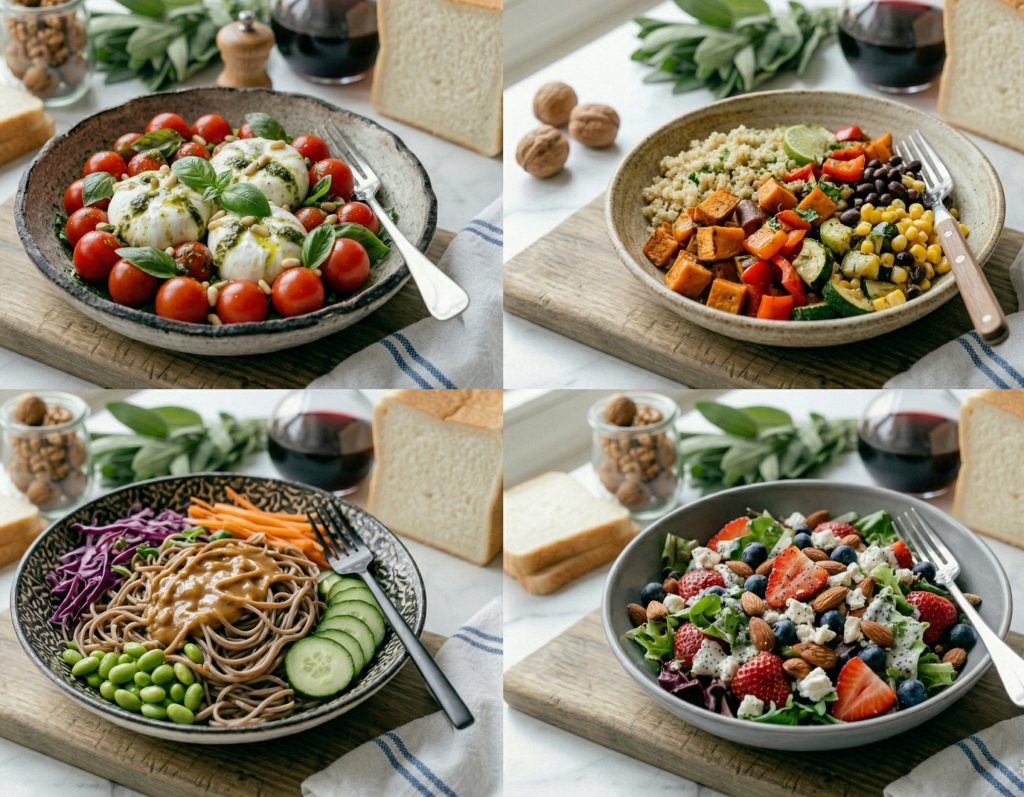
Mediterranean Salad: Romaine base, add cherry tomatoes, cucumber, black olives, thinly sliced red onion and crumbled feta. Dressing with EVOO, lemon juice and dried oregano.
Autumn Salad: Baby spinach base, add roasted sweet potato cubes, pomegranate arils, toasted walnuts and goat cheese. Dressing with EVOO, apple cider vinegar and mustard.
Asian Salad: Thinly sliced cabbage base and julienned carrots, add edamame, toasted peanuts and fresh cilantro. Dressing with toasted sesame oil, soy sauce, lime juice and grated ginger.
Tea’s Tips
A boring salad is monochrome and soft. A perfect salad plays with the senses using the Rule of Contrasts: Crunch (nuts, seeds, chickpeas), Softness (feta, avocado, roasted sweet potato), and Surprise (pomegranate arils, green apple, blueberries). For an expert touch, add a grind of fresh black pepper and a pinch of flaked salt (Maldon) over the cheese for an immediate flavor explosion. And don’t forget: the bowl must be large!
FAQ (Questions & Answers)
Why does my salad become limp right after I dress it?
The acid in the dressing (vinegar or citrus juice) and the salt begin to “cook” the leaves, breaking down their cell structure. That’s why it’s essential to dress the salad only a few seconds before serving and consume it immediately.
Can I use dark balsamic instead of white?
Yes, but keep in mind it will darken the color of the leaves and the flavor will be more intense and sweet. White balsamic is preferred to preserve the vibrant look of the salad. You can also use apple cider vinegar or lime/lemon juice.
How can I make the salad more filling as a main course?
Add a more substantial protein (chicken, tuna, hard-boiled eggs, tofu), a complex carbohydrate (roasted sweet potato cubes, quinoa, brown rice) and healthy fats (avocado, nuts, seeds). Make sure the proportions are balanced for a complete meal.
