
Vegetarian asparagus carbonara: the creamy, flavorful spring recipe
Asparagus carbonara is the most loved vegetarian variation of the classic Roman dish, but let’s be honest: the risk of turning an iconic plate into a sad pasta-with-omelet or, worse, a mass of fibrous stalks is very high.
The main challenge for anyone making this recipe is managing temperatures: the egg must become a velvety, viscous coating and not a solid curd, while the asparagus must release all their flavor without turning woody.
To serve a creamy asparagus carbonara, the trick is to infuse the asparagus flavor directly into the cooking water. In this recipe I’ll show you how to use the stalks to create a cooking base in which we’ll cook the tortiglioni.
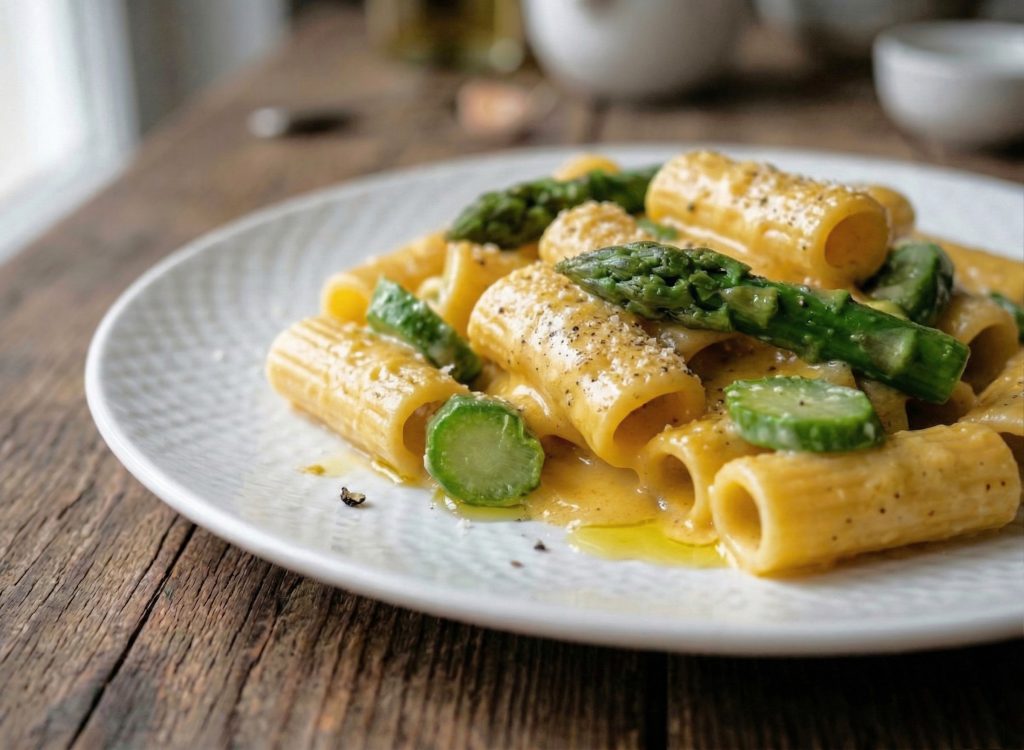
You will obtain a velvety, thick cream of yolks and Pecorino able to coat the pasta and transform simple ingredients into a masterpiece.
Creamy asparagus carbonara: the perfect vegetarian recipe without cream
- CARBONARA with pasteurized EGGS
- Creamy asparagus risotto: the perfect and easy recipe
- Pasta Primavera with asparagus, snow peas and peas: the perfect green mix
- Tall, fluffy asparagus frittata: grandma's recipe
- Puff pastry baskets with asparagus and bacon: the trick for a crisp base that doesn't get soggy
- Difficulty: Easy
- Cost: Budget-friendly
- Preparation time: 20 Minutes
- Cooking time: 15 Minutes
- Portions: 4
- Cooking methods: Stovetop
- Cuisine: Italian
Ingredients for Asparagus Carbonara
- 11 oz tortiglioni (or short ridged pasta)
- 1.1 lb asparagus (fresh)
- 5 egg yolks
- 3.5 oz Pecorino Romano (grated)
- to taste extra virgin olive oil
- 1 pinch black pepper (freshly ground)
- to taste fine salt
Tools
- Pasta pot
- Frying pan
- Bowl
How to make asparagus carbonara: tricks to prevent the egg from coagulating and keep tips firm
Wash and trim the asparagus. To remove the woody part without waste, apply light pressure with your finger on the stem until it naturally snaps. Grandma’s tip: don’t throw away the trimmings! Put them in the pot with the pasta water and bring to a boil; this very fragrant infusion will give the pasta an incredible flavor.
Cut the tender stalks into slices about 3/8 inch thick, keeping the tips whole and long. In a large pan, heat a drizzle of extra virgin olive oil and add the asparagus. Season with salt and pepper and let them release their flavor. Add a ladle of the trimmings’ cooking water and cook over medium heat for 5 minutes: the tips should remain turgid and not fall apart.
While the tortiglioni cook in the flavored water (after you remove the woody trimmings), prepare the sauce. In a bowl, combine the yolks, a ladle of warm cooking water and the Pecorino. Whisk well until you obtain a dense, viscous cream free of lumps.
Drain the tortiglioni al dente and transfer them directly to the pan with the asparagus. Toss briefly to let them absorb the flavors. Now the crucial step: remove the pan from the heat. Wait a few seconds, then add the yolk cream. Stir quickly to create a velvety emulsion using the residual heat of the pasta.
Ingredient notes and substitutions
The yolks: Use them at room temperature to avoid a severe thermal shock when you add them to the hot pasta.
The Pecorino: If you prefer a milder flavor, use half Pecorino and half Parmigiano Reggiano.
The asparagus: Choose ones with tightly closed tips, a sign of freshness and turgidity.
Storage
Asparagus carbonara should be eaten immediately. If stored, the egg loses its velvety viscosity and the pasta tends to become gummy. Reheating is not recommended.
Recipe variations
Gourmet: Add a bit of lemon zest at the end for a fresh citrus note.
Smoky: If you are not vegetarian, you can add crispy pancetta to evoke the original recipe.
Tea’s tips
My foolproof tip for a perfect cream? Never add the egg while the pan is on the heat, or you’ll end up with an omelet. If the cream seems too thick, add another splash of cooking water: the starch will help make it glossy. Serve with a generous shower of coarsely ground black pepper: the color contrast with the emerald green asparagus is beautiful.
FAQ (Questions and Answers)
Can I use whole eggs?
I recommend using only the yolks to achieve the dense, velvety texture typical of a true carbonara. The whites tend to coagulate at lower temperatures, making the dish less creamy.
Why is the trimmings’ water important?
Because the pasta, cooking in that water, absorbs the asparagus aroma deep into the center of each piece. It’s a small step that completely changes the dish’s depth.
Can I use white asparagus?
Certainly, but they have a more bitter and delicate flavor. In that case, I recommend using Parmigiano instead of Pecorino so as not to overpower the taste.
