
Pasta with asparagus and spring produce: a creamy, crunchy, vegetable-rich recipe
Waking up to sunlight warming the kitchen immediately makes you crave light dishes, but let’s admit it: often the risk is serving a rather disjointed pasta where the vegetables slip off the pasta and stay at the bottom of the plate.
If you’re not careful with cooking times, you may end up with hard little peas and overcooked asparagus, losing that bright green that instantly signals celebration.
To solve this problem without using cream or extra fats, I thought of a little trick: blend the onion to create a naturally velvety base that embraces every ingredient.
In just 20 minutes you can turn an ordinary Tuesday into a special moment, bringing the scent of the garden to the table with the simplicity that only things made with love can give. Let’s make it together!
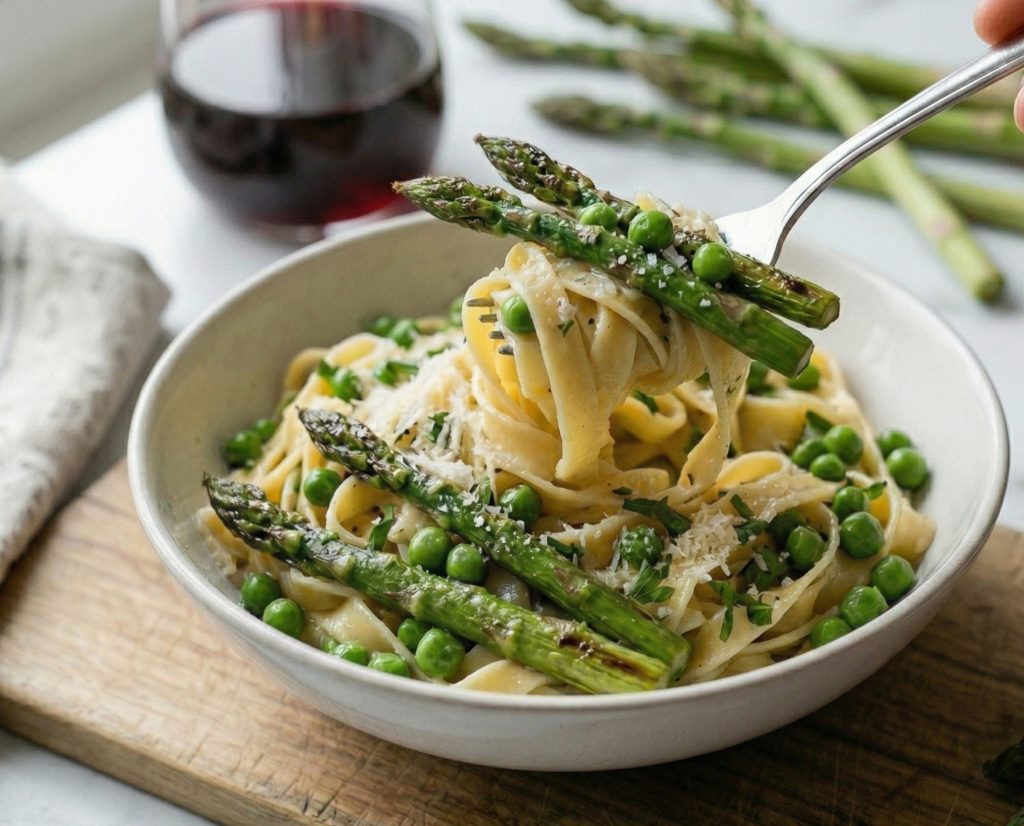
- Difficulty: Very easy
- Cost: Medium
- Preparation time: 10 Minutes
- Cooking time: 20 Minutes
- Portions: 4
- Cooking methods: Stovetop
- Cuisine: Italian
Ingredients — Pasta Primavera with asparagus, snow peas and little peas
- 11 oz pasta (tagliatelle or fusilli recommended to catch the sauce)
- 1.1 lb asparagus
- 5.3 oz snow peas (about 1 1/4 cups sliced)
- 3.5 oz little peas (fresh or frozen, about 2/3 cup)
- 1 white onion
- 3 tbsp extra virgin olive oil
- A few sprigs marjoram
- to taste salt
- 1 pinch black pepper
- as needed water (for cooking the pasta)
Tools
- Cutting board
- Knife
- Frying pan
- Pasta pan
Spring first course: how to cook asparagus, snow peas and peas together
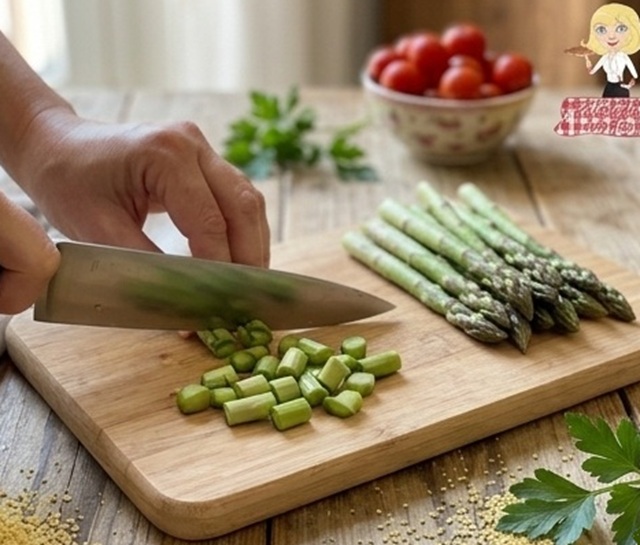
Clean the asparagus by trimming the woody ends; separate the tips and cut the stalks into pieces. Trim the snow peas and cut them on the diagonal into pieces about 3/4 in long. Shell the little peas if they are fresh. Blend the white onion until creamy.
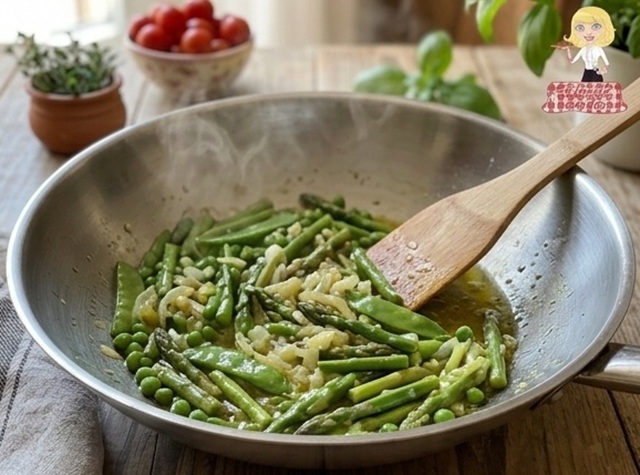
In a large skillet, sauté the onion cream with the olive oil for one minute. Add the chopped asparagus stalks, the cut snow peas and the marjoram. Cover with water, put the lid on and let simmer over medium heat for about 10 minutes. The snow peas and stalks will start to soften and create the base of the sauce.
When the base is nearly ready, add the little peas and the asparagus tips set aside earlier. Continue cooking for another 5 minutes without the lid: the peas should remain bright and the tips tender but still firm. If necessary, mash a few asparagus stalks with a fork to increase creaminess.
Cook the pasta in salted water and drain it very al dente. Transfer it to the skillet with the vegetable mix, adding one ladle of the pasta cooking water. Toss over high heat for one minute, until the starch creates a silky sauce that binds the asparagus, snow peas and little peas.
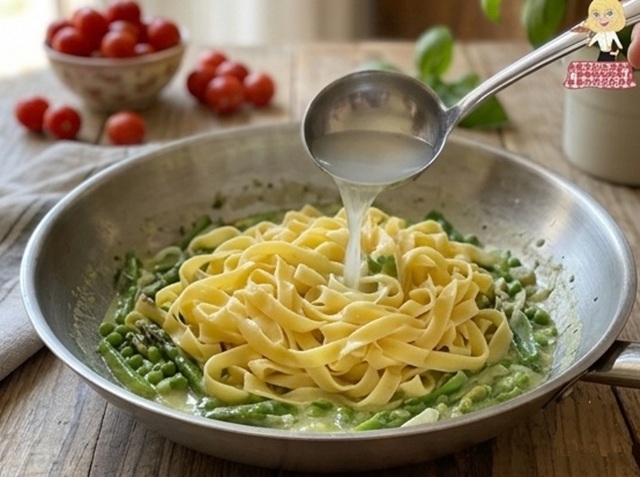
Finish with a drizzle of raw olive oil and freshly ground black pepper.
Notes on ingredients and substitutions
Snow peas: Choose firm pods without strings; if they are very long, cut them into three pieces.
Little peas: If you use fresh peas the flavor will be sweeter; frozen peas are a great quick alternative.
Herbs: If you don’t like marjoram, fresh mint will give an incredible freshness to the peas.
Storage
Pasta Primavera is a dish that is best served right after tossing. However, if you have leftovers, you can store them in the refrigerator in an airtight container for a maximum of 1 day. To reheat, I recommend warming it in a skillet adding a splash of hot water or a drizzle of oil to revive the creaminess of the sauce, avoiding the microwave which tends to dry out the vegetables.
Recipe variations
With cured meats: If you don’t want a vegetarian dish, you can enrich the sauce by adding strips of speck or crispy pancetta, adding them to the pan together with the asparagus tips.
Citrus touch: For an extra burst of freshness, grate the zest of an organic lemon directly over the finished plate; the acidity wonderfully enhances the sweetness of the peas.
Crunchy note: Add a handful of toasted pine nuts or flaked almonds before serving to give a crunchy contrast that pairs beautifully with the softness of the onion cream.
White variant: You can add sautéed zucchini cubes to make the mix of “greens” even richer and more varied.
Tea’s Tips
To keep the vegetables’ bright green color, don’t overcook them after adding the little peas. If you want extra color, you can add sliced zucchini flowers in the last 30 seconds of tossing.
FAQ (Questions & Answers)
Can I prepare the sauce in advance?
Yes, but add the little peas and the asparagus tips only when heating it for the pasta, so they won’t lose their color.
Do the snow peas remain tough?
No, cutting them on the diagonal and stewing them together with the asparagus stalks for the first 10 minutes will make them tender while keeping a pleasant bite.
Which pasta shape should I choose?
Fresh tagliatelle are excellent, but fusilli or shells are perfect for “catching” the little peas inside the shape.
