
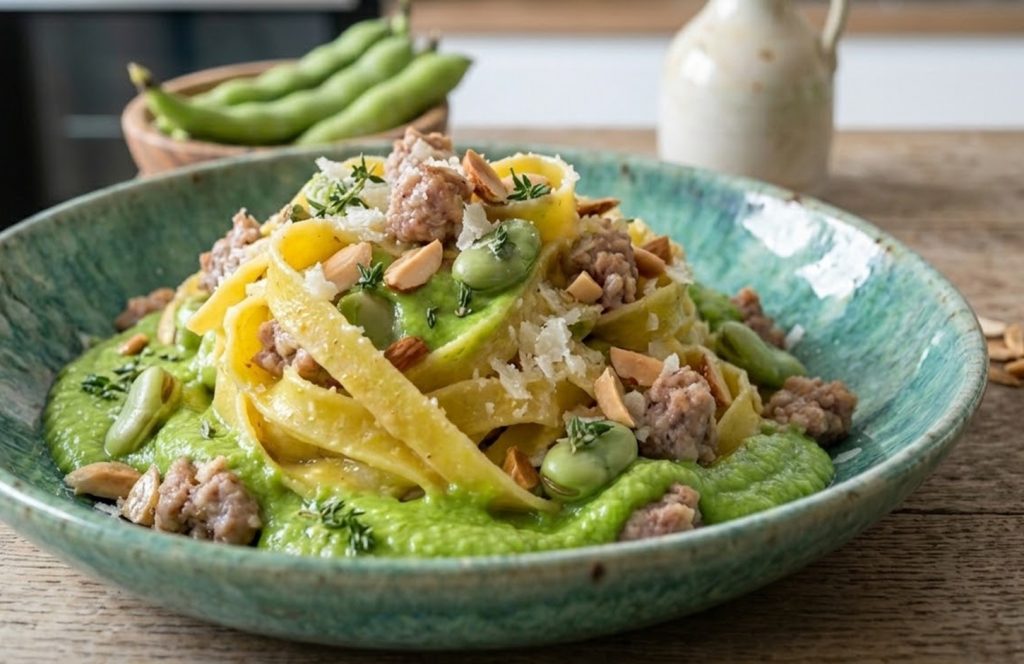
Egg tagliatelle with a fresh fava bean cream, crumbled browned sausage and toasted almonds
How to avoid a bitter taste in the fava beans and get a velvety texture for your spring lunch
How to avoid a bitter taste in the fava beans and get a velvety texture for your spring lunch
Have you ever bought a nice bag of fresh fava beans dreaming of a creamy dish, only to end up with a grainy pasta and, let’s admit it, a bitter aftertaste that ruins everything?
It’s a classic. Often the temptation to throw everything into the blender as-is, maybe to save time, is very strong. But if we don’t pay attention to that little outer skin, our fava cream will go from “silky delight” to “culinary disaster” in a second.
It’s not your fault — fava beans can be a bit stubborn if we don’t treat them the right way!
In this recipe I’ll reveal a very simple trick I always use to make the sauce irresistibly inviting and, above all, sweet.
Just a quick blanch (and really quick!) and a bit of patience to remove the skin: I assure you the difference between an ordinary pasta and a lip-smacking one is all here.
We’ll then pair the creaminess of the purée with the savory punch of well-browned sausage and the crunch of almonds.
It’s the kind of dish I make when I want spring on my plate but don’t have hours to spend at the stove. Let’s get to work — you’ll see what an amazing texture we’ll pull off today!
- Difficulty: Very easy
- Cost: Economical
- Preparation time: 15 Minutes
- Cooking time: 10 Minutes
- Portions: 4
- Cooking methods: Stovetop
- Cuisine: Italian
Ingredients for Tagliatelle with Fava Beans, Sausage and Almonds
- 13 oz egg tagliatelle (dried or 16 oz fresh)
- 1 1/2 cups fava beans (fresh, already shelled)
- 2 oz Parmigiano Reggiano PDO
- 1 1/2 oz almonds
- 1 clove garlic
- to taste extra virgin olive oil
- to taste fine salt
- 7 oz pork sausage (casings removed and crumbled)
- to taste thyme (fresh)
- to taste black peppercorns (freshly ground)
Tools
- Immersion blender
- Frying pan
- Pasta pot
- Skimmer
Tagliatelle with Fava Beans and Sausage: the original recipe and the trick for a velvety cream
Start with the essential part: peel the fresh fava beans. Bring a small pot of water to a boil and blanch the shelled fava beans for a couple of minutes: this step should not cook them through, but only soften the thin outer skin. Immediately scoop them out with a skimmer and remove the outer cuticle. This is the secret to remove bitterness and achieve a silky cream.
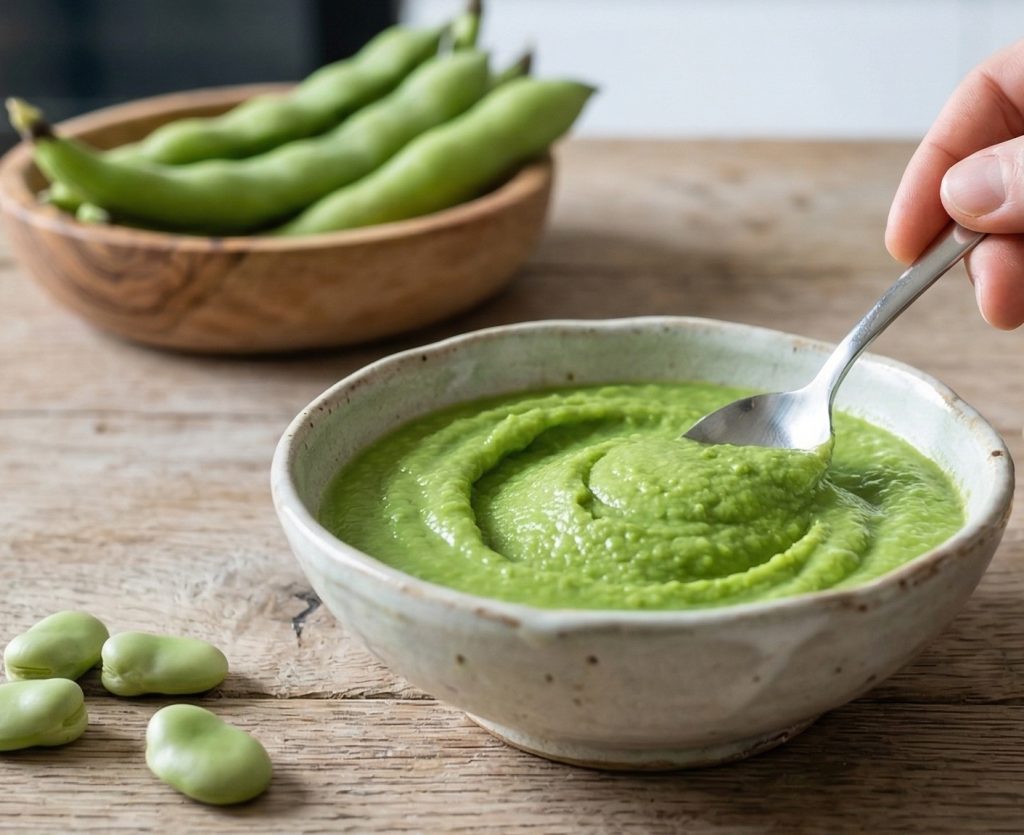
Gather the blanched and peeled fava beans in the blender jug. Add the peeled toasted almonds, the garlic clove (with the core removed) and the grated Parmigiano Reggiano. Blend everything, adding extra virgin olive oil in a thin stream, until you obtain an emulsion similar to a purée. Season with salt if needed.
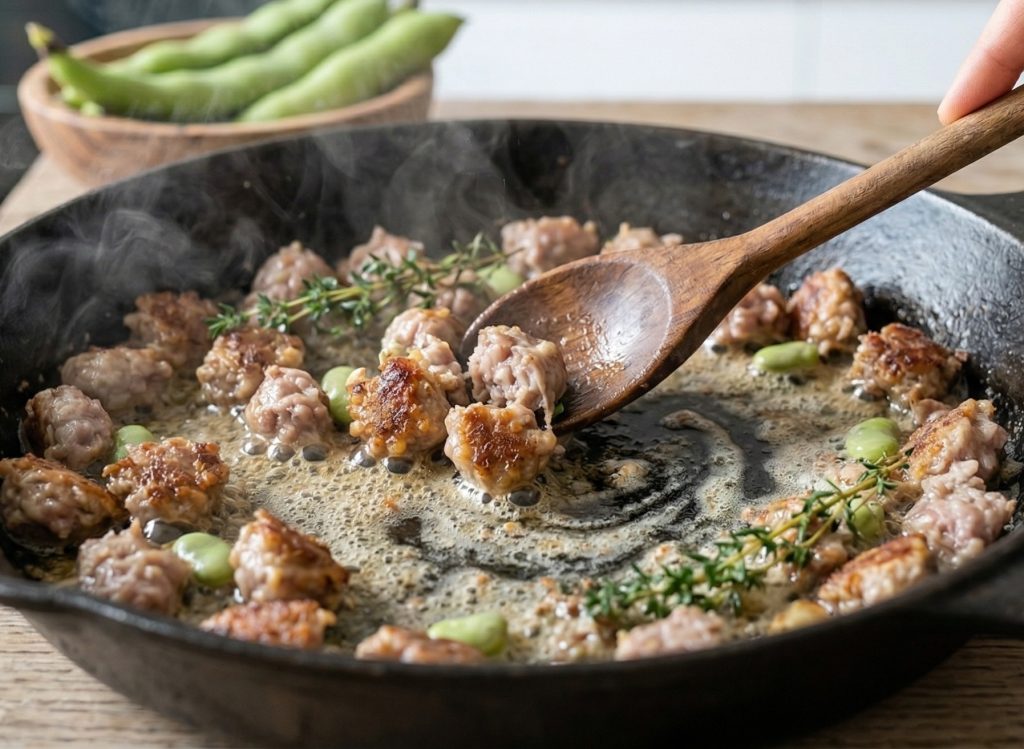
While you make the cream, remove the casing from the sausage and crumble it finely with your hands. Heat a nonstick pan without adding extra fat and sauté the sausage for a couple of minutes, until it becomes golden, plump and crumbly. Meanwhile, boil the egg tagliatelle in plenty of salted water (they should be rough and porous to absorb the sauce well). Drain them al dente, reserving a ladle of the cooking water.
Transfer the tagliatelle to a warm serving bowl and dress them with the prepared fava cream and the sautéed sausage. Gently toss, adding the reserved cooking water a little at a time, stirring until you obtain an emulsion. Finish with fresh thyme leaves and a sprinkle of freshly ground black pepper. Plate and serve immediately.
Notes on Ingredients and Substitutions
Fava beans: It’s essential to use fresh fava beans, bright green and firm. The quick blanch and subsequent peeling are the critical steps to achieve a silky texture without bitterness.
Almonds: Use peeled toasted almonds (granular and bright): toasting enhances their aroma and texture. They can be replaced with toasted pine nuts for an even creamier mouthfeel.
The pasta: Egg tagliatelle, dried or fresh (provided they are rough and porous), are ideal for absorbing the silky emulsion.
Storage
These tagliatelle should be enjoyed hot and just made. If leftovers remain, you can store the pasta (unseasoned) and the sauce separately in the refrigerator for up to 2 days. Reheat the fava cream and the sausage in a pan with a drizzle of oil and some cooking water before tossing with the pasta. Freezing is not recommended.
Variations
Pecorino variation: For a stronger taste and an extra crystalline graininess, replace Parmigiano Reggiano PDO with Pecorino Romano PDO.
Tip: If the fava cream is too dense, add a tablespoon of the pasta cooking water to the blender to loosen the consistency.
FAQ (Questions and Answers)
Why did my fava bean cream turn brown and bitter?
This happens if you did not completely remove the fibrous skin or if you blanched them for too long. The cuticle is the source of the bitterness.
Can I prepare the purée the evening before?
Yes, you can prepare the fava cream and sauté the sausage the day before and store them separately in the fridge.
