
The original Vignarola recipe: how to cook artichokes, fava beans and peas together
The main problem when preparing Roman vignarola is managing cooking times: because artichokes, fava beans, peas and lettuce have different textures, the risk is ending up with one vegetable undercooked and another turned to mush.
I confess that the first times I also had trouble making each ingredient “speak”, risking covering the sweetness of the peas with the bitterness of the artichoke.
To solve this problem and bring an explosion of spring flavors to the table, the technique of adding ingredients “in stages” is the definitive solution.
In this recipe I’ll show you how to respect every single vegetable, starting from browning the guanciale to the deglaze with white wine that ties all the aromas together.
Following this exact order, the lettuce will remain tender without disappearing, the artichokes will be soft and the legumes will keep that bright green that makes vignarola the king of Lazio side dishes.
Whether you decide to use it to dress a pasta or as a main course it will win you over at first bite.
Roman Vignarola: the trick to prevent vegetables from browning and keep them turgid
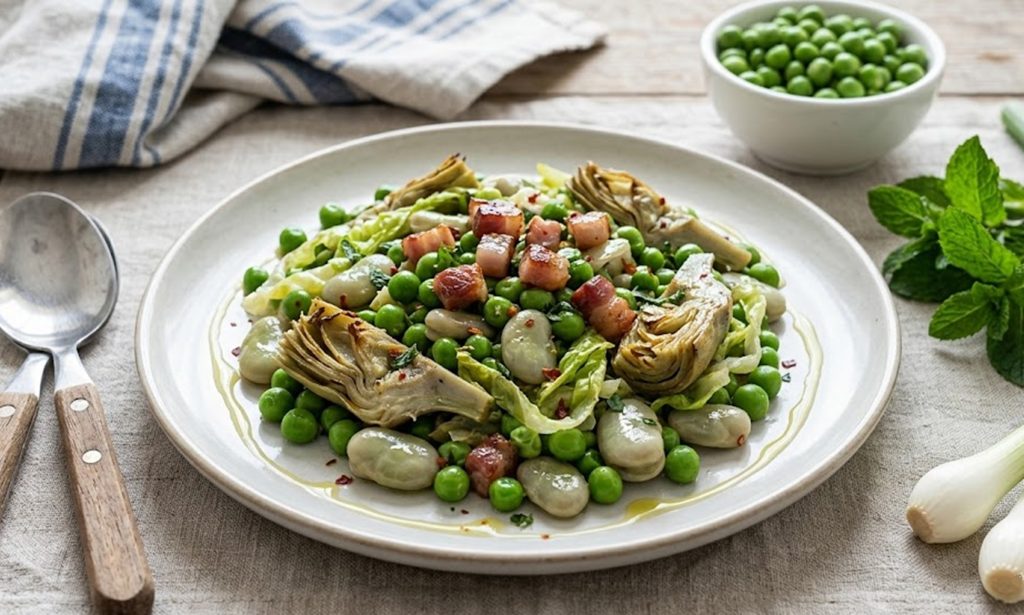
- Difficulty: Easy
- Cost: Medium
- Preparation time: 15 Minutes
- Cooking time: 25 Minutes
- Portions: 4
- Cooking methods: Stovetop
- Cuisine: Italian
Ingredients for Roman Vignarola
- 1 1/4 cups fava beans (fresh, to shell — about 1 1/4 cups shelled (from about 1.1 lb in pods))
- 1 1/4 cups peas (fresh, to shell — about 1 1/4 cups shelled (from about 1.1 lb in pods))
- 1 head romaine lettuce
- 3-4 artichokes baby globe artichokes (about 3–4 artichokes)
- 2 spring onions (scallions)
- 2 oz guanciale (cured pork cheek)
- fresh chili pepper
- 1/3 cup dry white wine
- to taste fine salt
- to taste extra virgin olive oil
Tools
- Pan
Roman Vignarola: the trick to prevent vegetables from browning and keep them turgid
Shell the peas and fava beans. Wash the lettuce and cut it into medium strips. Clean the artichokes by removing the tough outer leaves, peel the stem and slice them thinly (you don’t need to remove the choke if the baby artichokes are fresh). Finally, cut the spring onion into julienne and dice the guanciale.
In a large pan, heat a drizzle of oil and add the guanciale. Cook over low heat until the fat becomes translucent and the meat is crispy. Add the spring onion and the chili pepper, letting them wilt over moderate heat until the spring onion is nicely golden.
Raise the heat and add the artichokes: sauté them for 3–4 minutes. Add the fava beans and after another 3 minutes add the peas. Finally, add the romaine lettuce. This order ensures each vegetable gets the heat it needs without overcooking.
Deglaze with the white wine and let the alcohol evaporate. Cover with the lid and cook for 10 minutes. Remove the lid, season with salt and finish cooking for another 5 minutes until the bottom is nicely bound. Turn off the heat, drizzle with a little raw olive oil and serve.
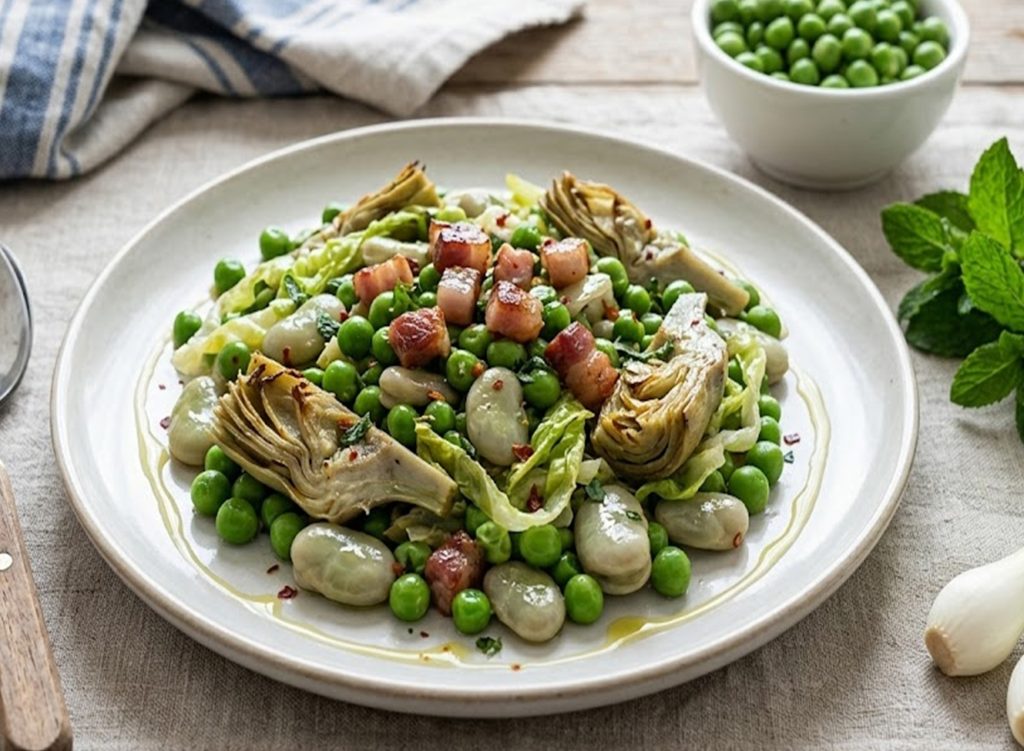
Notes on ingredients and Substitutions
The Vegetables: The quality of the vignarola depends on freshness. If the peas are very small, reduce the cooking times.
The Guanciale: It’s the element that gives a savory push. If you want a vegetarian version, omit it and slightly increase the salt and EVO oil.
White Wine: Use a dry, not very aromatic wine (a Frascati would be ideal) so it doesn’t overpower the sweetness of the vegetables.
Storage
Vignarola keeps in the refrigerator for 2–3 days. Freezing is not recommended because the vegetables would lose their turgid texture.
Recipe Variations
First Course: Use vignarola to dress fresh tonnarelli or mezze maniche, adding a generous sprinkle of pecorino romano.
Bruschetta: Serve it on slices of toasted country bread rubbed with a little garlic.
Tea’s Tips
The secret for an outstanding vignarola? Don’t add water! Fresh vegetables, if cooked covered after the deglaze with wine, will release their natural juices creating a very tasty little sauce. If you really see it drying too much, use just one ladle of light vegetable broth made from the pod scraps.
FAQ (Questions & Answers)
Can I use frozen peas and fava beans?
Yes, but the result will be less crisp. If you use them, add them straight to the pan without thawing, but be aware they will release more water and the texture will be softer.
Why did my lettuce turn bitter?
Make sure you use romaine lettuce and not other salad types. If cooked too long over high heat without liquid it can become bitter: the deglaze with wine helps balance this aspect.
The artichokes stayed hard, what did I do wrong?
Probably you didn’t remove enough outer leaves or the slices were too thick. Remember to peel the stem well, which is the sweetest part but needs the outer fiber removed.
