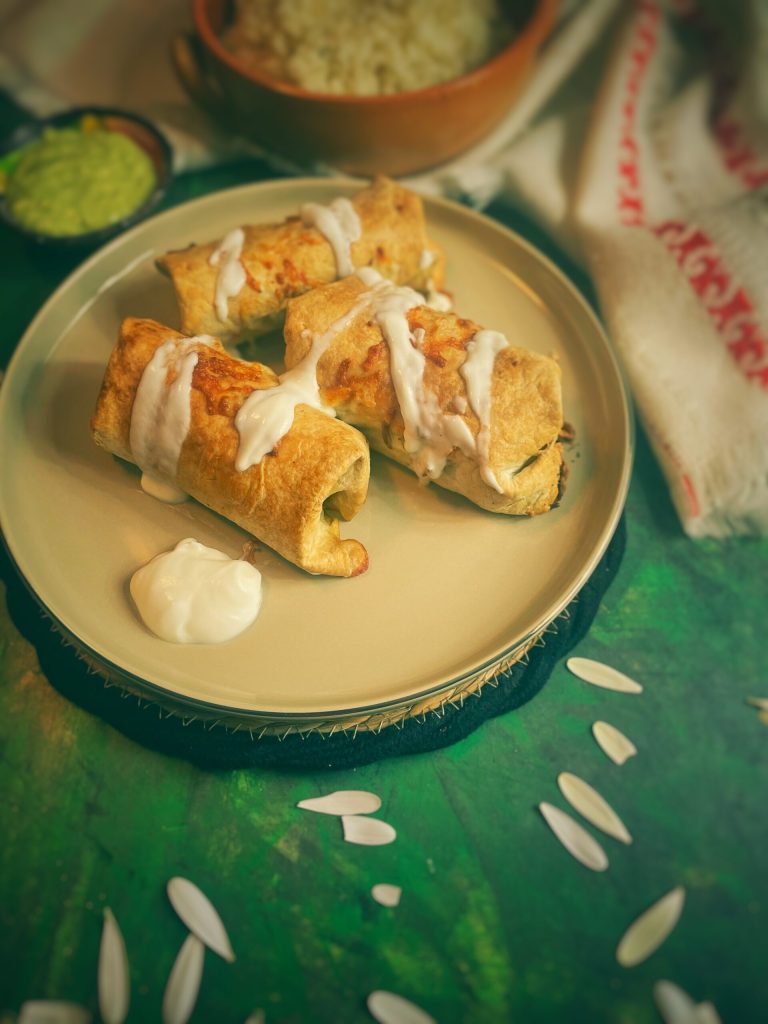
In the landscape of Tex-Mex cuisine and the culinary tradition of the U.S. Southwest, few dishes boast the charm and curious history of the chimichanga.
Although the debate about its origins is still open between the state of Sonora, Mexico, and Arizona, it is in the latter that the chimichanga found its definitive consecration, becoming a culinary symbol of the city of Tucson.
The most credited theory places its birth in 1922 at the historic El Charro Café in Tucson. It is said the owner, Monica Flin, accidentally dropped a burrito into the fryer.
Trying to suppress a colorful exclamation in front of her grandchildren, she coined the word “chimichanga” on the spot.
The words chimi and changa come from two Mexican-Spanish terms: chamuscado meaning burnt, and changa, related to chinga, a word that encompasses a range of vulgarities.
This fortuitous “mistake” gave birth to a preparation that would forever change the border restaurants’ offerings: a crispy tortilla shell that encloses a tender, spicy heart.
Technically, the chimichanga is a large burrito deep-fried.
Unlike the classic Mexican version, the Arizona variant is distinguished by the use of wheat flour tortillas (typical of northern Mexico) which, when in contact with hot oil, develop a golden, flaky and slightly blistered texture.
The heart of the dish is the protein: in the most authentic version ground meat is not used, but rather shredded beef (or machaca, dried and rehydrated meat), slowly cooked for hours until extremely tender.
The filling is completed with beans, melting cheeses such as Monterey Jack and green chiles, creating a robust, layered balance of flavors.
Today the chimichanga perfectly represents the evolution of frontier cooking: a meeting point between Mexico’s slow-cooking techniques and American culinary inventiveness.
Traditionally served with guacamole, sour cream and pico de gallo salsa.
In the original Arizona (Sonora-style) tradition, Mexican rice (or Spanish Rice) is almost always present on the plate, but rarely inside the chimichanga.
To respect the aromatic depth of the Arizona tradition, the following recipe adopts the slow-cooking technique using a CrockPot.
- Difficulty: Medium
- Cost: Budget-friendly
- Rest time: 10 Minutes
- Preparation time: 10 Minutes
- Cooking time: 5 Minutes
- Portions: 8 Pieces
- Cooking methods: Other, Slow cooking, Frying
- Cuisine: American
Ingredients
- 1.8 lb beef (whole piece (not ground) for shredding)
- 1 onion
- 1 clove garlic
- 2 tbsp chili powder (or a mix of smoked paprika and chili)
- 1 tsp ground cumin
- 1 tsp oregano
- to taste salt and pepper
- 8 flour tortillas (approximately 10–12 inches)
- 1.25 cups refried beans
- 1 cup green chiles (Hatch or Anaheim type)
- 2.25 cups grated cheese (Cheddar, Monterey Jack or mild Provolone)
- as needed vegetable oil
Tools
- 1 Pot crockpot
Steps
Browning (Optional but recommended): For deeper flavor, brown the whole piece of meat in a skillet with a splash of oil on all sides until well caramelized.
Placement: Put the meat into the Crock-Pot. Add the chopped onion, garlic, spices (cumin, chili powder, oregano) and salt.
Liquids: Pour in the beef broth.Note: Evaporation in a Crock-Pot is minimal, so reduce the amount of broth to about 1–1 1/4 cups (the meat should not be completely submerged).
Cooking times:LOW 8 – 10 hours.
HIGH: 4 – 5 hours.
The final touch (Essential): Once cooked, drain the meat and shred it with two forks. Do not discard the cooking liquid!Return the shredded meat to the Crock-Pot with a couple of ladlefuls of the reduced cooking liquid and let it rest for 15–20 minutes on the “keep warm” setting. This step ensures the meat reabsorbs the juices and doesn’t become dry inside the chimichanga.
Warming the tortillas: Pass the tortillas on a hot griddle for 10 seconds to make them pliable and prevent tearing.
Filling: In the center of each tortilla, spread a layer of beans (about 1/4 cup). Add about 1/4 cup of shredded beef (well drained of excess liquid), a tablespoon of roasted diced green chiles over the shredded meat, and a handful of cheese.
Closing: Fold the two side edges toward the center, then roll firmly from bottom to top, creating a sealed rectangular package.Bring the oil to 347–356°F in a deep skillet or fryer.
Immerse the chimichangas with the seam facing down. Fry for 2–3 minutes per side until evenly golden.
Rest: Drain on paper towels to remove excess oil and sprinkle more cheese on top.
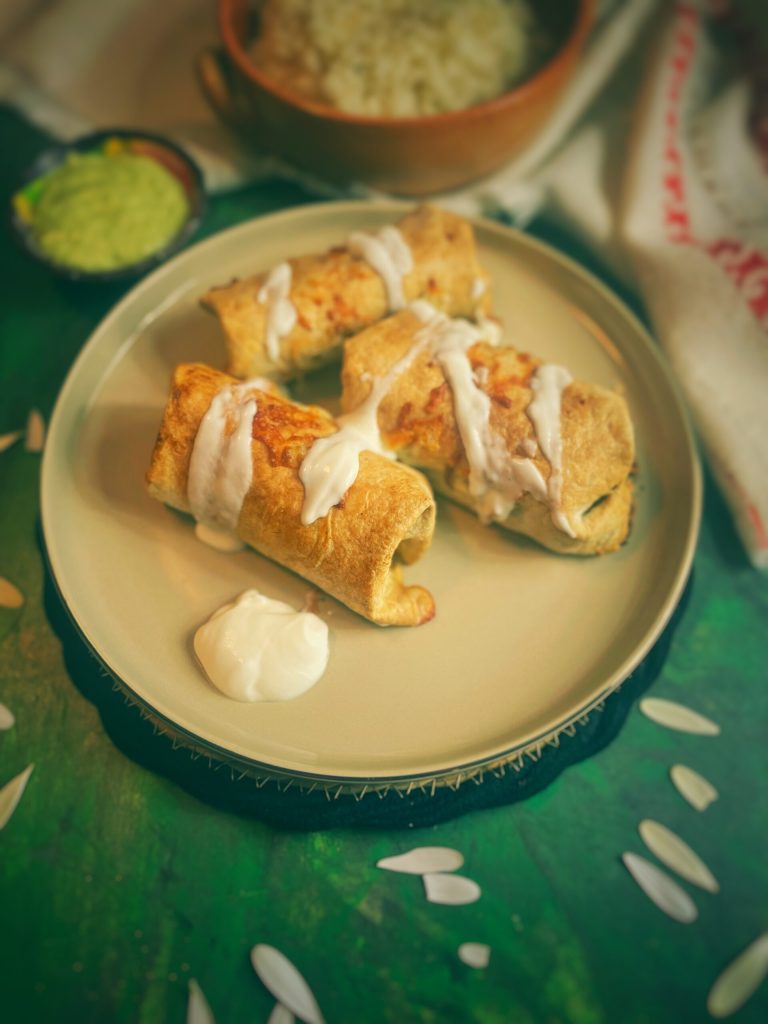
Place the hot chimichanga on a plate. As per Arizona tradition, top generously with sour cream and guacamole or serve them on the side, and serve Mexican rice as a separate side to preserve the crunchiness of the fried shell.