
Quick pasta and peas: a flavorful spring recipe ready in 25 minutes
There is something deeply reassuring in a plate of pasta and peas, but let’s admit it: the risk of bringing to the table a soup that’s too brothy or, on the contrary, a dry, separated mass of pasta is always around the corner.
The main problem of this recipe is often the management of the liquid: if you put too much you ruin the consistency; if you put too little the pasta won’t cook well and the peas lose that lively green, becoming grayish and uninviting.
To solve this issue and bring to the table a dish that truly smells like spring, the secret is to treat the pasta like a risotto.
In this recipe I’ll show you how the starch released gradually, combined with the sweetness of the peas, creates an amazing emulsion capable of binding everything together without adding cream or heavy fats.
Following my tips, you’ll transform two very simple ingredients into a creamy and spot-on first course, perfect for quick weekday lunches but so good it could be your grandmother’s Sunday meal.
Get ready to rediscover how special simplicity can be when made with the right tricks!
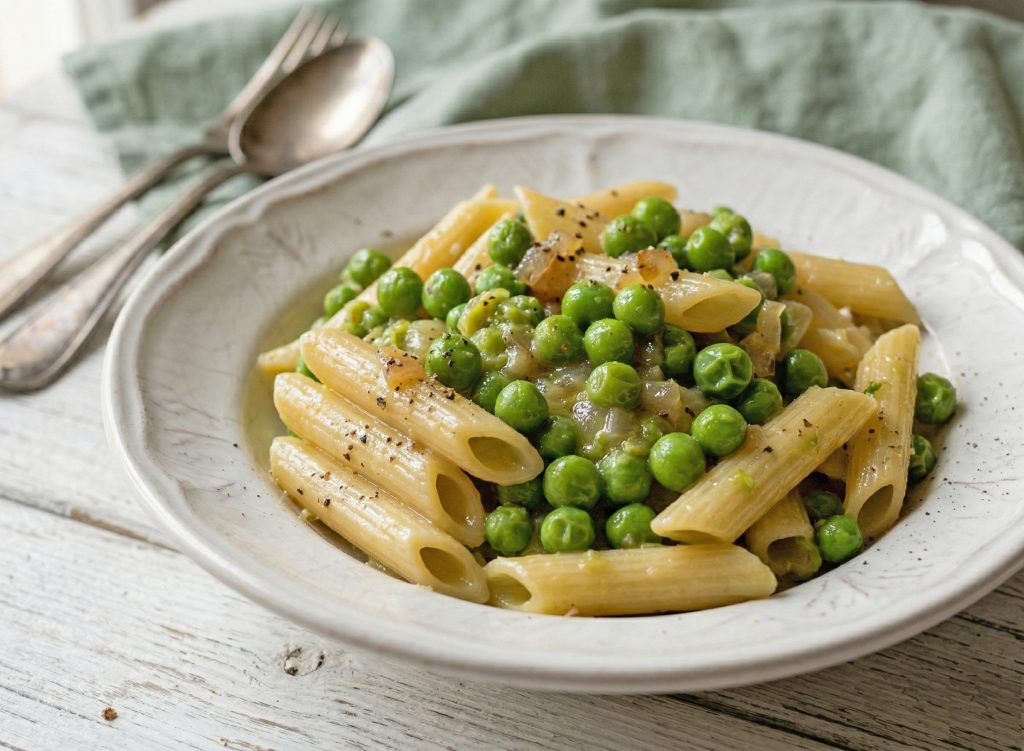
- Difficulty: Very easy
- Cost: Economical
- Preparation time: 5 Minutes
- Cooking time: 20 Minutes
- Portions: 4
- Cooking methods: Stovetop
- Cuisine: Italian
Ingredients: Quick pasta and peas
- 11 oz pasta (short pasta recommended, such as penne or ditalini)
- 3 1/8 cups peas (fresh shelled or high-quality frozen)
- 1 onion
- 2 oz grated Parmesan (about 1/2 cup grated)
- 3 fl oz dry white wine
- 1.5 cups vegetable broth
- 2 tbsp extra virgin olive oil
- 1 pinch black pepper
- to taste fine salt
Tools
- Kitchen scale
- Pan
How to cook pasta with peas: tricks for a spot-on, bright green result
Start by peeling the onion and cutting it into small, even pieces. In a large pan, heat two tablespoons of extra virgin olive oil (EVOO) with a pinch of salt. Add the onion and let it sweat over medium heat for about ten minutes: it should become golden and translucent, almost buttery, without burning.
Add the peas to the onion, stir well and let them flavor for about five minutes. At this point, deglaze with the white wine over high heat. Let the alcohol evaporate and continue cooking for another 5–6 minutes, until the peas look tender but still slightly firm.
Add the uncooked pasta directly into the pan with the peas and give it a good stir to coat. Begin adding the hot vegetable broth, one ladle at a time, as it is absorbed, just like you would for a risotto. This will allow the starch to create a natural creaminess.
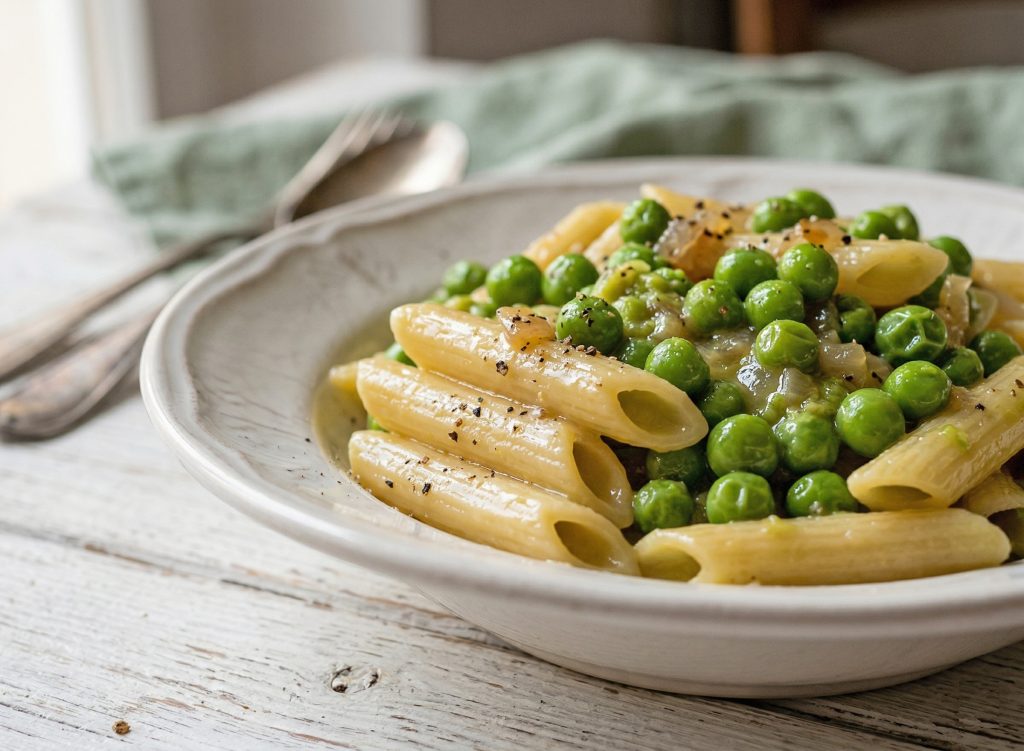
Continue cooking for about 10–12 minutes (or according to the package instructions). At the end of cooking, when the broth has become a thick little sauce, turn off the heat. Add the grated cheese and stir vigorously to distribute it evenly.
Notes on ingredients and substitutions
The peas: If you use fresh peas, the sweetness will be unbeatable. If you use frozen peas, add them straight to the pan without thawing to preserve their firmness.
The pasta: Choose a shape that can “hold” the peas inside, such as pipe or shells, for a surprise in every bite.
Broth: Make sure it is very hot so you don’t stop the boiling and the pasta’s cooking.
Storage
Pasta with peas is best eaten immediately. If you have leftovers, it keeps in the fridge for 1 day; you can reheat it in a pan with a splash of milk or broth to restore its creaminess, or transform it into a delicious pasta frittata.
Recipe variations
Savory: Add small cubes of pancetta or guanciale in the initial soffritto for a crunchy touch.
Super green: For an even creamier pasta, blend one-third of the cooked peas with an immersion blender before adding the pasta.
Tea’s tips
My trick for a really flavorful result? Don’t add too much broth at once, otherwise you’ll end up with a soup. The pasta should “suffer” a little so it releases the starch needed for creaminess. And don’t forget a generous grind of black pepper just one second before serving: it will enhance the sweet notes of new peas.
FAQ (Questions & Answers)
Can I use canned peas?
Yes, but add them only in the last 5 minutes of pasta cooking, since they are already very tender and could fall apart completely.
Which wine is best for deglazing?
A dry, light white, such as Vermentino or Pinot Grigio. Avoid wines that are too aromatic or sweet, which would overpower the delicacy of the peas.
The pasta remained hard despite the broth — why?
Make sure the broth is boiling hot when you add it. If the liquid is lukewarm, the pan’s temperature drops and the cooking time extends indefinitely.
