
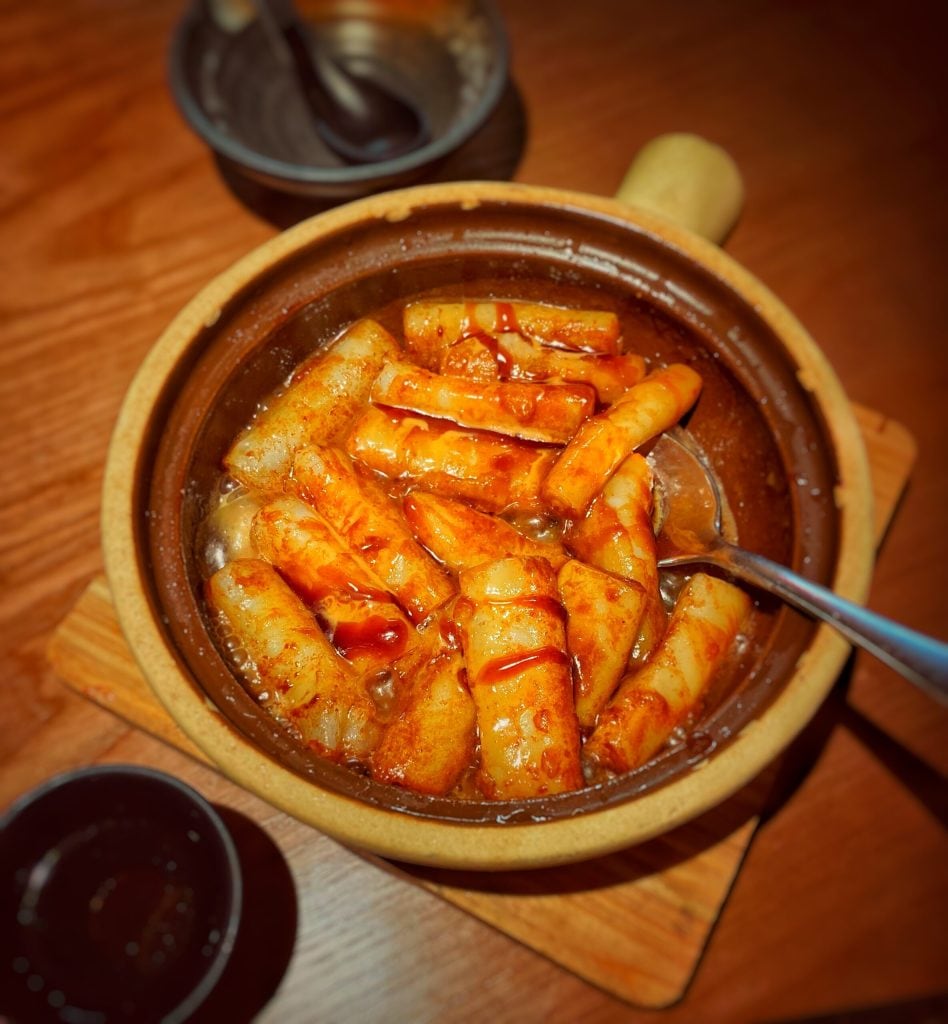
Gireum-tteokbokki are Korean rice cakes belonging to the Gochujang tteokbokki category, i.e. garae-tteok dressed with a spicy sauce based on gochujang (pepper paste).
The garae-tteok is a long tteok (rice cake*) with a cylindrical shape made from non-glutinous rice flour.
It is believed that the spicy variant of tteok-bokki made with a gochujang-based sauce first appeared in 1953.
When Ma Bok-Lim participated in opening a Korean-Chinese restaurant, she accidentally dropped tteok into jajangmyeon: a Sino-Korean dish made of Korean noodles served with a thick sauce based on sweet bean paste, diced pork and vegetables.
Realizing it tasted good, she developed the idea of seasoning the tteok with the Korean pepper paste, gochujang.
There are two versions of gochujang tteokbokki: gungmul-tteokbokki, soupy ones (the recipe is already on the blog), and gireum-tteokbokki, which are dry.
Often in gireum-tteok-bokki, a mix of gochugaru, soy sauce, sugar or syrup and sesame oil replaces gochujang.
The soft garae-tteok sticks are dressed with the sauce mixture, stir-fried in a pan with oil and served with sliced scallion.
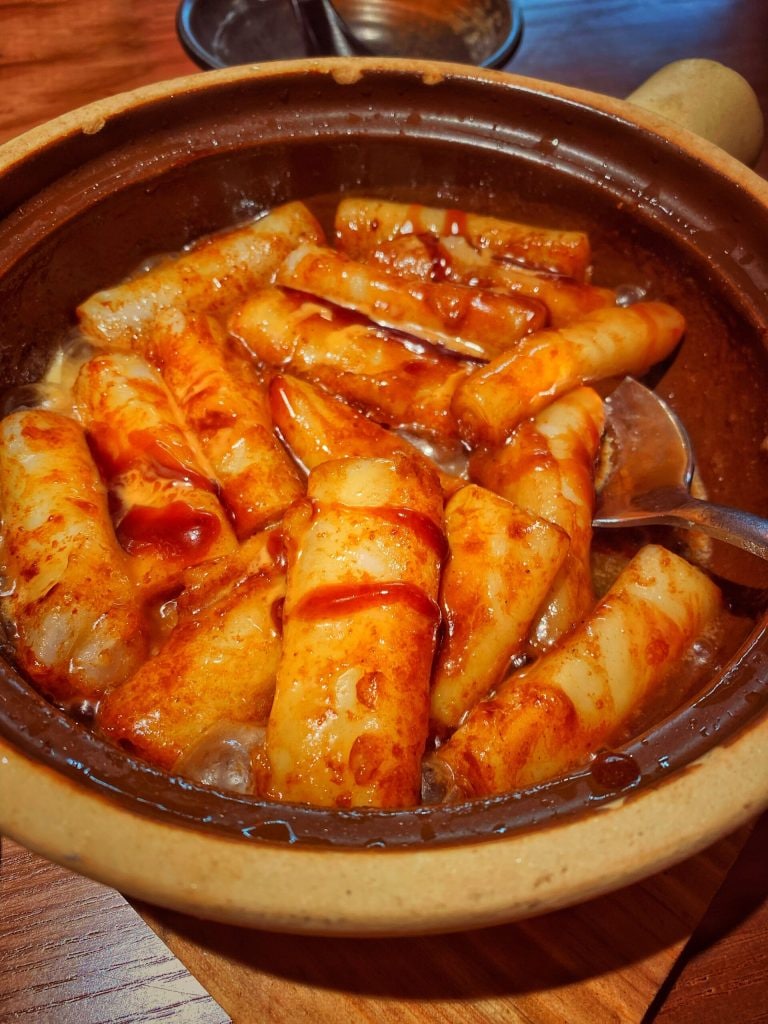
Gochujang tteokbokki are eaten throughout East Asia, not only in Korea; we actually tasted them during our trip to Shanghai, China (the ones in the photo) with a seasoning that can be translated as “ecstasy powder” (see photo below), i.e. a ground mix made of Sichuan pepper combined with a variety of chilies and sesame.
With its bright red color and spicy aroma, it strongly resembles the Korean seasoning based on gochujang.
The recipe is included in the “Blog Chinese version” column; however, the one below is the original Korean version, of which you can already find the “in broth” variant on the blog:
- Difficulty: Medium
- Cost: Affordable
- Rest time: 20 Minutes
- Preparation time: 15 Minutes
- Cooking time: 10 Minutes
- Portions: 2 servings
- Cooking methods: Stovetop
- Cuisine: Korean
- Seasonality: All seasons
Ingredients
- 12 oz garae-tteok
- 1.5 tbsp gochugaru
- 1 tbsp gochujang
- 1.5 tbsp brown sugar
- 1.5 tbsp soy sauce
- 1.5 tbsp sesame oil (+ for stir-frying)
- 2 cloves garlic
- 2 scallions
Steps
If you buy ready-made garae-tteok, you should soak them in a bowl to soften them slightly and to make it easier to separate them if they stick together; otherwise you can try making them following this recipe.
Drain the rice cakes.
Mix the soy sauce, sesame oil, crushed garlic, gochujang and gochugaru. Toss the rice cakes in the sauce.
Heat the oil in a skillet over medium-low heat, then add the rice cakes and stir.
Let them gently sizzle for about 10 minutes.
Once they have softened they will fold under the pressure of a utensil.
Serve with sliced scallion (the green part).
FAQ (Questions and Answers)
*What is a Tteok?
Tteok (Korean: 떡) is a group of Korean rice cakes made from steamed flour of various grains, including glutinous and non-glutinous rice.
The steamed flour can also be pounded, shaped or pan-fried to prepare tteok.
It is not just a dessert. It ranges from elaborate versions made in various colors, aromas and shapes using: nuts, fruit, flowers and namul (wild herbs/vegetables), to the simple white rice tteok used in home cooking.
It is largely divided into four categories:
“steamed tteok” (찌는 떡), “pounded tteok” (치는 떡), “boiled tteok” (삶는 떡) and “pan-fried tteok” (지지는 떡).
The steamed type is prepared by steaming rice or glutinous rice flour in a “siru” (시루), a large earthenware steamer, which is why it is often called “sirutteok” (시루떡). It is considered the basic and oldest form of tteok.
Pounded tteok is made using a board or a mortar after steaming it first.
In the preparation of pan-fried tteok, the rice dough is flattened like a pancake and pan-fried in a pan with vegetable oil, for example in Japchae.
There are also shaped tteok, which are obtained by kneading the dough with hot water and then shaping it into balls.
