
CAESAR SALAD DRESSING Homemade, creamy and genuine
Tired of the usual store-bought Caesar dressings, often full of mysterious ingredients and a standardized flavor? It’s time to revolutionize your salad! With this very easy recipe you’ll make a homemade Caesar dressing that will outclass any bought or restaurant version! Yes, you read that right: a rich, umami and authentic taste, customizable to your preferences.
Making dressings from scratch, like the Classic Salad Dressing, is surprisingly simple, and our creamy Caesar dressing is no exception. Forget blenders and food processors that make a mess and complicate things: this recipe was designed to be made in a single bowl with a simple hand whisk. Measure, pour, mix… and you’ll have a thick, enveloping dressing full of aromatic notes from fresh garlic, lively lemon juice and plenty of Parmesan.
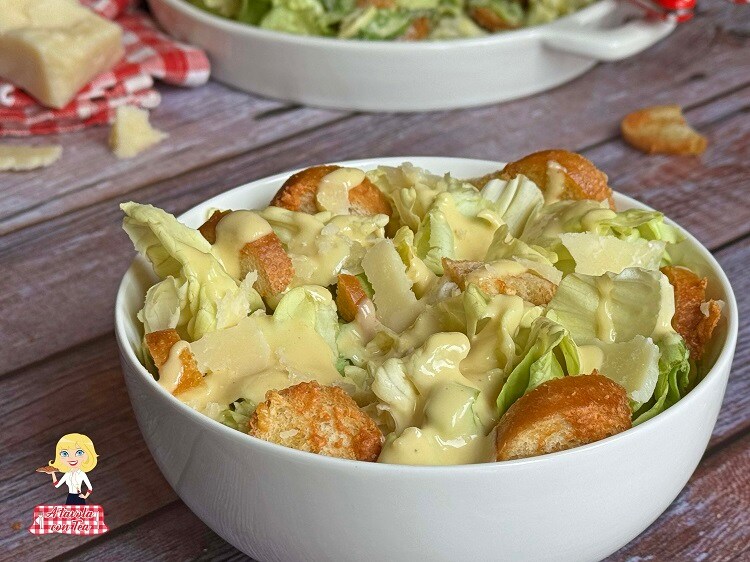
This dressing is a true kitchen wildcard and will become the secret of your classic Caesar salad, turning crisp romaine lettuce and homemade croutons into a gourmet dish. Thanks to its stability and texture that stays intact, you can enjoy it straight from the refrigerator without it separating. A touch of umami, a citrus note and perfect creaminess: get ready to fall in love with your new favorite Caesar dressing!
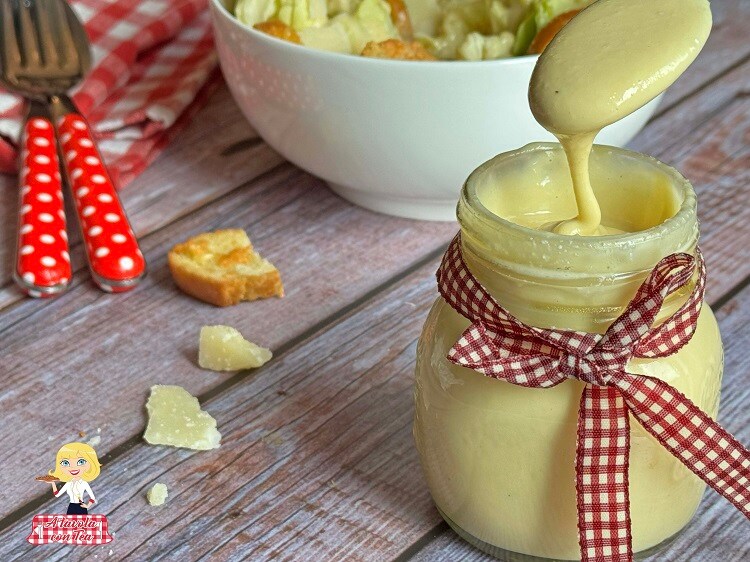
- Difficulty: Very easy
- Cost: Inexpensive
- Preparation time: 15 Minutes
- Portions: 10
- Cooking methods: No-cook
- Cuisine: American
- Energy 132.27 (Kcal)
- Carbohydrates 2.70 (g) of which sugars 0.14 (g)
- Proteins 2.19 (g)
- Fat 13.07 (g) of which saturated 2.58 (g)of which unsaturated 0.51 (g)
- Fibers 0.35 (g)
- Sodium 81.12 (mg)
Indicative values for a portion of 25 g processed in an automated way starting from the nutritional information available on the CREA* and FoodData Central** databases. It is not food and / or nutritional advice.
* CREATES Food and Nutrition Research Center: https://www.crea.gov.it/alimenti-e-nutrizione https://www.alimentinutrizione.it ** U.S. Department of Agriculture, Agricultural Research Service. FoodData Central, 2019. https://fdc.nal.usda.gov
Ingredients for Caesar Salad Dressing — about 1.5 cups (350 ml) of dressing
- 1/2 cup mayonnaise
- 2 tsp Dijon mustard
- 2 tsp Worcestershire sauce
- garlic (2 cloves, grated or pressed)
- 3 tbsp fresh lemon juice
- 1/2 tsp fine salt
- 1 pinch freshly ground black pepper
- 1/2 cup extra virgin olive oil
- 1/2 cup grated Parmesan (Parmigiano)
Tools
- Kitchen scale
- Bowl
- Whisk
How to prepare the Caesar Salad Dressing
To prepare the Caesar dressing you can simply use a bowl and a hand whisk, or if you want to be faster, an immersion blender.
In a large bowl, combine the mayonnaise, Dijon mustard, Worcestershire sauce, grated or pressed garlic, fresh lemon juice, fine salt and freshly ground black pepper. Using a hand whisk, beat these ingredients vigorously until well combined and smooth in texture.
While continuing to whisk vigorously, start to drizzle the olive oil slowly into the mixture. The key to getting a thick, well-emulsified dressing is to add the oil very gradually, incorporating it vigorously with the other ingredients. Continue whisking until all the oil is incorporated and the dressing is creamy and glossy.
Finally, add the freshly grated Parmigiano Reggiano to the dressing. Whisk vigorously to incorporate the cheese and ensure it distributes evenly. Your Caesar dressing is ready!
Transfer the prepared dressing to a glass jar with an airtight lid. Keep it refrigerated until ready to use. This dressing will maintain its creamy texture even when cold, so you can use it directly from the fridge without re-emulsifying. Remember to label the jar with the preparation date to track freshness.
NOTES Ingredients and Substitutions
Mayonnaise: Use a good-quality mayonnaise, preferably a “real” one (egg-based) to achieve the best texture and flavor. The eggs in mayonnaise act as a natural emulsifier, ensuring the dressing stays thick and doesn’t separate. If you love the flavor, a homemade mayonnaise will elevate your dressing even more.
Dijon Mustard: Adds a touch of heat and depth of flavor, as well as acting as a natural emulsifier. Any brand of Dijon will work well.
Worcestershire Sauce: This ingredient is essential for the rich, complex umami flavor of Caesar dressing.
Note for vegetarians/fish allergies: Traditional Worcestershire sauce contains anchovies. If you are vegetarian or allergic to fish, look for vegan or vegetarian Worcestershire-style sauces that do not include anchovies in the ingredients.
Extra Light Olive Oil: It is important to use a neutral-flavored oil such as extra-light olive oil, sunflower oil or canola oil. Robust extra virgin olive oil would alter the classic flavor profile of Caesar dressing.
Garlic: Always use fresh grated or pressed garlic for maximum flavor. Garlic powder or pre-minced garlic from a jar won’t deliver the same punch.
Fresh Lemon Juice: Freshly squeezed lemon juice is essential for the acidity and freshness that balance the richness of the dressing. Avoid bottled concentrate lemon juice, which tastes less vibrant.
Parmigiano Reggiano: Use freshly grated Parmesan for the best flavor. It can be finely grated or coarser depending on your preferred texture. You can also use Grana Padano.
Storage
Transfer the homemade Caesar dressing to a glass jar with an airtight lid or a sealed container. Store it in the refrigerator for up to one week. Its creamy texture will remain intact even when cold, and you can use it straight from the fridge without having to rewhisk it. Remember to put it back into the refrigerator immediately after use to maintain freshness.
Recipe Alternatives and Variations
This dressing is already a classic, but you can personalize it slightly:
With Anchovies (Traditional): If you love the authentic anchovy flavor, you can add 1-2 anchovy fillets (or 1/2 tsp anchovy paste), finely chopped, and incorporate them in the first step with the other liquid ingredients. Although Worcestershire contains anchovies, adding them directly will make the anchovy presence more pronounced.
Lower Calories: For a slightly lighter version, you can replace half the mayonnaise with plain Greek yogurt (nonfat). The texture may be less thick.
Fresh Herbs: Add a teaspoon of finely chopped fresh parsley or a pinch of fresh thyme for an herbal note.
Spicy Kick: A pinch of red pepper powder or a few drops of Tabasco can add a bit of heat.
Lactose-free: Replace Parmigiano Reggiano with an aged lactose-free cheese (e.g., some types of Pecorino) or omit it, although the flavor will be affected. Check that mayonnaise and Worcestershire sauce are lactose-free.
Origins and History of Caesar Dressing
The dressing and the Caesar salad have a fascinating history not connected to the Roman emperor Julius Caesar, but rather to an Italian-American restaurateur named Caesar Cardini. Legend has it that in 1924, during a busy weekend at his restaurant in Tijuana, Mexico (where he had moved to avoid Prohibition), Cardini found himself with few ingredients and improvised a salad with what he had: romaine lettuce, olive oil, raw eggs, lemon juice, Parmesan cheese, Worcestershire sauce and croutons.
The innovative touch was the presentation and the way it was dressed: the ingredients were prepared at the table, mixed all at once. The salad became an immediate success, attracting Hollywood stars crossing the border. Although Cardini’s original recipe was slightly different (it is said it did not include anchovies in the dressing, with umami coming from Worcestershire and the eggs), the version with anchovies or anchovy paste became very popular over time. Its fame spread quickly, making it one of the most loved and recognized salad dressings in the world.
FAQ (Questions & Answers)
1. Does the dressing thicken once refrigerated?
Yes, absolutely! Caesar dressing tends to thicken further once refrigerated as the oil cools. This is normal and desirable. It does not separate and will remain creamy, ready to use straight from the fridge.
2. Can I use a blender instead of a whisk to prepare the dressing?
Certainly! Although the recipe is designed for preparation in a single bowl with a hand whisk for simplicity and less mess, you can absolutely use a blender, food processor or immersion blender. This will make the dressing even smoother and better emulsified, though you may need to scrape the sides to ensure everything is well combined.
3. Why is extra virgin olive oil discouraged?
Extra virgin olive oil has a much stronger and more characteristic flavor compared to extra-light olive oil or other neutral oils. If used in Caesar dressing, its intense taste would tend to mask and alter the delicate, balanced flavor profile achieved with garlic, lemon and Parmesan, not doing justice to the classic dressing taste.
