
CESAR SALAD Homemade: Crispy, Creamy and Unforgettable!
Would you like to impress your guests with a salad that tastes like haute cuisine but is surprisingly easy to make? The Homemade Caesar Salad is the answer! Forget supermarket packet versions: this recipe will guide you step by step in creating a masterpiece of flavors and textures, from crisp romaine lettuce to golden croutons, fresh Parmesan and a light, irresistible Caesar dressing.
The inspiration for this recipe comes directly from the United States, where I first tasted it at a friend’s house and fell in love immediately. As soon as I returned to Italy, I recreated it and since then it has become the most requested salad by my family – a true success for getting even the little ones to eat their greens!
The secret of this salad is its dressing, the Caesar sauce which is easy to make in a bowl with a simple whisk. The result is a light, healthy dressing with a fresh flavor featuring notes of lemon, garlic and the umami of Parmesan. All ingredients are simple and you probably already have them at home: romaine lettuce, Parmesan, croutons and homemade Caesar dressing.
Once you try the Caesar Salad you won’t go back. It’s better in every way: fresh, crispy, creamy and with the authentic flavor you’d expect from a refined steakhouse. Serve it as a light side dish or turn it into a complete meal by adding baked chicken breast, seared steak strips or grilled shrimp. Make this delight and please everyone’s palate!
- Difficulty: Very easy
- Cost: Inexpensive
- Preparation time: 15 Minutes
- Cooking methods: Oven, Air Fryer
- Cuisine: American
- Energy 470.32 (Kcal)
- Carbohydrates 27.81 (g) of which sugars 2.46 (g)
- Proteins 14.10 (g)
- Fat 35.07 (g) of which saturated 8.79 (g)of which unsaturated 3.05 (g)
- Fibers 2.88 (g)
- Sodium 525.92 (mg)
Indicative values for a portion of 125 g processed in an automated way starting from the nutritional information available on the CREA* and FoodData Central** databases. It is not food and / or nutritional advice.
* CREATES Food and Nutrition Research Center: https://www.crea.gov.it/alimenti-e-nutrizione https://www.alimentinutrizione.it ** U.S. Department of Agriculture, Agricultural Research Service. FoodData Central, 2019. https://fdc.nal.usda.gov
Caesar Salad Ingredients
You can decide to make everything at home: the croutons, the Caesar sauce, the mayonnaise (my mayonnaise recipe is HERE). Or buy some of these ingredients ready-made. I leave the choice to you.
- 1/2 baguette (about 5–7 oz (150–200 g) — half a baguette approximately)
- 3 tablespoons extra virgin olive oil
- 1 tablespoon fresh garlic (minced)
- 2 tablespoons grated Parmesan
- 1/2 cup mayonnaise
- 2 teaspoons Dijon mustard
- 2 teaspoons Worcestershire sauce
- 1 clove garlic (minced or crushed)
- 3 tablespoons lemon juice (fresh)
- 1/2 teaspoon fine salt
- 1 pinch black pepper
- 1/2 cup extra virgin olive oil
- 2 oz grated Parmesan (freshly grated (about 50 g))
- 1 romaine lettuce (large head or 2 small heads, or romaine hearts)
- 1.4 oz Parmigiano Reggiano PDO (shaved (about 40 g))
Tools
- Bilancia pesa alimenti
- Bowl
- Small bowl
- Whisk
- Mandoline
- Baking sheet
- Parchment paper
- Oven
How to prepare the Classic Caesar Salad
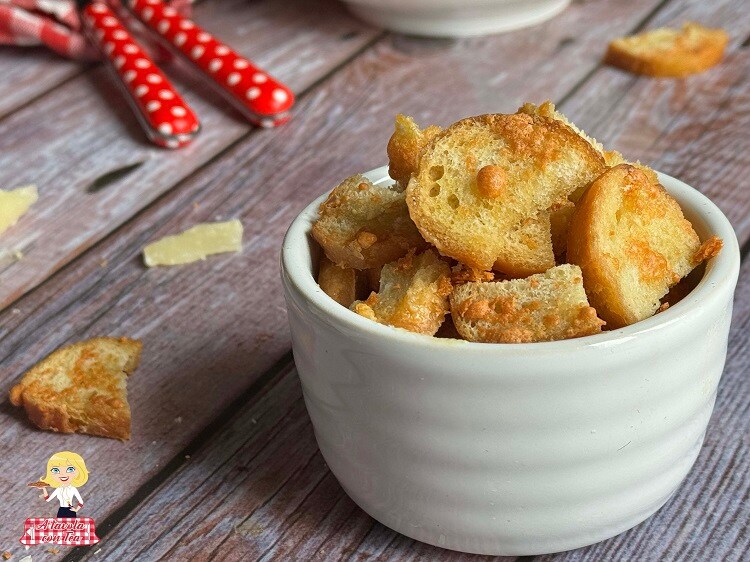
Preheat the oven to 190°C (374°F). Slice the baguette lengthwise in half and then slice each half on the diagonal, obtaining pieces about 0.01 in (0.3 mm) thick. Arrange the bread on a baking sheet. In a small bowl, combine 3 tablespoons extra virgin olive oil and 1 teaspoon finely minced garlic. Pour the garlic oil over the bread pieces and sprinkle with 2 tablespoons grated Parmesan. Toss well to coat evenly. Spread the bread in a single layer on the baking sheet and bake at 190°C (374°F) for 10–12 minutes, or until golden and crispy. Halfway through cooking, turn the croutons for even browning. Remove from the oven and let cool completely.
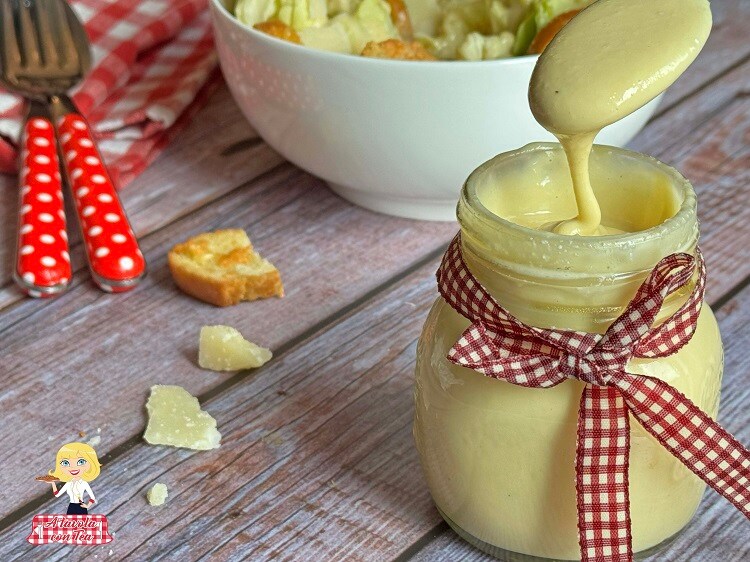
In a large bowl, combine the mayonnaise, Dijon mustard, Worcestershire sauce, grated or pressed garlic, fresh lemon juice, fine salt and freshly ground black pepper. With a hand whisk, beat vigorously until well blended and smooth. While continuing to whisk vigorously, begin to stream in the olive oil very slowly. It is essential to pour the oil gradually and whisk hard to emulsify the dressing, making it thick and glossy. Once all the oil is incorporated, add the 2 oz (about 50 g) freshly grated Parmigiano Reggiano and whisk to combine. Your Caesar dressing is ready.
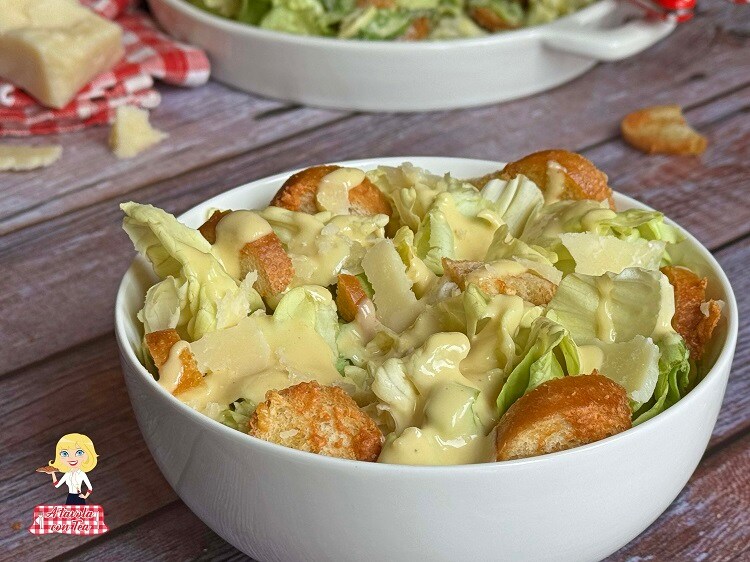
Prepare the lettuce: rinse the romaine leaves well under cold water, dry thoroughly (preferably in a salad spinner) and cut or tear into bite-sized pieces. Place them in a large serving bowl. Just before serving, add the prepared croutons and Parmigiano Reggiano (grated or shaved using a vegetable peeler for the shavings). Drizzle the salad with the homemade Caesar dressing and toss gently to coat the lettuce and croutons evenly. Serve immediately.
Ingredient Notes and Tips
Romaine Lettuce: Use a whole head or romaine hearts. Avoid pre-washed bagged salad, which tends to soften faster and won’t provide the same crunch. Cold, dry lettuce is the key to a crisp salad.
Parmigiano Reggiano: Freshly grated or shaved Parmesan will have superior flavor and texture compared to pre-grated varieties, which often contain additives.
Croutons: This recipe yields irresistible croutons and you will probably have enough for two salads, so you can save some for next time. You can also use sourdough for croutons for a deeper flavor.
Caesar Dressing: Our version is light and does not require raw eggs or anchovies, making it suitable for children. If you prefer a richer dressing, you can add 1–2 anchovy fillets finely chopped together with the other liquid ingredients in step 2.
Storage
This Caesar Salad is also perfect for advance prep, provided you do not dress it until serving time.
Preparing the Lettuce: Chop, rinse and spin the romaine lettuce. Store it in a zip-top bag or airtight container with a paper towel (to absorb moisture) in the refrigerator. It will stay crisp for 3–4 days.
Storing Croutons: Bake croutons 1–2 days ahead, then make sure they cool completely before storing in an airtight container at room temperature. This keeps them crispy.
Storing the Dressing: The sauce can be made 3–4 days in advance. Keep it in a glass jar with a lid in the refrigerator. If it solidifies (normal because of the oil), let it come to room temperature for a few minutes and whisk briefly to bring it back together before serving.
How to Serve the Homemade Caesar Salad
This dressing is so versatile and tasty you’ll want to use it on everything!
Complete Caesar Salad: Add strips of baked chicken breast, pan-seared steak or grilled shrimp to make the salad a complete and satisfying meal. It’s also perfect for a chicken Caesar wrap for a healthy lunch.
As a Dip for Raw Veggies: Ideal as a dip for carrot sticks, sliced cucumbers or cauliflower florets for a crunchy snack.
Pasta Salad Dressing: Try it in a Caesar pasta salad, in a tortellini salad with broccoli and diced tomatoes, or in a macaroni salad for a creamy, flavorful base.
Marinade: It can be used as a marinade for meat or chicken before grilling to tenderize and flavor.
Potato Salad Dressing: A creamy, flavorful alternative for classic potato salad.
Origins and History of the Caesar Salad
The story of the Caesar Salad is fascinating and surprising: despite the name, it has nothing to do with the Roman emperor Julius Caesar. The most credited legend attributes it to Caesar Cardini, an Italian restaurateur who emigrated to the United States and then to Mexico, where he opened restaurants in San Diego and Tijuana.
It is said that on July 4, 1924, during a particularly busy holiday weekend at his Tijuana restaurant, Cardini found himself nearly out of food. With the ingredients on hand – romaine lettuce, olive oil, eggs, lemon juice, Parmesan cheese, Worcestershire sauce and bread croutons – he improvised a salad that he prepared tableside for his guests. The novelty was the addition of lightly cooked eggs and the “show” preparation in front of customers, who were delighted.
Although Cardini’s original recipe did not include anchovies (the umami flavor came from Worcestershire sauce and eggs), the version with anchovies or anchovy paste became very popular over time. The salad became a huge success and attracted Hollywood celebrities. Its fame spread quickly, turning it into one of the most beloved and recognized salad dressings worldwide, a true symbol of elegance and taste in international cuisine.
Possible Additions and Enhancements for the Caesar Salad
These additions not only make the Caesar Salad more complete and satisfying but also enrich its flavor and visual appeal. Which addition will you try first?
Proteins for a Complete Meal:
Grilled or Baked Chicken: Add strips of grilled or baked chicken breast and then slice. It’s the classic pairing and turns the salad into a main dish.
Sautéed Shrimp: For a more refined touch, quickly sautéed shrimp with a drizzle of oil, garlic and chili pair wonderfully with Caesar flavors.
Salmon: A baked or grilled salmon fillet, flaked over the salad, adds healthy fats and a unique flavor.
Hard-Boiled Eggs: For a simple but nutritious option, hard-boiled eggs cut into wedges are always a good addition.
A Touch of Freshness and Color:
Cherry Tomatoes: A few cherry or grape tomatoes, halved, add color, acidity and freshness that complement the richness of the dressing.
Avocado: Cubes of ripe avocado can add extra creaminess and a delicate flavor that balances the garlic and lemon.
Flavor and Texture Variations
Crispy Bacon: For the indulgent, some crispy cooked bacon crumbled over the salad adds an irresistible salty, smoky note.
Chili: If you like a spicy touch, a pinch of chopped red chili in the dressing or a final sprinkle over the salad.
FAQ (Questions & Answers)
1. Can I prepare the Caesar salad in advance and dress it at the last minute?
Yes, absolutely! This is the best way to enjoy the Caesar Salad. You can wash and cut the lettuce and prepare the dressing and croutons 1–2 days ahead, storing them separately as indicated. At serving time, combine all ingredients and dress. This ensures the lettuce and croutons remain crispy.
2. Is it necessary to use a light olive oil for the dressing? Can I use extra virgin?
For the Caesar dressing, it is recommended to use a light olive oil or a neutral oil such as sunflower or canola. Extra virgin olive oil has a stronger, more pronounced flavor that could alter the classic balanced taste of the dressing, overpowering key aromatics like lemon and garlic.
3. My romaine lettuce doesn’t stay crisp, what can I do?
There are some tricks to keep romaine lettuce crisp:
Rinse in cold water: Keeping the lettuce very cold will help it stay crisp.
Dry thoroughly: After washing, remove as much water as possible. Use a salad spinner for effective drying.
Proper storage: Once rinsed and dried, store the lettuce in an airtight container or zip-top bag with a paper towel to absorb excess moisture. Refrigerate until ready to use.
