
Cat’s tongues: the secret to thin, crunchy cookies perfectly golden
Is there anything more elegant and delicious than an artisanal cat’s tongue cookie to accompany a cup of tea or to garnish a spoon dessert? These cookies are a pastry classic, loved for their extreme lightness and that good buttery taste that melts in your mouth.
The ingredients to make them are very few and simple, and you probably already have them in your pantry. The recipe doesn’t require special kitchen skills, just some small precautions to avoid baking cookies that are too thick or that become soft after a few hours.
A first attention should be paid to the temperature of the butter: if you don’t get that perfect “creamy” consistency, the cookie will lose its characteristic glassy, thin finish.
Then there’s dough handling. I confess that before discovering the secret — that it’s not about whipping the mixture but gently mixing it so as not to incorporate too much air — I struggled with cat’s tongues that looked like ordinary dunking cookies.
In this recipe I’ll show you how to balance egg whites and flour to obtain that irresistible dual texture: a pale center and browned, crunchy edges.
Following my tips you’ll transform a simple preparation into a pastry masterpiece.
Get ready to amaze your guests with a wafer that “cracks” on the first bite.
Homemade Cat’s Tongues: the failproof recipe for flaky, buttery wafers
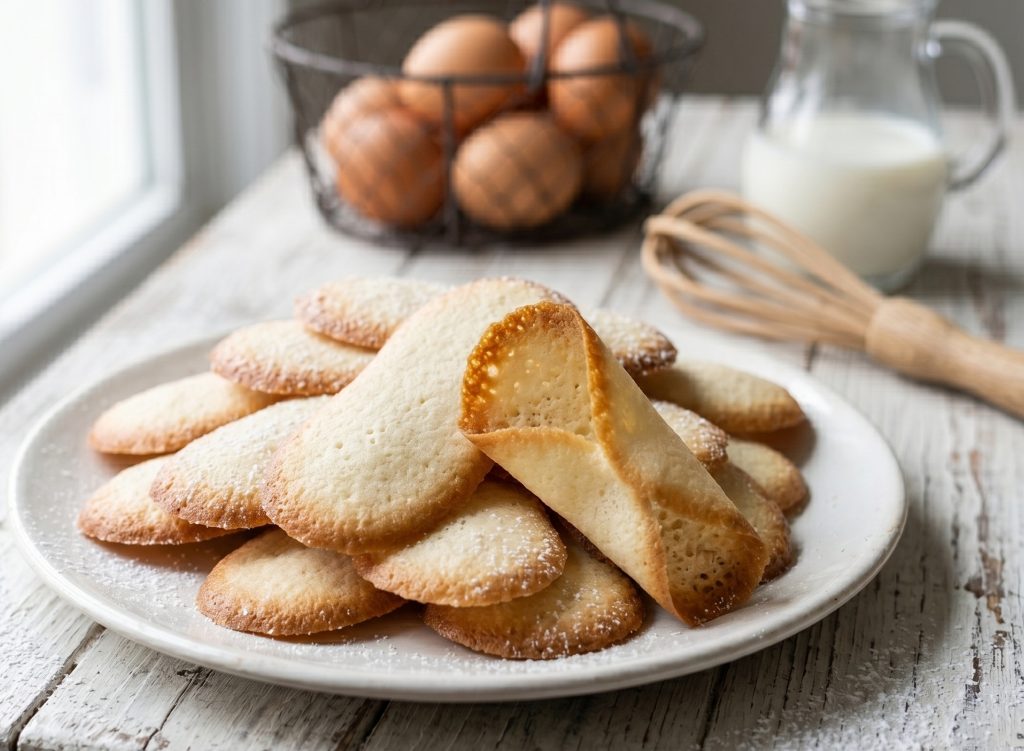
- Difficulty: Easy
- Cost: Very inexpensive
- Preparation time: 15 Minutes
- Cooking time: 8 Minutes
- Portions: about 30 pieces
- Cooking methods: Oven
- Cuisine: Italian
Ingredients Homemade Cat’s Tongues
- 3 1/2 tbsp butter (soft, creamy (pomade) consistency)
- 1/2 cup powdered sugar
- 1 1/2 large egg whites egg whites (from about 1½ eggs)
- 3/8 cup type 0 flour
Tools
- Kitchen scale
- Bowl
- Hand mixer
- Spatula
- Piping bag
- Baking sheet
How to make perfect cat’s tongues: tricks to prevent sticking and get the waved shape
In a bowl, work the soft butter with the powdered sugar using a spatula. Mix well until you obtain a smooth cream. Remember: this mixture must not be whipped, so don’t use electric beaters; work it patiently by hand with the spatula.
Gradually incorporate the egg whites little by little, continuing to mix with the spatula until fully absorbed. Finally, add the sifted flour and blend everything until you have a soft, homogeneous, lump-free dough.
Transfer the dough into a piping bag fitted with a smooth round tip about 10 mm (≈ 3/8 in). On a baking sheet lined with parchment paper, pipe sticks about 4 inches long, well spaced from each other (about 15 per sheet) because they will spread considerably during baking.
Bake in a preheated fan oven at 374°F for about 8 minutes. They are ready when the edges are nicely browned. If you want the classic wave shape, remove them from the sheet while still hot and drape them over a rolling pin: as they cool they will take the curved shape.
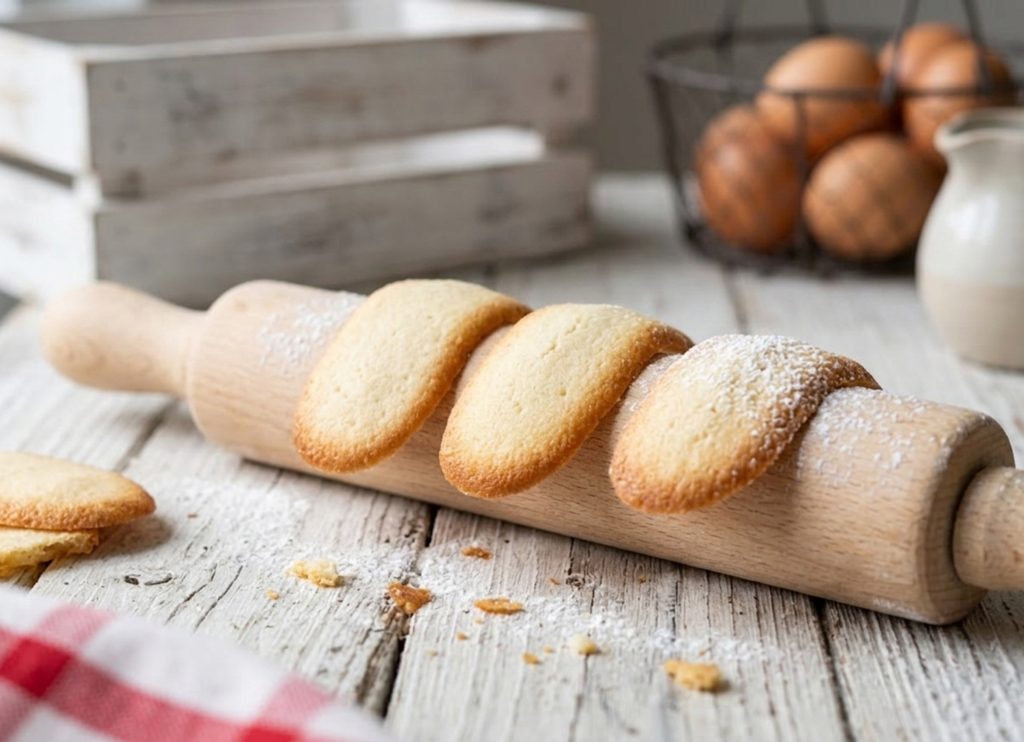
Alternatively, let them cool flat.
Notes on ingredients and substitutions
Butter: It should be at “pomade” stage — very soft but not melted. Take it out of the fridge at least 2 hours before.
Egg whites: Use them at room temperature so they bind better with the butter’s fat.
Flour: Type 0 flour is ideal, but you can also use a weak 00 for an even more crumbly texture.
Recipe variations
Chocolate-dipped: Once cool, dip the tips of the cat’s tongues in melted dark chocolate and let them set.
Flavored: Add a pinch of vanilla or a fine-grated lemon zest to the dough for a citrusy aroma.
Storage
Cat’s tongues fear humidity! Store them in an airtight container (preferably tin) for up to 2 weeks. You can also freeze them baked for about 1 month, taking care not to break them as they are very fragile.
Tea’s tips
My clever tip? When preparing the baking sheet, lightly wet the sheet before laying the parchment: this way the paper will adhere perfectly and won’t move while you pipe, giving you straight and precise sticks!
FAQ (Questions and Answers)
Why did my cat’s tongues stay soft?
Probably the baking time was too short or you removed them from the oven before the edges were well caramelized. They must be browned on the perimeter to become crunchy.
Can I use granulated sugar?
I strongly recommend powdered sugar: it dissolves instantly in the butter without needing to whip the mixture, guaranteeing the smooth, silky texture typical of these cookies.
What can I do with leftover yolks?
Don’t throw them away! You can use them for a pastry cream or a delicious custard to serve alongside your cat’s tongues.
