
Homemade wholewheat focaccia: the steam trick for an incredibly soft interior
Making a wholewheat focaccia that isn’t heavy or overly dense is the main challenge for those who love less refined flours. The common issue with whole grains is that they absorb liquids differently than white flour, with the risk of ending up dry and almost “stringy” to the palate.
It’s a nuisance that discourages many, but it can be easily solved with a small technical trick during baking.
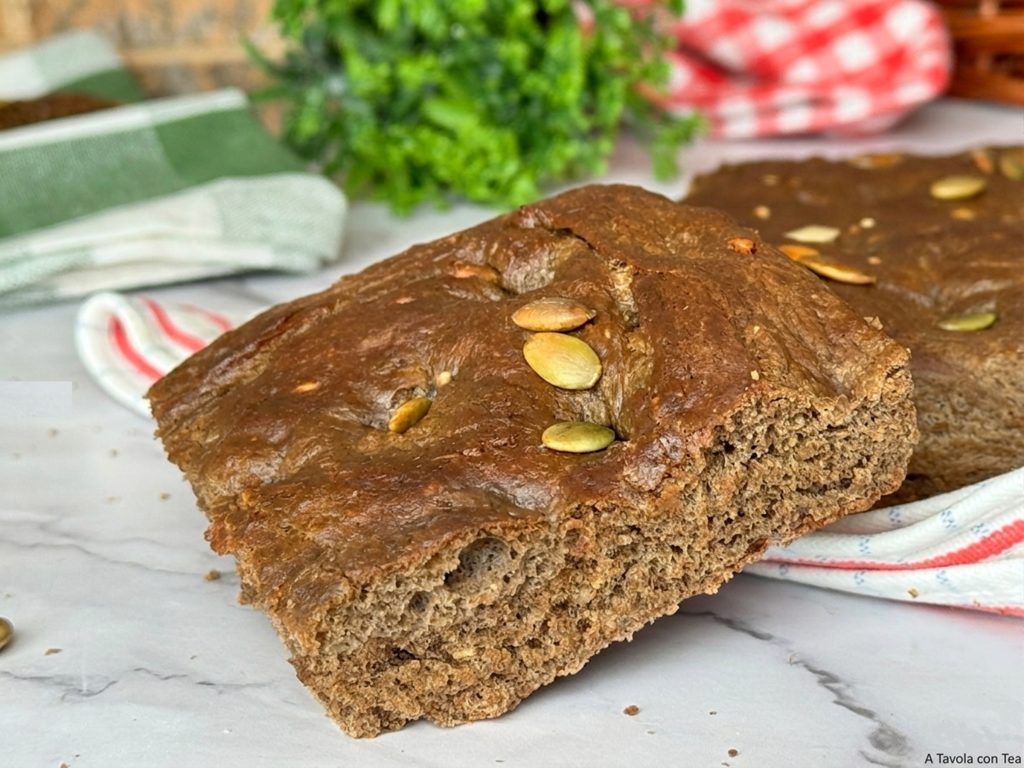
To overcome this problem, my secret is creating a humid environment in the oven: place a pan of water on the bottom and the steam will keep the dough hydrated, allowing the focaccia to rise tall and remain spongy inside.
Using a seven-grain flour blend gives a unique aromatic complexity, which is enhanced by the classic brine and the crunchy note of pumpkin seeds.
This focaccia is not only a healthier alternative, but a true rustic pleasure that pairs wonderfully with charcuterie and cheese boards.
By following the proofing times I indicate and the final flipped-bake trick, you’ll obtain a crispy base and an open, airy crumb that will surprise your guests.
It’s the perfect solution for those looking for a homemade, fiber-rich bread that doesn’t give up the typical “cloud” of softness of traditional focaccia.
Grain focaccia with pumpkin seeds: a digestible, crunchy recipe
- Rest time: 3 Hours 30 Minutes
- Preparation time: 20 Minutes
- Cooking time: 18 Minutes
- Portions: rectangular pan 12 x 16 in
- Cooking methods: Oven
- Cuisine: Italian
Ingredients Wholewheat Focaccia
- 4 cups wholemeal multigrain flour (I use Spadoni 7 cereals)
- 1 1/8 cups warm water (warm)
- 4 tbsp extra-virgin olive oil
- 3 1/4 tsp dry baker's yeast
- 1/2 tsp fine salt
- 2 tbsp water (warm)
- 2 tbsp extra-virgin olive oil
- to taste coarse salt
- to taste pumpkin seeds (or rosemary, optional)
Tools
- Kitchen scale
- Stand mixer
- Baking pan
Homemade wholewheat focaccia: the steam trick for an incredibly soft interior
Preheat the oven to 428°F and place a pan with water on the bottom: steam is essential! In a stand mixer or on the work surface, combine the flour, yeast, 4 tablespoons of oil and the salt. Add the warm water a little at a time, kneading vigorously until you obtain a soft, smooth ball. Cover and let rise until doubled (about 1½ to 2½ hours, depending on temperature).
Generously oil a rectangular baking pan. Stretch the risen dough with your hands until it reaches the edges. Cover with a cloth and let rest for another 45–60 minutes. This second rest is what will make the crumb tall and airy.
Make the classic dimples by pressing the surface with your fingertips. Emulsify the 2 tablespoons of water with the 2 tablespoons of oil and brush liberally, filling the holes. Add coarse salt and pumpkin seeds. Bake for 15–18 minutes. Tea’s tip: for a super-crispy base, flip the focaccia onto another baking sheet during the last minute of baking. Remove from the oven and cool on a rack, preferably inverted, to let the moisture escape.
📝 Notes on Ingredients and Substitutions
Seven-grain flour: Gives a toasty, rustic flavor. You can use a regular wholemeal flour, but the cereal mix ensures a more interesting crumb structure.
Yeast: If you use fresh baker’s yeast, you’ll need about 3/4 to 7/8 oz (20–25 g).
Pumpkin seeds: Add a crunchy texture that contrasts wonderfully with the softness of the crumb.
🔄 Alternatives and Variations
Mediterranean version: Replace the pumpkin seeds with halved cherry tomatoes and Taggiasca olives.
Sweet focaccia: Omit the rosemary and use the brine to anchor grapes or thin apple slices.
📦 Storage
Keeps soft for 2 days wrapped in a tea towel or in a paper bag. You can freeze it already sliced and reheat directly in the oven or in a toaster.
💡 Tea’s Tips
When you open the oven to insert the focaccia, be careful: the accumulated steam will rush out. This professional technique helps an instant oven spring, preventing the crust from drying too quickly and stopping the focaccia from rising.
FAQ (Questions and Answers)
1. Can I use less yeast?
Yes, but you will need to extend the time of the first rise, perhaps letting it mature in the fridge overnight.
2. The focaccia stayed flat—why?
Check that the water wasn’t too hot (it can kill the yeast) and make sure the second proof in the pan took place in a place without drafts.
3. Can I make it with spelt flour?
Absolutely yes, the procedure remains unchanged, but the texture will be even more rustic and slightly more delicate.
