
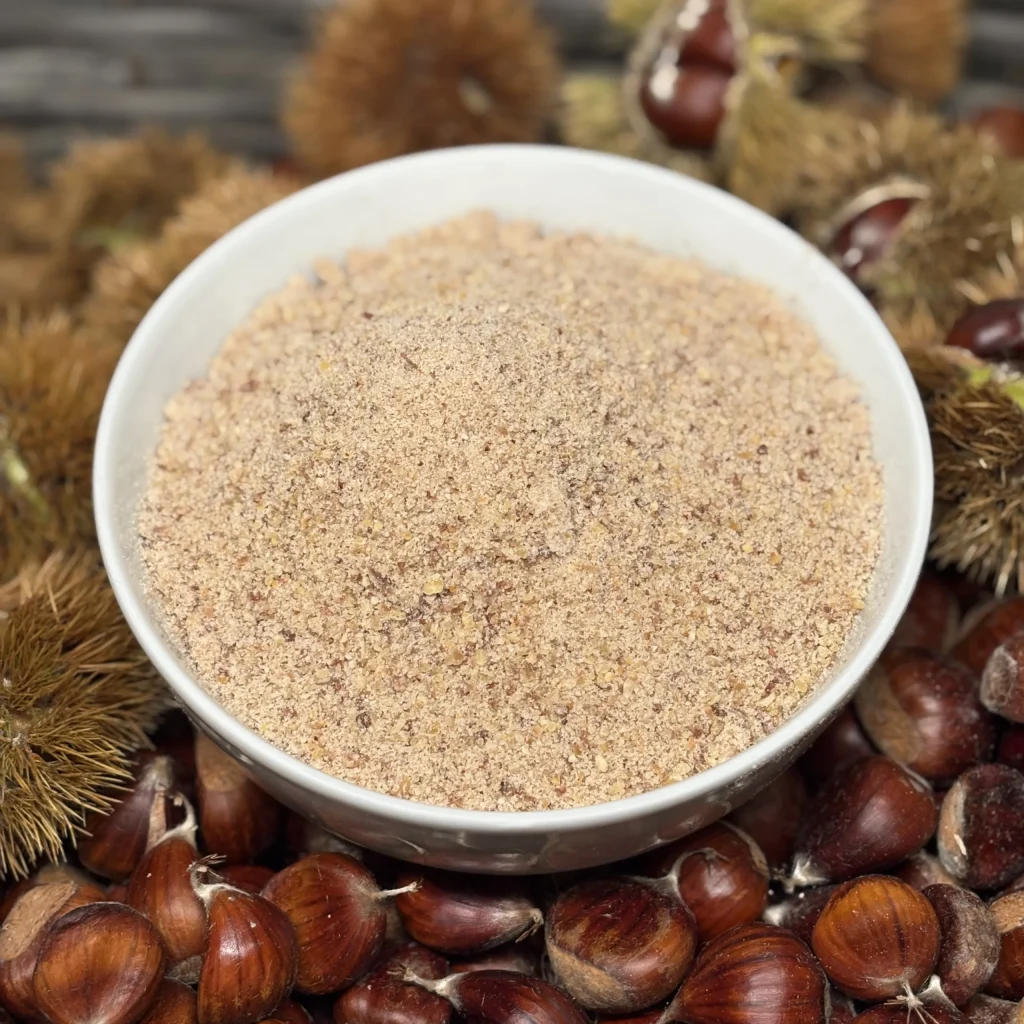
Hello friends of taste and lovers of authentic traditions! Today, I take you on a journey scented with earth, woods, and joyful labor: the making of our homemade chestnut flour. We’re not talking about a bag purchased at the supermarket, but the real “brown gold” personally gathered in the beating heart of Sicily, among the picturesque chestnut groves of Madonie, precisely in the splendid setting of Petralia Sottana.
Imagine the crunch of dry leaves underfoot, the crisp air, and the dull thud of falling chestnuts: this is where the magic begins. After carefully collecting the finest fruits, we transformed them, step by step, into a flour with an intense and unmistakable flavor, perfect for sweet and savory preparations that taste like history and home.
Are you ready to discover all the secrets to turning your woodland bounty into high-quality chestnut flour? Put on your aprons, let’s get started!
Related recipes:
- Difficulty: Medium
- Cost: Medium
- Preparation time: 12 Hours
- Portions: about 270 g
- Cooking methods: Boiling, Oven
- Cuisine: Italian
- Seasonality: Autumn
Ingredients
- 4.4 lbs chestnuts
Tools
- Cutting Board
- Knife
- Pot
- Colander
- Baking Tray
- Parchment Paper
- Oven
- Food Processor
Steps
First, make an incision in each chestnut, then cook for 40 minutes from boiling in a pot full of water.
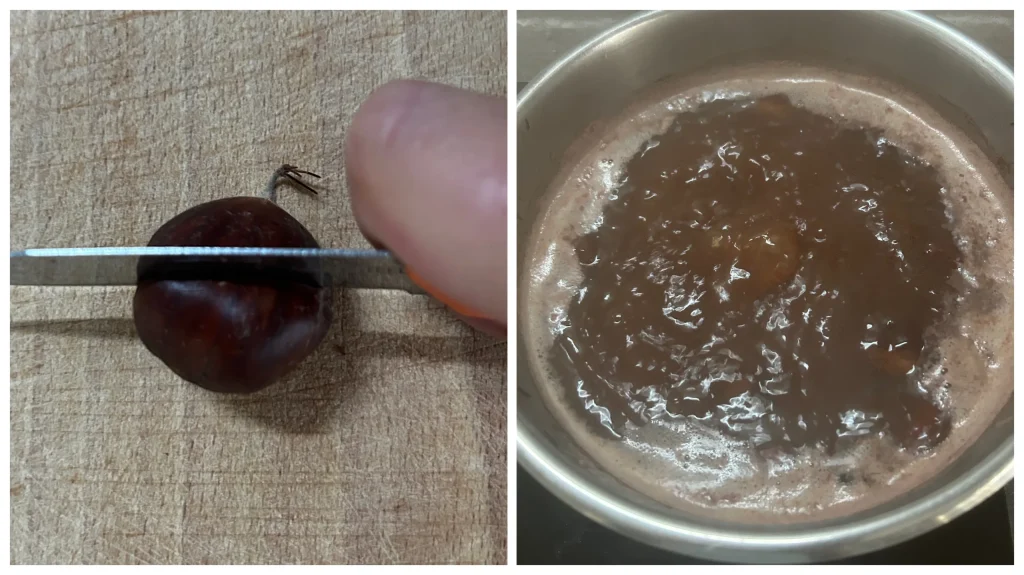
Next, after cooking is complete, drain the chestnuts in a colander and let them cool until they are warm to the touch. Once the time has passed, proceed to peel all the chestnuts.
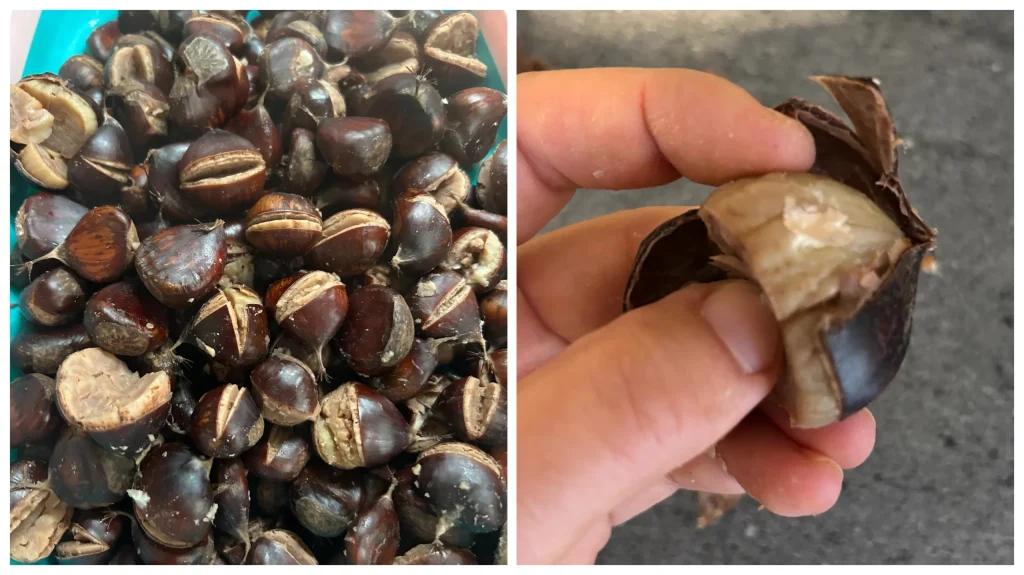
Then, place all the peeled chestnuts on a lined baking tray and bake in a preheated oven for about 1 hour at 320°F. At the end of cooking, remove the tray and let it rest at room temperature for about 6 hours or until the chestnuts are well dried.
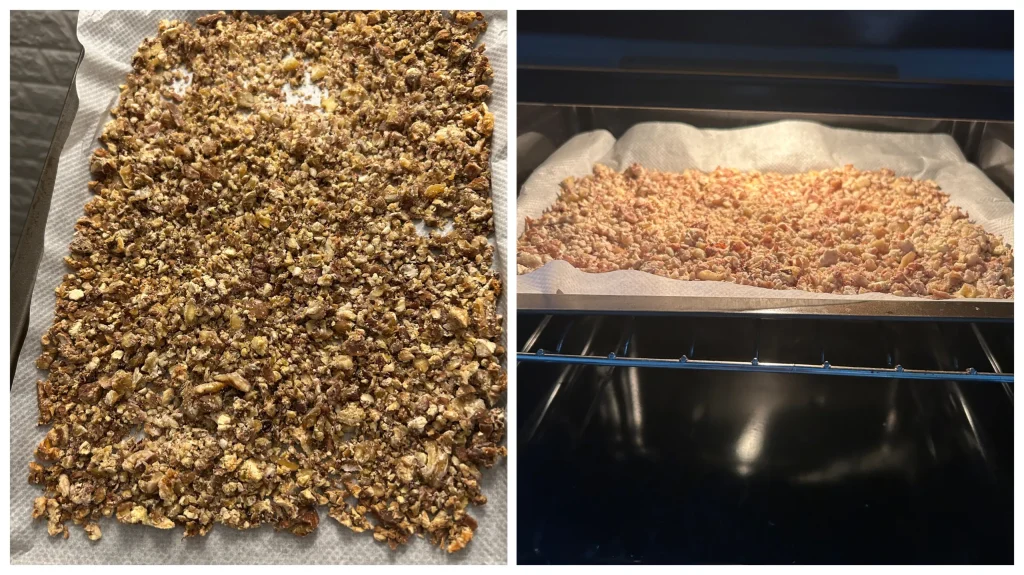
Finally, pour the chestnuts into a blender or mixer and grind into flour, adjusting the appropriate power and speed.
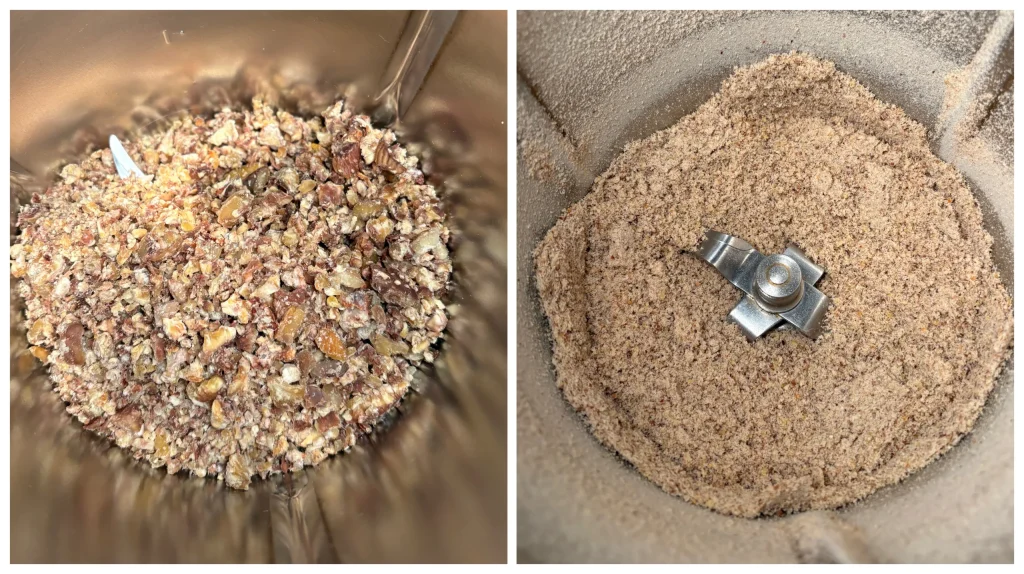
You can use the chestnut flour immediately or store it in glass jars for later use.
Advice
Chestnut flour can be stored in jars at room temperature for about 7 days, after which it is advisable to store it in the freezer for long-term preservation.
FAQ (Frequently Asked Questions)
What can I use chestnut flour for?
Generally for sweet recipes like cakes, crepes, and pancakes.
