
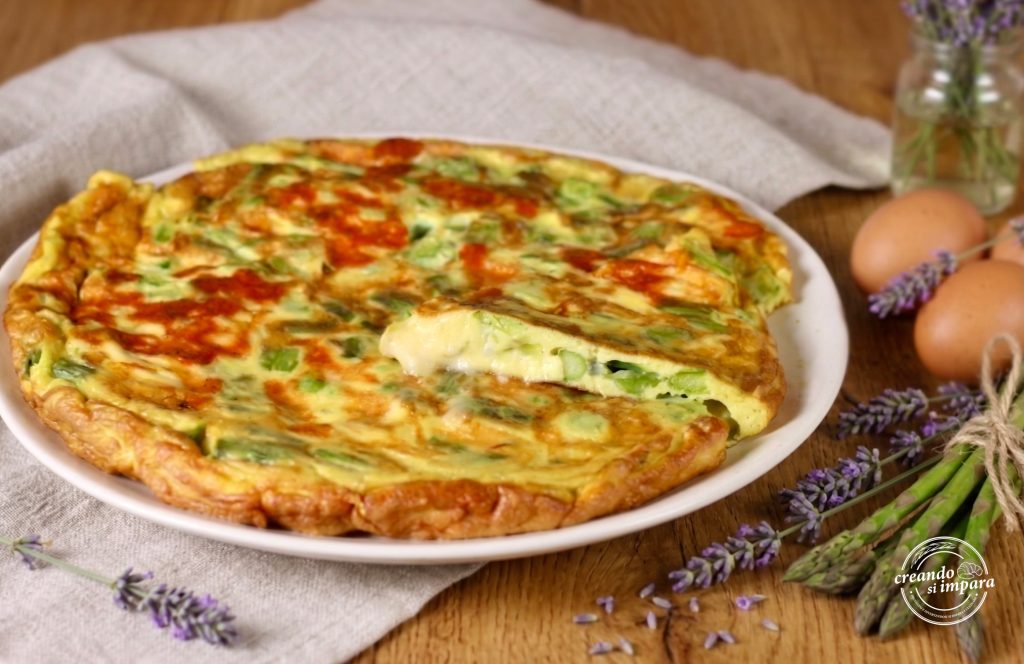
The asparagus and Asiago frittata is a hearty second course that captures the freshness of seasonal ingredients. The sweetness of green asparagus, sautéed to preserve its texture, pairs divinely with the bold note of Asiago, which melts to create an irresistibly melty center. This preparation is distinguished by its simplicity and by the balance between the savoriness of Parmesan and the softness of the eggs. It’s a flavorful main dish ideal for a quick dinner or to serve in cubes at an aperitif, able to win everyone over thanks to its enveloping aroma and velvety texture. Follow my technical steps to achieve even cooking and perfect browning!
If you like frittatas try the folded zucchini frittata, the baked frittata with potatoes, the baked ricotta and zucchini frittata or the frittata pizza.
HERE you’ll find the best main courses
Follow my page FACEBOOK to discover many tasty ideas.
OTHER FRITTATAS
- Difficulty: Easy
- Cost: Budget-friendly
- Preparation time: 20 Minutes
- Cooking time: 10 Minutes
- Portions: 2People
- Cooking methods: Stovetop
- Cuisine: Italian
- Seasonality: Spring
Ingredients for preparing the asparagus frittata
- 4 eggs
- 9 oz green asparagus
- 2 cloves garlic
- 1/3 cup grated Parmesan (about 1 oz)
- to taste extra virgin olive oil
- to taste salt and pepper
- 3.5 oz Asiago (about 1 cup diced)
Steps to prepare the asparagus and Asiago frittata
Begin preparation by taking care of the raw ingredients: clean the asparagus by removing the woody, tougher end of the stalk. A key technical detail for success is to peel the thicker part of the stalk with a vegetable peeler so it becomes as tender as the tips. Then cut the stalks into rounds, keeping the tips intact for a nicer presentation. In a pan add a drizzle of extra virgin olive oil, add the two garlic cloves and sauté the asparagus with a pinch of salt for about ten minutes. Once cooked, remove the garlic and let them cool slightly.
In a large bowl, break the eggs and add the grated Parmesan and the Asiago cut into regular pieces. Season with salt and pepper to taste and finally add the previously sautéed asparagus. A very important technical tip: mix quickly everything together. Remember that eggs for a frittata should not be overworked or excessively whipped; it is enough to combine the ingredients so the mixture remains compact but soft once cooked, preserving the structure of your homemade frittata.
Heat a little oil in a nonstick pan and, when it is hot, pour in the mixture spreading it evenly. Immediately cover with a lid: this will allow the heat to circulate, cooking the top of the frittata thanks to the retained steam. Cook for a few minutes over low heat, monitoring the edges. Managing the lid is the secret to a flavorful frittata that doesn’t dry out inside while keeping a nice crust outside.
When the base is nicely golden and the top begins to set, perform the most delicate step: flip the frittata using the lid itself or a flat plate. Slide it back into the pan and cook for another 2-3 minutes on the other side without the lid to encourage final browning. Once ready, slide it onto a serving plate. You can choose to serve the frittata hot to enjoy the melty Asiago, or cold, which is an excellent option if you want to serve it as an appetizer or during a picnic.
Tips for a perfect result
Peeling the stalks: Don’t skip peeling the thicker part of the stalks; it ensures every asparagus piece has the same melting texture, avoiding unpleasant fibrous bits in your flavorful recipe.
Low heat: Keep the heat low during cooking. Too high a temperature will burn the outside before the cheese inside has time to melt properly.
Right-sized pan: Use a pan not too large for 4 eggs (about 8-9 in), so you’ll get a nice tall and fluffy frittata.
Tasty variations
Mint note: Add a few chopped fresh mint leaves to the egg mixture; the freshness of the mint amazingly enhances the asparagus flavor.
Oven cooking: If you prefer a lighter version, you can bake the mixture in a parchment-lined pan at 356°F (about 180°C) for approximately 20 minutes, until golden.
Adding potatoes: Add cooked diced potatoes to turn the dish into a more substantial rustic tortilla.
Storage
In the fridge: The frittata keeps perfectly for 2 days when stored in an airtight container.
In a sandwich: It makes an ideal gourmet sandwich filling the next day; the flavor of asparagus and cheese mellows and becomes even more intense.
Reheating: If you want to eat it hot the following day, briefly reheat it in a pan with a lid to revive the Asiago.
Now it’s your turn!
The asparagus and Asiago frittata is a classic that never gets old, perfect for bringing garden flavors straight to the plate. The creaminess of the cheese and the delicacy of the asparagus tips make it a guaranteed success.
Do you prefer to serve it hot to see the Asiago stretch, or do you find it tastier after resting and served cold? Tell me in the comments if the peeler trick made your asparagus very tender and if this homemade frittata will become the star of your spring lunches!
FAQ (Questions and Answers)
Can I use aged Asiago?
You can, but the frittata will be less melty and more savory. Fresh pressed Asiago is ideal to achieve that soft, melting center that characterizes our flavorful recipe.
What if the frittata breaks while I flip it?
Don’t panic! If it happens, gently reassemble it with a spatula while it finishes cooking. The melted cheese will help “seal” the cracks and once on the plate nobody will notice.
Should the asparagus be blanched first?
Following my method, sautéing them in the pan after peeling, there is no need to blanch. This way they keep a more intense flavor and a better texture.
