
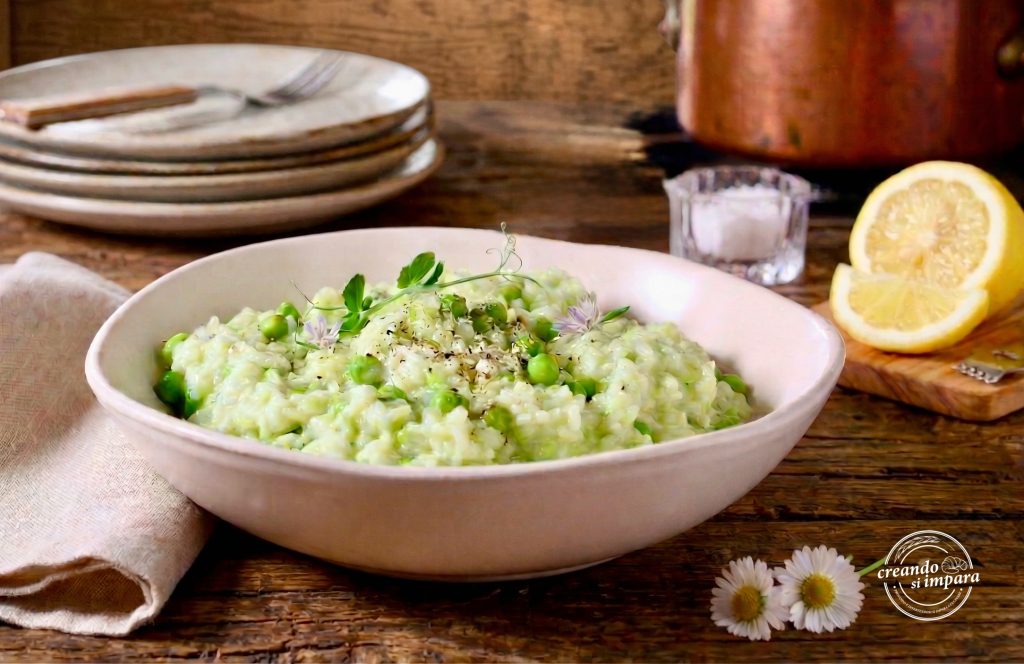
The creamy pea risotto is a first course that celebrates the sweetness of spring through an enveloping texture and a bright green color. The real technical secret to achieving a restaurant-worthy result lies in the double processing of the legume: part of the peas are left whole to provide bite, while the other part is transformed into a smooth purée that binds the grains of Carnaroli rice in a natural finishing. Toasting the rice in the same cooking base used for the peas allows you to recover every nuance of flavor, guaranteeing a perfect balance between the savory broth and the legumes’ sweet notes. It’s a genuine and refined homemade risotto, ideal for those seeking a flavorful dish that melts in the mouth. Follow my steps for an impeccable wave-like creaming!
If you like risottos try the asparagus risotto, the tomato risotto, the basil risotto or the lemon risotto.
Browse all my FIRST COURSES to find the one for you.
Follow me on Facebook for lots of ideas to bring to the table every day!
OTHER RISOTTOS
- Difficulty: Easy
- Cost: Budget-friendly
- Preparation time: 20 Minutes
- Cooking time: 25 Minutes
- Portions: 4
- Cooking methods: Stove
- Cuisine: Italian
- Seasonality: All seasons
Ingredients
- 1 3/4 cups Carnaroli rice
- 1 1/4 cups peas
- Half onion
- 4 tbsp extra virgin olive oil
- 6 1/3 cups vegetable broth
- 1 oz Parmesan cheese (grated)
- to taste salt and pepper
- to taste chives
Tools
This post contains affiliate links
- Saucepan
- Immersion blender
Steps to prepare the pea risotto
Begin by finely chopping half an onion and sautéing it in a large pan with a drizzle of extra virgin olive oil. When the onion becomes translucent, add the peas, season with salt and pepper, and cook them, adding a couple of ladles of vegetable broth as needed. Once the peas are tender, remove about half of them and purée them with an immersion blender until you obtain a thick, lump-free cream. This technical step is the heart of your flavorful risotto: the pea purée will act as a natural binder, making the final texture incredibly velvety and uniform.
In the same saucepan where you cooked the remaining whole peas, add the Carnaroli rice and toast it over high heat for about two minutes, until the grains feel warm to the touch and slightly translucent. Then begin the actual cooking by adding the well-heated vegetable broth, one ladle at a time. Remember to stir the rice frequently during this stage: the friction between the grains helps release starches, which combined with the broth will create the base for a homemade risotto with superior creaminess. Make sure the broth is always boiling so as not to interrupt the grain’s cooking.
About five minutes before the rice is done, add the pea purée to the mixture. Stir well so the green cream distributes evenly, giving the risotto a vivid color and an intense aroma. Continue adding broth if necessary, keeping the rice well hydrated. This joining phase is essential so that the legume flavor penetrates deeply into each grain, ensuring a creamy pea risotto that is balanced throughout, without the purée feeling detached from the other ingredients.
Once the rice is al dente, remove the saucepan from the heat to proceed with the final creaming. Add the Parmesan, a final drizzle of extra virgin olive oil and, if desired, chopped chives and grated lemon zest for a fragrant touch. Stir vigorously with a circular motion to incorporate air and make the mixture glossy and frothy. Let the risotto rest covered for one minute: this technical rest is essential to stabilize the starches and achieve the perfect consistency. Serve your flavorful risotto immediately, piping hot to fully enjoy its velvety softness.
Tips for a perfect result
Natural creaminess: Don’t add too much water when blending the peas; the cream should be thick so it binds well to the grains during the creaming of your homemade risotto.
Hot broth: Keep the vegetable broth on low heat next to the risotto pan. Adding cold broth would irreparably compromise the structure of the creamy pea risotto.
Creaming off the heat: Always finish creaming away from the stove. The residual heat of the pan is enough to melt the Parmesan and create the perfect emulsion with the oil.
Tasty variations
Robiola version: For an even creamier result and a slight tang, replace half of the Parmesan with 1 tablespoon of fresh robiola.
Crispy note: If you love contrasts, sprinkle each plate with toasted pine nuts; their resinous note pairs wonderfully with the sweetness of the peas.
Mint fragrance: If you don’t have chives, a few chopped leaves of fresh mint will give your risotto an unforgettable spring aroma.
Storage
In the fridge: Risotto can be kept for 1 day in a closed container. Reheat it with a splash of water or broth to restore its softness.
Kitchen recovery: With leftover flavorful risotto you can form breaded and fried rice balls, perfect as an appetizer or finger food.
No freezer: Freezing is not recommended as it would alter the grain’s texture and the peas’ creaminess, making the dish watery.
Now it’s your turn!
The creamy pea risotto demonstrates that the double processing technique can transform a simple recipe into a masterpiece of texture. The legumes’ sweetness makes it a dish loved by the whole family.
Do you prefer your risotto very loose or do you like a firmer consistency on the plate? Let me know in the comments if the pea purée trick made your risotto as creamy as you hoped and if this version will become your new “never without”!
FAQ (Questions & Answers)
Which rice variety is best?
Carnaroli is unbeatable for risottos because it holds its cooking exceptionally well, ensuring an excellent homemade risotto even for beginners.
Can I use canned peas?
It’s better to use fresh or frozen peas to maintain a more authentic flavor and a bright green color, but if you use canned peas, make sure to rinse them thoroughly.
Why use chives?
Chives add a note of freshness and a slightly pungent aroma that balances the peas’ sweetness, completing the aromatic profile of your flavorful risotto.
