
Creamy Pasta and Peas with Sausage: The One-Pot Recipe That Rocks
There’s something magical about watching a few simple ingredients turn into a dish that warms your soul. If the Original Pasta and Chickpeas Recipe is a Sunday hug, this Pasta and Peas with Sausage is the energy boost to face the week with flavor and zero stress.
Forget the usual bland little soup. This is a “spot-on” version, where the sweetness of the peas meets the bold character of crumbled and nicely browned sausage. The secret? It’s all in the one-pot cooking: the pasta cooks directly in the sauce, releasing its starches and creating a creamy coating that will make you skip the spoon and go straight to the obligatory bread-sopping.
It’s a clever, quick and incredibly tasty dish, perfect for when you want something substantial without spending hours at the stove. And if after this rockin’ first course you want to keep the tradition going, don’t miss my Sausages in Tomato Sauce for an amazing main, or check out the Baked Pasta with Artichokes and Sausage if you’re looking for a festive lunch idea.
To finish sweetly without guilt? My Sugar-Free Pineapple Tiramisu is the final treat that pleases everyone.
Get comfortable, turn on the stove and let’s make this deliciousness together!
- Difficulty: Very easy
- Cost: Very inexpensive
- Rest time: 2 Minutes
- Preparation time: 10 Minutes
- Portions: 4
- Cooking methods: Stovetop, One-pot
- Cuisine: Italian
- Seasonality: All seasons
Ingredients
- 13 oz pasta (Short)
- 3 cups frozen peas
- 11 oz sausage (Pork)
- 5 cups vegetable broth
- Half glass white wine
- 1 spring onion (Large)
- 2 oz pecorino
- as needed extra virgin olive oil
- 1 pinch black pepper
- 1 pinch salt
Tools
- 1 Deep saucepan Lagostina
- 1 Small saucepan Tognana
Steps
The basic ingredients
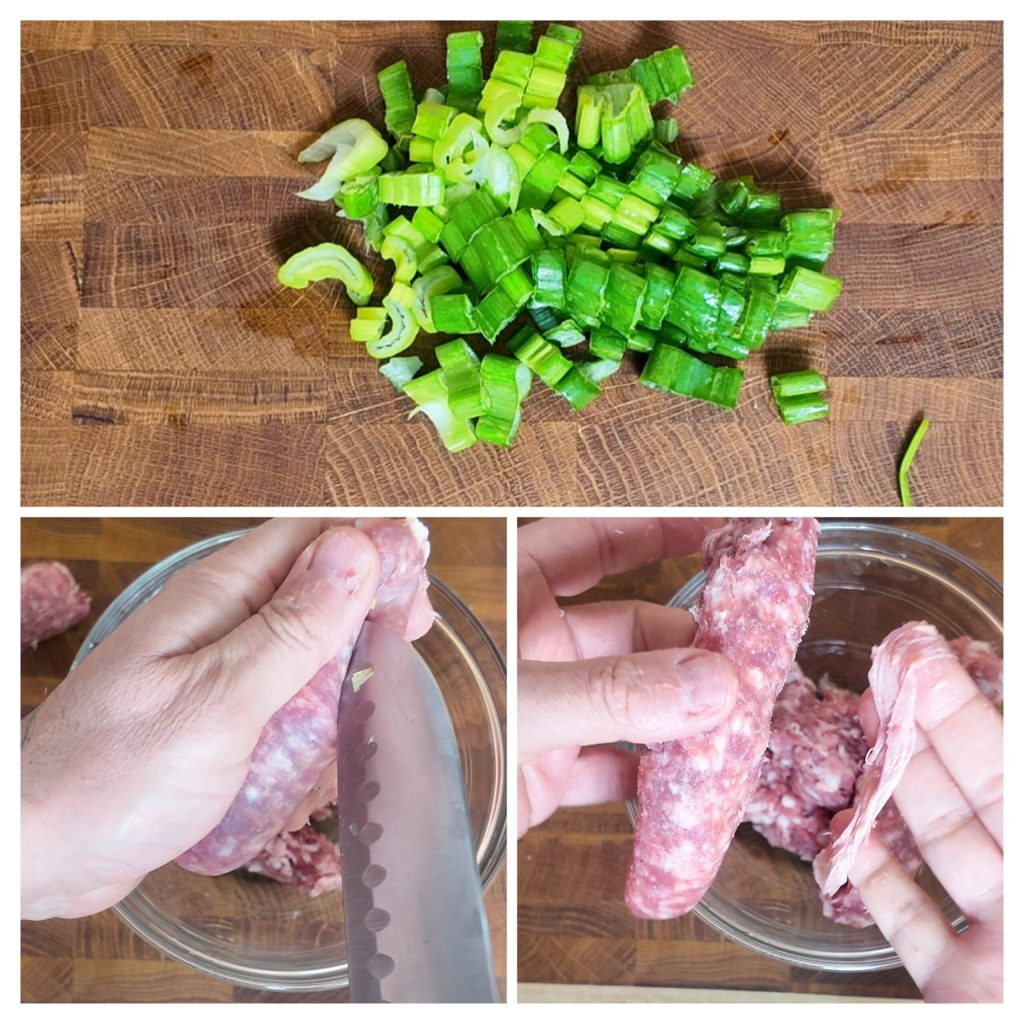
Start by preparing the base for the recipe. Slice the spring onion separating the white part from the green: keep the green part aside because, if you like, we’ll add it raw at the end to give freshness.Then move on to the sausage: cut the casing, remove it carefully and crumble the meat well with your hands or with a fork in a bowl.
The soffritto and the peas
Heat a deep pan and brown the sausage with a drizzle of extra virgin olive oil.
When it’s nicely golden, deglaze with the white wine.
Once the alcohol has evaporated, add the white part of the spring onion and the peas.
Let the soffritto flavor everything for a couple of minutes, then cover with hot vegetable broth and continue cooking.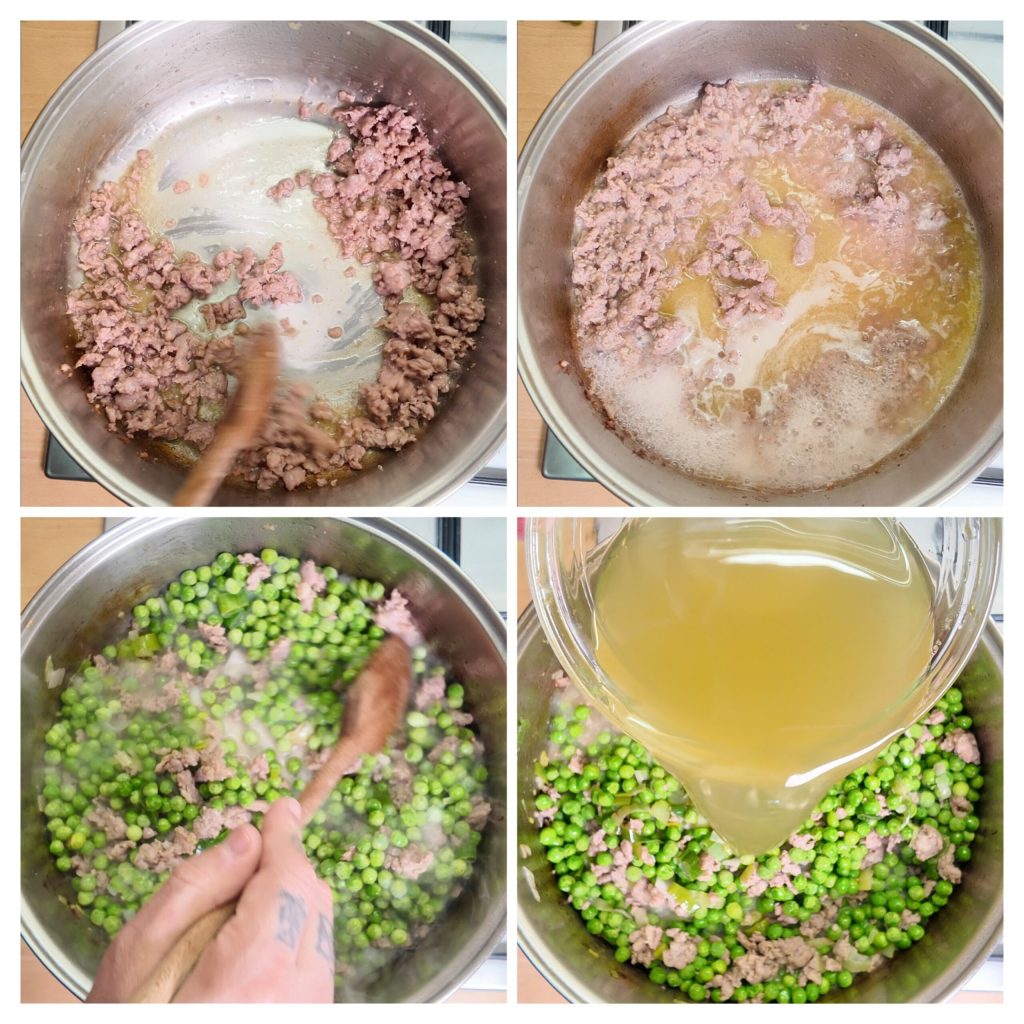
Cooking the pasta
When the peas are almost cooked but still slightly crunchy, it’s time to add the pasta directly to the same pot.
Cook it by adding more hot broth as needed, as you would with a risotto, until it reaches the right texture and the pan juices become creamy.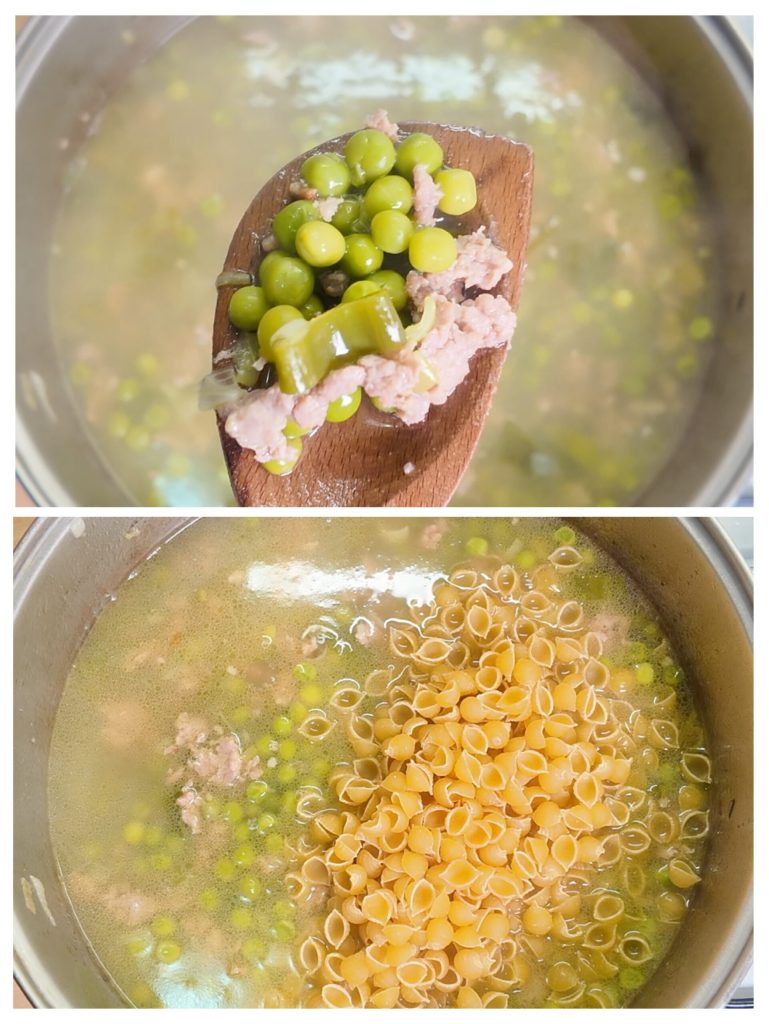
Finishing and resting
With the heat off, adjust salt if needed.
Add the green part of the spring onion you set aside, a good pinch of black pepper and, if you like, a handful of grated pecorino to bind everything together.
Cover the pot with the lid and let it rest for a minute: this step is essential to let all the flavors meld.
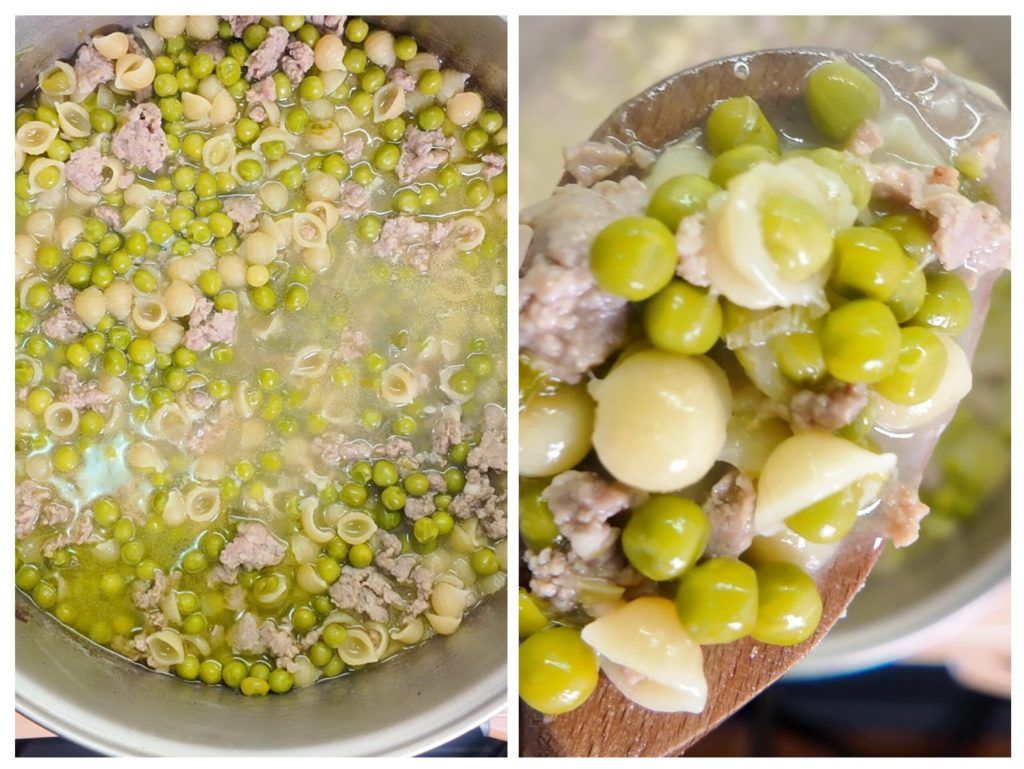
To the table
All that’s left is to plate and enjoy the result.
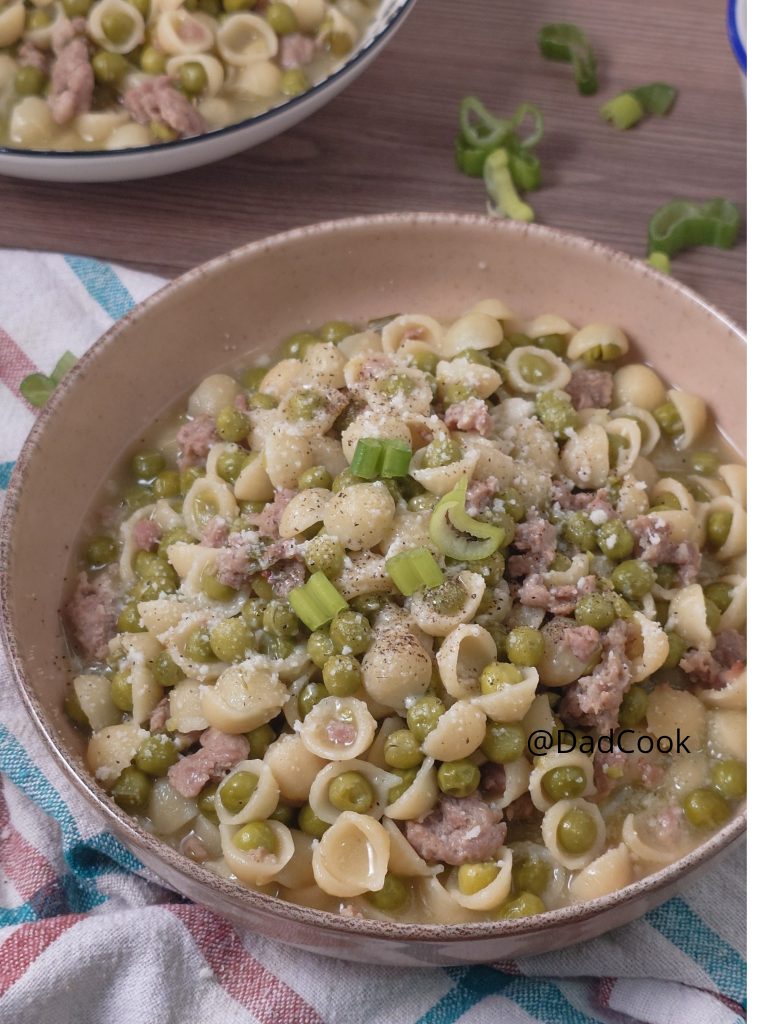
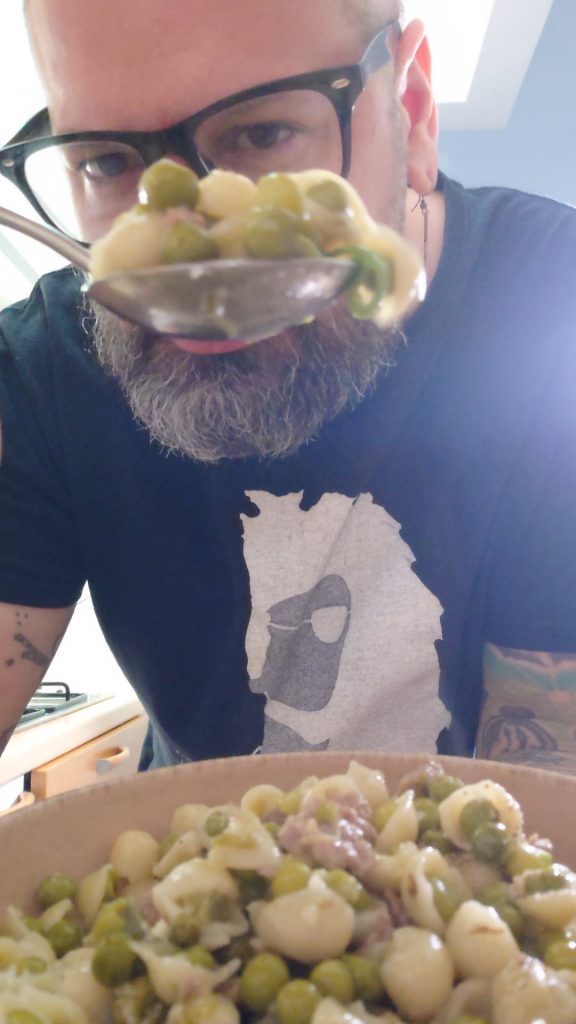
A spot-on, creamy and flavorful pasta and peas, ready for the final taste test.
STORAGE, TIPS, VARIATIONS AND NOTES:
Storage:
how to handle it best
If you have leftovers, you can store the pasta and peas in an airtight container in the refrigerator for up to 2 days.
Keep in mind that, as it cools, the pasta will tend to absorb all the cream and become compact.
To reheat it best, warm it in a small saucepan adding a splash of hot water or broth: it will become soft and tasty again like just-made.
Freezing is not recommended because the pasta would lose its texture.
Dadcook’s Tips
The right pasta: For this recipe the ideal is a short pasta that holds peas and bits of sausage well.
Besides small shells, ditalini or classic mixed pasta work well.
The broth:
Always use boiling broth.
Adding it cold would stop the cooking of the pasta and the peas, ruining the final creaminess.
The sausage:
Try to crumble it very finely in a bowl before putting it in the pot, so it distributes better in every bite.
Clever variations
“Red” version: If you like, you can add a tablespoon of tomato paste or a few cherry tomatoes halved together with the peas to give a touch of color and acidity.
Crispy note:
You can replace the sausage with pancetta or guanciale, making them crispy at the beginning and adding them only at the end on top of the dish.
Herb aroma:
If you don’t like spring onion, you can use chopped fresh mint to add at the end: it’s a classic pairing with peas that refreshes the dish.
Final notes
This recipe is a classic example of how, with few ingredients and a single pot, you can serve a complete and wholesome first course.
The risotto-style cooking technique really makes the difference, turning a simple dish into something velvety.
Have you tried this recipe?
I hope this Pasta and Peas with Sausage wins you over with its incredible creaminess, just like it did me!
It’s the perfect solution for those who want a dish that tastes like home and tradition, but with that clever touch of one-pot cooking that makes it velvety and irresistible without too much effort.
A true moment of authentic pleasure, ideal for a wholesome family lunch that satisfies everyone, young and old.
If you have doubts about how to manage risotto-style cooking to get the perfect density or if you want to suggest your secret variation — maybe with a pinch of chili or a different pasta shape — write to me below in the comments.
I love reading your versions and discovering those little tricks that make every dish unique when it enters your kitchens!
And don’t forget to follow me on my Facebook, DadCook page for more clever tips and to stay updated on my latest kitchen discoveries.
Cook with passion and… see you at the next recipe!
Frequently Asked Questions (FAQ)
What is the secret to an ultra-creamy pasta and peas?
The secret is risotto-style cooking.
By cooking the pasta together with the peas and the sausage, the released starch is not lost in the boiling water but creates that natural cream that perfectly binds all the ingredients.Can I use canned peas?Yes, you can use them if you’re short on time, but the flavor and texture change.
Fresh or frozen peas keep their shape and bright green color better.
If you use canned peas, add them only towards the end of browning the sausage because they are already very tender.Why did my pasta turn out too dry?
Risotto-style pasta continues to absorb liquids even after the heat is turned off.
The trick is to leave it slightly less done than desired before covering for the final rest.
If you notice it’s too dense, just add a ladleful of hot broth before serving.Can I prepare it in advance?
This recipe tastes best right away.
However, if you prepare it in advance, set aside some vegetable broth.
When you reheat it, add it in the pan to revive the original creaminess that the pasta has absorbed during resting.
