
Easter Vegetarian Lasagne: Color and Lightness on the Table
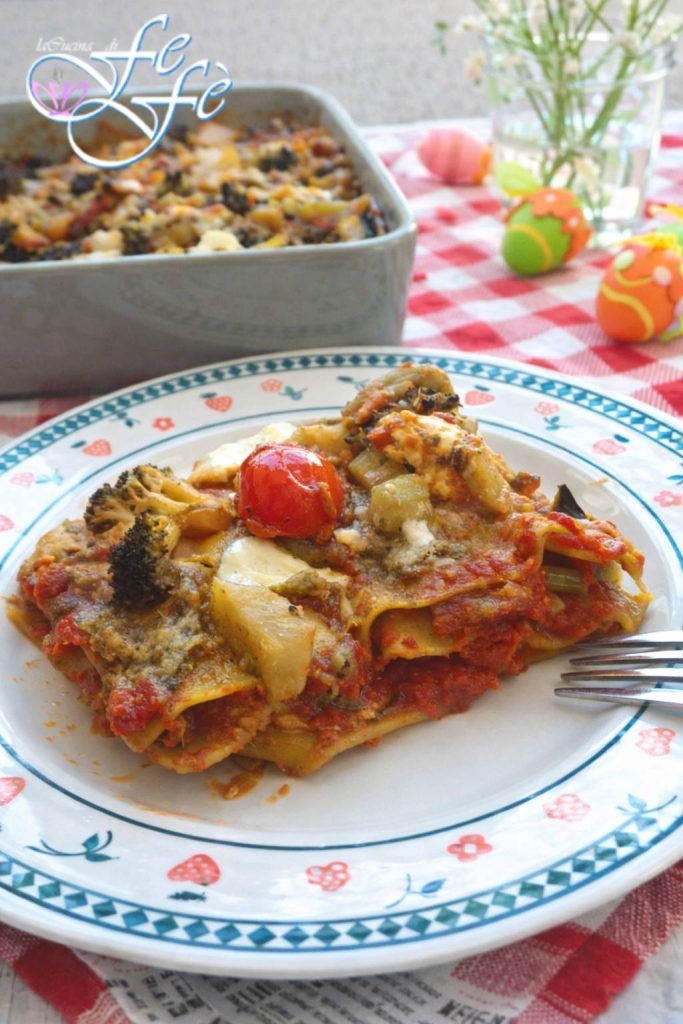
This year Easter was marked by sobriety. No large family lunches or grand celebrations, but a domestic intimacy that pushed us to rediscover the value of small things. Despite the difficult period we are living through in Italy and around the world, I wanted to give my husband and myself a moment of real carefreeness: a small bouquet from the balcony, an elegantly set table and the aroma of these fantastic vegetarian lasagne that made our celebration special. Taking advantage of spring produce, these lasagne bridge winter vegetables, now nearly at the end of their season!
A lighter variation: No Béchamel
The special feature of this lasagna? I decided to break with tradition. Instead of the classic béchamel, I chose a fresh, creamy mix based on cherry tomato passata, homemade pesto for an aromatic, intense touch, and ricotta flakes for a creamy texture without weighing it down.
Versatility and Seasonality
The great thing about this single first course is that it is totally customizable. I enriched it, layer by layer, with the vegetables I had on hand, but you can adapt it to any season. Go for asparagus, peas and artichokes in spring; zucchini, eggplant and grilled peppers in summer; or pumpkin, mushrooms or spinach in autumn and winter.
All “vegetarian” recipes exclude meat and/or fish (NB: other animal-protein-based foods such as eggs and cheeses may be used).
Other lasagne recipes you might be interested in:
- Difficulty: Easy
- Cost: Medium
- Preparation time: 30 Minutes
- Cooking time: 25 Minutes
- Portions: 6 Servings
- Cooking methods: Electric oven
- Cuisine: Italian
- Seasonality: Easter, Autumn, Winter
Ingredients
⚠ IN THIS RECIPE ONE OR MORE AFFILIATE LINKS ARE PRESENT. The products I recommend are the same ones I use in my recipes; purchasing them through my blog helps support me and my work, at no extra cost to you!
- 11 oz green egg lasagna sheets
- 1 cup fava beans (fresh, already shelled and peeled)
- 1 cup green beans (trimmed and cut into pieces)
- 1 cup broccoletti (broccoli florets) (florets, already trimmed)
- 1 1/2 cups tomato passata (cherry)
- 8 cherry tomatoes
- 7 oz pesto
- 1 1/4 cups sheep ricotta
- 2 cups vegetable broth
- 3 oz Parmigiano Reggiano PDO (grated)
- to taste nutmeg
- to taste salt
- to taste black pepper
Preparation
In a baking dish start by preparing the first layer, spreading a few tablespoons of tomato passata and pesto and 2 tablespoons of vegetable broth. Then place the lasagna sheets to cover the entire surface of the pan.
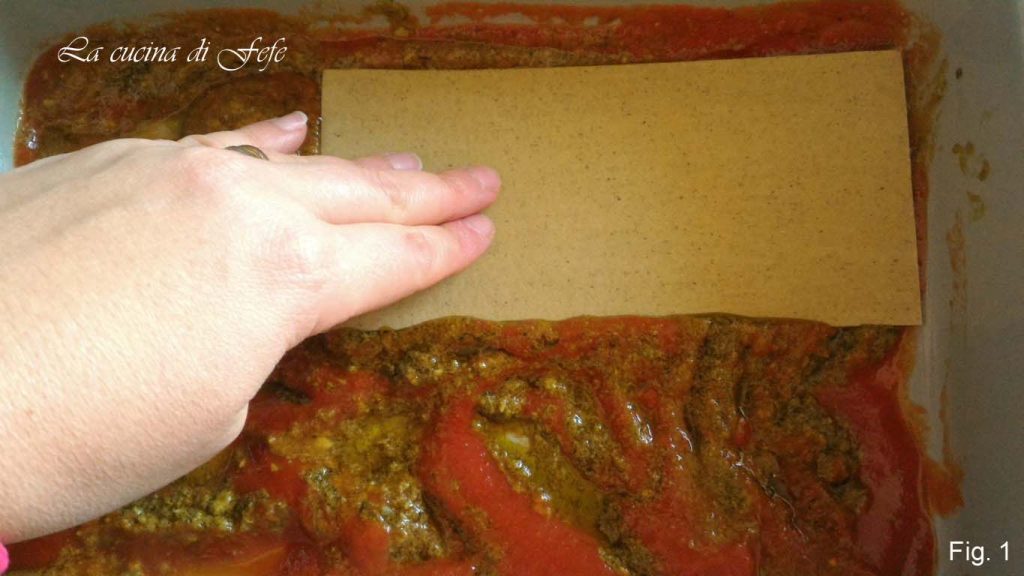
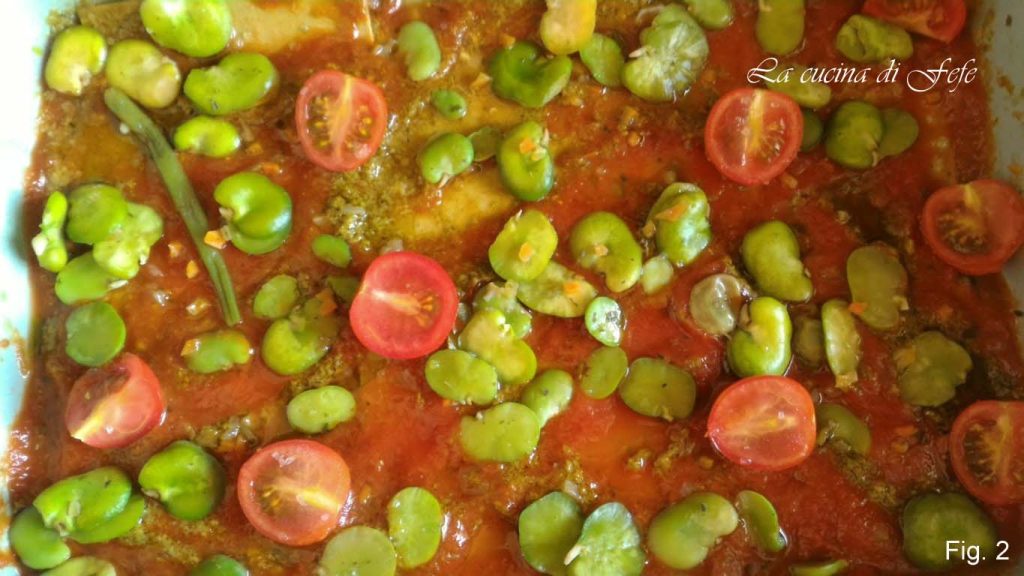
Cover the lasagne with a few more tablespoons of sauce and pesto. Add the cherry tomatoes cut in half and the fresh fava beans after having blanched them for 5 minutes in the vegetable broth and drained.
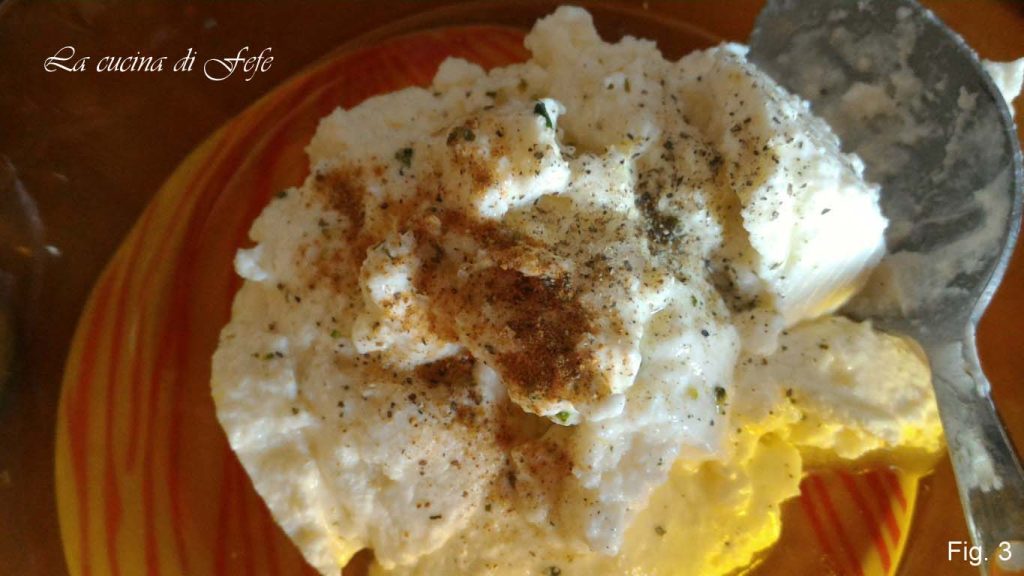
Meanwhile, in a separate bowl, work the ricotta with a pinch of salt, nutmeg and a dusting of black pepper.
Add a few spoonfuls here and there of the ricotta mixture and a sprinkle of grated Parmigiano.
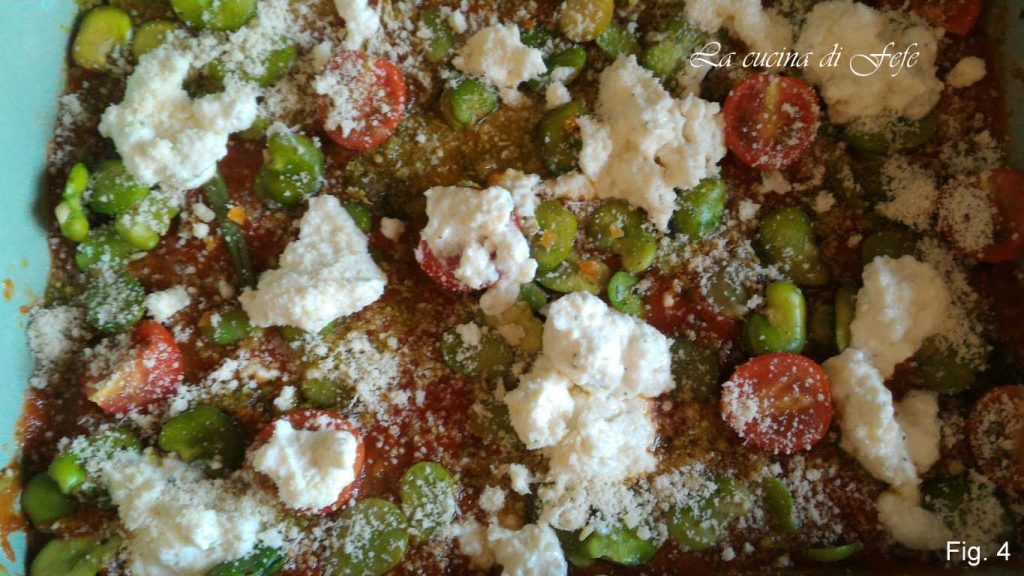
Build a second layer of lasagne, seasoned with more tomato passata and pesto to cover them well, then add the broken green beans, also previously blanched in the same vegetable broth for 10 minutes.
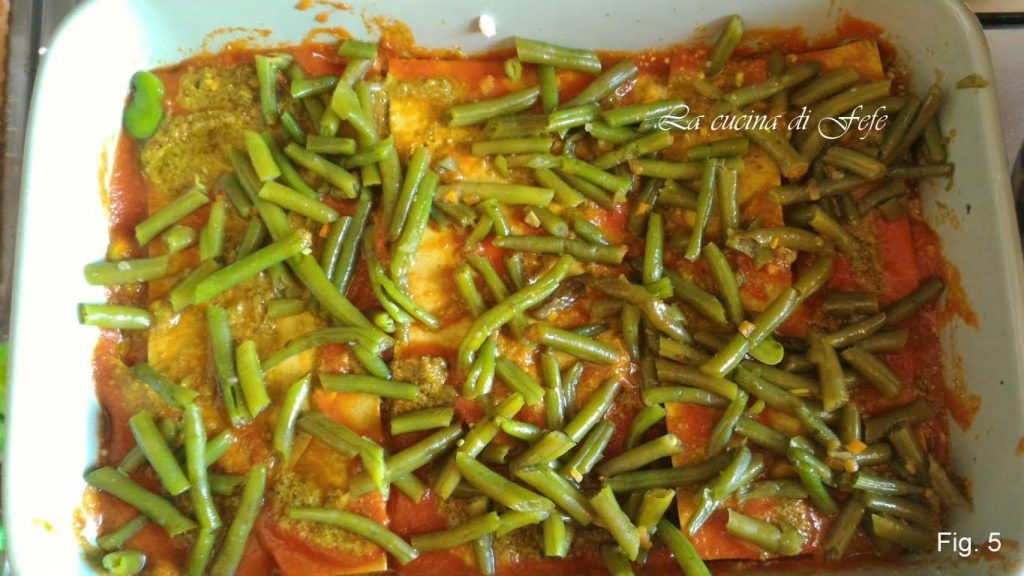
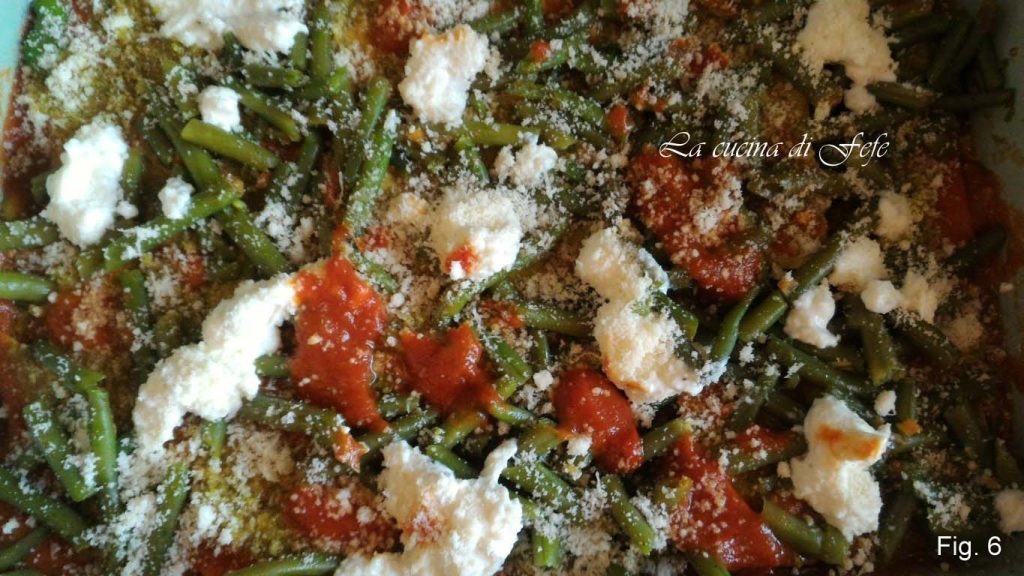
Add a few more spoonfuls here and there of ricotta and a sprinkle of grated Parmigiano.
Finally create a third layer of lasagne, seasoned with the remaining tomato sauce and pesto, then add the broccoli florets previously blanched in the vegetable broth for 8 minutes.
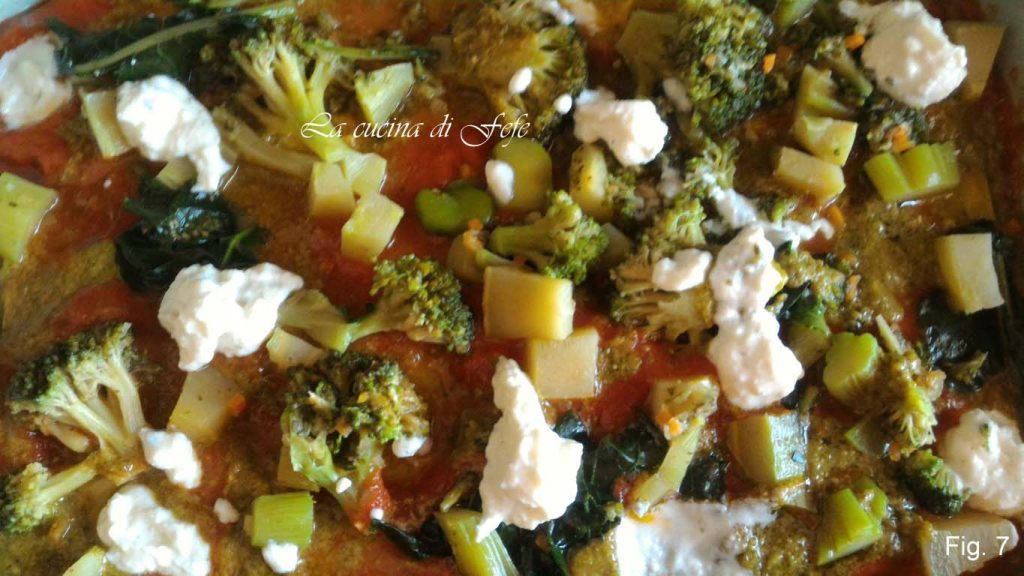
Finish everything with more flakes of ricotta and the remaining grated Parmigiano.
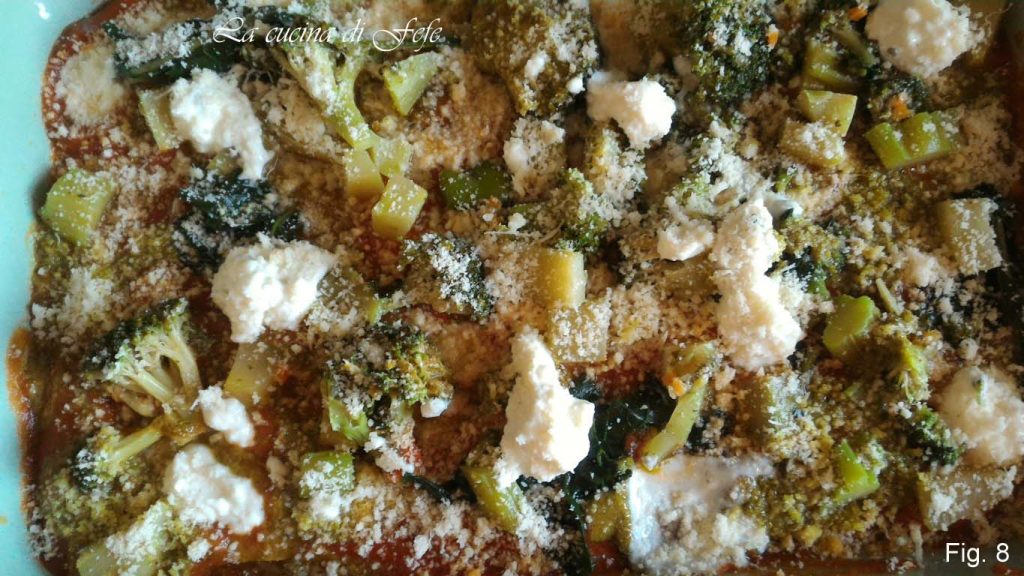
Put in the oven in static mode at 356°F for 30 minutes. If needed, sprinkle a little vegetable broth around the edges and corners of the lasagne. Then turn on the grill and cook for another 5 minutes to brown the surface.
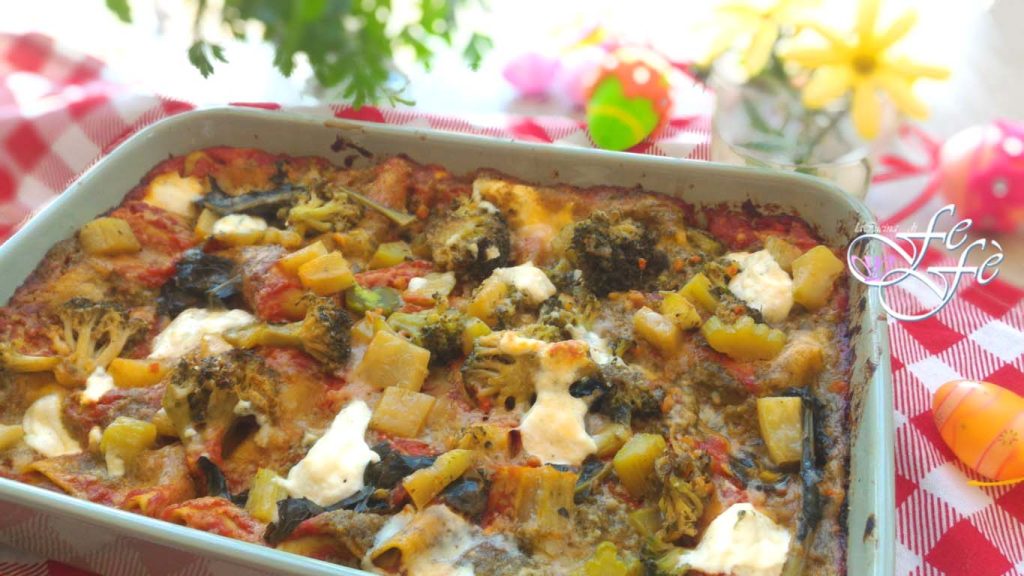
And voilà… the green lasagne with vegetables and ricotta flakes are ready to be enjoyed!
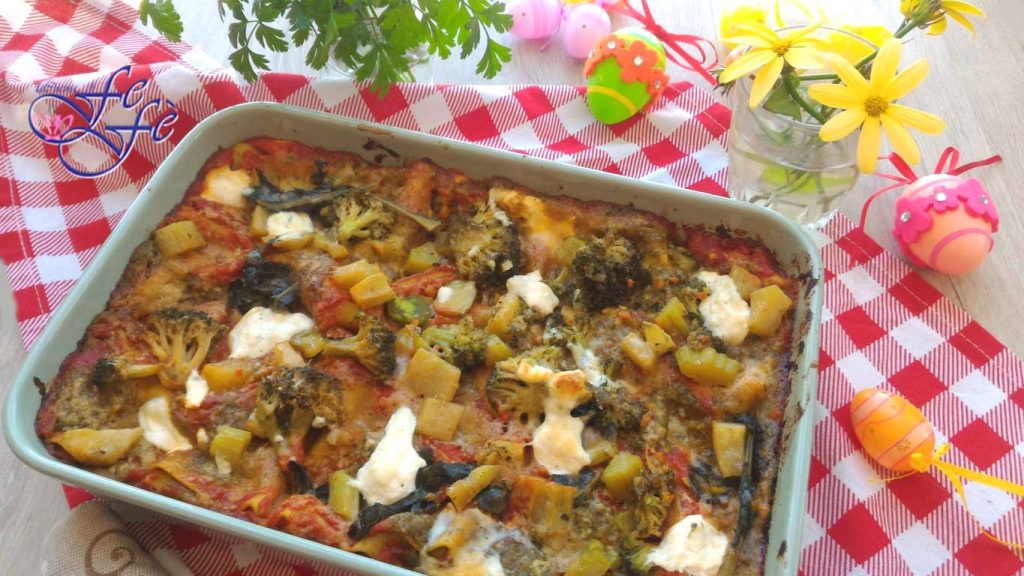
Enjoy your meal from La Cucina di FeFè!
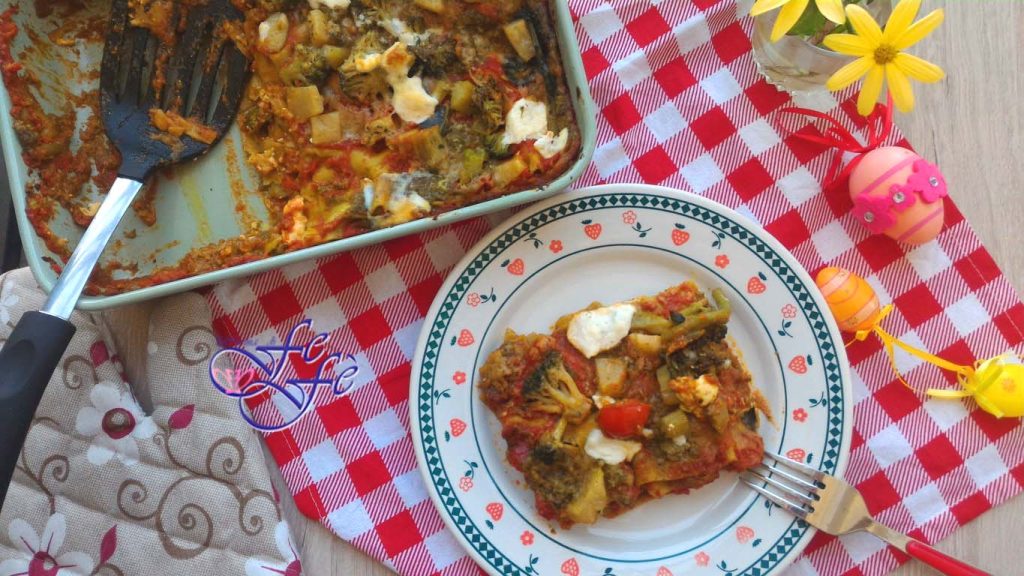
Storage
👉 You can store the green lasagne with vegetables once cooked and cooled in the fridge in suitable refrigeration containers for 1-2 days.
Tips, notes, variations and suggestions
🟣For an extra boost of flavor: I suggest quickly sautéing all the vegetables in a pan with a drizzle of oil and a clove of garlic before placing them in the layers. This will also remove excess water, preventing the lasagne from becoming too watery.
1. Can I use fresh lasagna sheets or do I need the dried ones?
You can use either. If you use dried sheets, the tomato passata and pesto should be fluid enough so the pasta will cook properly by absorbing the moisture from the sauce, while fresh sheets don’t require this precaution.
2. How can I replace ricotta for a lactose-free version?
You can use lactose-free ricotta or a tofu cream blended with a little oil and salt. The “flake” effect will remain very similar and the dish will be just as tasty.
