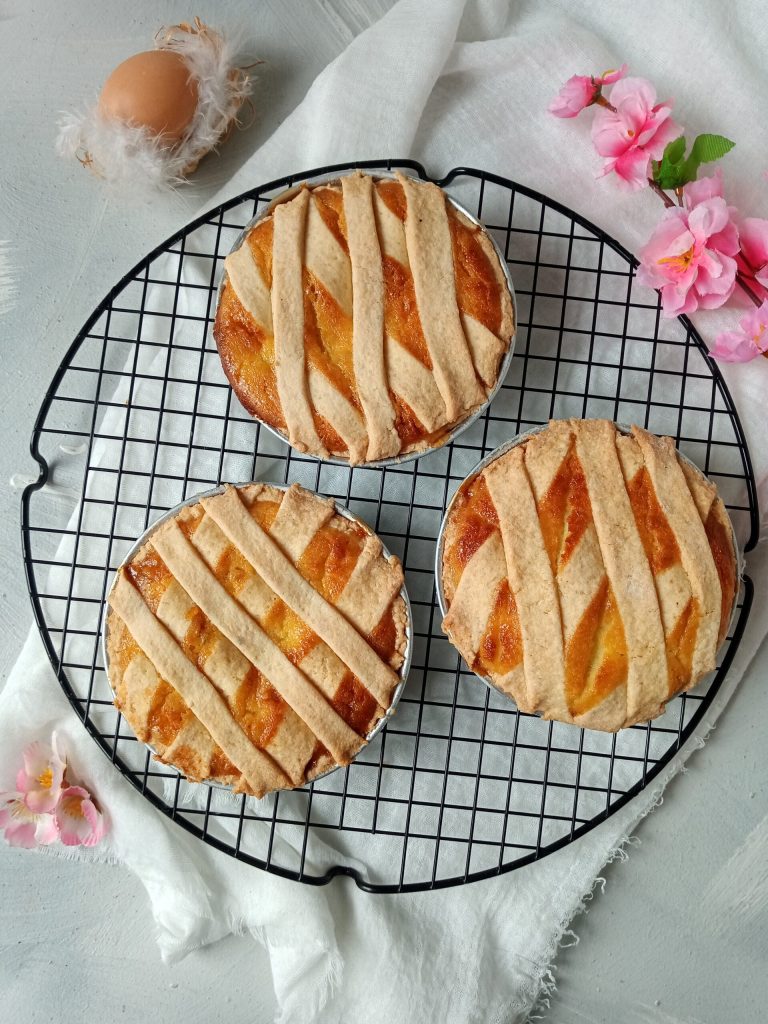
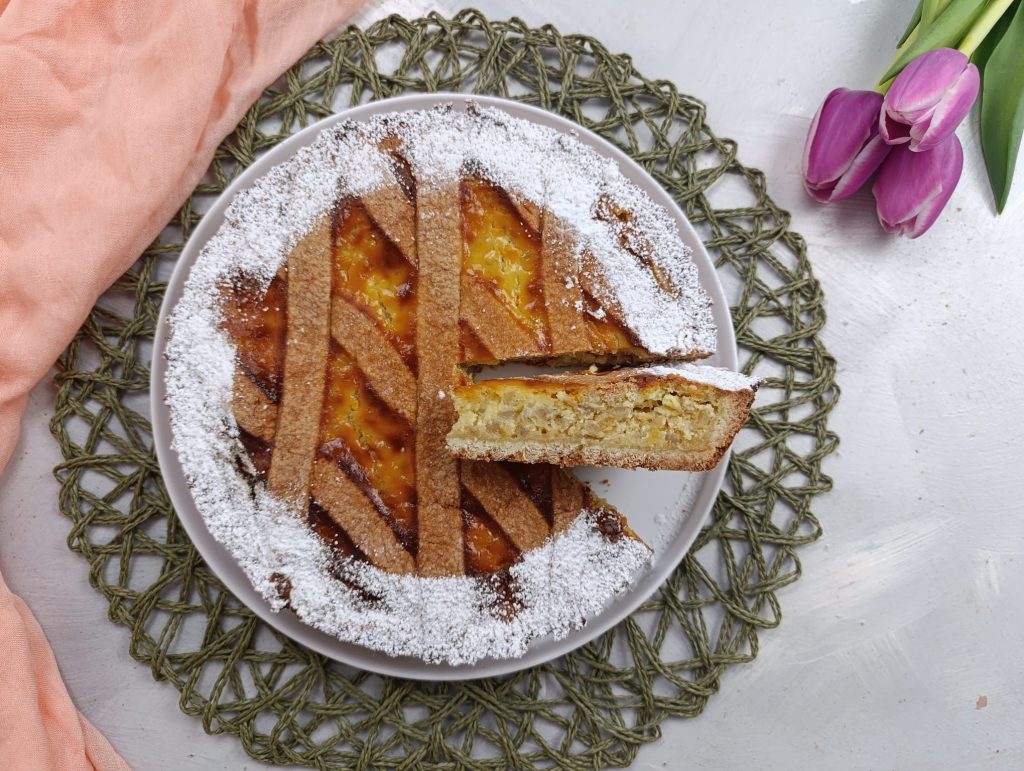
Neapolitan pastiera, the original recipe of one of the most typical Neapolitan desserts from the ancient tradition of Neapolitan artisanal pastry.
It’s a typically spring dessert, and at Easter it’s always present on Neapolitan tables, and not only.. yes, it is widespread everywhere.
- Difficulty: Medium
- Cost: Economical
- Preparation time: 1 Hour
- Portions: Two medium-sized pastiere
- Cooking methods: Oven
- Cuisine: Italian
INGREDIENTS FOR TWO MEDIUM-SIZED PASTIERE
- 4 cups all-purpose flour
- 1 cup sugar
- 2 eggs
- 7 oz lard
- 2 g Baker's ammonia
- Zest of one lemon
- 18 oz ricotta (9 oz cow and 9 oz sheep)
- 2.5 cups sugar
- 18 oz wheat for pastiera
- 1.25 cups milk
- 5 eggs
- 3.5 oz candied fruit
- to taste Orange flower water
- 1 packet Vanillin
Preparation of two medium-sized pastiere
NEAPOLITAN PASTIERA, original recipe
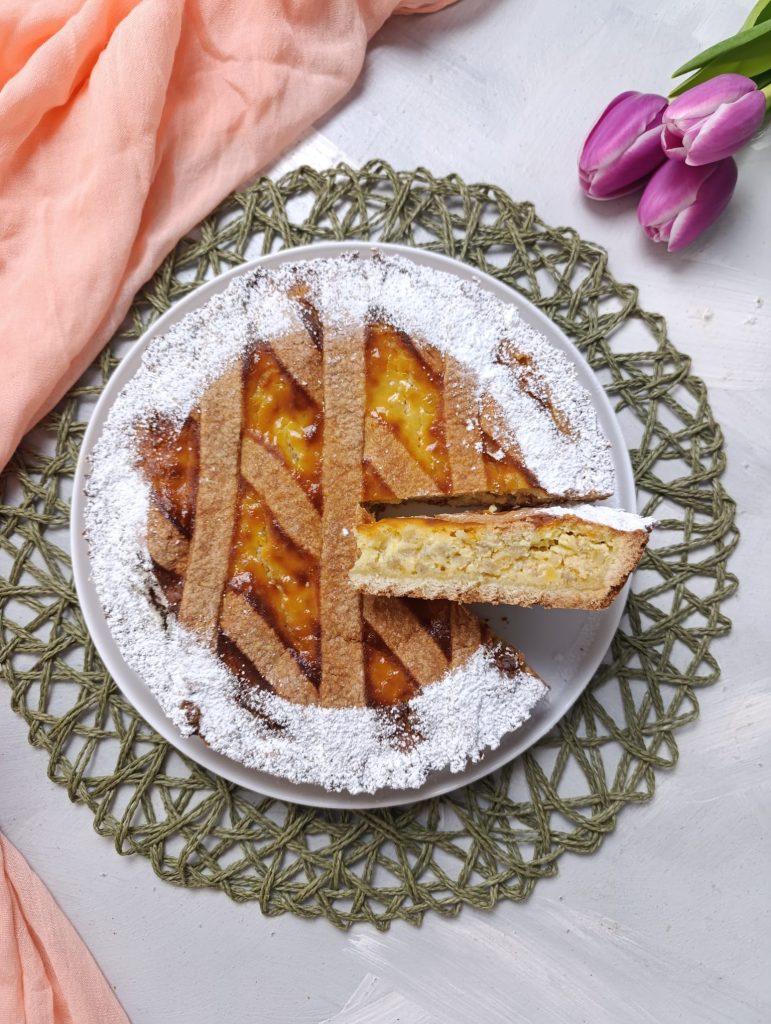
Let’s start preparing our Neapolitan pastiera together.
First, make a “flour well”. In the flour, add all the ingredients: sugar, lard, ammonia, lemon zest, and eggs. Mix, and gradually, the flour will absorb everything.
Attention! The dough must be made with a light hand! Do not knead the dough hard!
Once the pastiera dough is ready, let it rest. It must rest for at least 24 hours.
Meanwhile, prepare the filling.
Pour pre-cooked wheat and milk into a pot.
Bring everything to a slow boil, stirring until you get a thick cream.
Pour into a bowl and let cool slightly.
In another bowl, beat the eggs, sugar, ricotta, orange flower water, and vanillin.
You should get a rather fluid cream without lumps.
When the wheat and milk cream is cold, mix it with the egg and ricotta cream. Finally, add the candied fruit.
Now let’s proceed to prepare the Neapolitan pastiera; remember, with these doses, you’ll have two medium-sized pastiere.
After the resting time, we finally have the shortcrust pastry ready for the pastiera: with a rolling pin, make a “pettola” and spread it in the baking pan.
Attention: it must adhere well, and then you need to trim “all around”; at this point, we finally have the shortcrust pastry container that will hold the filling of our Neapolitan pastiera.
Put the filling inside the shortcrust shell.
From the shortcrust pastry we previously prepared, make rectangular strips of 0.4 inches and place them over the pastiera filling, to control its rising in the oven; indeed, these strips help to contain everything: when the Neapolitan pastiera is in the oven, it tends to become a “balloon,” then when it comes out of the oven, it settles, returning to its original shape.
Now let’s move on to cooking.
In the oven, set a temperature of 392°F; the pastiera should be kept in the oven for a time that depends on the size of the dessert; we can say it can vary from just under an hour to an hour and a half. I have always preferred a good baking; in this way, the sugar makes the Neapolitan pastiera almost shiny and a bit glossy: in my opinion, the result is better!
There are two beautiful legends about the birth of the pastiera, the first linked to the cult of the mermaid, the second linked to the deep connection between the sea and Naples:
According to the first legend, the strips of the pastiera must be 7, arranged to create diamonds. The story tells of a “sleeping” mermaid, as if in hibernation, who in spring emerges from the waters to greet the people of her city. Traditionally, the mermaid sings, delighting all Neapolitans. To thank the mythical creature, the latter bring her flour, ricotta, eggs, wheat, orange flower water, spices, vanilla, and sugar. The ingredients, when mixed together, form the pastiera and are 7, like the strips covering the Neapolitan dessert.
The second legend relates to the sea: it seems that once, on the beaches of Mergellina, the fishermen’s wives brought seven baskets with ricotta, candied fruit, wheat, flour, butter, eggs, and orange blossoms as offerings to the “Sea,” to “ingratiate themselves” with the aquatic element and have their husbands return to land safe and sound. In the morning, when the women returned to the beach to welcome back their men, they noticed that the waves had mixed all the ingredients. However, in one of the baskets, a new cake appeared: the pastiera indeed.
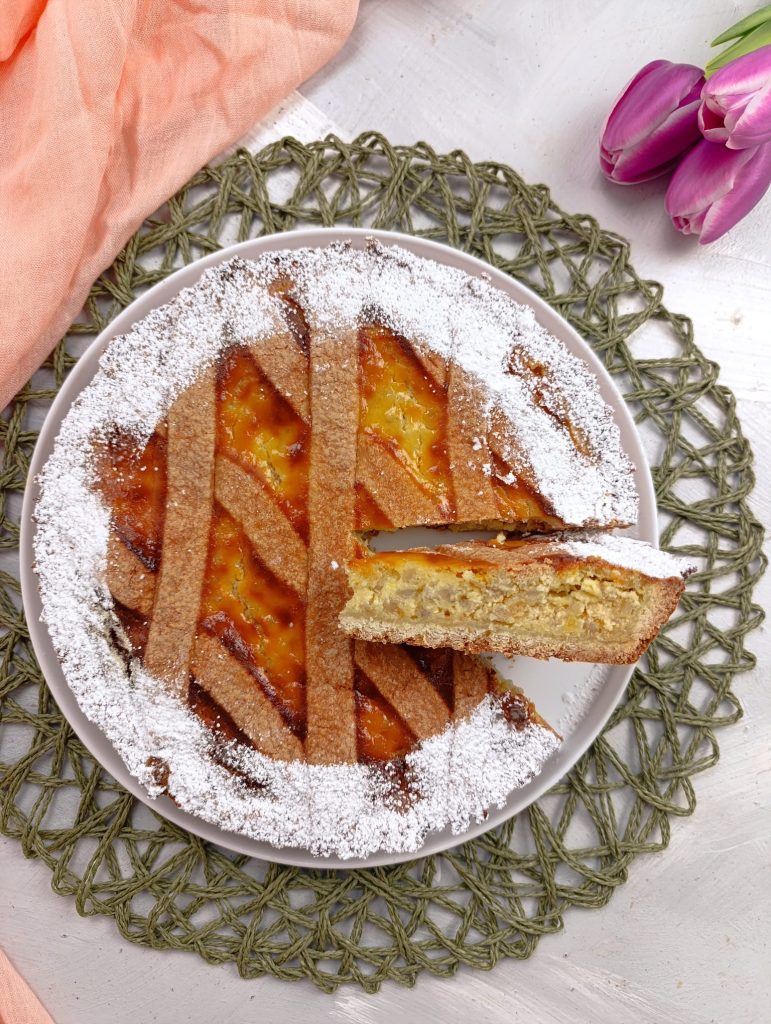
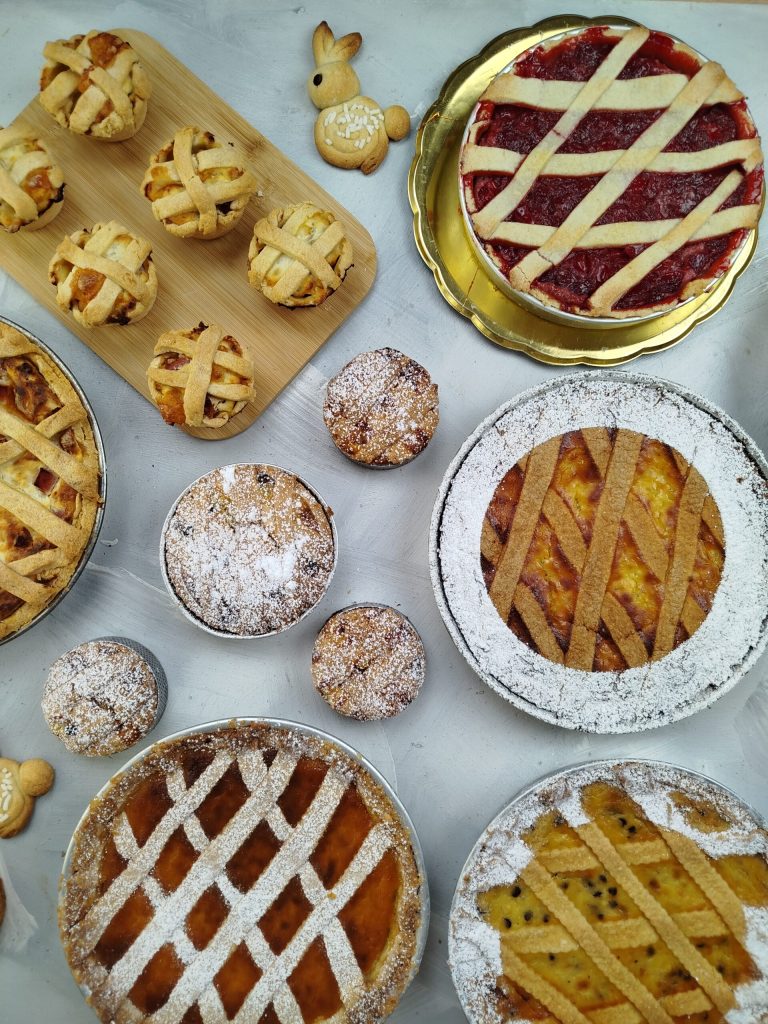
A very nice idea is to prepare small pastiere and perhaps pack them and give them as gifts to friends and relatives.