
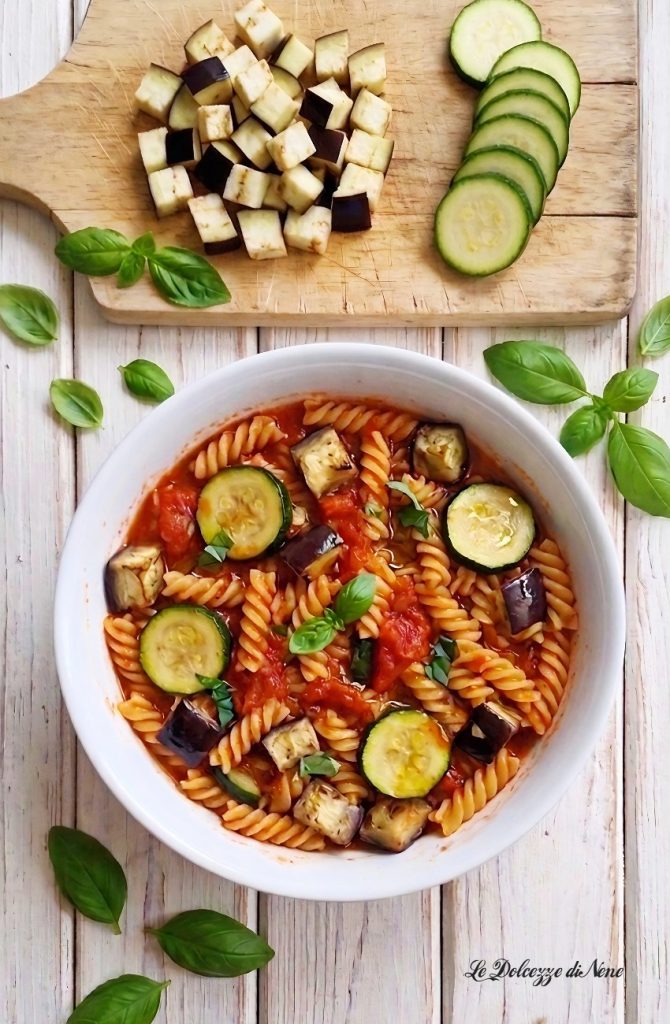
Summer pasta with zucchini and eggplant: a light and tasty recipe
There is something special about dishes that come from old cookbooks: they smell like home, past memories and timeless recipes handed down through generations. I rediscovered this Pasta with zucchini and eggplant sauce exactly like that, leafing through a volume yellowed by time.
It’s a light first course, perfect for the warmer months, when zucchinis are crisp and sweet and eggplants reach full ripeness. In this version the eggplant is cut into cubes, while the zucchini remains in rounds, so every bite has a different and irresistible texture.
A quick, fragrant and colorful sauce, ideal for a summer family dinner or to give new life to garden vegetables. A recipe that tastes of sun and simplicity, just the way we like it.
Here are more vegetable ideas to try, I’m sure you’ll like them
- Difficulty: Easy
- Cost: Inexpensive
- Preparation time: 10 Minutes
- Cooking time: 20 Minutes
- Portions: 6 People
- Cooking methods: Stovetop
- Cuisine: Italian
- Seasonality: Ferragosto, Summer
Ingredients for the zucchini and eggplant sauce for the pasta
- 18 oz pasta (the shape you prefer)
- 1 3/4 cups tomato passata (or peeled tomatoes)
- 3 1/2 tbsp extra virgin olive oil
- 2 zucchini (about 7 oz each – sliced into rounds)
- 1 eggplant (about 7 oz – diced)
- 1 onion
- 1 clove garlic
- 1 bunch basil (leaves, washed)
- 1 pinch ground chili pepper (or fresh)
- to taste salt
Tools
- 1 Pan
- 1 Pot
- 1 Colander
- Knives
- Forks
- Spoons
Preparation of the zucchini and eggplant sauce for the pasta
In a large pan, heat the extra virgin olive oil over medium heat. Add the chopped onion and garlic and let them sauté until golden. Add the diced eggplant and cook for about 10 minutes, stirring often to prevent sticking. Then add the zucchini slices to the same pan and continue cooking for another 5 minutes. Season with salt and finish with a pinch of chili.
Pour the tomato passata into the pan with the vegetables, add a few fresh basil leaves and let simmer over low heat for 15 minutes, stirring occasionally. Meanwhile, fill a large pot with water, bring it to a boil and add salt. Cook the pasta for the time indicated on the package.
Drain the pasta al dente and transfer it directly to the pan with the zucchini and eggplant sauce. Mix well to coat the pasta evenly. Serve immediately, finishing each plate with plenty of grated Parmesan, a few fresh basil leaves and a drizzle of raw olive oil.
Tips for perfect pasta
1. Eggplant and zucchini have different cooking times and textures:
diced eggplant needs more time to brown
zucchini rounds cook faster Cooking them separately prevents one from becoming mushy or remaining undercooked.2. Salt the water at the right moment
The water should be well salted (like the sea) and only when it boils. This helps the pasta absorb flavor and keep a good texture.3. Choose the right cheese
If you want to add cheese, opt for:
grated ricotta salata (perfect with summer vegetables)
mild pecorino
or no cheese for a fresher, lighter version
TIPS and NOTES
STORAGE
In the refrigerator
Store the pasta in an airtight container.
It keeps well for 1-2 days.
Before serving, reheat it in a pan with a drizzle of olive oil or a tablespoon of water to bring back creaminess.
In the freezer (sauce only)
Cooked pasta with sauce is not ideal for freezing, but the zucchini and eggplant sauce is:
Place it in a container or in single portions.
It keeps up to 2 months.
Thaw in the fridge and then heat in a pan before using to dress the pasta.
🌈 Variations of zucchini and eggplant pasta
🍅 1. With fresh cherry tomatoes
Add a handful of cherry tomatoes halved in the last minutes of cooking the zucchini. Result: a juicier, sweeter and more colorful sauce.
🧀 2. With ricotta salata or feta
For a Mediterranean touch, finish the dish with grated ricotta salata or crumbled feta. Perfect if you want a salty contrast that enhances the sweetness of the vegetables.
🥓 3. With pancetta or speck
If you want a richer version, brown pancetta or speck cut into cubes and add them to the vegetables. The contrast between sweet vegetables and smoky saltiness is irresistible.
