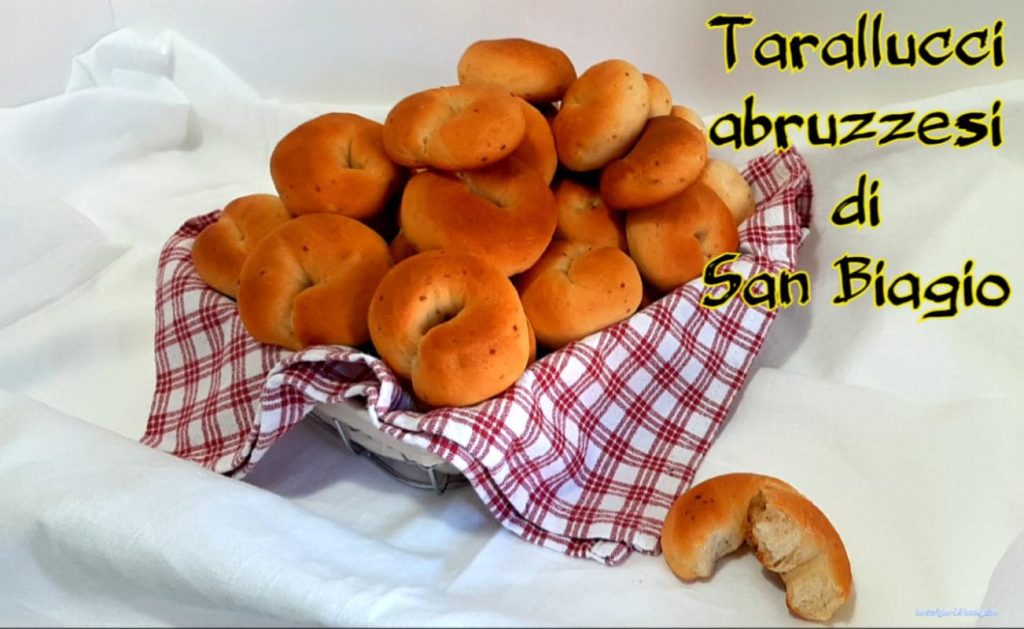
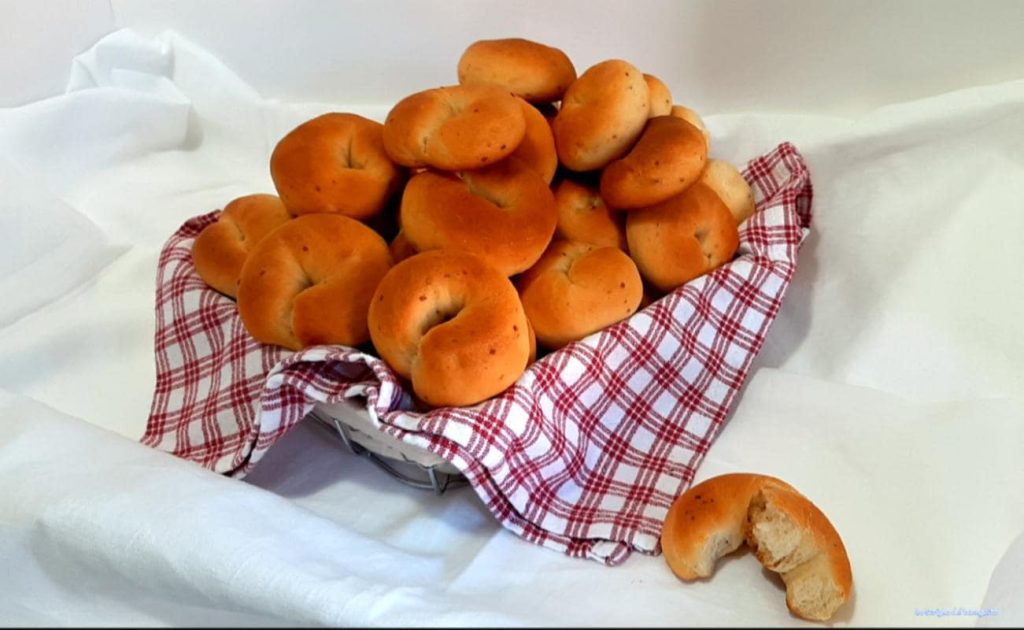
The Abruzzese tarallucci of San Biagio: the symbolic dessert of February 3!
The Abruzzese tarallucci of San Biagio are one of the most representative traditional sweets of Abruzzo and are an absolute must during the festival of February 3, the day dedicated to San Biagio, protector of the throat.
Throughout the region, this occurrence is deeply felt and is celebrated not only with religious rites but also with a rich gastronomic tradition that varies from area to area.
In Abruzzo, each territory indeed guards its customs related to San Biagio.
Next to the tarallucci, there are various typical San Biagio sweets, prepared according to recipes passed down from generation to generation.
However, the taralli remain among the most widespread and loved, both in the sweet and savory version. Although less known outside the region, both are irresistible in fragrance and taste.
The sweet tarallucci of San Biagio that we propose today are made in a small version, perfect to enjoy at different times of the day or to give as a gift.
Nothing prevents, however, making them in a larger size, according to personal preferences or family traditions.
The main characteristic of these taralli is the light leavening, which makes them soft on the inside and crispy on the outside.
As the Abruzzese tradition demands, anise, a symbolic ingredient of the recipes related to San Biagio, cannot be missing.
Its intense and unmistakable aroma is what makes these sweets immediately recognizable and deeply connected to the feast.
Anise, always associated with religious and popular celebrations, is considered the soul of San Biagio’s sweets.
According to custom, once baked, the tarallucci, like all San Biagio’s sweets, should be taken to church for blessing, then offered to friends and relatives as a sign of sharing and good omen.
A simple yet meaningful gesture, that makes these sweets not only good to eat but also deeply connected to the cultural identity of Abruzzo.
Approx. 61 Kcal per taralluccio
- Cost: Economic
- Rest time: 3 Hours
- Preparation time: 10 Minutes
- Portions: 55 tarallucci
- Cooking methods: Electric oven
- Cuisine: Regional Italian
- Region: Abruzzo
- Seasonality: Winter, San Biagio
Ingredients to make Abruzzese Tarallucci of San Biagio
- 1 medium egg
- 4.23 oz sugar
- 0.42 oz fresh brewer's yeast
- 7.76 oz whole milk
- 2.47 oz sunflower seed oil
- 2 tbsps sambuca (optional)
- Grated zest of 1 lemon
- anise seeds (as desired)
- 19.40 oz all-purpose flour
- 2 tbsps milk
- 1 tbsp sugar
Preparation of Abruzzese Tarallucci of San Biagio
In a bowl or in the mixer, put the warm milk, the yeast and let it dissolve, then add half the flour and knead well.
Next add the sambuca, the egg, the grated lemon zest, the oil, the sugar, the anise seeds, and the remaining flour, working the dough well for a few minutes.
Place the dough in a bowl and let it rise until doubled, then shape into small rings to create the tarallo.
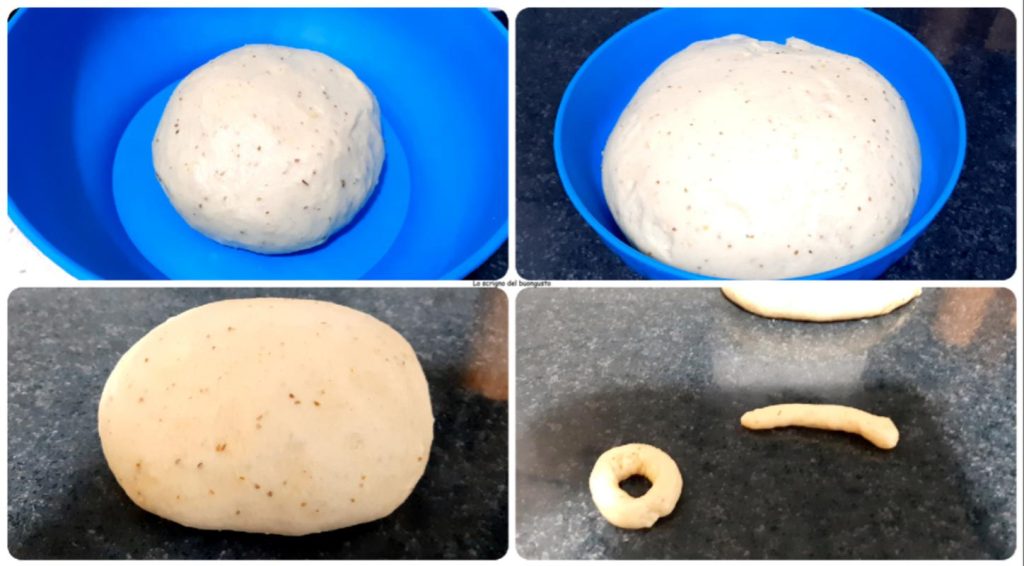
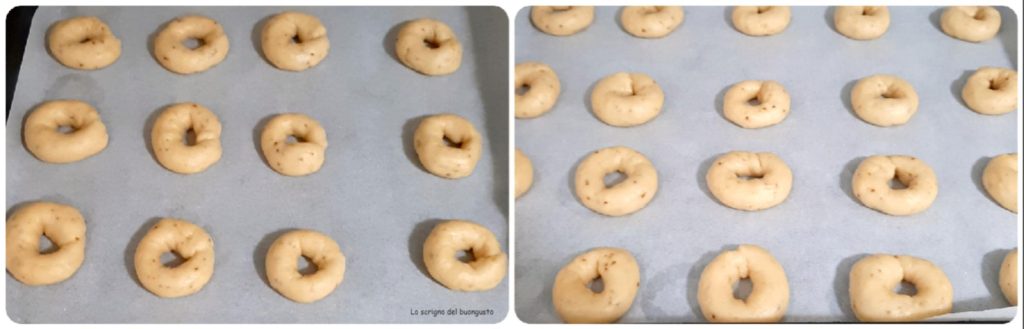
Once the tarallucci are formed, transfer them onto a baking sheet lined with parchment paper and let them rise again for at least 1 hour.
After the time has passed, brush the surface of the tarallucci with milk and sprinkle with sugar.
Bake in a hot oven at 338 °F for 20 minutes, keeping an eye on the baking.