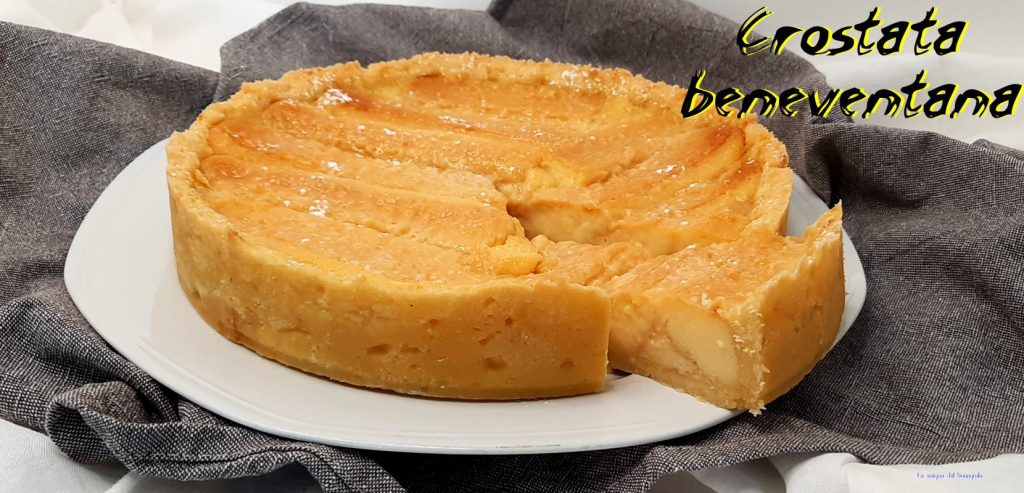
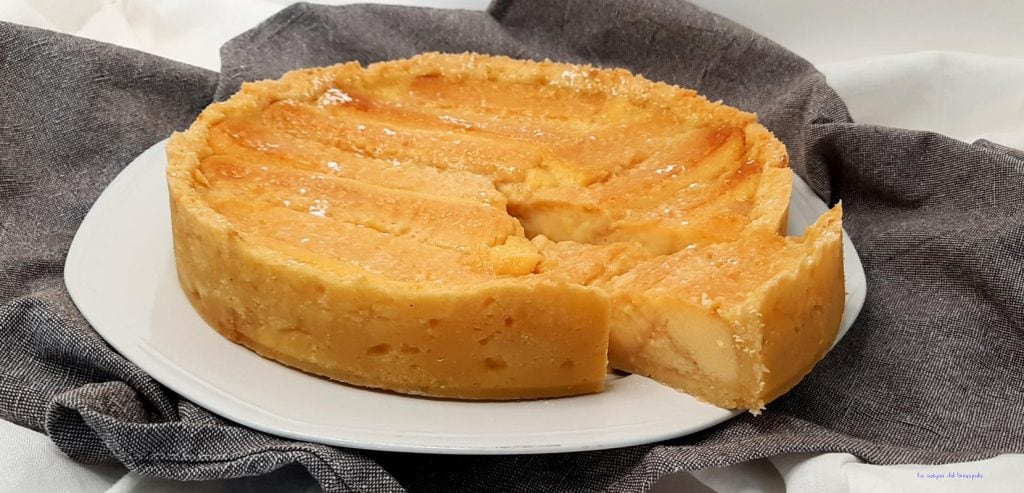
The Benevento tart or Portuguese cake is a little-known dessert typical of Benevento, also known as the Portuguese cake, but it has nothing to do with that name.
A tart or tart with an outer shortcrust pastry and a soft, creamy, flavorful filling.
A quick dessert to prepare, the only wait will be a bit of resting time in the fridge for the pastry, but the rest is really fast.
You will have step-by-step photos to make the dessert below.
This dessert is not only delicious but also a wonderful representation of the rich culinary heritage of the Campania region, often enjoyed on special occasions.
The special thing about this tart is its filling, which, besides having a beaten mix of eggs and milk, contains ladyfingers, like a sweet quiche.
If you make this or other recipes on my blog, feel free to send me your photos, and I will post them on my fb page with your name.
Approx. 656 Kcal per person
- Difficulty: Easy
- Cost: Medium
- Rest time: 6 Hours
- Preparation time: 30 Minutes
- Portions: 8 servings
- Cooking methods: Electric Oven, Boiling
- Cuisine: Italian Regional
- Region: Campania
- Seasonality: All Seasons
Ingredients for making the Benevento Tart or Portuguese Cake
- 2 cups all-purpose flour
- 3/4 cup powdered sugar
- 2/3 cup butter
- grated zest of 1 lemon
- 2 egg yolks (medium)
- 2 cups whole milk
- 2/3 cup sugar
- 1 tbsp Strega liqueur (to taste)
- grated zest of 1 lemon
- 3 eggs (medium)
- 12 ladyfingers
Tools
- 1 Springform Pan springform pan
Preparation of the Benevento Tart or Portuguese Cake
Put the flour, powdered sugar, and grated lemon zest in a bowl, mix well, then add the softened butter and mix again.
Next, add the egg yolks and work for a few minutes until you get a homogeneous dough.
Form a ball, wrap it with cling film and let it rest in the fridge for at least half an hour.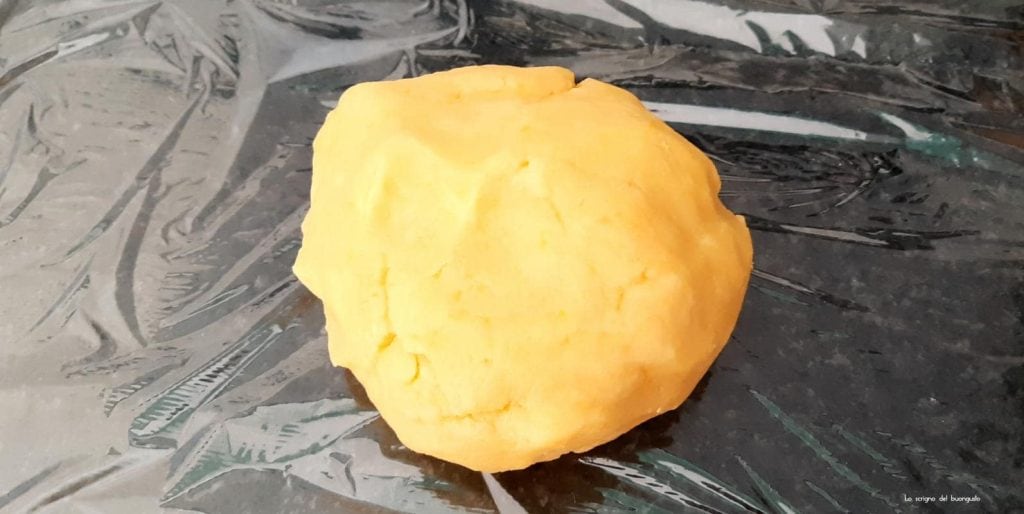
In a saucepan with high edges, put the milk and heat it to about 122°F, in any case, even if it should be warmer, the important thing is not to reach a boil.
Once heated, turn off the heat, add the grated lemon zest, liqueur, sugar, and finally the eggs.
Mix everything well with whisks, I beat them so well that they were white and frothy, but it’s okay even less than I did.
Set aside so the mixture cools down a bit.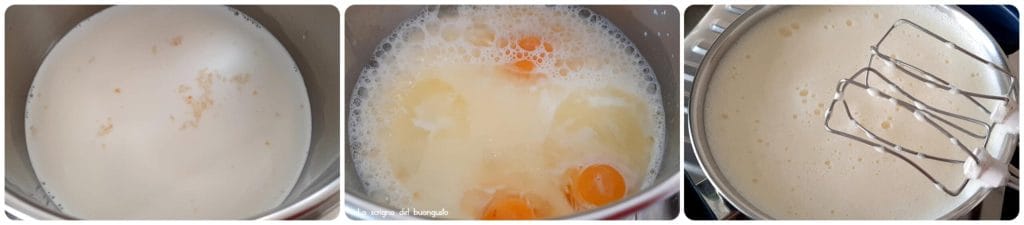
Take the pastry from the fridge, place it between two sheets of parchment paper and roll it out with a rolling pin to a thickness of about 1 inch.
Take a mold, preferably a 9.5-inch springform, place the sheet we used on the pastry to roll it out, but cover only the base, then cut the excess.
The rolled dough, with the help of the parchment paper, turn it over into the mold and gently remove the paper with which we helped ourselves.
Trim the excess pastry that should rise on the edges by about 1 inch.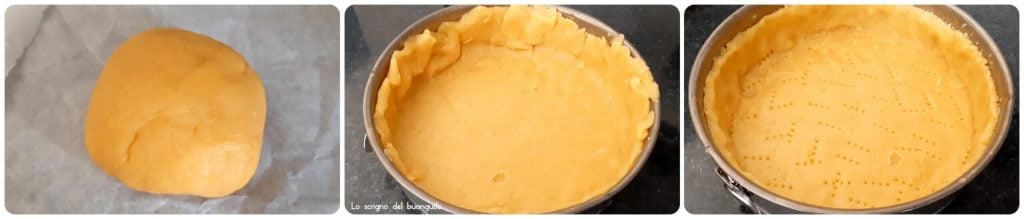
Prick the base of the pastry, then place the ladyfingers in a herringbone pattern or as best as you can, pour in the beaten eggs previously made, and let rest for 10 minutes.
In the meantime, preheat the oven to 338°F and bake the dessert for 45 minutes.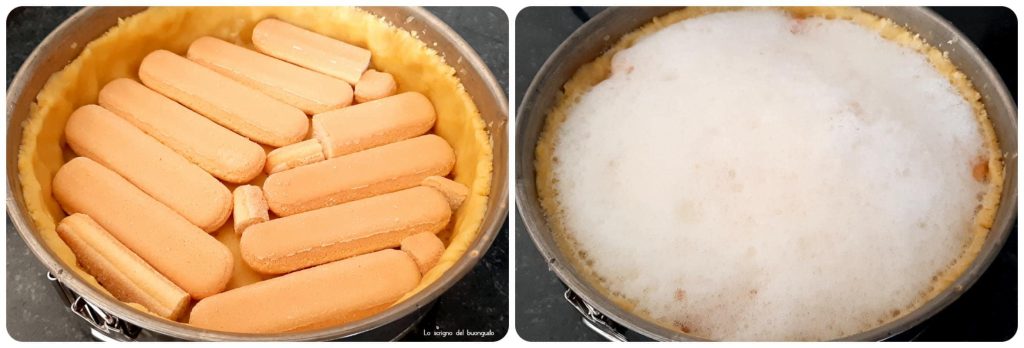
Once cooked, let it cool well at room temperature, then transfer the dessert to the fridge for 4-5 hours or overnight if you make it in the evening.
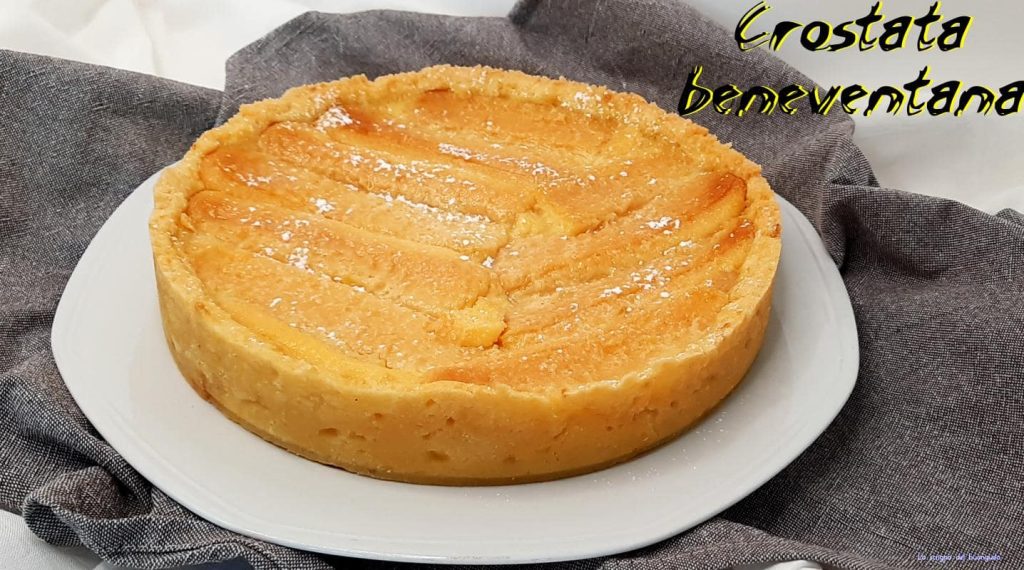
Once it has cooled well in the fridge, remove the dessert from the mold and transfer it to a serving plate.
Cut the dessert and serve, I tried putting some powdered sugar on top, but of course, the dessert absorbed it, but honestly, I would have liked the effect.