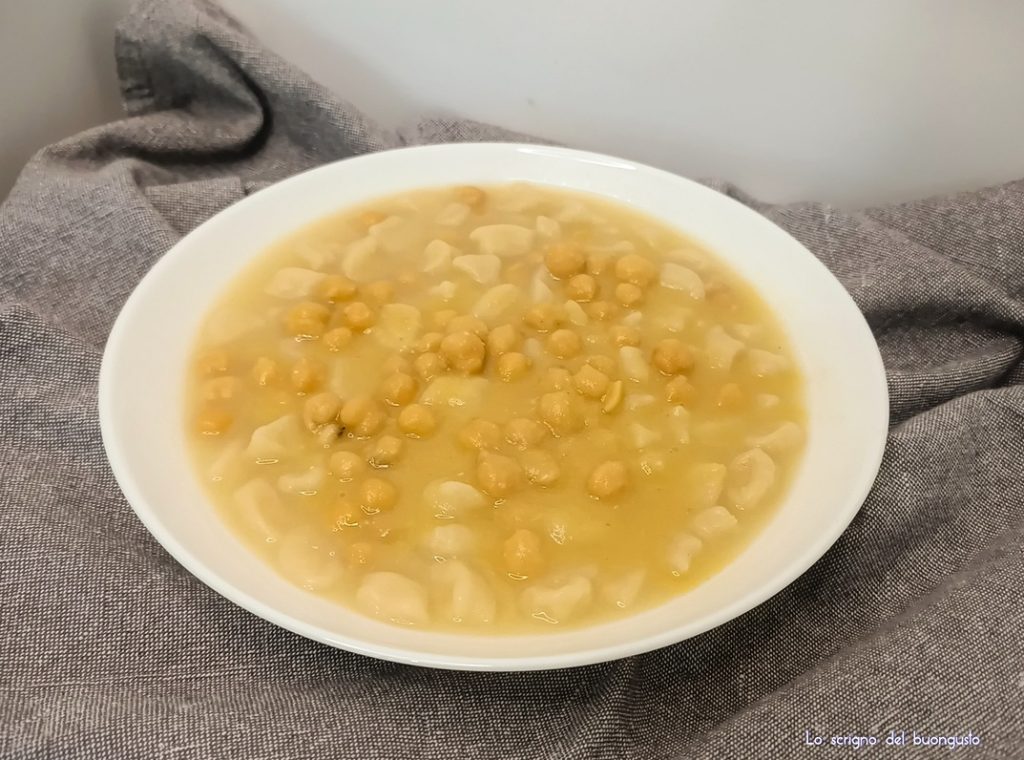
Gnocchetti and chickpeas: the authentic taste of Abruzzo between history and tradition.
There are dishes that tell the story of a territory better than a thousand words, and gnocchetti and chickpeas are undoubtedly one of them.
This recipe sinks its roots into the heart of Abruzzo, particularly the Navelli plateau, a land where growing legumes has been a serious tradition since the Middle Ages.
Preparing this dish today means honoring a centuries-old story made of simple gestures and humble but extraordinary ingredients.
Historical documents confirm that chickpea production in the Navelli area was already flourishing in the 1800s.
At that time there was not just one variety: in the fields you could find white, red and even black chickpeas, each with its own flavor nuances; even today, though in smaller quantities, the red and black ones can still be found.
Legumes were the basis of the peasant diet: they were eaten in hot soups, cooked together with pasta or ground into flour to make fracchiata, a kind of poor polenta made with legume and cereal flours.
But chickpeas were also conviviality — who doesn’t remember grandparents’ tales about chickpeas roasted in a pot with wine?
A comfort food that was never missing in cellars among friends or at stalls during religious festivals.
These roasted chickpeas are divine and I make them from time to time!
The origin of the gnocchetti and chickpeas recipe strictly calls for a white base, essential to enhance the legume’s mineral flavor; however, over time the cuisine has evolved and today it is common to find versions enriched with a touch of tomato sauce.
But if we talk about Navelli, we cannot forget its “red gold” — for a very personal taste linked to the land, adding a few saffron stigmas to the cooking water or to the seasoning transforms this soup into a regal, fragrant dish with a sunny color.
Even today this tradition is more alive than ever.
Every year in August, the village of Navelli comes alive for a big festival (the Chickpea and Saffron Festival) where the skilled hands of local housewives compete in preparing the original recipes.
Seeing the large pots of braised chickpeas or those perfumed with saffron is an experience that takes you back in time.
Serving gnocchetti and chickpeas at the table is not only offering a nourishing first course, but sharing a little piece of Abruzzo.
Whether you prefer the classic white version or the more modern and colorful one, the important thing is to choose quality legumes, perhaps those small and flavorful from our land, capable of making every spoonful a journey into memory.
Calories 540 approx per person
- Difficulty: Easy
- Cost: Inexpensive
- Preparation time: 40 Minutes
- Cooking time: 1 Hour 10 Minutes
- Portions: 4 servings
- Cooking methods: Boiling
- Cuisine: Italian Regional
- Region: Abruzzo
- Seasonality: All seasons
Ingredients to make Gnocchetti and Chickpeas
- 2 1/2 cups 00 flour (type 00 / all-purpose flour)
- 3/4 cup water
- 1 1/4 cups dried chickpeas (preferably Navelli chickpeas)
- 2 tbsp extra virgin olive oil
- to taste salt
- 2 cloves garlic
Tools
- 1 Pot
Preparation of Gnocchetti and Chickpeas
The first thing to do is soak the dried chickpeas the night before for about 12 hours — preferably Navelli chickpeas, given the typicality of the dish; these are small and flavorful.
The next day, drain and rinse the chickpeas well, then place them in a pot and cover with water (if more water is needed during cooking, we will add it). Add a little salt and start cooking.
In a small pan, put the extra virgin olive oil and the garlic cloves and let them gently brown, then pour everything into the pot with the chickpeas.
Stir and cook covered over medium heat for at least 45 minutes, though it depends a lot on the chickpeas; often it can take up to an hour.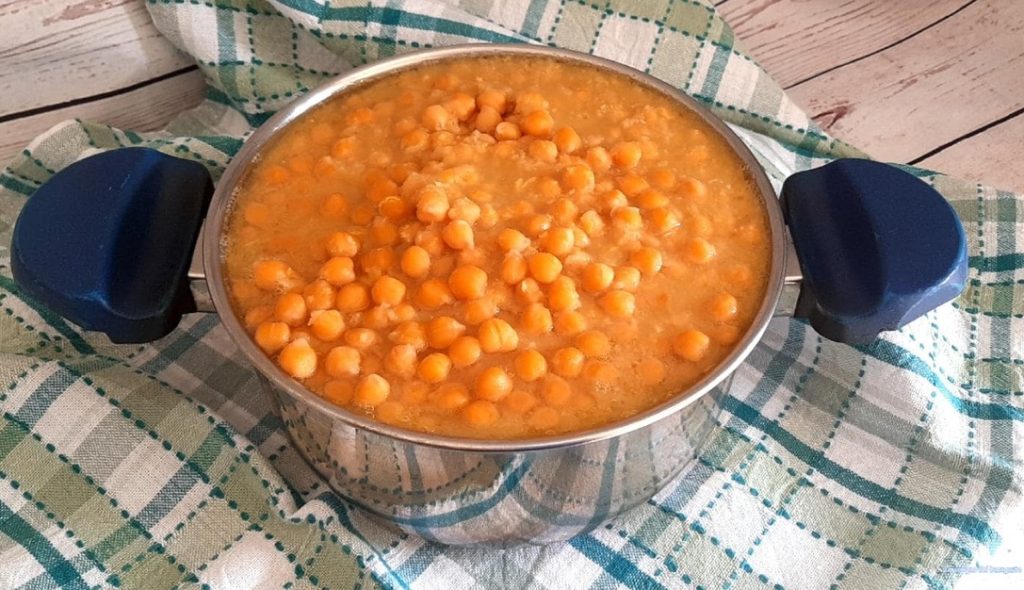
While the chickpeas cook, prepare the gnocchetti.
In a bowl put the water and flour and mix well, knead and then finish the work on a floured surface.
Once the dough is formed, take pieces of dough and roll them into thin ropes, cut them into small pieces to form the gnocchetti.
Pass them in flour so they don’t stick.
I floured a tray well at the end of the process, placed the gnocchetti with enough flour so the work surface remained clear.
At cooking time I put them in a large sieve to shake off excess flour.
When the chickpeas are cooked, take out one cup of them and blend with an immersion blender, then return this purée to the pot and mix well — this trick will create a tasty creamy texture.
Prepare a pot of salted water — you’ll need the water to be about 1.5–2 inches deep (approximately 4–5 cm).
When the water boils, add the gnocchetti and if you see the pot has too much water, remove some… keep in mind you’ll add the chickpeas with their cooking liquid later.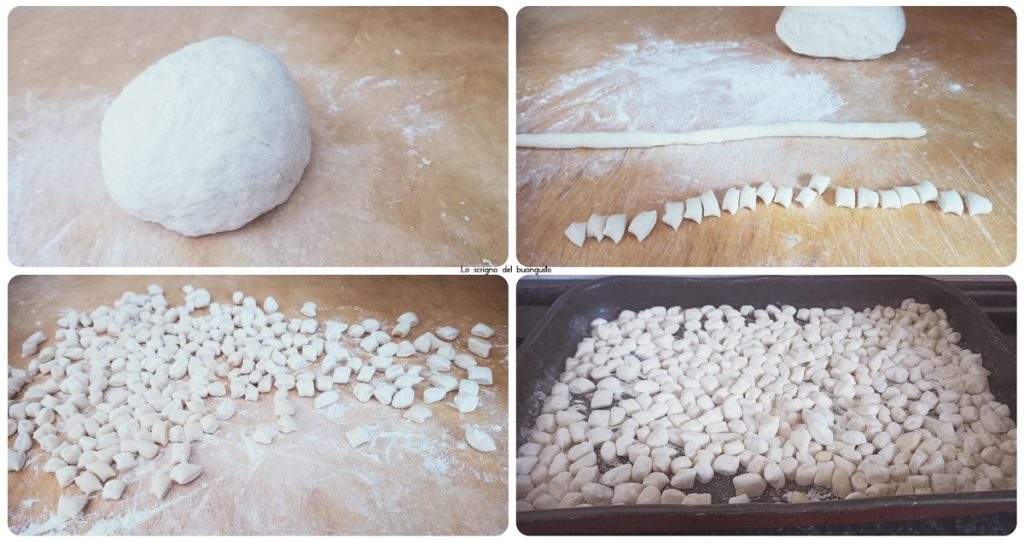
Add the chickpeas to the gnocchetti, mix well, adjust the salt during cooking and cook for about 10 minutes.
This type of gnocchetto does not cook very quickly, so you need to check.
When cooked, plate and serve.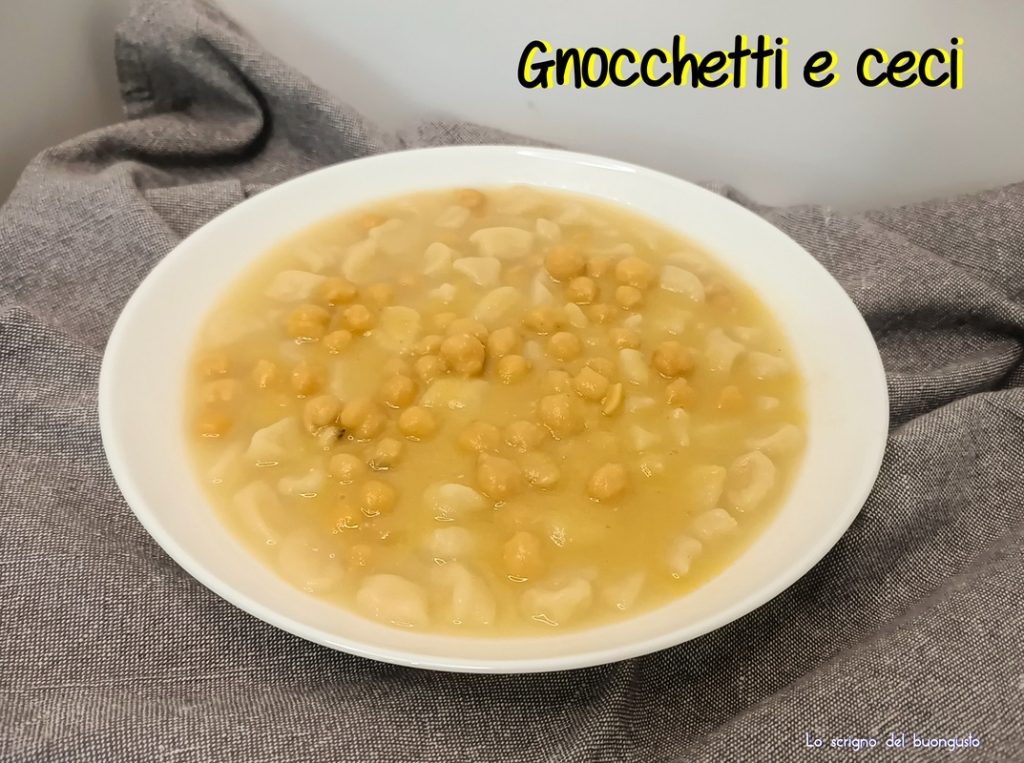
Curiosity: White, Red or “Black”? The colors of the ancient harvest
Did you know that in the past the fields of Navelli were not only dotted by the yellow chickpeas we know today? Until the 1800s, Abruzzo’s biodiversity offered three main varieties:
White Chickpeas: The most common, with a thin skin, ideal for delicate soups.
Red Chickpeas: More rustic and rich in iron, with a stronger, earthier flavor.
Black Chickpeas: Today considered a rare delicacy, they were the most “tenacious”. They required very long soaking and cooking times, but produced a dark, very fragrant, almost velvety broth.
In the past, this mix of colors on the plate was not only an aesthetic choice, but the result of mixed agriculture that guaranteed the survival of the harvest even in the most difficult years. Rediscovering these flavors is a real dive into the past of the Plateau!