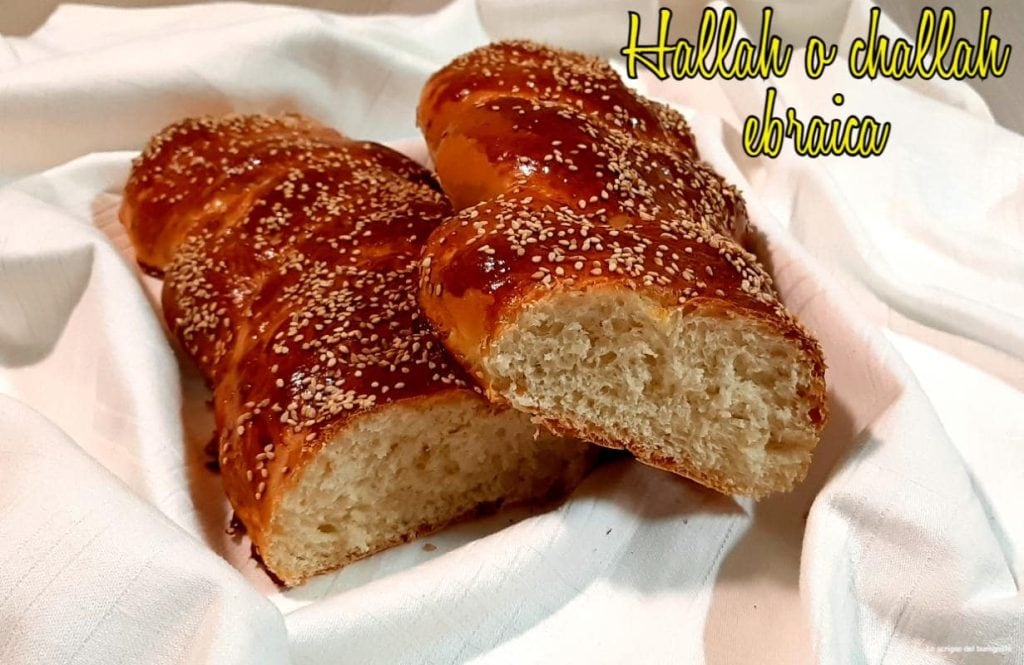
Jewish Hallah or Challah is the typical bread that Jews eat during “Shabbat”, the day of rest (except for Passover, when leavening bread is not allowed).
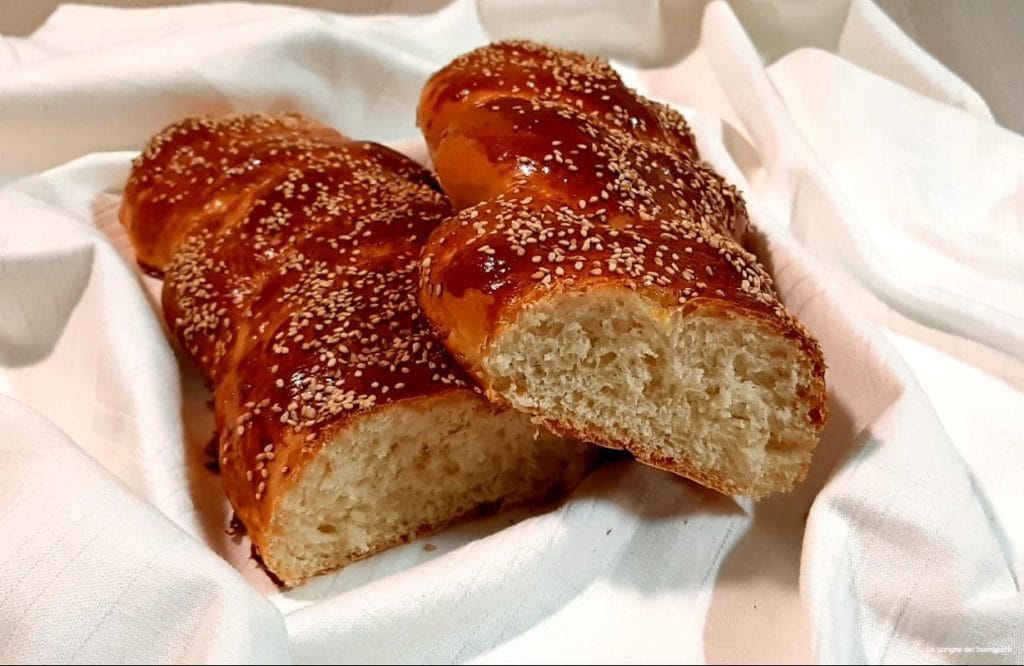
It is a white, very soft bread, similar to a brioche bread but without butter or milk, in compliance with Jewish dietary regulations, which do not allow the simultaneous consumption of meat and dairy products.
The challah, a slightly sweet-tasting white and soft bread, is an essential component of the Saturday meal.
It is braided in shape, and two are present on the table, symbolizing the double portion of manna that God provided to the Israelites in the desert on the eve of the Sabbath and holidays.
The preparation of this bread and the offering taken from the dough are exclusively female responsibilities.
The characteristic of the Challah or Jewish Hallah, however, does not lie so much in the type of dough, but in its profoundly symbolic value.
The first time I made it, I always braided it, but then forming a loaf, let’s say, this time it is instead a kind of 4-cord braid, but always special.
Try to make Jewish Hallah yourself!
Try making it following my recipe and if you want, send me a photo, I will put it on my FB page with your name if you like!
Approximately 200 kcal per person
- Difficulty: Easy
- Cost: Affordable
- Rest time: 5 Hours
- Portions: 8 people
- Cooking methods: Electric oven
- Cuisine: Jewish
- Seasonality: Christmas
Ingredients for making Jewish Hallah
- 2 1/2 cups all-purpose flour
- 3/8 cup lukewarm water
- 0.35 oz fresh yeast
- 1/4 cup sugar
- 1 tbsp sunflower or soybean oil
- 1 medium egg
- 1 1/2 tsp salt
- 1 egg yolk for brushing
- to taste sesame seeds
Preparation for making the Jewish Hallah
Dissolve the fresh yeast in a bowl with lukewarm water, add 100 grams of flour, mix well and let rise covered in the oven with the light on for about an hour.
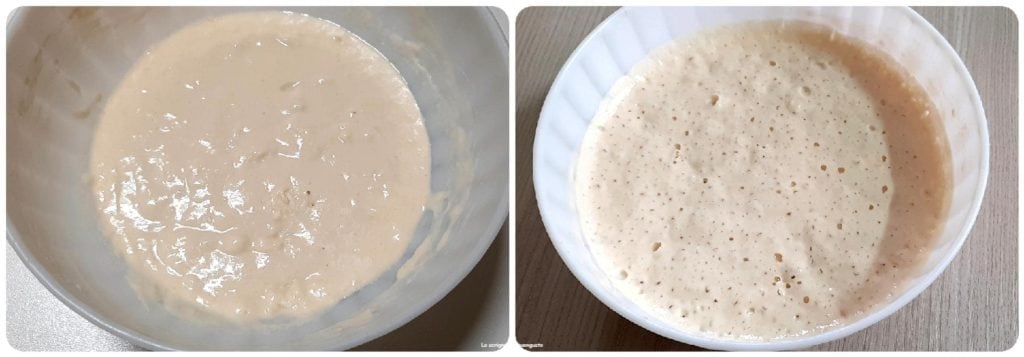
Once risen, pour the leavened mixture into a larger bowl, add sugar, egg, oil, salt, and the remaining flour, mixing well for a few minutes.
Once a well-blended mixture is obtained, let it rise covered in the oven with the light on for about 3 hours or until doubled in size.
Once risen, transfer the dough to a lightly floured surface, recreate a ball

….from which we’ll make 4 equal cords slightly thicker than a finger.
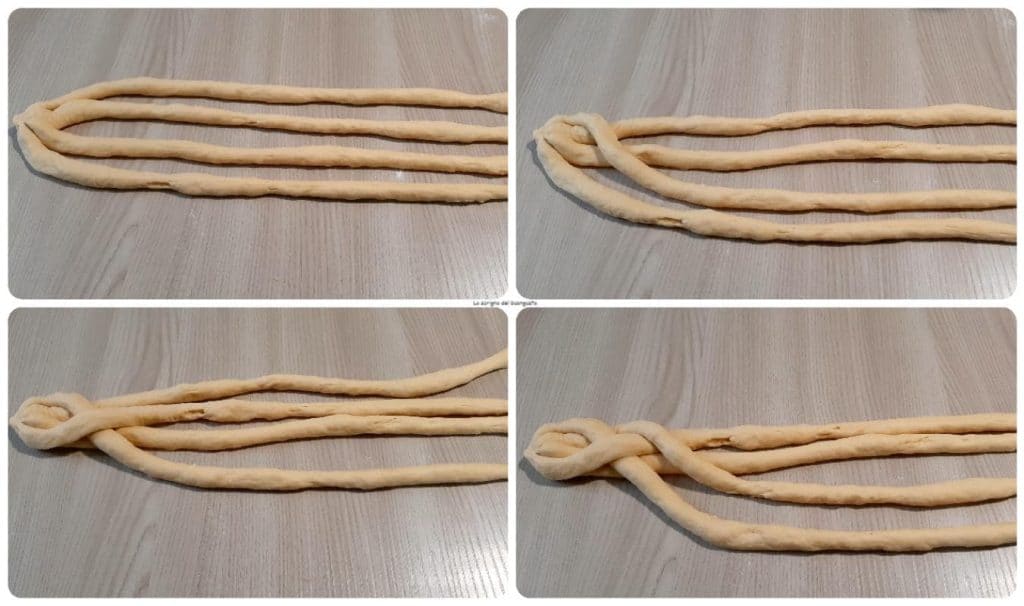
Join the 4 cords with a pinch at one end, then take the last cord on your right and place it in the center, crossing over the 2 cords going to the left.
Then take the cord on your left and bring it towards the center, always crossing over 2 cords, counting from left to right.
Finally, take the second cord from the left and bring it to the center, always counting 2 cords from left to right.
Now restart the braiding as in the first photo, taking the last cord on your right and bringing it to the center, counting 2 cords, completing the braid until closing it with a pinch.
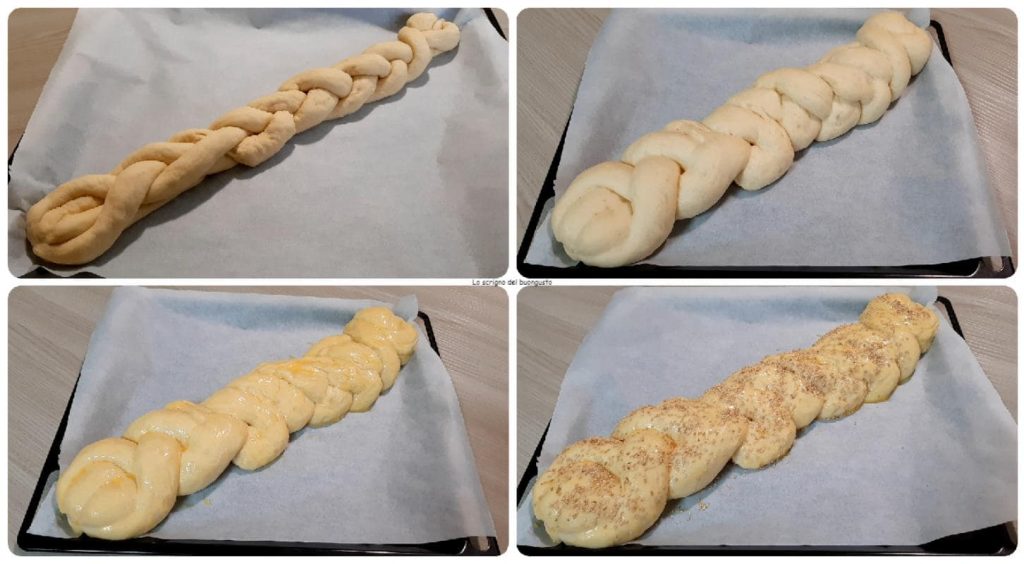
At this point, let it rise again on a baking sheet lined with parchment paper for about 1 1/2 hours or until doubled, then brush with egg yolk, sprinkle with sesame seeds, and bake in a hot oven at 340°F for about 25 minutes, checking the baking.
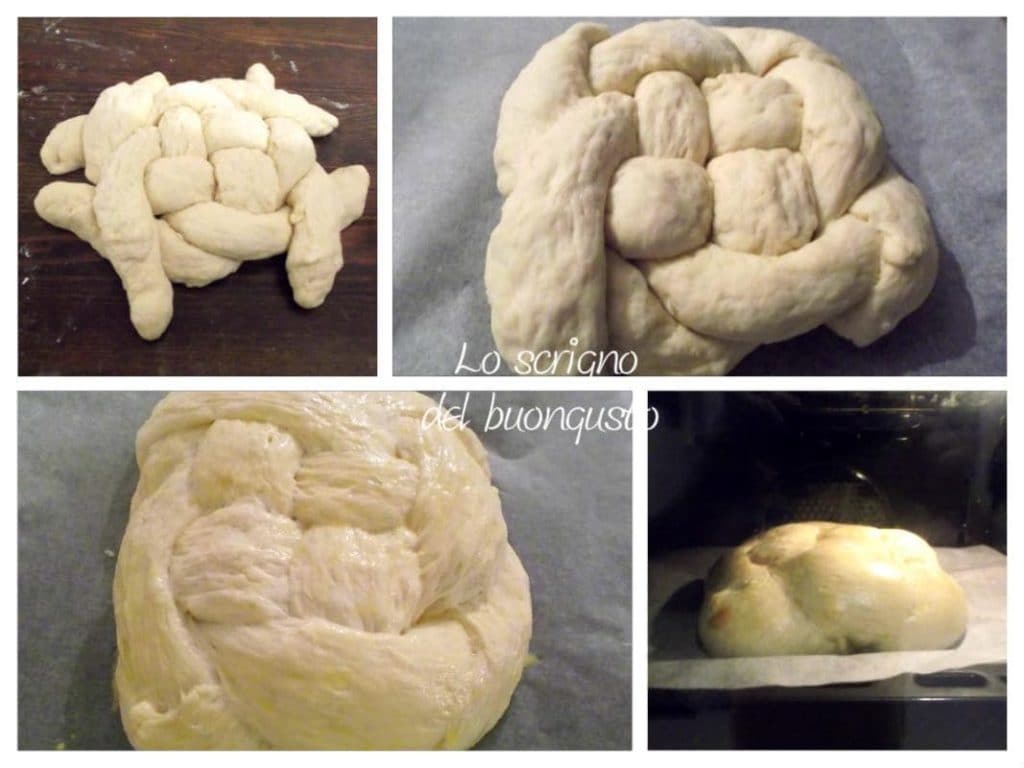
I’ll also put photos of the braids if you want to create a braided loaf
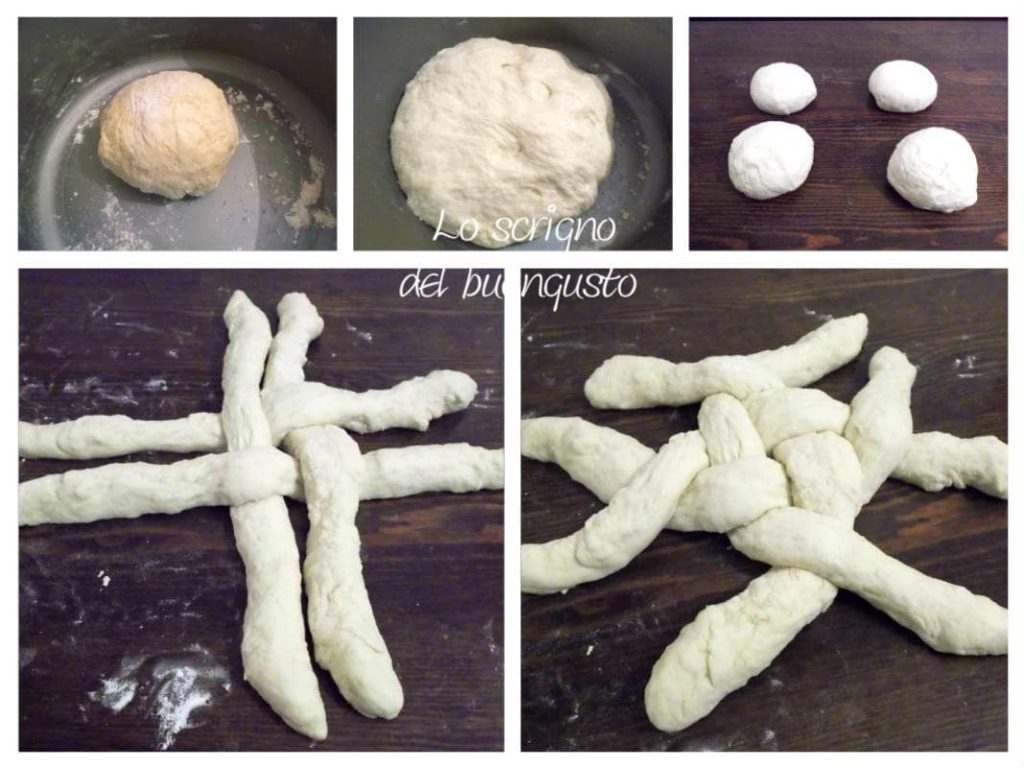
since the shape of the hallah can be in two ways.
Once cooled, you can store it in a plastic or paper bag for a few days, maintaining its softness.
A recipe that is really soft and super good, just try to make it.