Pinca Pasquale: the sweet heart of Croatian tradition.
If there is a scent that perfectly captures the anticipation of Easter in homes along the Adriatic coast, it is undoubtedly that of the Pinca Pasquale.
This typical Croatian sweet is not just a sugared loaf, but a real treasure chest of history and symbolism that reaches back to times long before it took on the religious meaning we know today.
Croatian cuisine is a fascinating mosaic of influences: depending on the area, culinary nuances change drastically. In the inland regions, robust meat dishes prevail, while along the coast fish reigns supreme, often grilled according to centuries-old traditions where the type of wood used for the embers makes a major difference in the final flavor.
In this context of gastronomic excellence, the Pinca stands out as the special occasion leavened bread.
Historically, it was prepared to celebrate the spring equinox, a rite of rebirth tied to nature’s cycles that was later absorbed into the Christian Easter tradition.
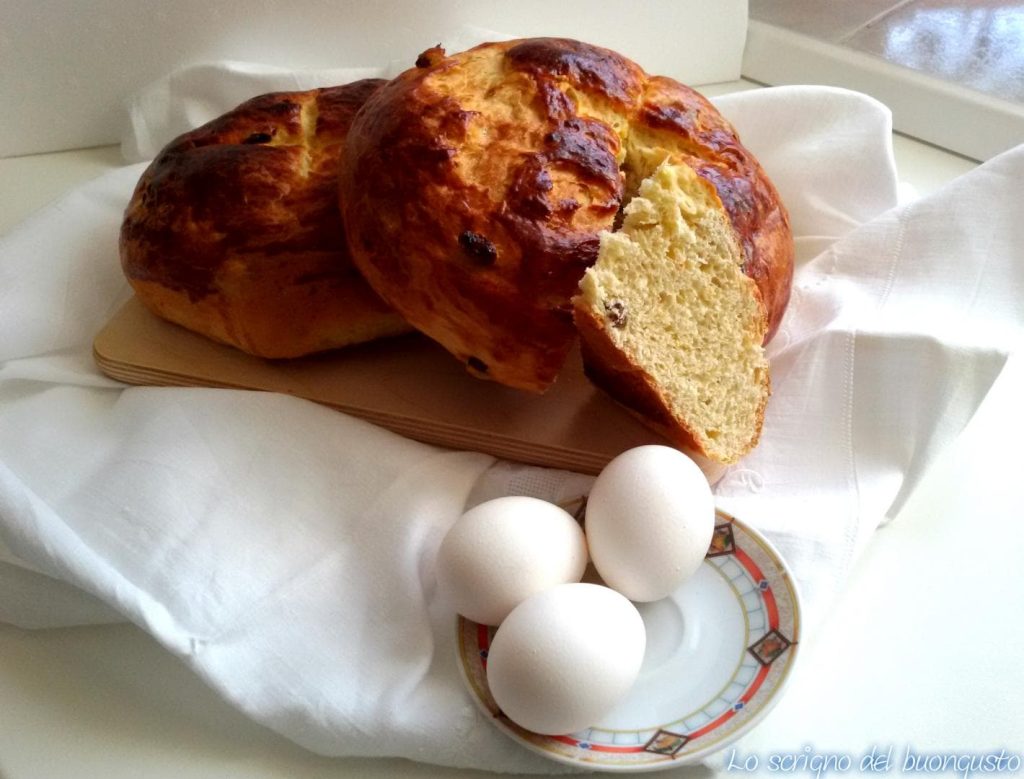
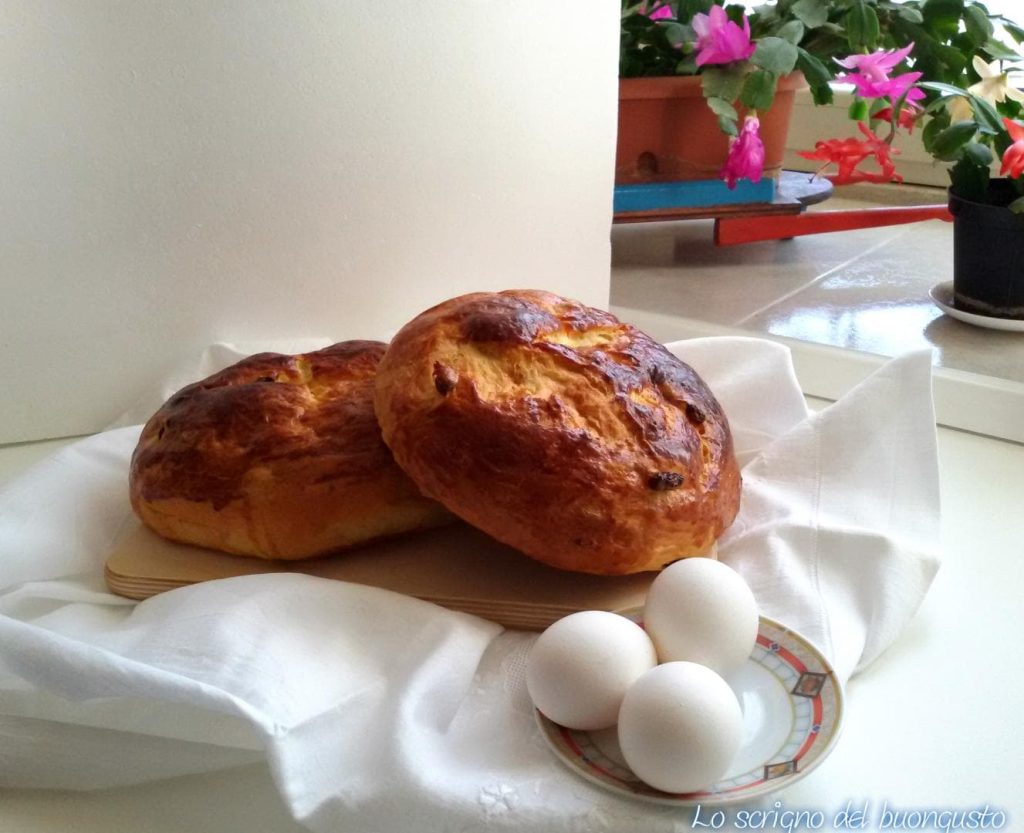
The shape of the Pinca is unmistakable: a round, golden, glossy loaf marked by a deep cross in the center.
This cut, besides helping the dough rise evenly in the oven, symbolizes the crucifixion of Christ, making the sweet the absolute protagonist of the festive table.
By custom, the Pinca is carefully prepared on Holy Saturday.
Families then bring it to church for the solemn blessing, waiting until Easter Sunday to finally break and share it at breakfast or after the meal.
It is a very substantial sweet, characterized by a dough rich in egg yolks and aromas that strongly recall some of our Easter buns or the sweet breads of central Italy.
Its aroma is intoxicating: a mix of citrus and vanilla that fills the house with warmth. Despite its rich texture, the Pinca remains soft, perfect for dunking or enjoying on its own, perhaps accompanied by a glass of sweet wine.
After learning these fascinating curiosities, all that’s left is to try it yourself. Making Pinca at home is a wonderful way to travel with your palate and bring a piece of Croatian tradition to the table.
Follow my recipe step by step: I’m sure the result will win you over at first bite!
Approx. 1790 kcal per pinca
- Difficulty: Medium
- Cost: Inexpensive
- Rest time: 5 Hours
- Preparation time: 30 Minutes
- Cooking time: 30 Minutes
- Portions: 2 loaves
- Cooking methods: Electric oven
- Cuisine: Croatian
- Seasonality: Easter
Ingredients to make Pinca Pasquale
- 2.25 tsp (active dry yeast, substitute for fresh yeast) Fresh yeast (or 2 1/4 tsp active dry yeast)
- 4 cups Manitoba flour
- 3/4 cup Whole milk
- 1 tsp Salt
- 5 1/4 tbsp Butter (melted)
- 3 Egg yolks
- 3 packets Vanillin (vanilla powder)
- 2 tbsp Powdered sugar
- 1/2 cup Sugar + 1 tablespoon
- Grated zest of 1 lemon
- Grated zest of 1 orange
- 1/3 cup Raisins (sultanas)
- 1 1/3 tbsp Rum
- 1 Egg yolk (for brushing)
- 2 tsp Milk (for brushing)
Tools
- 1 Baking pan
Preparation of Pinca Pasquale
First, in a small bowl combine about 100 ml of whole milk (approximately 1/3 cup + 1 tbsp) with the yeast and 1 tablespoon of sugar; stir and let it rest until it becomes foamy.
Meanwhile, soak the raisins in the rum for at least 30 minutes.
At this point I used a stand mixer, but you can work the dough by hand or with another appliance.
In the bowl of the mixer place the flour and salt and mix, then add the yeast mixture, the melted butter, the remaining milk, the egg yolks, the sugars and the grated citrus zests.
Mix everything and as soon as the dough starts to pull away slightly from the bowl, add the drained raisins, finish kneading until everything is well combined. Oil a bowl with extra virgin olive oil and transfer the dough to it; let it rise in a warm place, covered, for about 3 hours.
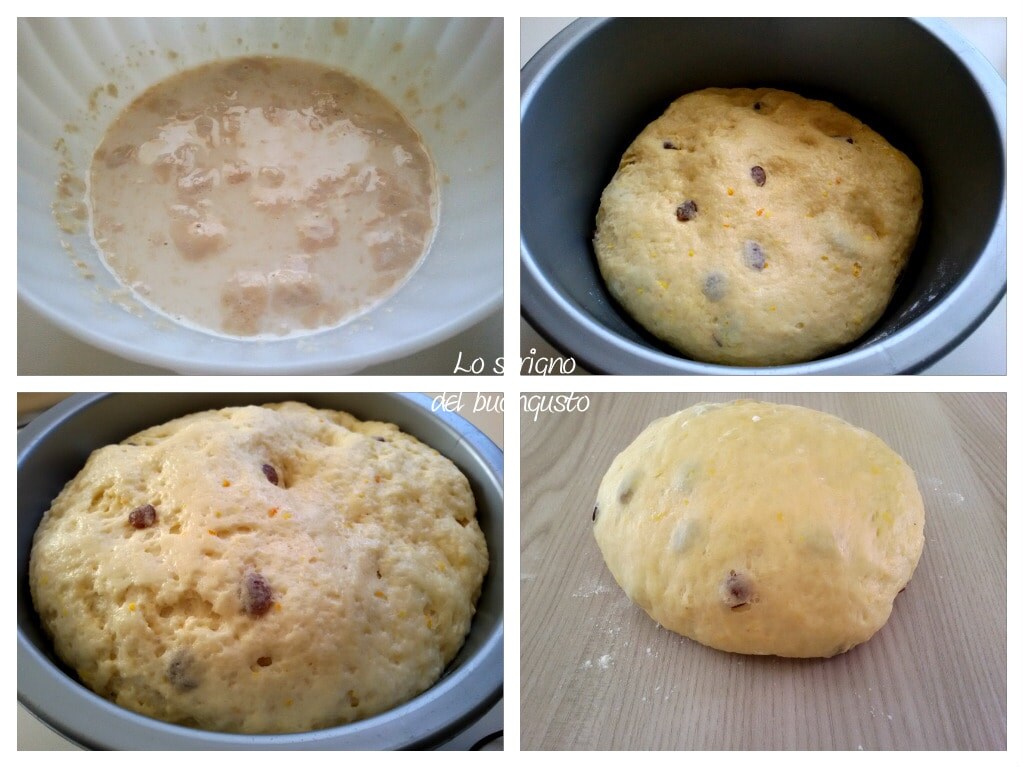
Once risen, transfer the dough to a work surface, work it lightly and divide it into two equal parts to form two balls.
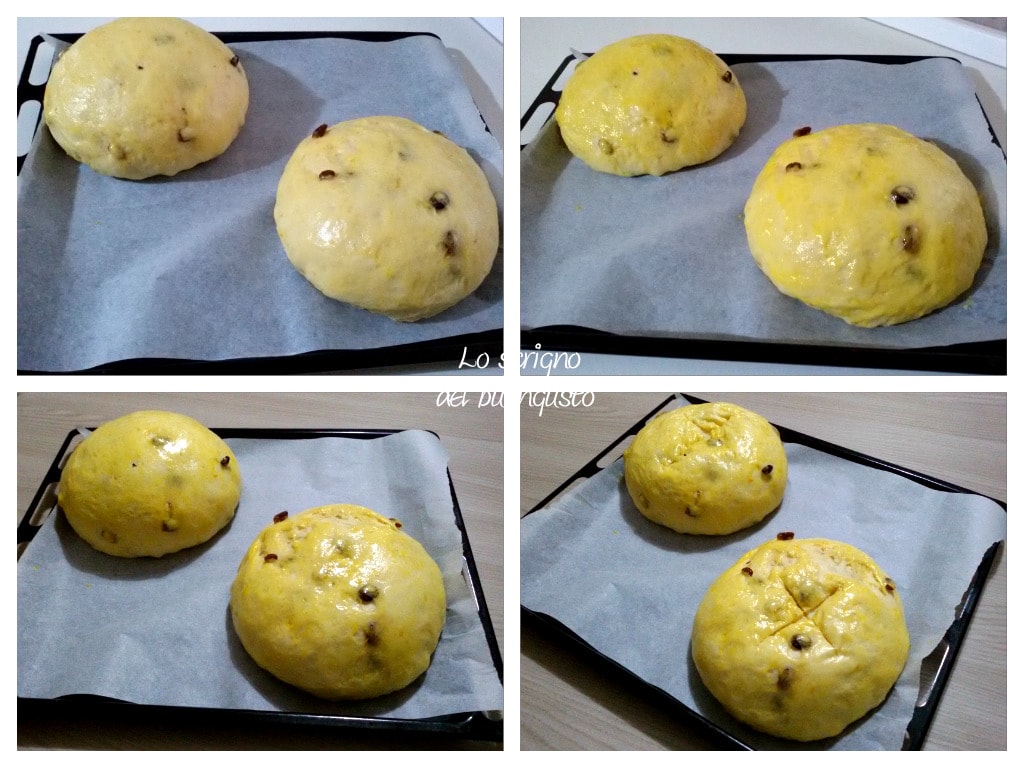
Line a baking sheet with parchment paper and place the two dough balls on it, spaced well apart.
In a small cup mix the egg yolk with the milk and brush the tops of the pincas, then let them rise for 1 hour or a little longer.
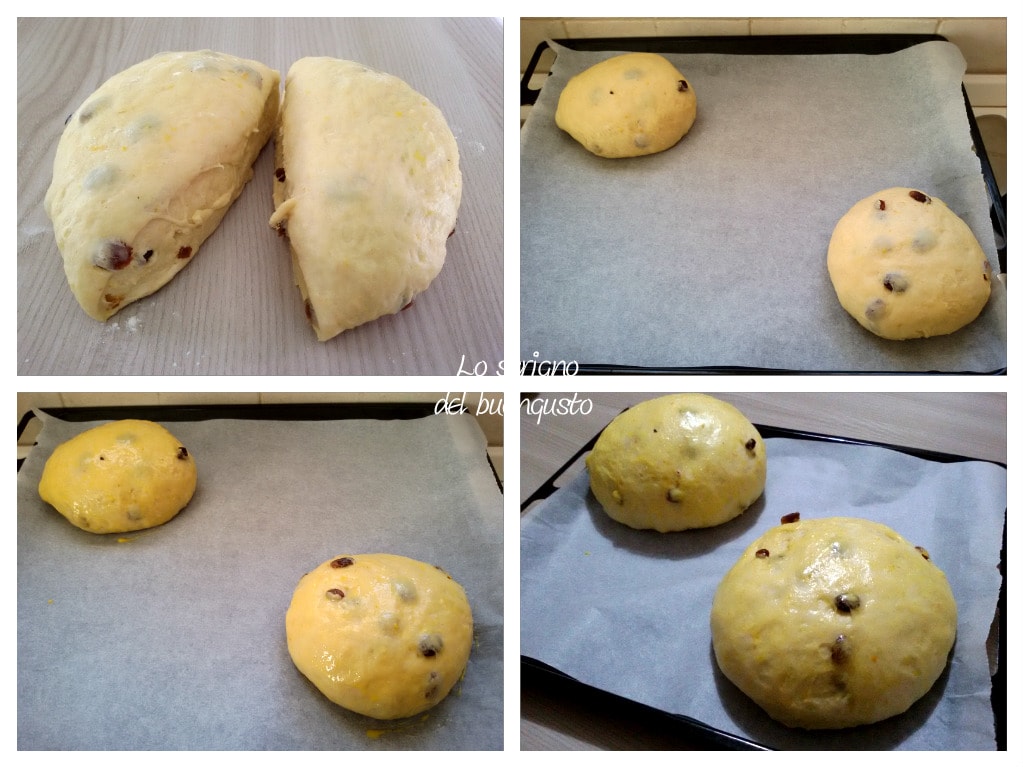
When this second rise is complete, brush again with the egg mixture and let rise for another hour or so.