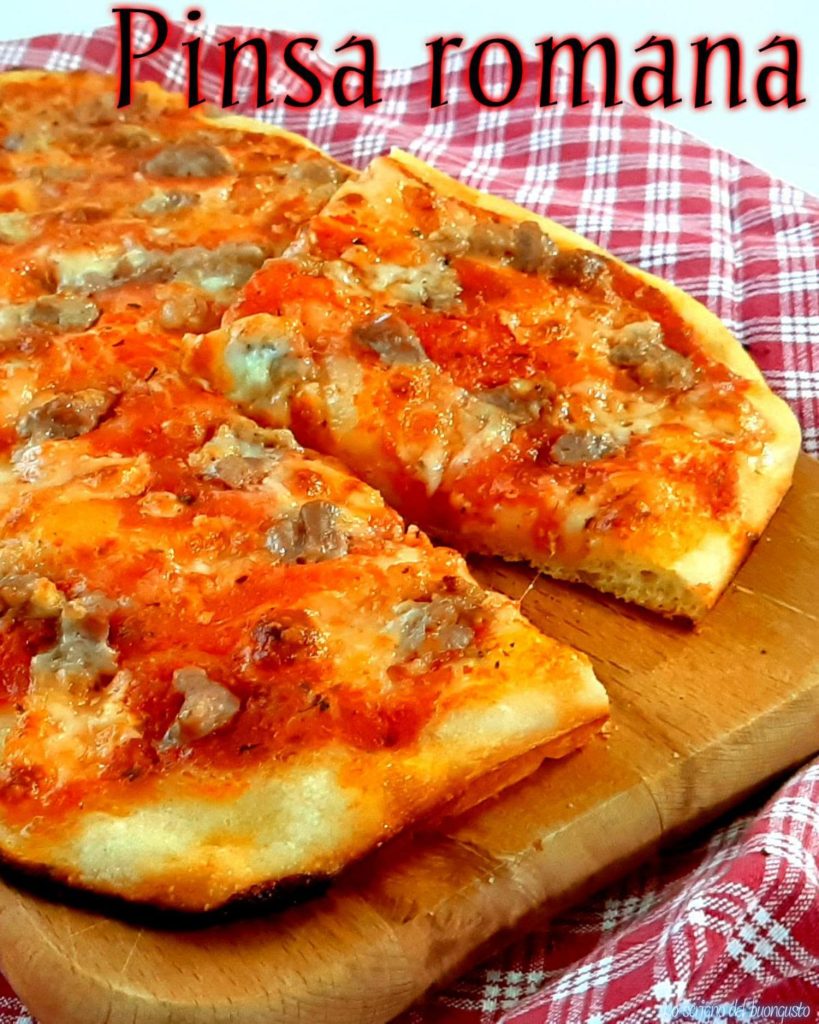
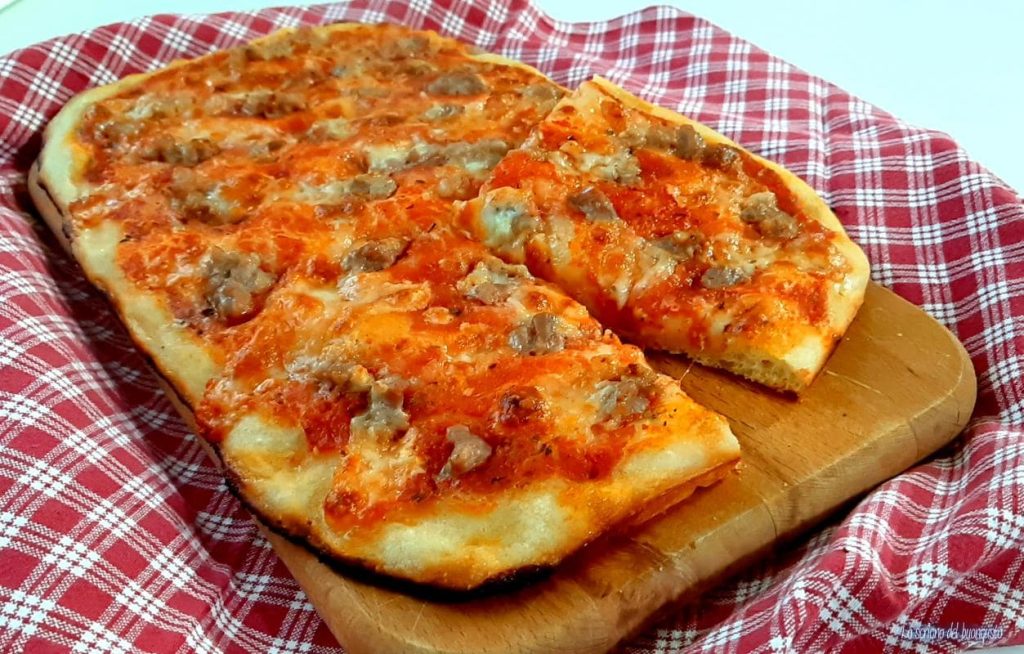
Roman pinsa was one of my challenges that I had promised myself, a recipe that, unlike pizza with classic dough, remains lighter and the taste and cooking are different.
You need to arm yourself with good patience because it has to rise for 24 hours up to a maximum of 150 in the refrigerator.
Obviously, if we decide to let the dough rise for a long time, we should lower the yeast in the dough to at least 2-3 grams.
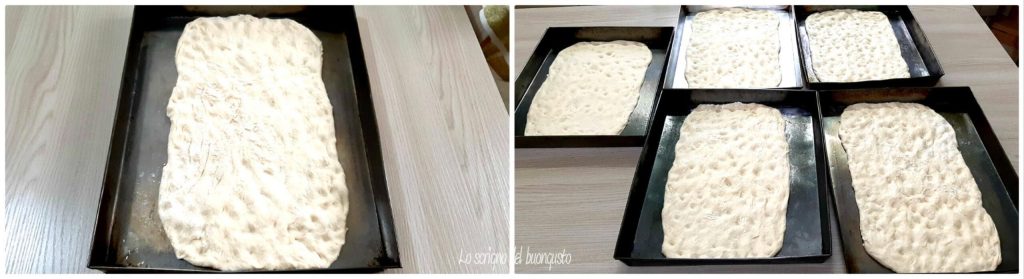
The peculiarity is its rectangular-oval shape, although mine should have been more so.
The dough is made up of a mix of flours including soft wheat, soy, and rice flour, and with cold water, the dough will remain a bit sticky if you like, but it must be that way.
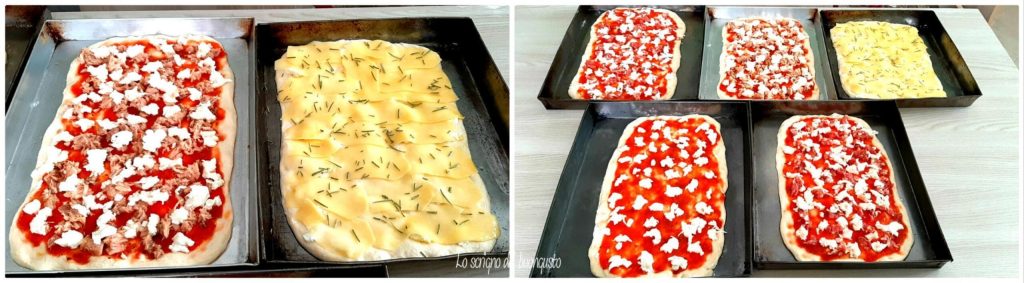
I prepared my pinsas by seasoning them to my liking, but I will definitely make them again soon to bake them in a white focaccia version, I’m sure it will be delicious that way too.
I tend to make pizzas quite thin and not load them with mozzarella, but as I repeat, you can adjust it to your taste.
My cooking was done in an electric oven, but if you have a more professional oven, or even a wood-fired one, I can’t imagine the result!
Below you will find 2 versions to make the pinsa, because if you buy the flour for Roman pinsa, in my opinion, you will go safer, the flours will be better balanced than we would do at home.
I made it both ways and I must say that with the pre-made flour it is better.
If you make one of my recipes, send me the photos and I will publish them on my page with your name.
Then you just have to try my Roman pinsa and let me know what you think.
Approximately 200 Kcal for every 100 grams of pinsa (dough only)
- Difficulty: Medium
- Cost: Cheap
- Rest time: 48 Minutes
- Preparation time: 30 Minutes
- Portions: 7 pinsas
- Cooking methods: Electric oven
- Cuisine: Italian
- Seasonality: All seasons
Ingredients for making Roman Pinsa
- 3 cups cold water
- 30 oz type 0 flour
- 3 1/2 oz rice flour
- 1 3/4 oz soy flour
- 1 tsp dry yeast
- 4 tsp salt
- 4 tbsps extra virgin olive oil
- 3 cups cold water
- 35 oz flour for Roman pinsa
- 1 tsp dry yeast
- 1/4 cup cold water
- 4 tsp salt
- 4 tbsps extra virgin olive oil
Preparation of the Roman Pinsa
In the planetary mixer, put the cold water and the yeast, letting it dissolve, then add the flour a little at a time kneading for a few minutes.
Once the work is completed, with a knife create cuts in the dough, even if it is not clearly visible in the photo, I made at least 4 cross cuts.
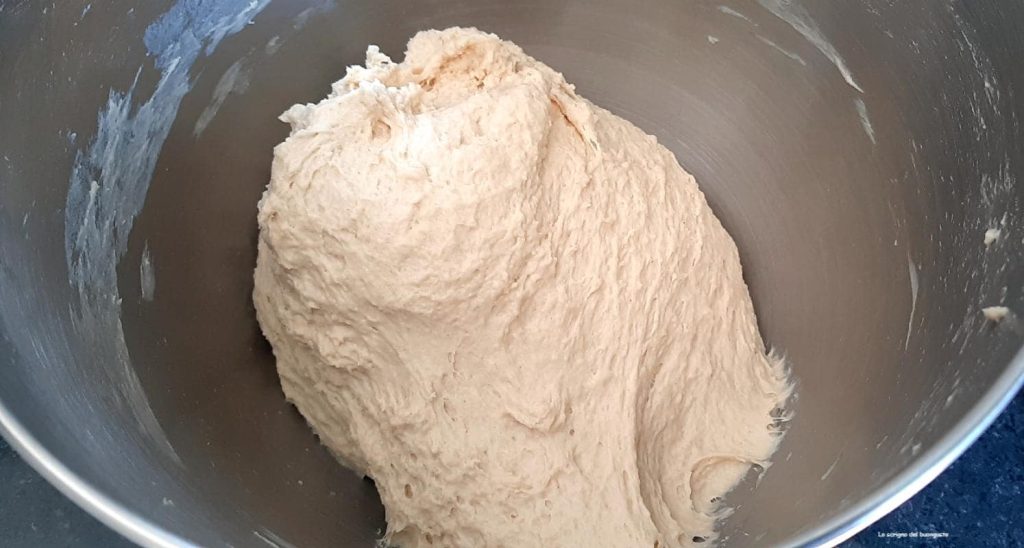
Add the salt, e.v.o. oil, 50 grams of cold water and work the dough, making it well-knit for about 10 minutes.
At this point, let it rest for about 20 minutes
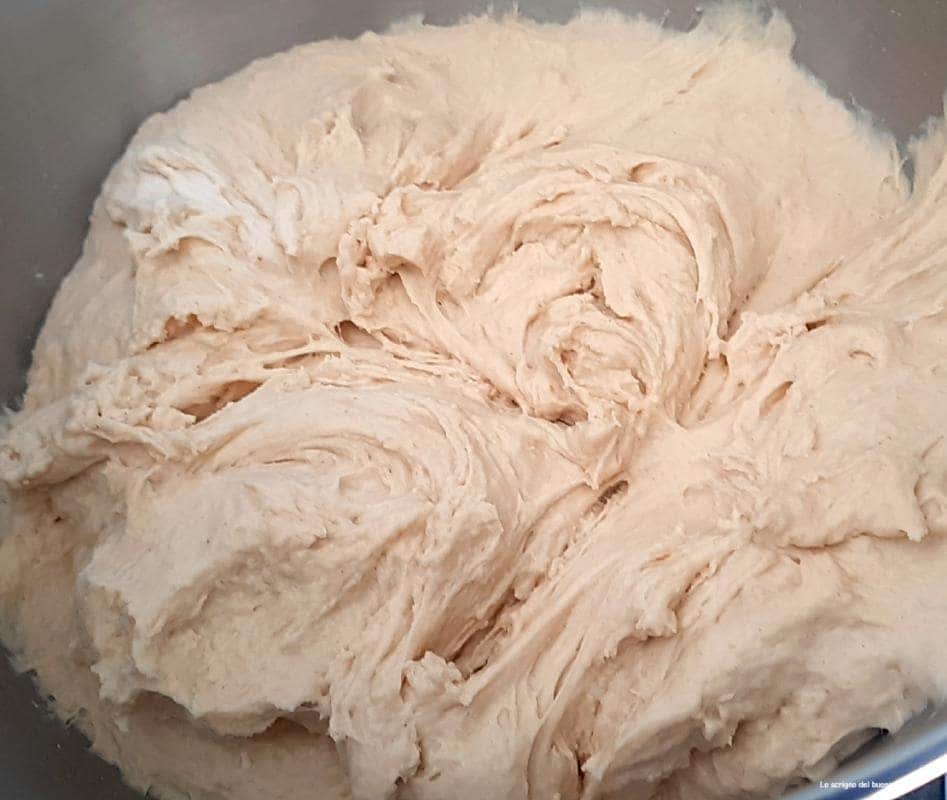
then transfer the dough onto a floured surface
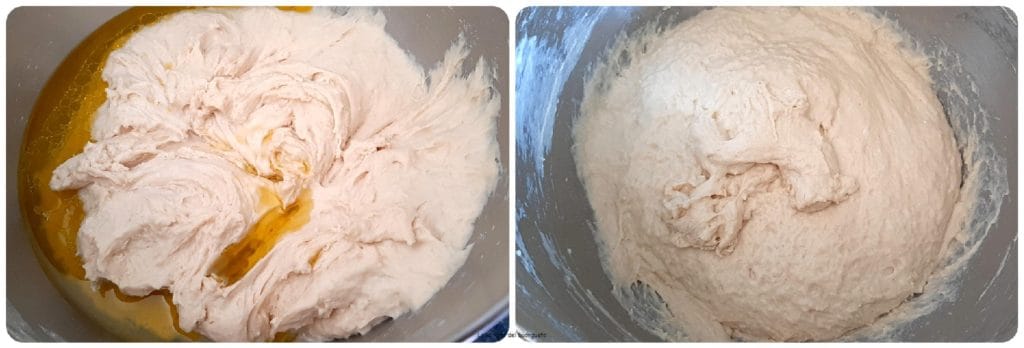
and fold the dough from the outside to the inside on each side
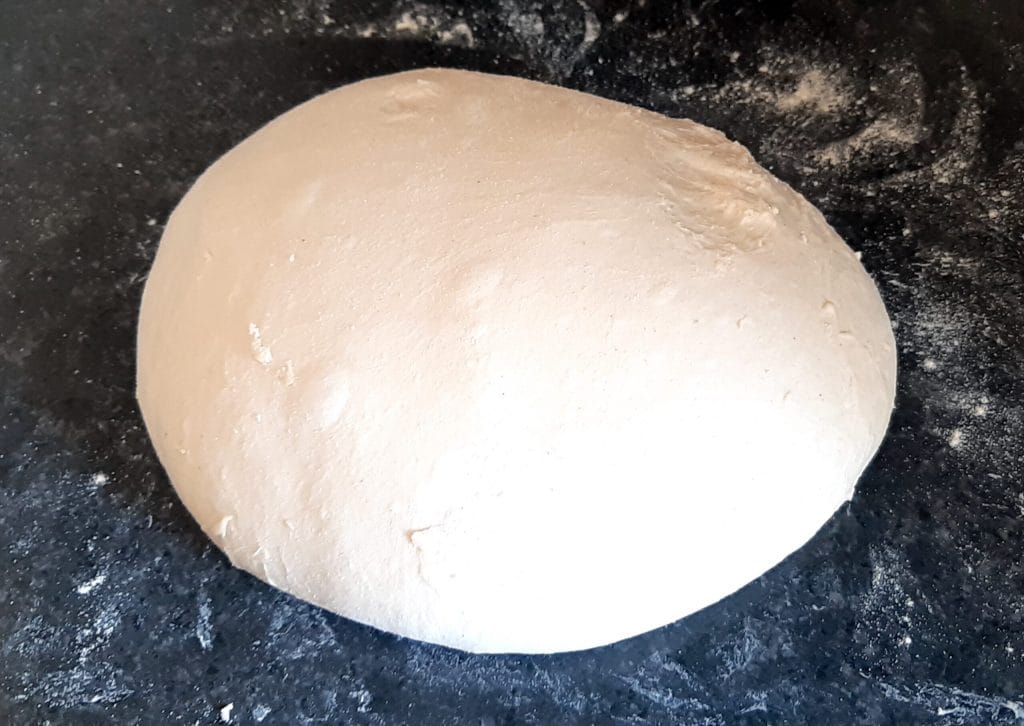
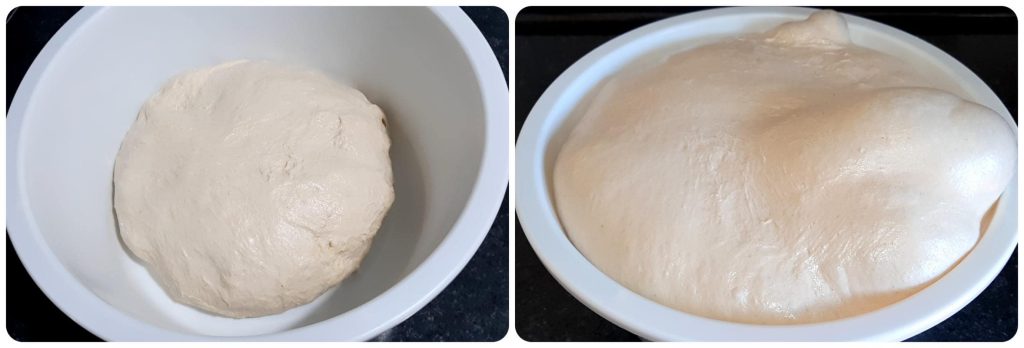
….then recreate a ball and transfer the dough into a large container and let it rise covered until almost doubled.
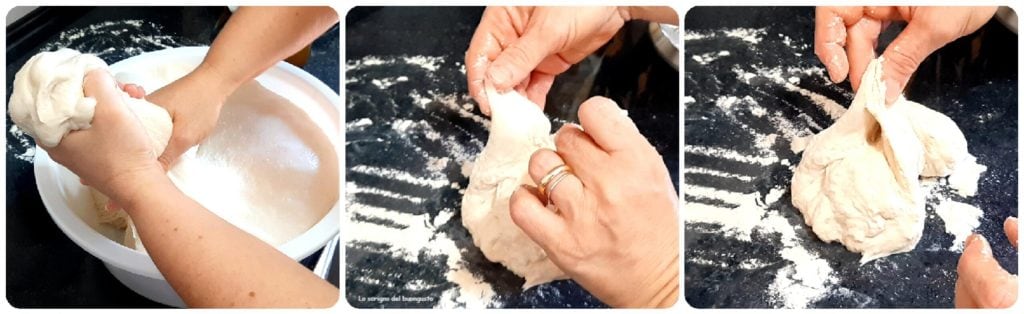
Once risen, transfer the dough to the fridge for 24 hours and if it rises too much, before going to bed, take the dough and still in the bowl, tuck your hands under the dough and turn it over recreating a ball, perhaps grease your hands if the dough sticks too much.

After 24 hours, obtain 250-gram pieces of dough by pinching pieces from the main dough, close the edges of the dough from the outside to the inside to create a ball.
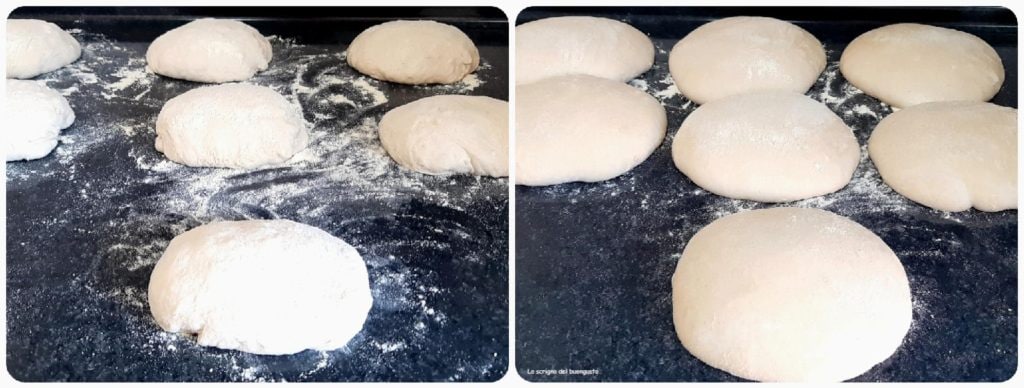
Let the balls rise on a lightly floured surface until doubled.
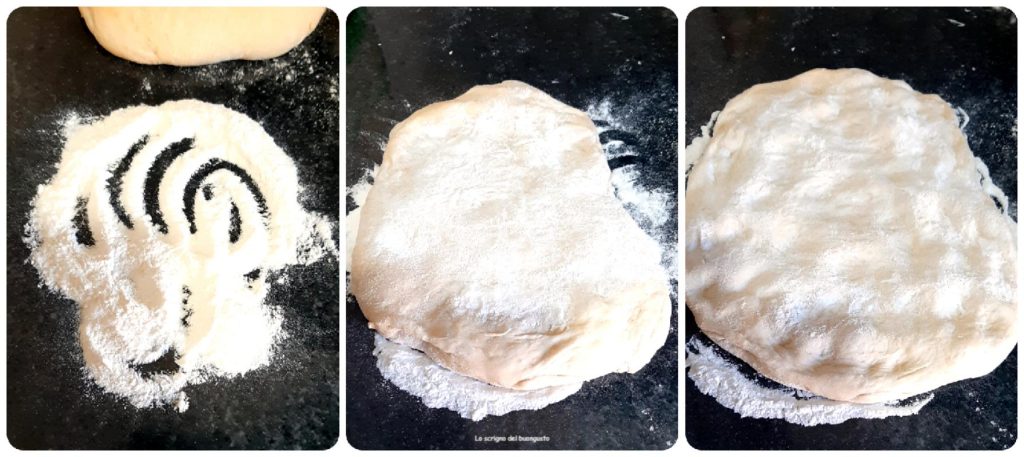
Position each ball on rice or durum wheat flour and also dust the surface, then with spread fingers press onto the dough to create the shape of the pinsa, then lift the dough and let the excess flour fall off
….place our pinsa on an tray greased slightly spreading it to create the typical shape of this type of pizza.
Once the pizzas are rolled out, season them to our taste and bake at 482°F for 10-15 minutes, and if you have a more powerful oven, it will be even better, 572°F would be even better.
It will be crunchy on the outside and soft inside.