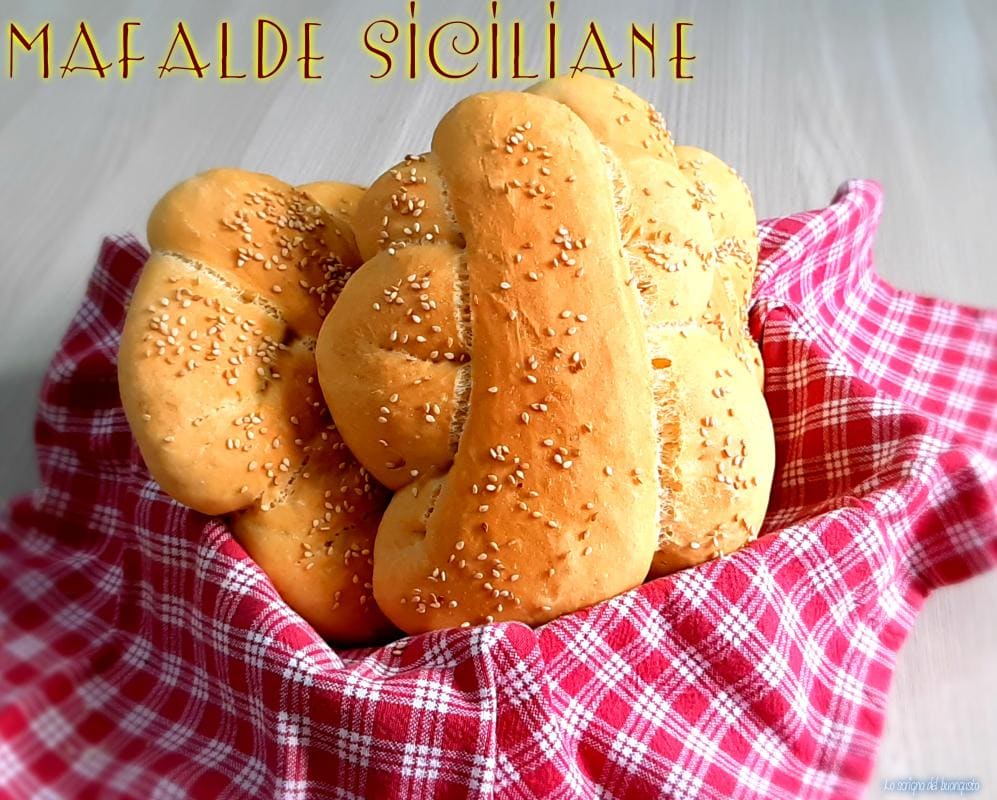
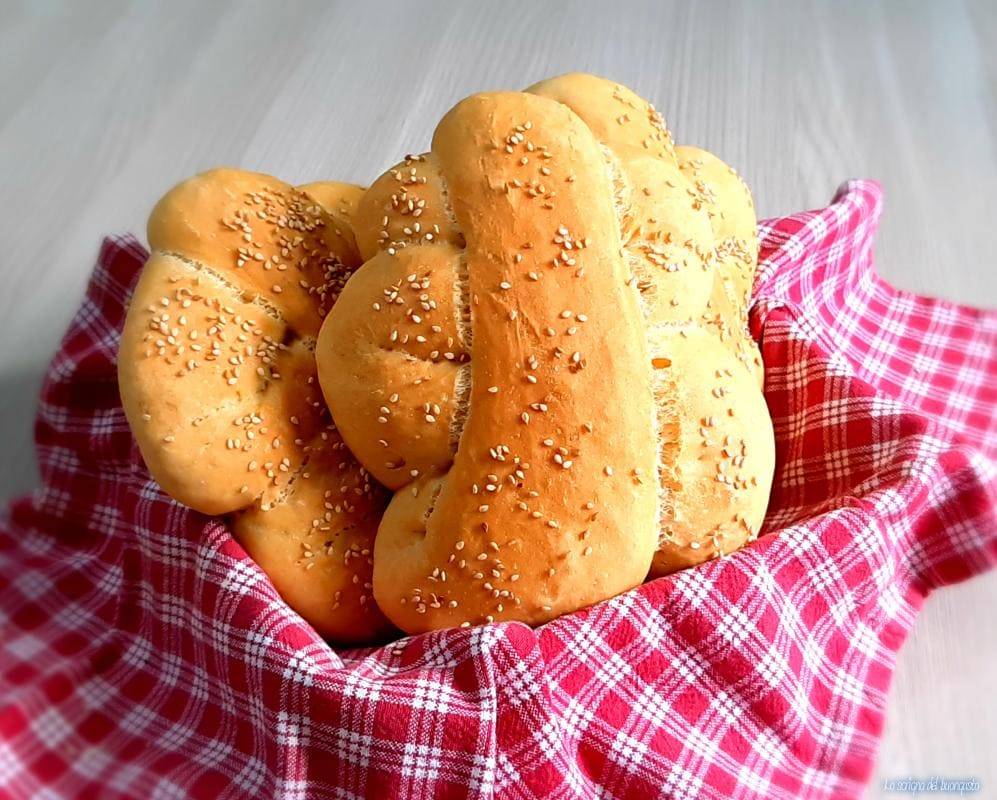
Sicilian Mafalde are traditional durum wheat rolls typical of Sicily, very simple to make, and characterized by the taste of sesame seeds sprinkled on top. Sicilian Mafalde can be shaped like an ‘S’ or a crown, but the person who introduced me to this recipe suggested giving them an ‘S’ shape but slightly different. The important thing is to make them correctly regarding the dough, then, of course, you can decide on the shape. With the quantities I propose, you will make 6, and the raw dough should not exceed 280-300 grams per mafalda, otherwise, they will be too large. These rolls are typical Sicilian but especially from the city of Palermo, and if you happen to go there, you will certainly find them in every reputable bakery. The origins of this bread seem to date back to very ancient traditions from the distant 1800s when a master baker created this fragrant bread enriched with sesame seeds. Later in the 1900s, another master brought it to Catania, dedicating it to the Princess of Savoy, thus becoming popular. If you make any of my recipes, send me the photos, and I will publish them on my page with your name. Now you just have to try them, following my recipe, and see if they are as exceptional as they say. Approximately 670 kcal per mafalda
- Difficulty: Medium
- Cost: Cheap
- Rest time: 3 Hours
- Preparation time: 15 Minutes
- Portions: 6 mafalde
- Cooking methods: Electric oven
- Cuisine: Regional Italian
- Region: Sicily
Ingredients to make Sicilian Mafalde
- 0.7 oz fresh brewer's yeast
- 2.7 cups warm water
- 2.2 lbs and 3.5 oz of durum wheat flour + 1 oz for the work surface
- 1 tsp honey
- 2 tbsps extra virgin olive oil
- 0.7 oz salt
- as needed water
- as needed sesame seeds
Preparation of Sicilian Mafalde
You can work the dough by hand or with a stand mixer, the result will be excellent, it will only take a little more elbow grease by hand!
In the stand mixer, put the warm water, brewer’s yeast, teaspoon of honey, half the flour, and mix for at least 2 minutes.
Then add the salt, extra virgin olive oil, and the remaining flour, working the dough for a few more minutes until obtaining a soft, homogeneous, and non-sticky mixture.
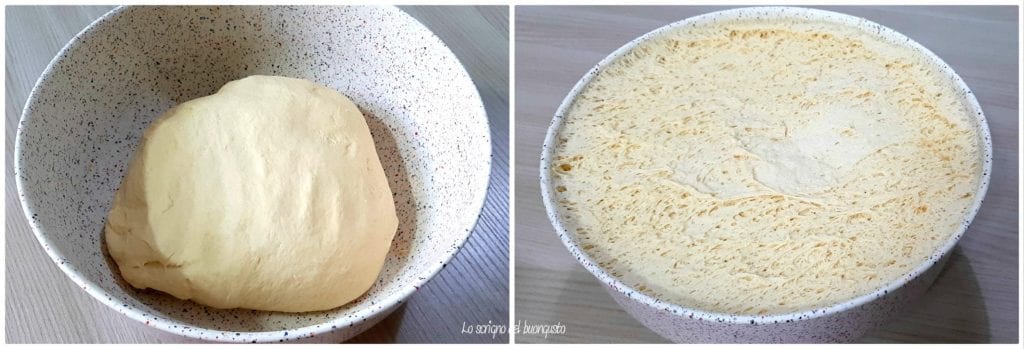
When the dough is well kneaded, transfer it to a large container and let it rise for about 2 hours or until it doubles in size.
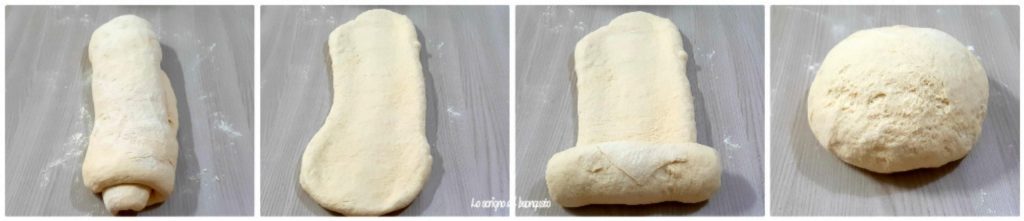
Once risen, transfer the dough to a floured surface and knead it to form a homogeneous ball, then use a rolling pin to create a rectangle not too thin and roll it up on itself from the narrow side, forming a sausage

turn it vertically and flatten it again with the rolling pin to create a rectangle and roll it up once more, forming a sausage, then close it at the ends to form a loaf again.
Divide the dough into six equal parts, each weighing about 10-10.5 oz, and form balls with each.
Take each ball and work it to create a cord about two fingers thick and 12 inches long, forming a kind of snake, tucking the last piece over the snake itself
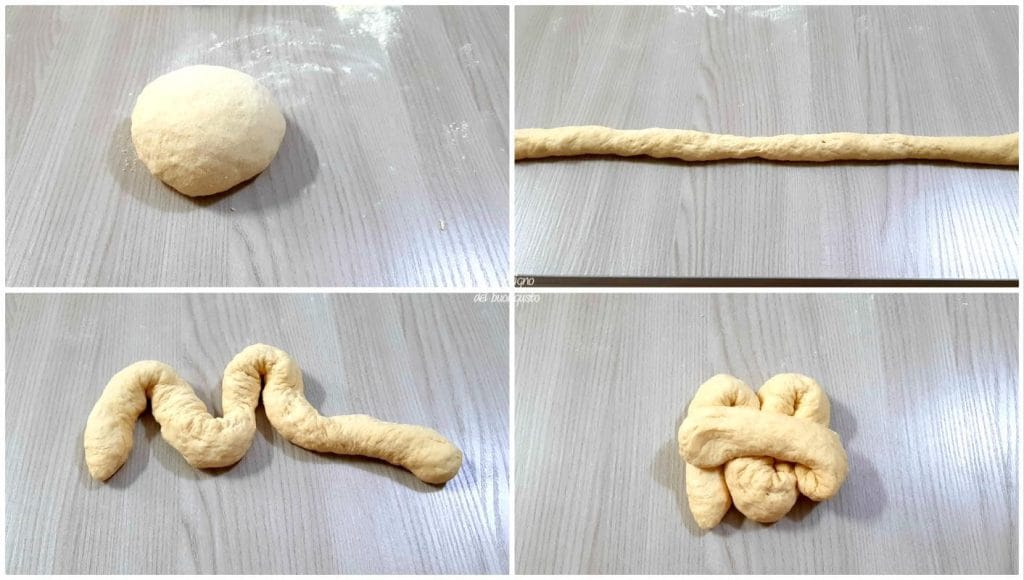
place it on a baking sheet lined with parchment paper and repeat with the remaining balls.
Moisten the surface of the mafalde with water, sprinkle generously with sesame seeds, and let rise again for about an hour.

Bake in a preheated oven at 410°F for about 20-25 minutes, checking the cooking.