Sourdough starter or mother dough is one of those recipes that I wanted to make but kept postponing. Then one day, I started the process, and now I have plenty of starter and certainly won’t buy it anymore.
Homemade starter is not only more genuine, but also more digestible and gives a more intense flavor to the leavened products.
It’s harder to explain the process than to actually do it.
Remember that 300 grams of sourdough starter is equivalent to a 25-gram cube of fresh yeast.
Make your own sourdough starter, and you won’t need to buy yeast from the store again!
If you make any of my recipes, send me the photos, and I will publish them on my page with your name.
Approx. 230 Kcal per 100 grams
- Cost: Economical
- Cooking methods: No cooking
- Cuisine: Italian
- Seasonality: All seasons
Ingredients for making Sourdough Starter
- 3/8 cup warm water
- 7 oz All-purpose flour
- 1 tsp Salt
- 1 glass or plastic container with a good seal
Preparation of Sourdough Starter
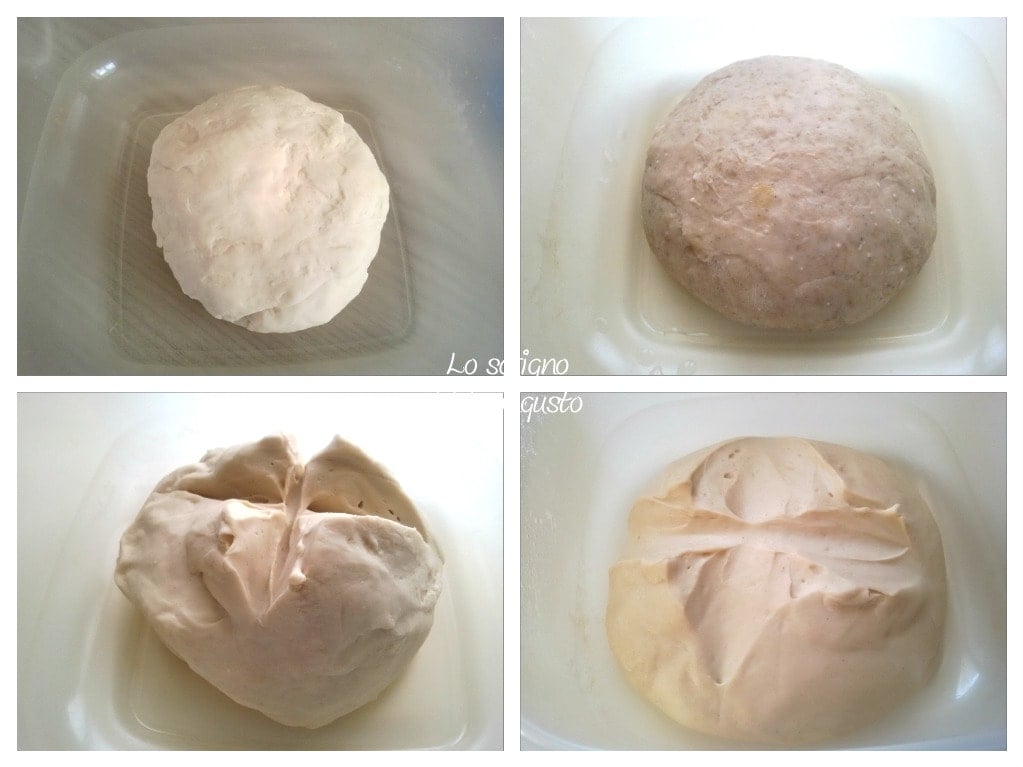
Take all the ingredients, knead them and create a dough, place it in a container with the lid and let it rest for 24 hours.
After this time, take the dough again, add 3/8 cup of warm water, 7 oz of flour and incorporate the ingredients to form a dough again, make a cross cut, leave it to rest at room temperature, always sealed in a container with the lid for at least 4-5 hours, then put it in the fridge for the remaining hours to reach 24 hours.
Follow this procedure every day for 15 days and refresh the dough every 24 hours with water and flour in the quantities already described.
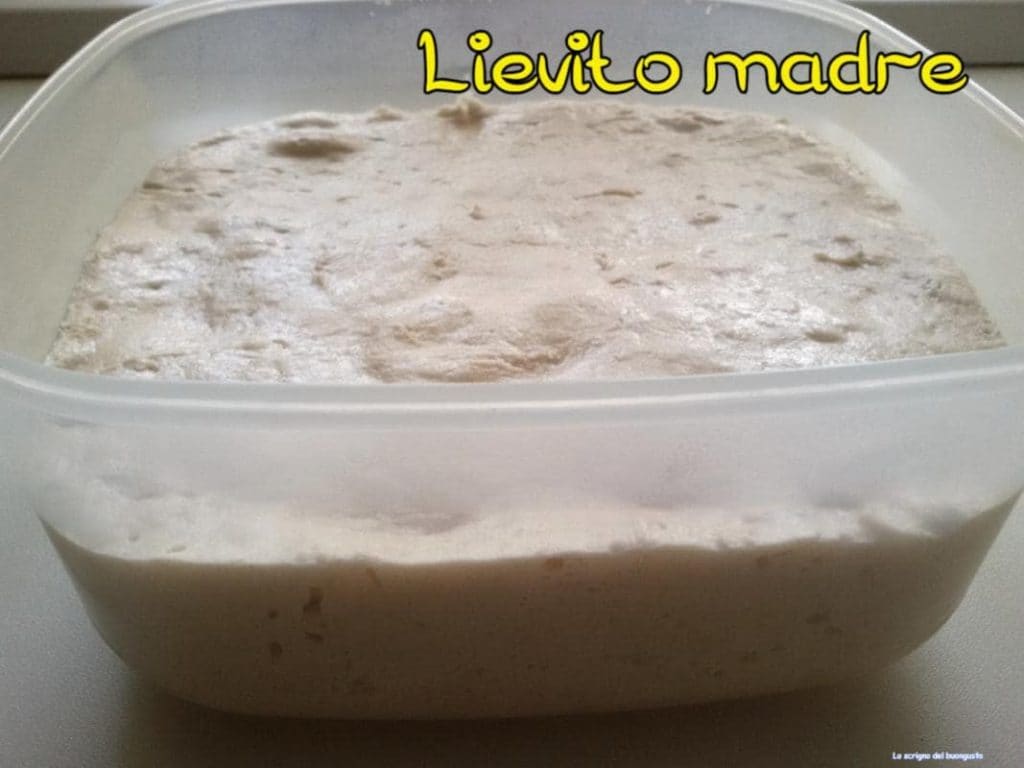
After 15 days, our natural starter is ready to be used.
Refresh the dough by adding 3/8 cup of warm water and 7 oz of flour, mix everything well and form a dough again, store it in the fridge always in a container with a lid and leave it to rest for another 7 days.
To maintain the sourdough starter, every 7 days add 1/4 cup of water and 3.5 oz of flour, reform the dough and let it rest in the fridge.
Generally, the refreshment involves throwing away a part and keeping a little more than half, and that’s the part to be refreshed, but I didn’t want to waste and thus always refreshed the entire dough. It’s true that later the amount of starter will be a lot, but if maintained well, it won’t spoil.
Of course, when it becomes too much, you’ll be forced to throw away some part or start using it.
The only advice is to be careful if between refreshments, our starter creates a crust on the surface, that should be removed and discarded.
When we need to use it, refresh the entire dough, take the part we need and leave it covered in a warm place for a few hours and the rest is stored in the fridge.