
There is something profoundly spiritual about transforming a simple block of butter into a golden elixir, fragrant and incredibly versatile. Ghee, the quiet protagonist of many traditional kitchens, is not just an ingredient: it is a ritual, a little home alchemy that fills the kitchen with warm, enveloping aromas.
Making it at home is easier than you might think — and the result is decidedly better than any store-bought version.
During preparation, water, lactose and milk proteins are removed: the result is a pure fat, naturally lactose-free, more digestible than traditional butter and suitable even for those with dairy sensitivities.
But it is not only a technical matter. In the tradition of Ayurvedic cuisine, ghee is considered a precious food: it nourishes, balances and supports overall well-being. It is used not only for cooking, but also as a base for therapeutic preparations and daily rituals, a symbol of purity and transformation.
A small daily ritual
Making ghee is not just a recipe, it’s an invitation to slow down. Watching the butter change, listening to the delicate sounds of cooking, smelling the evolving aroma… it is a simple way to reconnect with the authentic pleasure of cooking.
And when you taste it, you will understand it’s not just clarified butter. It is liquid gold made with your own hands, deeply rooted in an ancient tradition.
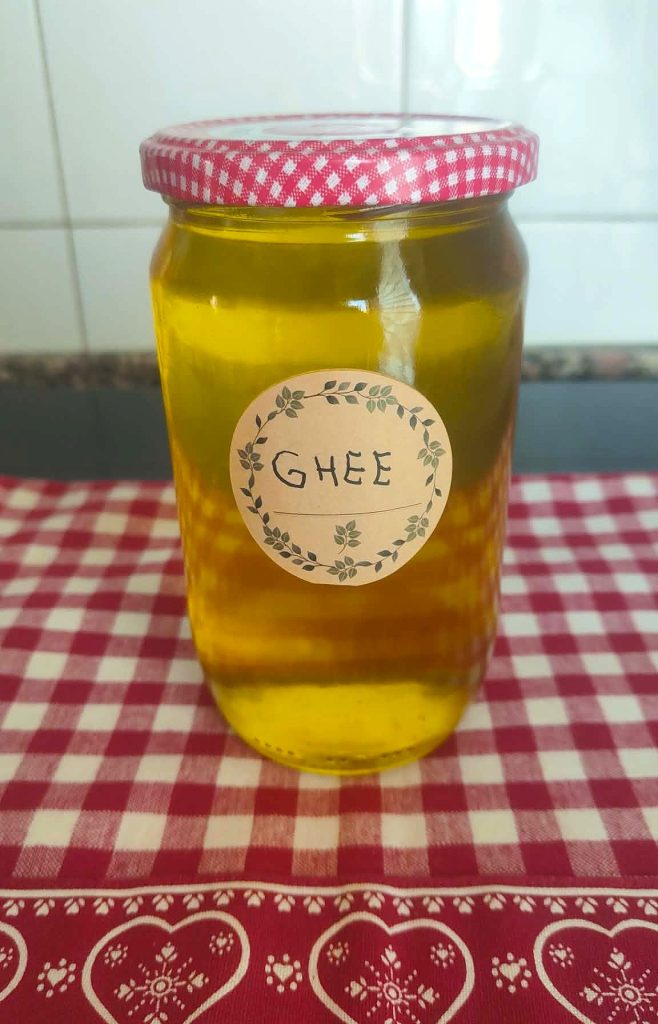
- Difficulty: Very easy
- Cost: Budget-friendly
- Cooking time: 40 Minutes
- Portions: 2 Pieces
- Cooking methods: Stovetop
- Cuisine: Italian
Ingredients
- 4 3/8 cups unsalted high-quality butter (about 2.2 lb/35 oz) (4 blocks of 8.8 oz (250 g) each)
Steps
1 – Melt the butter slowly
Cut the butter into pieces and place it in a saucepan with a thick bottom. Turn the heat to low and let it melt without rushing. This is where the magic begins: no hurry, no stirring.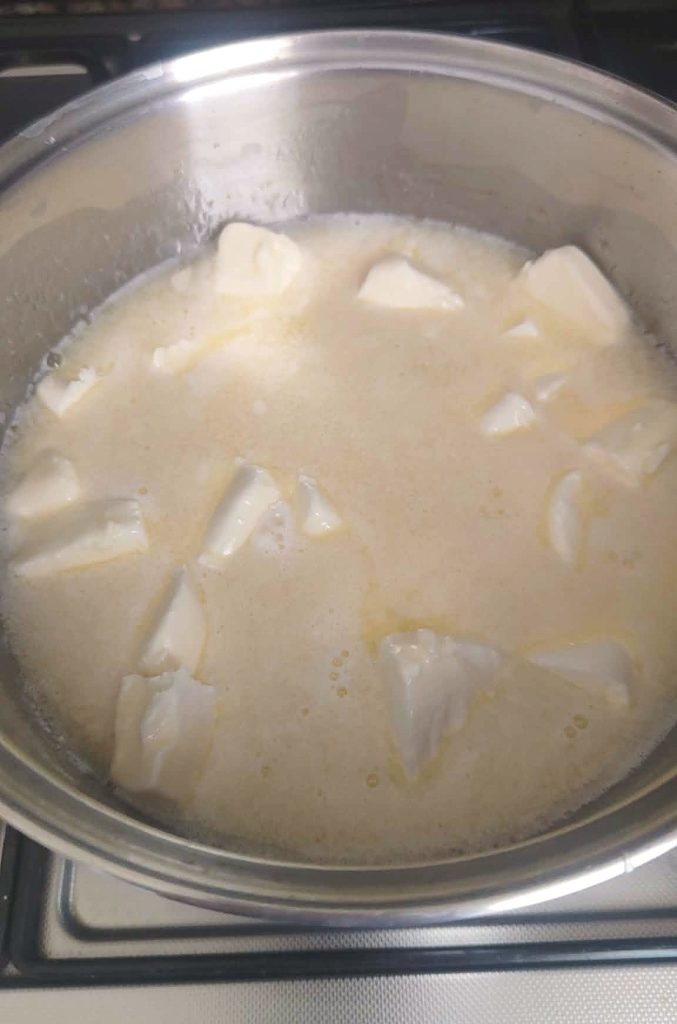
2 – Watch the transformation
After a few minutes, the butter will begin to separate. A whitish foam will form on the surface, while milk solids will settle on the bottom. The liquid in the middle will become increasingly clear and golden.3 – Remove the surface foam
With a skimmer or a fine-mesh spoon, gently remove the foam on the surface. Do not stir up the solids that have settled on the bottom. This step helps obtain a clearer, purer ghee.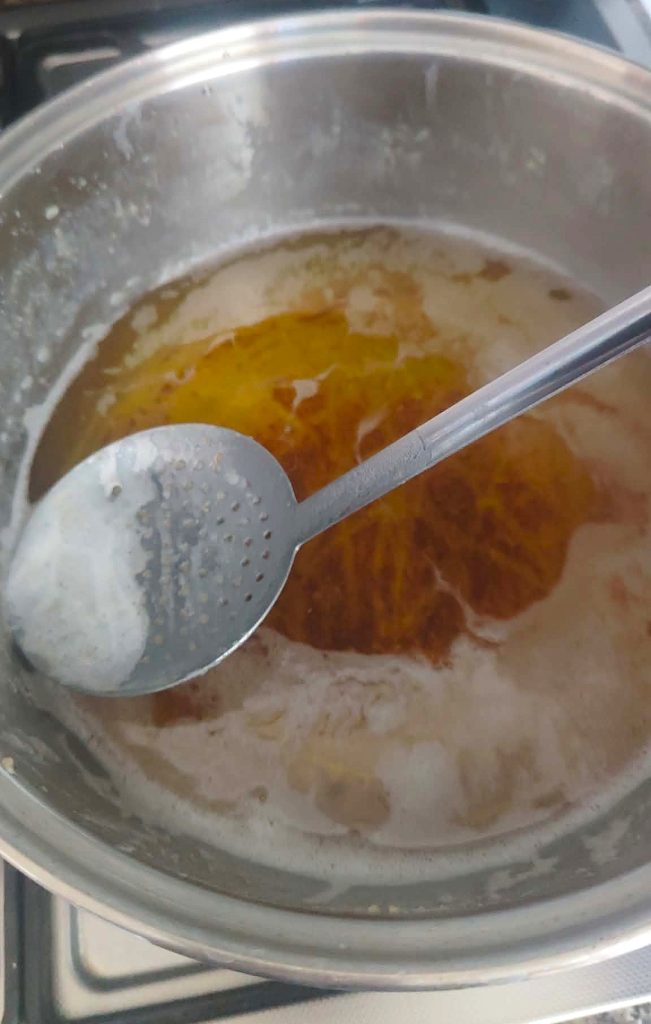
4 – Let it simmer gently
Continue cooking over low heat for about 30 minutes, occasionally removing any foam from the surface. Gradually the aroma will become more intense, with slightly nutty notes.
5 – Reach the perfect moment
When the liquid is completely transparent and a warm golden color, and the solids on the bottom are slightly amber (not burned!), the ghee is ready.
6 – Strain and store
Turn off the heat and let it cool for a few minutes. Strain everything through a fine-mesh sieve or cheesecloth, pouring the liquid into a clean glass jar. Let it cool slightly and then seal the lid.
Storage and uses of ghee: small secrets to know
Once ready, ghee is not only beautiful to look at: it’s also incredibly practical in the kitchen. It can be stored for weeks at room temperature, thanks to the absence of water and milk proteins.
HOW TO STORE IT
– At room temperature: you can keep it in a well-sealed glass jar, away from light and heat sources, for several weeks.
– In the refrigerator (optional): if you want to extend its shelf life further, you can refrigerate it. It will become firmer but will retain all its properties.
Always use clean utensils: use dry, clean spoons to avoid contamination and keep it perfect for longer. The expiration will be that printed on the butter you used.
HOW TO USE IT IN THE KITCHEN
Ghee is a true everyday ally thanks to its high smoke point, which makes it ideal for:
– Sautéing and browning: enhances flavor without burning
– Light frying: more stable than regular butter
– Raw dressings: on vegetables, rice, legumes, or toasted bread
– Sweets and spiced recipes: perfect to add a warm, enveloping note
Try it also on vegetables, rice or toasted bread: a little is enough to transform a dish.
A LITTLE EXTRA
Try using it instead of butter in your favorite recipes: you’ll discover a deeper, slightly nutty flavor that can transform even the simplest dishes into something special.
Ghee, in the end, is exactly this: an ancient ingredient, yet surprisingly modern, combining practicality, flavor and well-being in a single spoonful.
