Black Venere rice, also known as Nerone, is a whole grain that requires longer cooking times compared to other types of rice. For quicker white cooking, it is recommended to cook it in a pressure cooker with plenty of water, avoiding the absorption method, which is complicated with whole grains.
I prefer to choose organic and natural varieties, like Alce Nero, to keep both taste and nutritional properties intact. Conversely, varieties like Parboiled Scotti (or Gallo) are treated or precooked, which makes them faster to cook but compromises some of their original characteristics.
The Venere rice is a specific variety of black rice born in Italy, developed in the early 2000s by crossbreeding an Asian black rice with an Italian variety from the Po Valley. It is whole grain, very fragrant (reminiscent of freshly baked bread or hazelnuts), and requires longer cooking time compared to refined rices, but it offers high nutritional value. It is an all-Italian black rice, mainly cultivated in Piedmont and the Po Valley.
#cookingcereals
Easy GLUTEN-FREE recipes with cereals
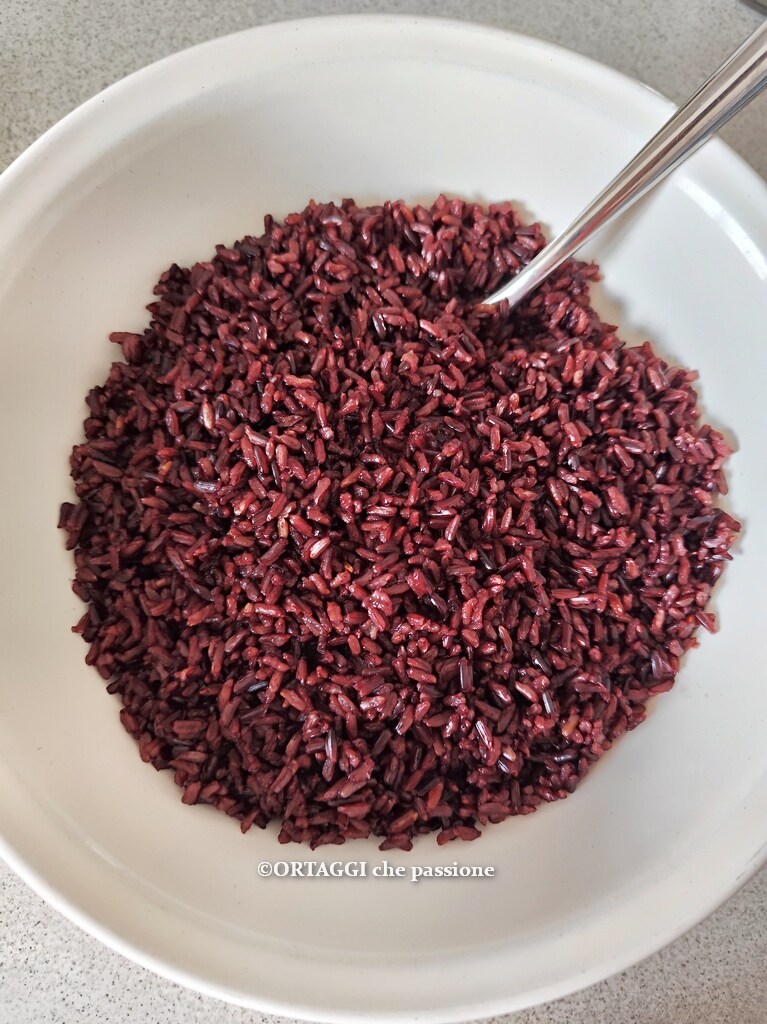
- Difficulty: Easy
- Cost: Cheap
- Preparation time: 2 Minutes
- Portions: 2People
- Cooking methods: Stove, Pressure Cooker
- Cuisine: Healthy
- Seasonality: All Seasons
- Energy 422.00 (Kcal)
- Carbohydrates 91.11 (g) of which sugars 0.00 (g)
- Proteins 8.89 (g)
- Fat 3.33 (g) of which saturated 0.00 (g)of which unsaturated 0.00 (g)
- Fibers 15.60 (g)
- Sodium 615.37 (mg)
Indicative values for a portion of 250 g processed in an automated way starting from the nutritional information available on the CREA* and FoodData Central** databases. It is not food and / or nutritional advice.
* CREATES Food and Nutrition Research Center: https://www.crea.gov.it/alimenti-e-nutrizione https://www.alimentinutrizione.it ** U.S. Department of Agriculture, Agricultural Research Service. FoodData Central, 2019. https://fdc.nal.usda.gov
Black Venere Rice – Quick Cooking
PER PERSON
🍀 boiled Venere rice as side dish: 60-80 grams
🍀 boiled Venere rice for salad or one-course meals: 80-100 grams
- 200 g black Venere rice
- 600 g water (see below)
- to taste coarse salt (half a teaspoon)
Should Venere rice be washed? A quick rinse under running water can be useful to remove impurities and reduce any traces of pesticides, dust, mold, or other contaminants accumulated during cultivation, transport, or storage. Soaking is not necessary but can help reduce cooking times.
How much water to use for cooking and for how long?
For whole Venere rice (type Alce Nero or Baule volante)
🍀 In pressure cooker: about three times the weight of the rice, with cold water. Cook for 18-20 minutes from the whistle.
🍀 In pot: about five times the weight of the rice, with cold water. Cook over low heat for 35-40 minutes.
🍀 In oven: about twice the weight of the rice, with hot broth or water. Cook covered at 392°F for 30 minutes.
If Venere rice is parboiled or precooked (usually Scotti or Gallo), reduce cooking time and water, following the package instructions.
Tools
- Pressure Cooker for quick cooking
How to cook Venere rice?
ADVANTAGES
🍀 Quick times: cooks Venere rice in about 18 minutes.
🍀 Nutrients preserved: better retains nutritional properties thanks to sealed cooking.
🍀 Intense flavors: better preserves taste due to cooking in a closed environment.
🍀 Energy saving: uses less energy compared to traditional cooking.In conclusion, Venere rice turns out faster and tastier.
Wash the black Venere rice under running water.
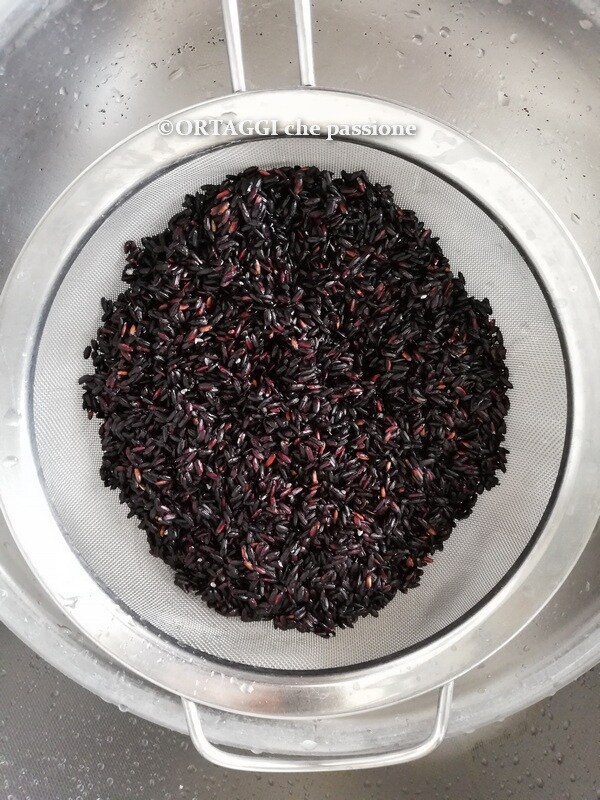
Pour the rice into the pressure cooker (to enhance the flavor, it can be slightly toasted before adding water), cover with three times its weight in water, then add the salt and close. At the first whistle, lower the heat and cook for 12 minutes. Turn off the heat and let it depressurize naturally; in this way, cooking will continue (for 3-5 minutes) safely and ecologically.
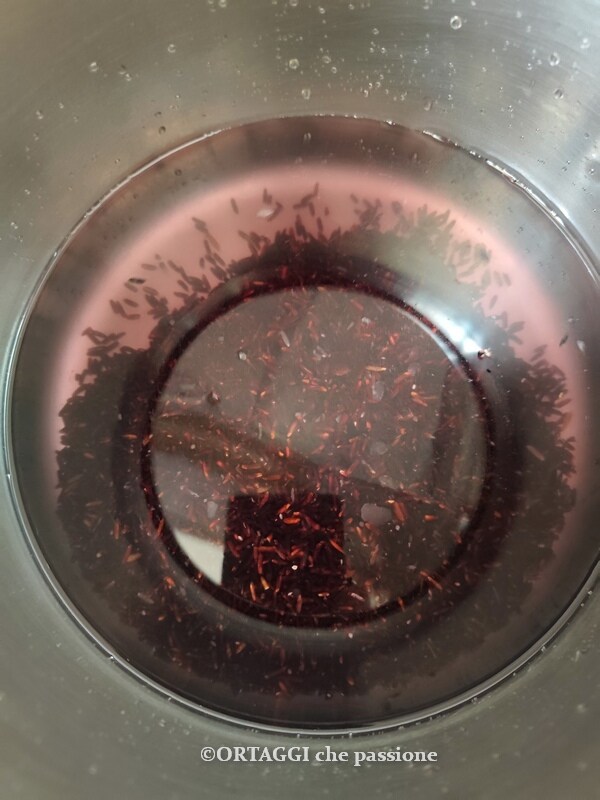
Once ready, drain.
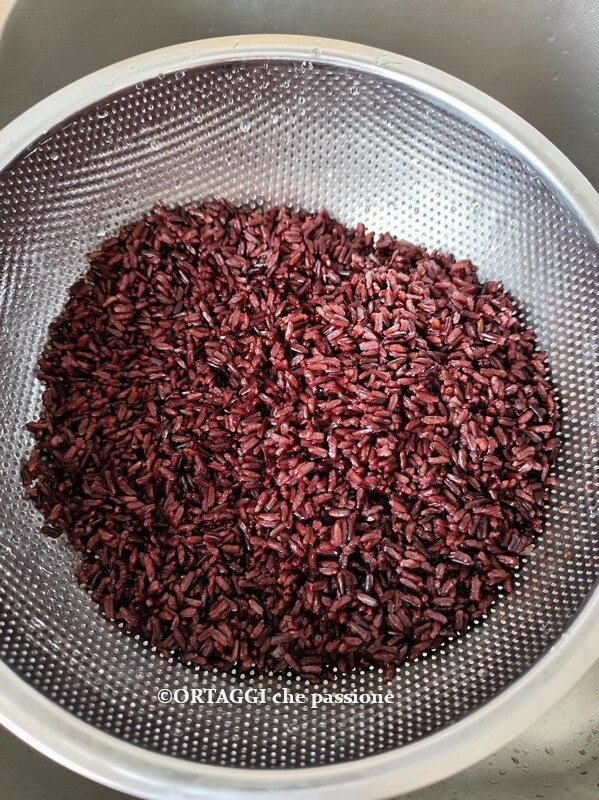
To taste, season with a drizzle of extra virgin olive oil before serving, or sauté in a pan with other ingredients to blend the flavors.
Rinse it under cold water. Optionally, briefly toast it in a pan with a drizzle of oil (to enhance its aroma), then add five times its weight in water. Bring to a boil, lower the heat and cook covered for 35-40 minutes or until done. Once cooked, let it rest for 5 minutes, then drain and season to taste.
In an ovenproof pan, toast the rice with a drizzle of oil. Add hot broth or hot water and, as soon as it boils again, cover with a lid suitable for oven cooking.
Then, cook in a preheated static oven at 392°F for about 30 minutes.
Black rice is not ideal for classic risotto, as it is less starchy and creamy. However, it is possible to prepare a tasty and creamy dish inspired by risotto, adjusting times and technique.
Toast the Venere rice in a drizzle of oil with chopped onion. Optionally, deglaze with white wine and then gradually add the hot broth, stirring occasionally. Continue cooking for 35-40 minutes or until the rice is al dente. To make the risotto creamier, add a blended vegetable cream, a pesto or vegetable cream towards the end of cooking.
STORING boiled Venere rice
Once cooked, allow the Venere rice to cool completely. Transfer it to an airtight container and store in the refrigerator. It keeps well for up to 4 days.
For subsequent consumption, it can be reheated by steaming, in a pan with a drizzle of oil, or enjoyed cold in salads.
Freezing is not recommended as the texture may suffer.
FAQ (Questions and Answers)
What is the difference between black rice and Venere rice?
Venere rice is a specific variety of black rice, born in Italy from the crossbreeding of an Asian black rice and an Italian variety. Not all black rice is Venere rice: when you find only “black rice” written, it could be a different variety, perhaps cultivated in Asia. Venere rice, on the other hand, is Italian, fragrant, and nutritious, and is mainly cultivated in the Po Valley.
Is Venere rice whole grain?
Venere rice is a type of whole grain rice, which means it retains the bran, germ, and endosperm, thus maintaining all its nutritional properties. This makes it a healthier choice compared to refined white rice.
Why is Venere rice black?
It is black due to the presence of anthocyanins, powerful antioxidants that give the rice its characteristic dark color. These anthocyanins, similar to those found in fruits like blueberries and blackberries, not only give the rice its appearance but also enhance its nutritional value, making it rich in beneficial properties for health.
Black Venere rice – BENEFITS
Black Venere rice offers numerous benefits: it is rich in antioxidants thanks to anthocyanins, promotes digestion with its high fiber content, and supports heart health due to its low glycemic index. It is also a good source of minerals such as iron and magnesium and contains vegetable proteins, making it ideal for a healthy and balanced diet.
Black Venere rice – CONTRAINDICATIONS
It may cause digestive problems in those not accustomed to a high-fiber diet. Additionally, it could be contaminated with gluten during processing, so those with celiac disease should choose a certified gluten-free variety. Finally, like other types of rice, it may contain traces of arsenic, so it is better to consume it in moderation.
Does Venere rice make you gain weight?
Black Venere rice, like other whole grains, does not cause weight gain if consumed in moderation. It is rich in fiber, which helps you feel full longer, and has a low glycemic index, which helps maintain stable blood sugar levels. However, as with any food, it is important to pay attention to portions and the overall context of the diet.
Can black rice cause constipation?
Being rich in fiber, Venere rice generally aids digestion, but excessive consumption can cause bloating or constipation, especially if you are not used to a high-fiber diet. It is important to consume it in moderation and accompany it with sufficient water.