
Greek Lagana with sourdough starter: the bread that cannot be missing from the table on Clean Monday (Kathara Deftera), the day that marks the beginning of Orthodox Lent.
This is a bread born to respect the strict rules of religious fasting which required abstaining from any food of animal origin. In some communities even olive oil was avoided: for this reason, Lagana often uses tahini (sesame cream) as the fat, which gives the dough a truly unique aroma.
The Lagana is a thin bread, characterized by the typical dimples made by pressing with the fingers and by a generous topping of sesame seeds that, during baking, release a toasted fragrance. Whether to respect tradition or to enjoy experimenting with a new leavened bread, this recipe will win you over with its authentic simplicity.
For other traditional breads, this time from the Tuscan tradition, take a look here!
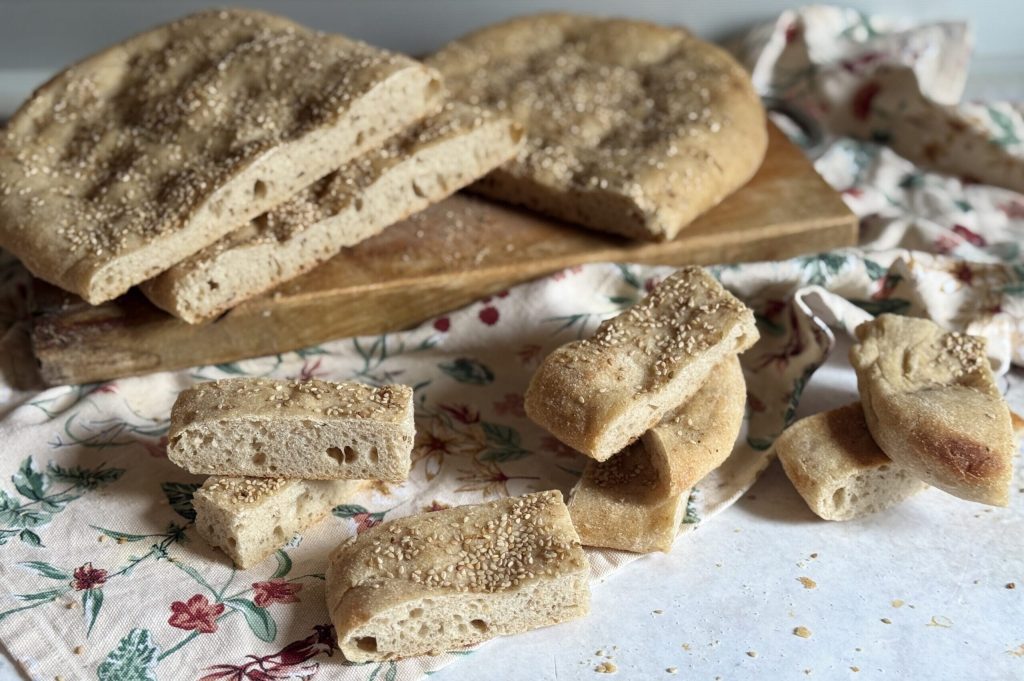
- Difficulty: Easy
- Cost: Very inexpensive
- Rest time: 12 Hours
- Preparation time: 20 Minutes
- Cooking time: 25 Minutes
- Portions: 8People
- Cooking methods: Oven
- Cuisine: Greek
- Seasonality: Easter, Lent
Ingredients for Greek Lagana with sourdough starter
To prepare this Greek Lagana with sourdough starter, I chose to balance tradition with flours that enhance its rustic and ancient character. As with every recipe from popular tradition, there are endless variations of this bread: after studying them, I developed my personal version in which I used part spelt flour combined with a type 1 flour.
If you are looking for suggestions on how to further personalize it or substitute some elements, you will find all my tips in the FAQ section at the end of the article.
- 3 cups type 1 flour
- 1 1/4 cups white hulled spelt flour (white)
- 4.6 oz sourdough starter
- 1.5 cups water
- 2 2/3 tbsp tahini
- 1 1/2 tsp honey
- 2 1/2 tsp salt
- to taste anise seeds
- to taste sesame seeds
- 3 1/2 tbsp water
- 1 1/2 tbsp sugar
Tools
To make my Greek Lagana with sourdough starter, I used a plunging-arm mixer, the MYMISS BAKER by Bernardi. Those who follow me know how much I love kneading: this type of machine mimics the movement of hands guaranteeing a perfect gluten structure. If you don’t have this tool, don’t worry: a classic stand mixer will work well, and at the end of the dough steps I explain how to do it by hand.
- Mixers
- 1 Dough board
- 1 Metal dough scraper
- 2 Baking pans
- 1 Parchment paper
- 1 Brush
- 1 Container
Steps
To prepare your Greek Lagana using a plunging-arm mixer, start by pouring the flours directly into the bowl and break the sourdough starter into pieces over them. Add the first 100 g of water and run the machine at low speed: in this initial phase, the flour will begin to hydrate slowly. Add another 50 g of water and wait for it to be absorbed.
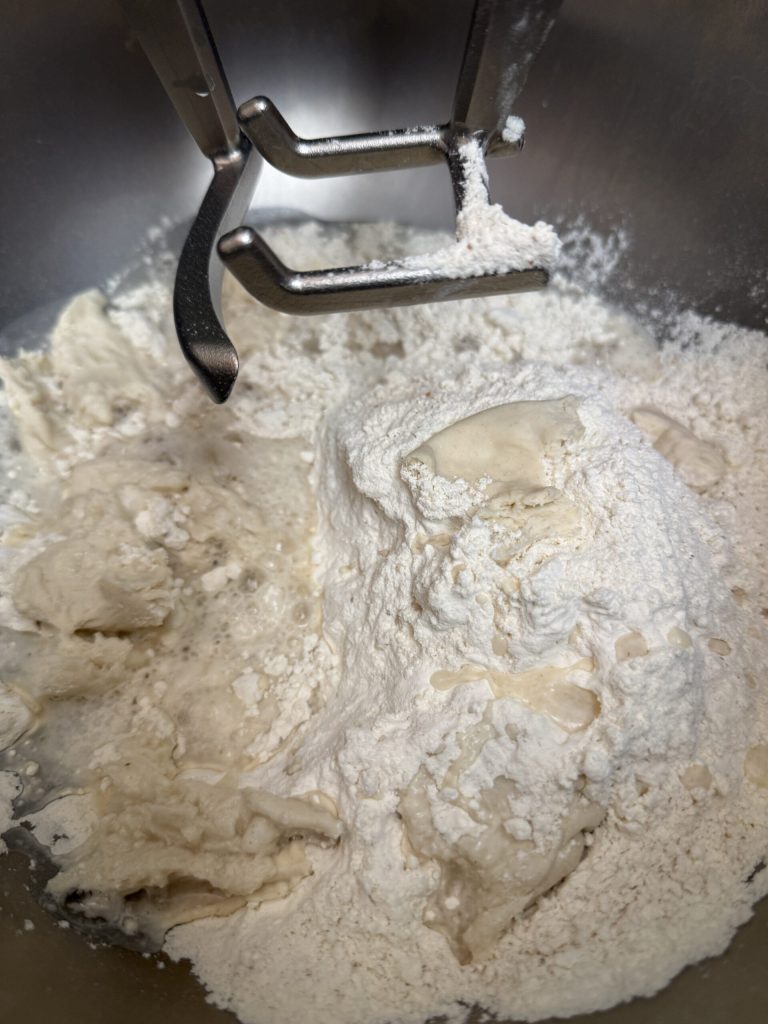
Add the honey and pour in almost all the remaining water, but keep about 50 g aside for the final stage. Raise the speed slightly and let the machine work for about 20 minutes.
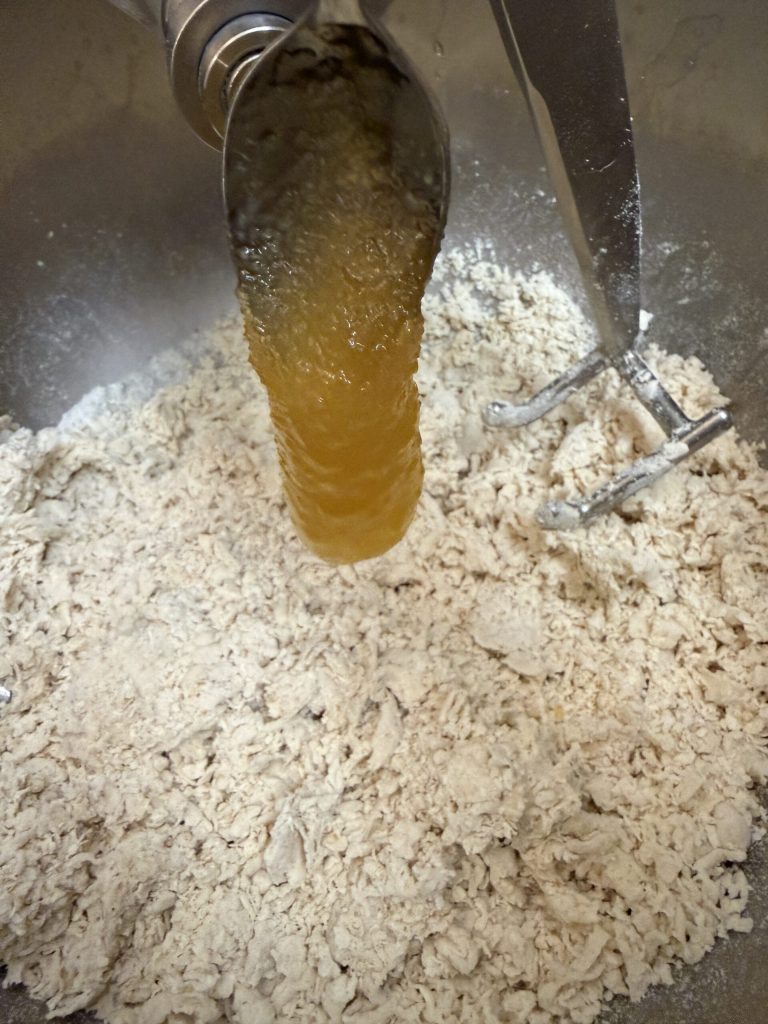
Dissolve the tahini in 40 g of water taken from the total and add it to the dough: let the machine run until the sesame fat is completely incorporated.
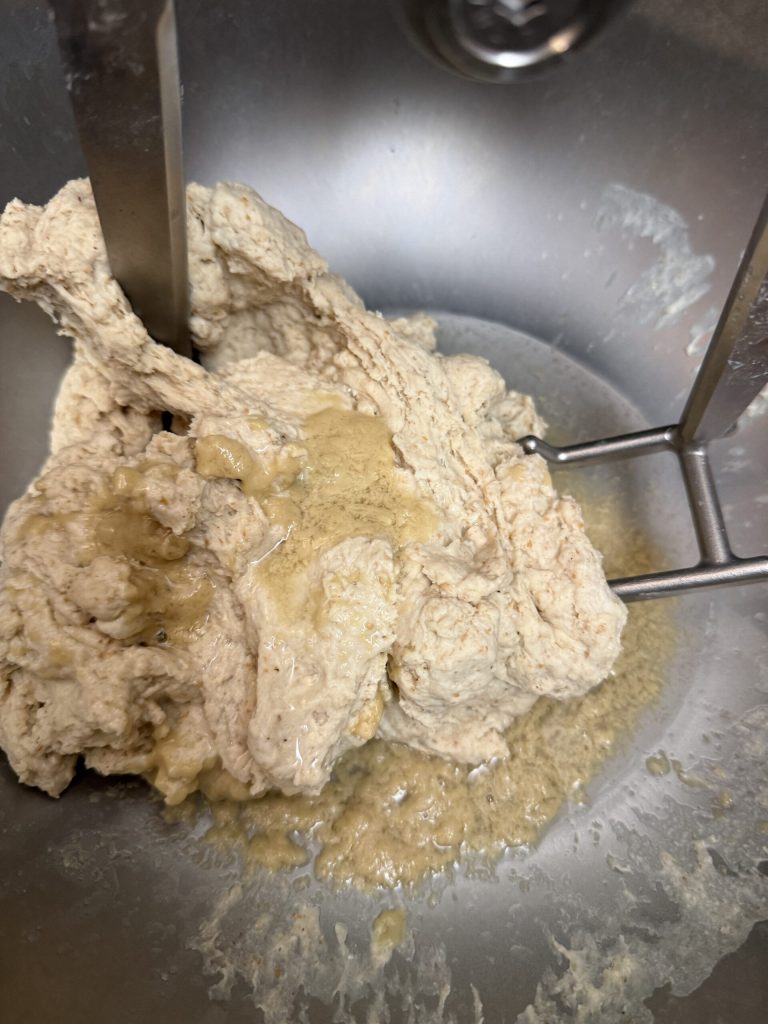
Dissolve the salt in the remaining 10 g of water and pour it into the dough together with the anise seeds.
Close the dough by raising the speed slightly. Let the machine run until the mass is perfectly in the window stage (well developed), smooth and cleanly detached from the walls of the bowl.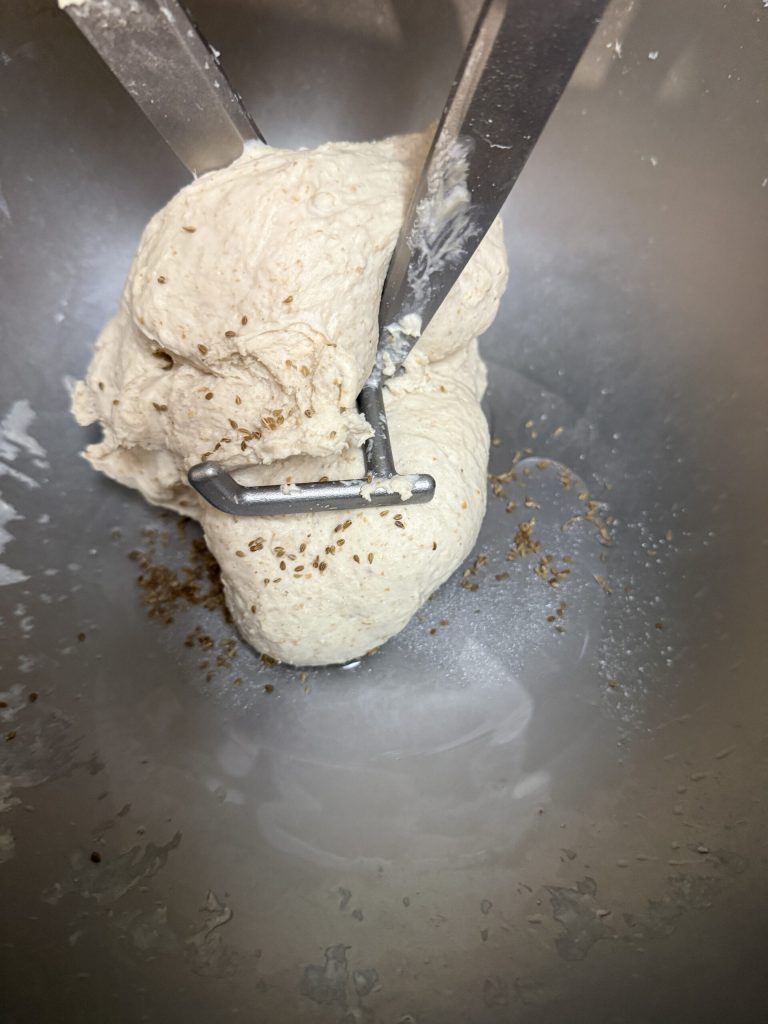
Transfer the Lagana dough onto your work surface and perform a slap and fold to strengthen the structure. The dough will be very tenacious, since it is not overly hydrated.
Pirlare to shape the ball smooth and regular.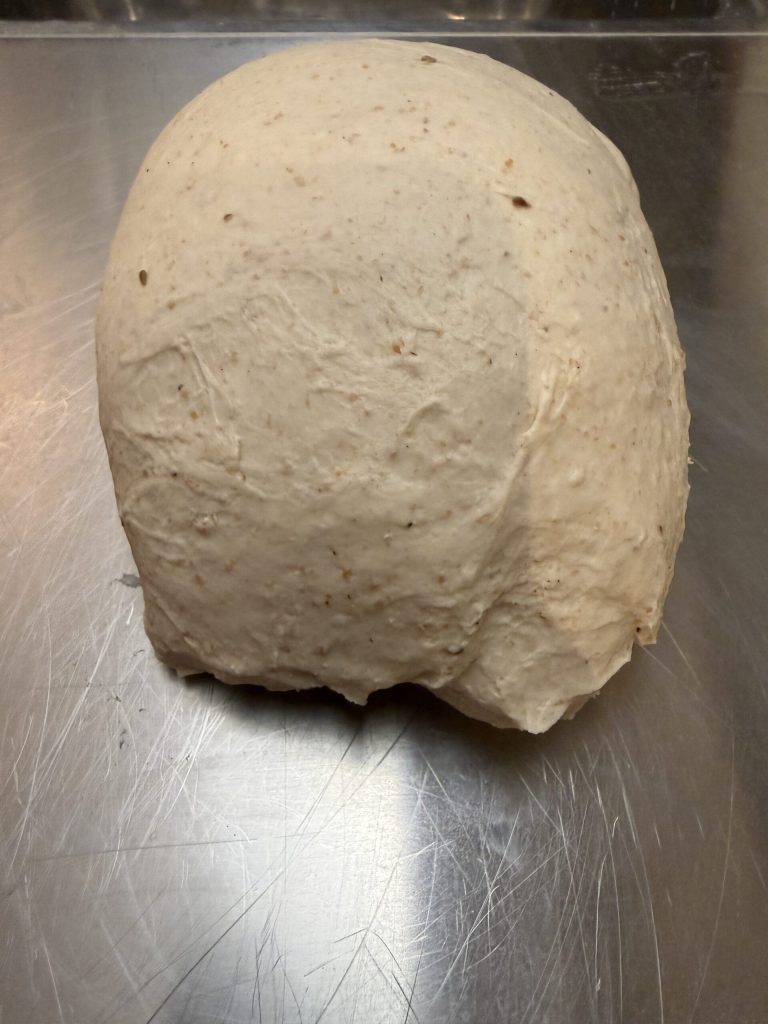
Cover the dough with a bowl in a cloche and let it rest for at least half an hour.
Then give two more series of strengthening folds to finalize the structure. Transfer the dough ball into a container previously oiled with neutral oil and let it bulk ferment at room temperature for about 2-3 hours.
Finally, put the container in the refrigerator overnight.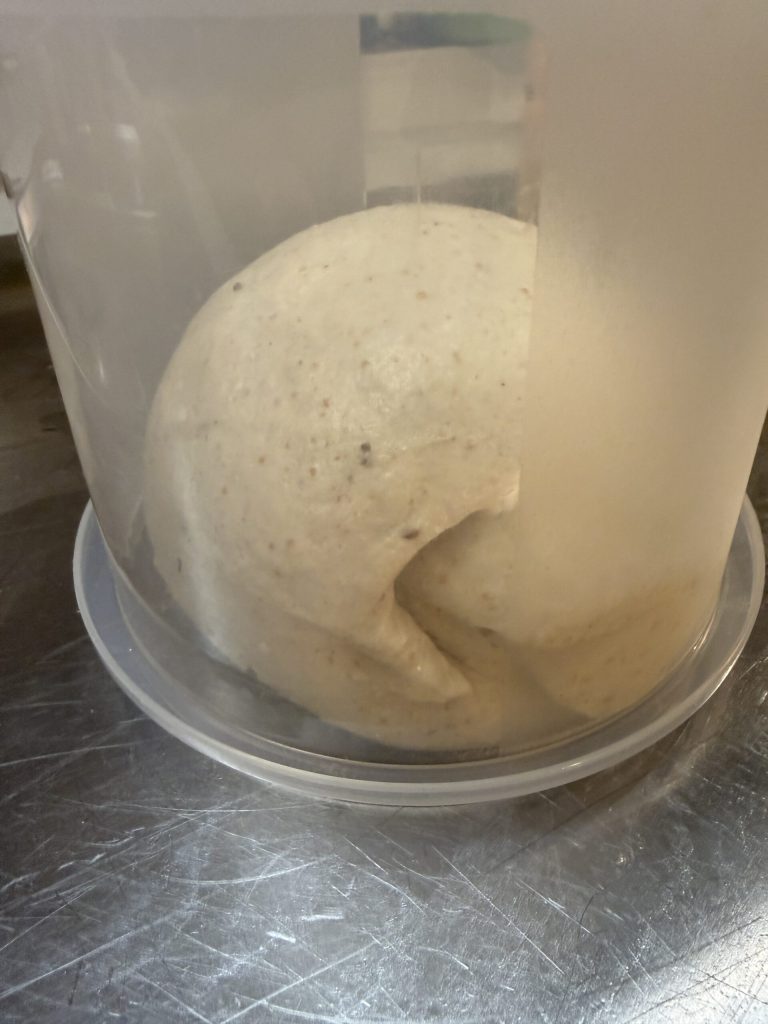
If you use a stand mixer for your Greek Lagana, dissolve the sourdough starter in 100 g of water and, as soon as the mixture becomes liquid, add the honey.
At this point, start adding the flours gradually, alternating them with the remaining water. When the dough begins to come together, fit the dough hook and work at speed 2 or 3. Now add the tahini and finally add the anise seeds and the salt.
Raise the speed slightly and continue to work until you obtain perfect development: the dough must be smooth, elastic and detach completely from the sides of the bowl.In the morning take the container out of the refrigerator. The dough will be cold and well matured, maybe slightly increased in volume.
Let it sit at room temperature for about an hour.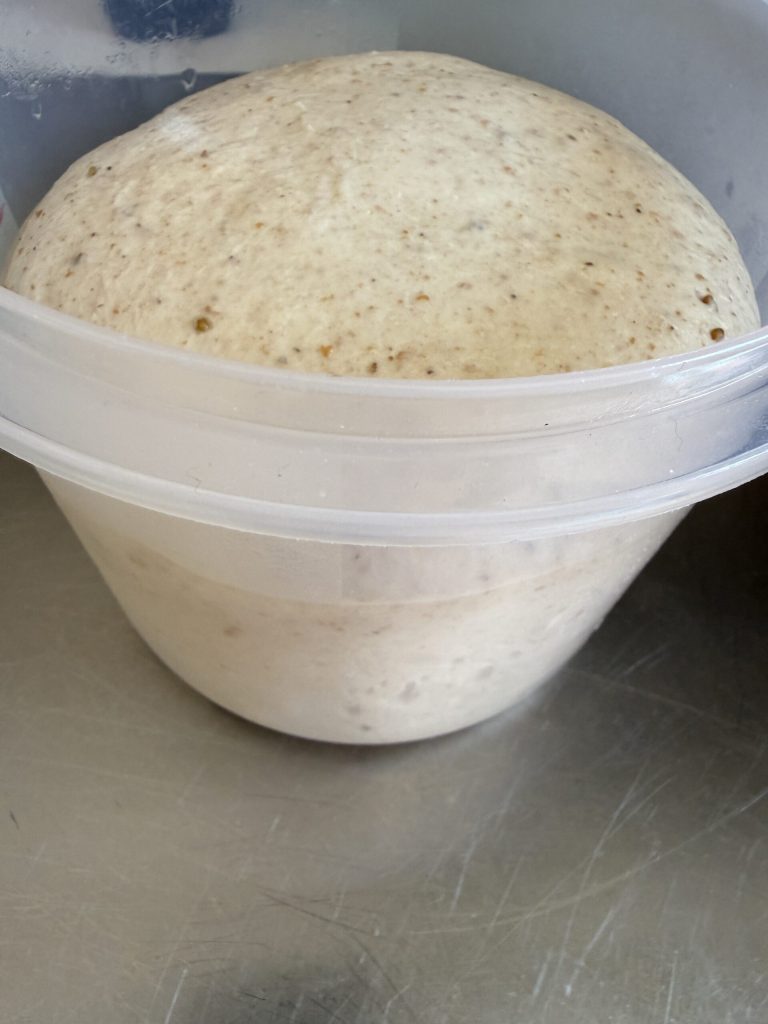
Dust the work surface with some semolina to prevent the dough from sticking and use a dough scraper to divide the dough exactly into two equal parts.
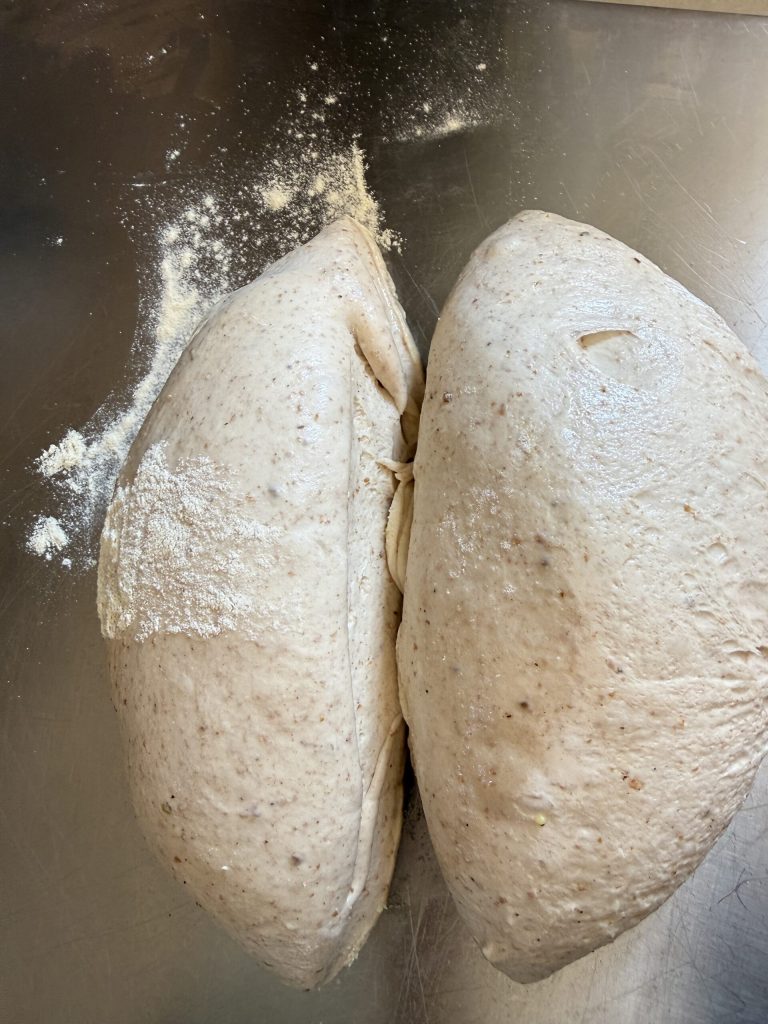
Place the first dough ball on the floured surface and spread it out until you obtain a rectangular shape. Fold the top part of the dough toward the center and do the same with the bottom part.
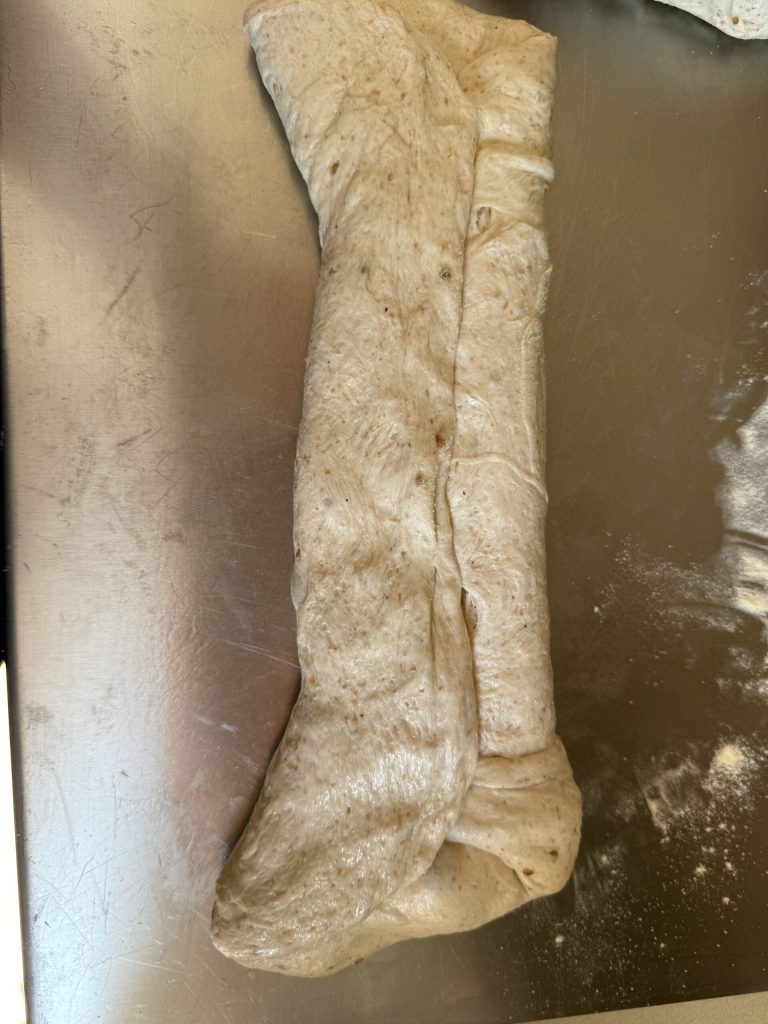
Once the first fold is sealed, take the two outer flaps and bring them to the center.
Overlap the parts carefully and try to seal the edges well.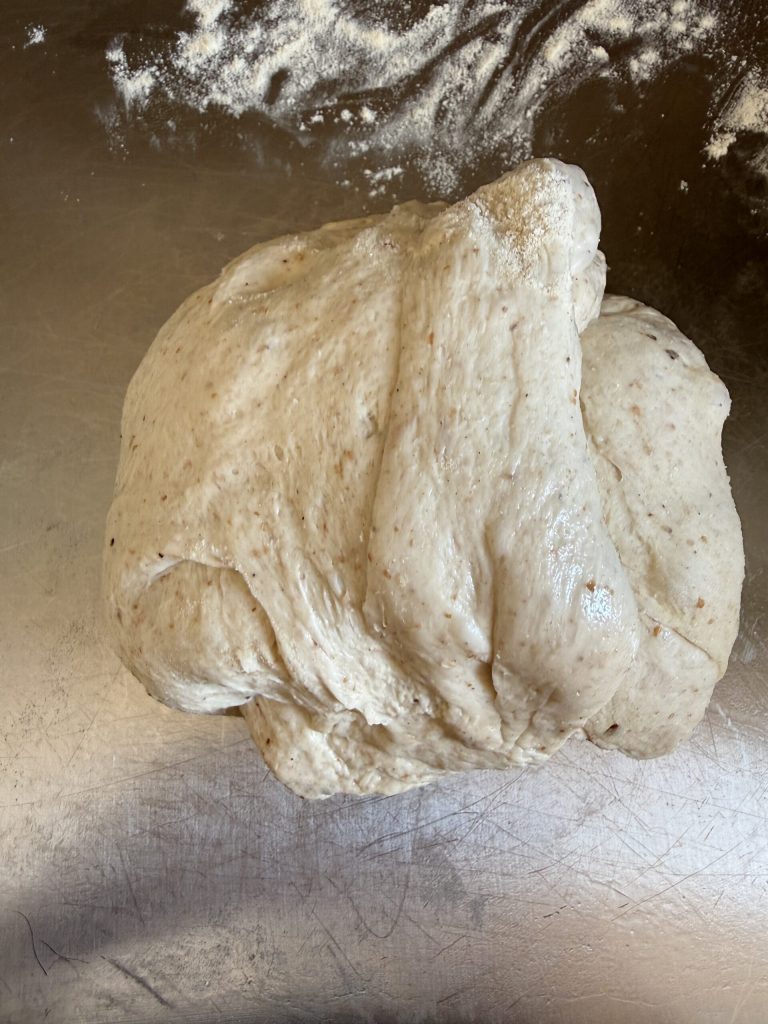
Pirlare the dough ball on the work surface with circular movements. You must create good surface tension on the mass.
Place it on a layer of semolina to rest and do the same with the second piece of dough.
Cover both with plastic wrap and let them relax for about an hour.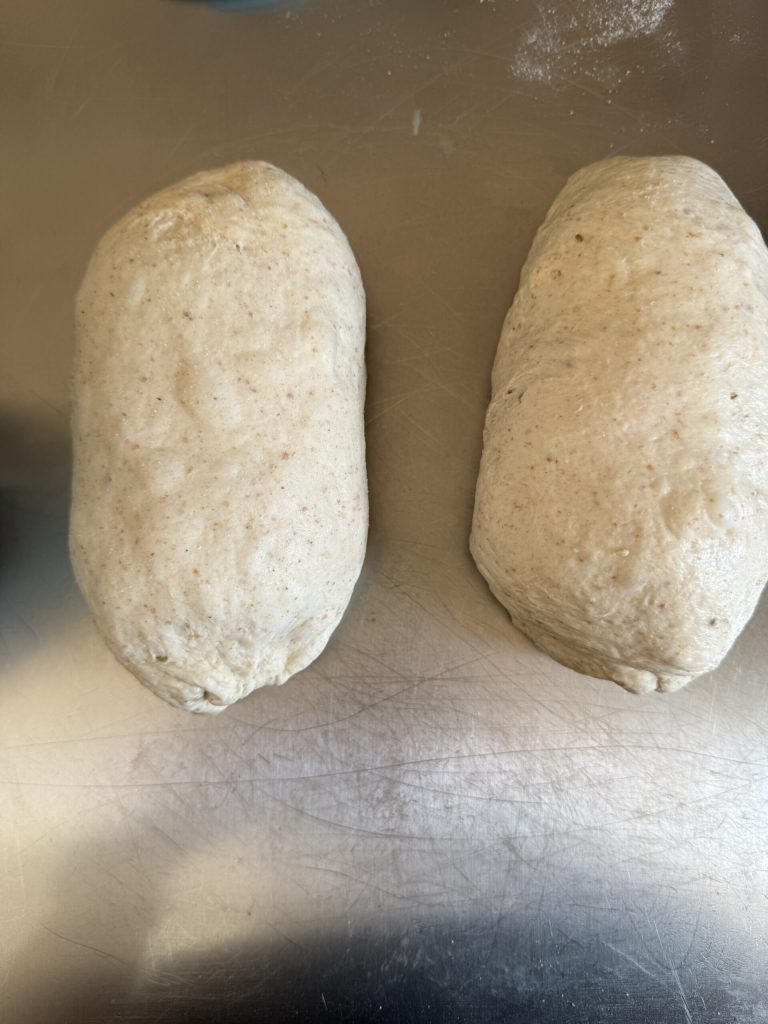
To stretch it, take the dough ball and start using your fingertips trying not to deflate the dough. Then switch to the rolling pin, but very lightly without pressing too hard
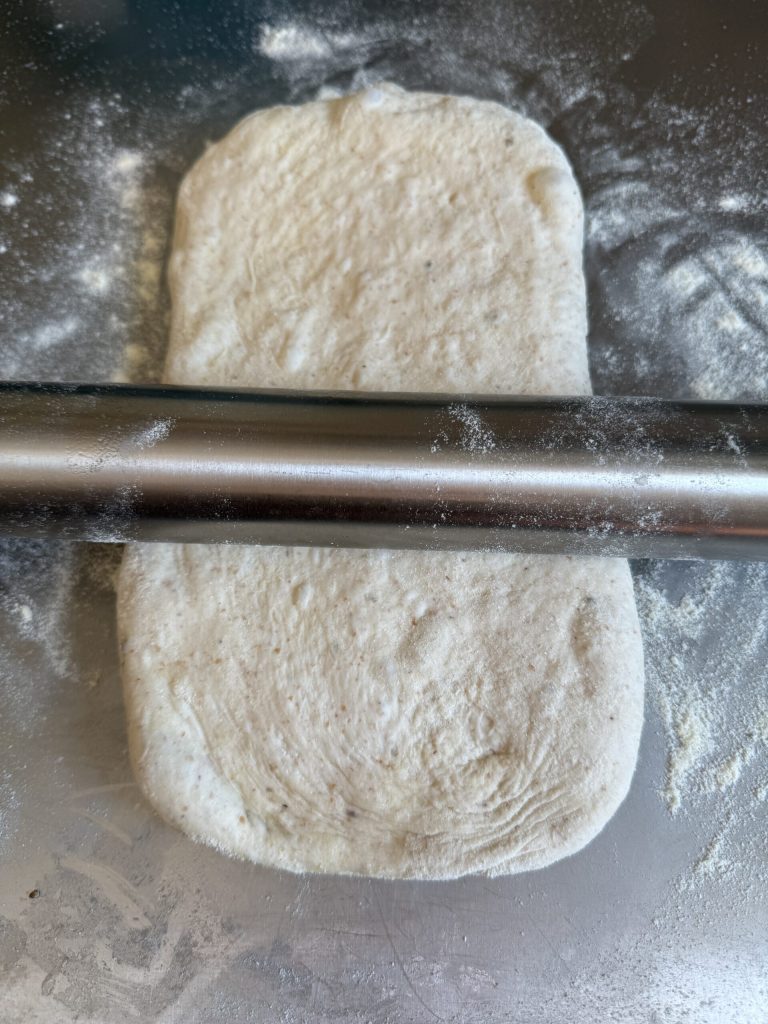
Try to obtain long tongues of dough during the rolling. This is the classic shape of the real Greek Lagana.
Preheat the static oven to 392°F.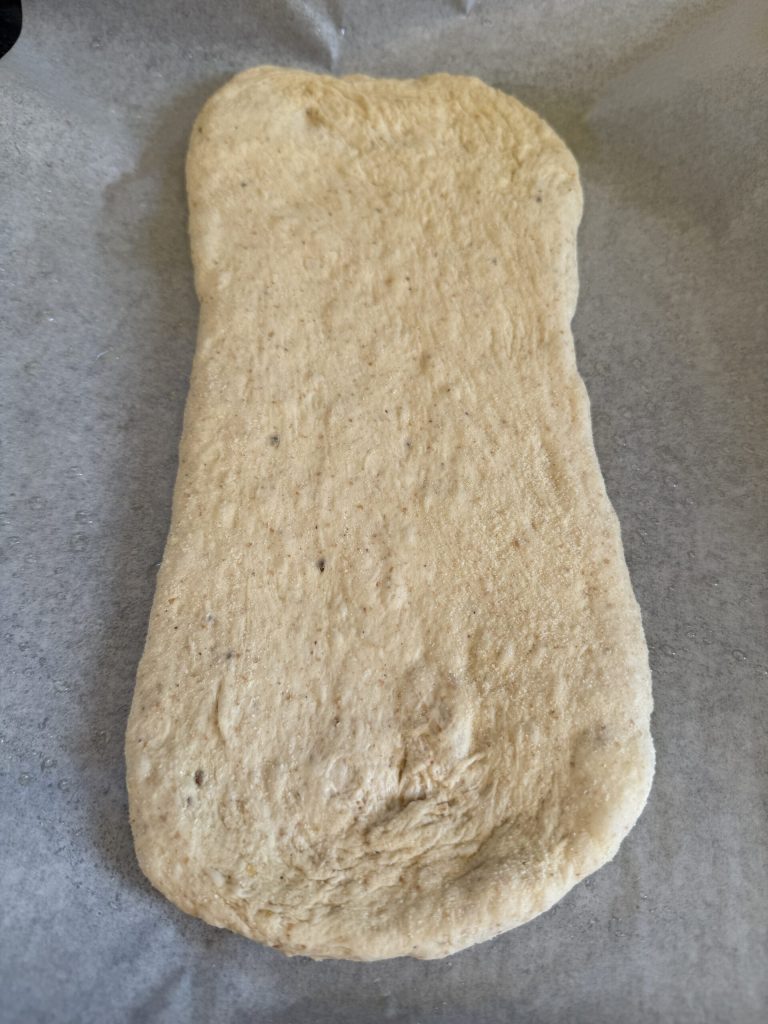
Transfer the laganes onto the baking trays lined with parchment paper lightly oiled with neutral oil.
Let them rest and then adjust the shape by lengthening it again gently. Use your fingertips to make the classic Lagana dimples.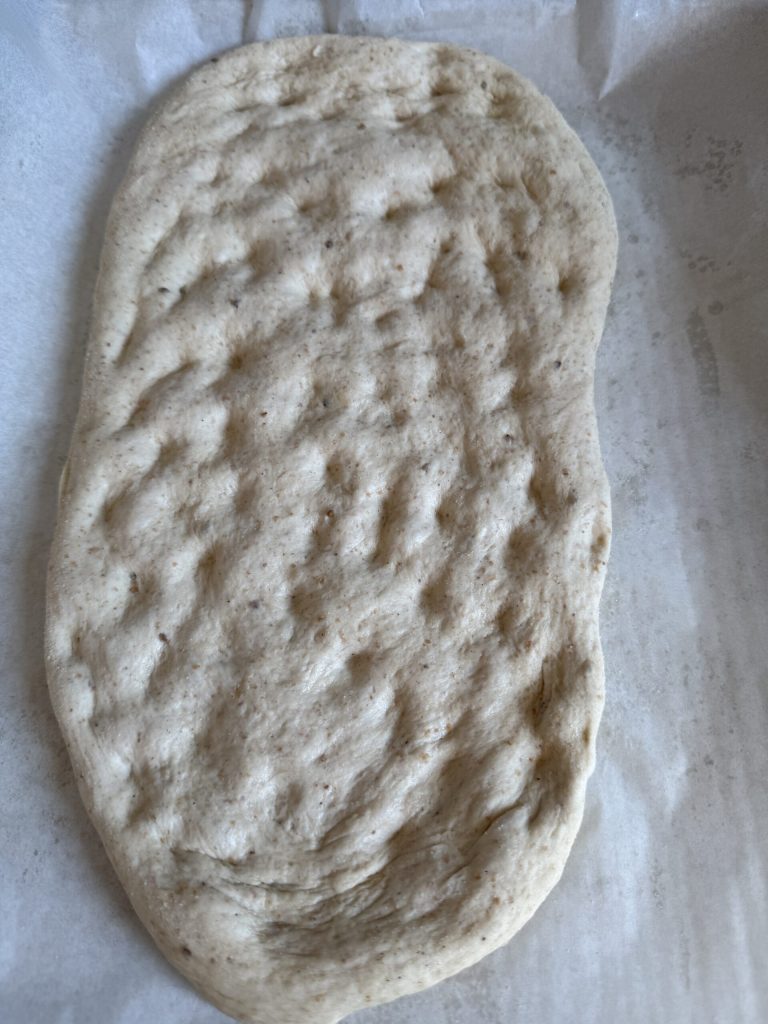
Prepare a mixture of water and sugar to brush the surface and gently pass the brush along the entire length of the dough. Make sure to wet the edges well too.
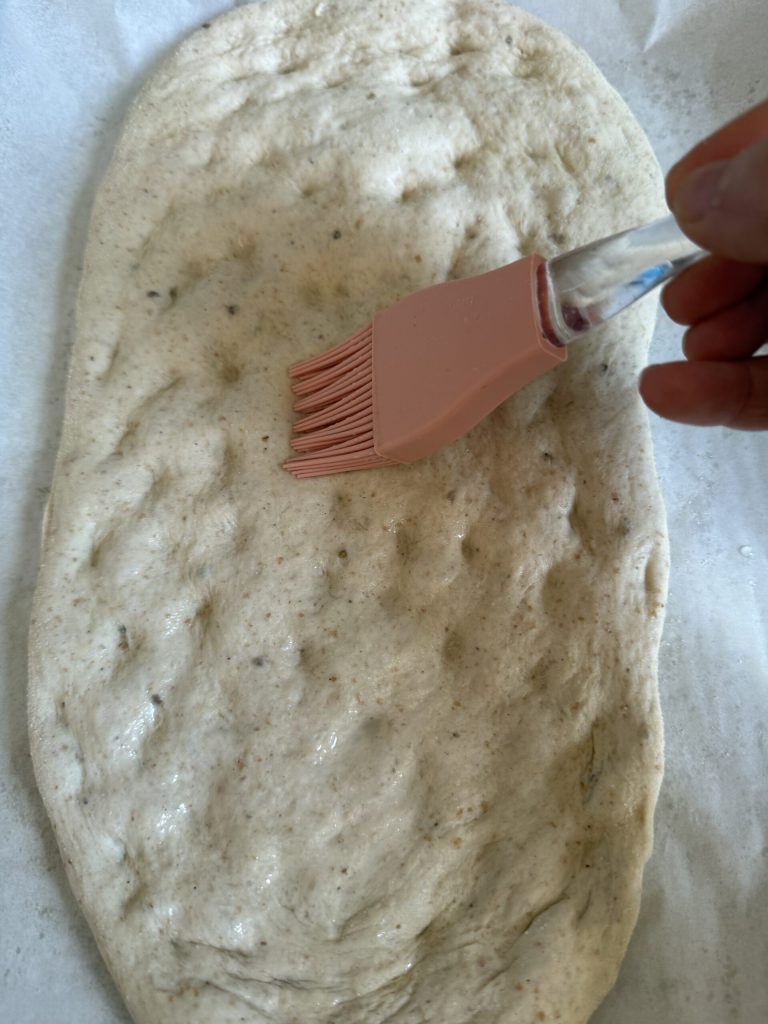
Sprinkle generously with sesame. Thanks to the sugar water, the seeds will remain perfectly attached during baking.
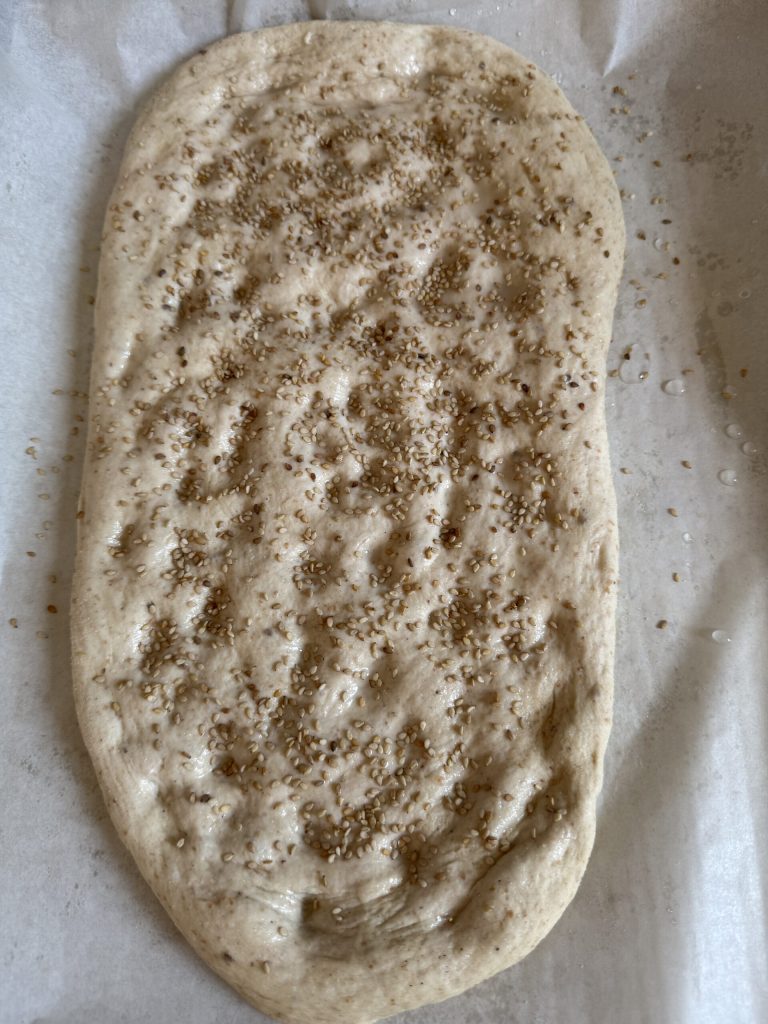
When the oven reaches 392°F, bake your laganes for about 25/30 minutes.
If you use two different trays, I recommend swapping their positions halfway through baking.
Every oven has its own characteristics, so always check the color. If the laganes look pale, let them bake a few more minutes. Take them out, let them cool slightly and enjoy!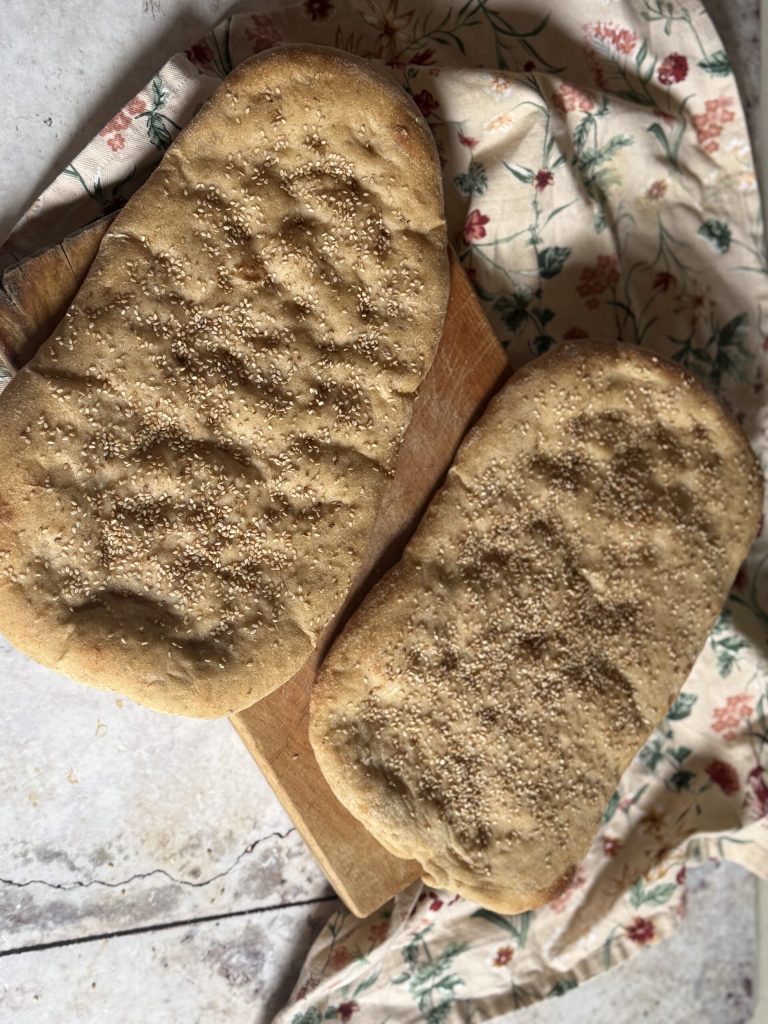
For those on a gluten-free diet, it is possible to make a Lagana with sourdough starter without gluten just as my colleague Selene from the blog ViaggiandoMangiando did.
Despite the absence of gluten, softness and the tongue shape remain the protagonists. For all the details THIS is her recipe.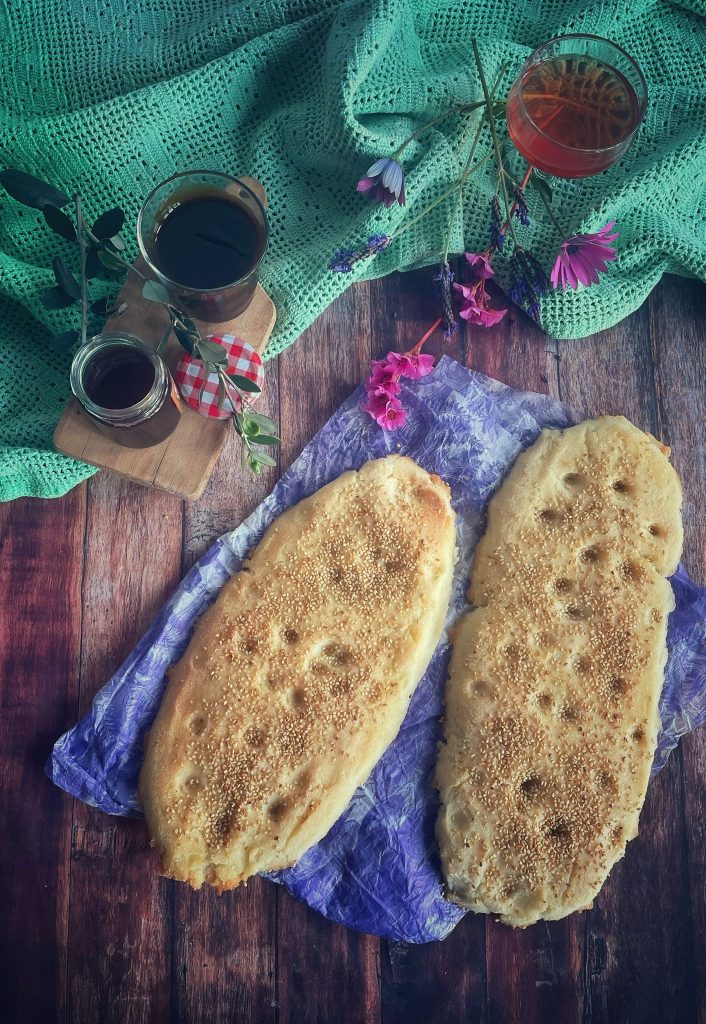
How to store Greek Lagana with sourdough starter
Eating this bread fresh from the oven is a unique experience. However, Lagana stays excellent for a couple of days if well protected in a clean cotton tea towel. Alternatively, choose a paper food bag. I do not recommend plastic, as it ruins the crust’s texture. If desired, you can also freeze pieces in freezer bags. To consume, let it come to room temperature for an hour. Finally, pass it through a hot oven for a few minutes to restore crispiness.
FAQ (Questions and Answers)
Can I omit tahini in the lagana?
Yes, the recipe works even without this ingredient. Keep in mind, though, that the flavor will change slightly. Sesame cream gives the Lagana an unmistakable aroma. Without it, you will obtain a simpler and less traditional bread.
Can I use baker’s yeast?
This option is perfect if you do not have sourdough starter. I suggest using a minimal amount if you want to keep the recipe timings, about 3-5 grams of fresh yeast.
Watch the times carefully, since the rising will be a bit faster. Proceed to shaping as soon as the dough volume has doubled.Can I make this recipe vegan?
The honey in the dough prevents the traditional recipe from being vegan. You can easily solve this with a simple substitution.
Choose cane sugar or maple syrup instead of honey and use the same quantities indicated for the honey. Your Lagana will keep a soft texture and an irresistible aroma, fully respecting the vegan choice.Can I vary the type of flour?
My dough is born from a balanced mix of type 1 flour and spelt, but you can vary it.
Feel free to use only type 1 flour for a more classic result. You will obtain a soft crumb and an evenly golden crust.
Do you like bread with a strong character? Replace a portion with whole wheat flour, but remember to add a little more water.
You can also opt for a strong flour (type 0 or 00) if you prefer a more vigorous rise. Your Lagana will still be delicious and ready to enjoy.
