
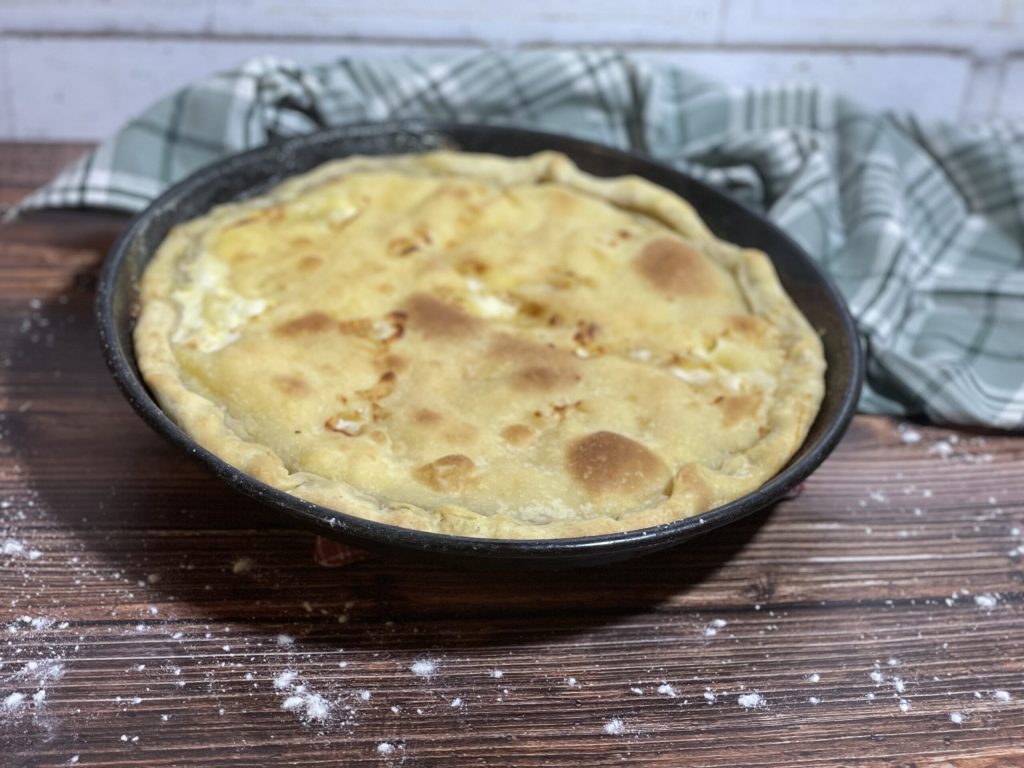
The Liguria cheese focaccia is a snack reminiscent of afternoons by the seaside as children, the ideal treat after a long swim in the sea. It is a recipe tied to a precise specification, which I have tried to follow as faithfully as possible in creating my homemade version.
Of course, it can never be identical to the one eaten at the historic focaccerias of Recco: the Recco Focaccia is indeed an IGP product and can only be called so if prepared in the territory. Nonetheless, even at home, it is possible to achieve a very similar result in flavor and texture, with a few adjustments.
This Liguria cheese focaccia is very easy to prepare, has a very short ingredient list and, most importantly, requires no yeast, unlike some of my other recipes like Tuscan flatbread or focaccia with squacquerone. This makes it perfect for last-minute guests or when you want to serve something delicious quickly.
So yes: let’s put the sourdough to sleep and make a good homemade Liguria cheese focaccia together.
For other quick and yeast-free but equally delicious recipes, take a look here!
- Difficulty: Very Easy
- Cost: Very Cheap
- Rest time: 30 Minutes
- Preparation time: 1 Hour 30 Minutes
- Portions: 12
- Cooking methods: Oven
- Cuisine: Regional Italian
- Region: Liguria
- Energy 321.22 (Kcal)
- Carbohydrates 29.33 (g) of which sugars 1.28 (g)
- Proteins 11.21 (g)
- Fat 17.95 (g) of which saturated 1.36 (g)of which unsaturated 0.00 (g)
- Fibers 0.94 (g)
- Sodium 1,108.49 (mg)
Indicative values for a portion of 170 g processed in an automated way starting from the nutritional information available on the CREA* and FoodData Central** databases. It is not food and / or nutritional advice.
* CREATES Food and Nutrition Research Center: https://www.crea.gov.it/alimenti-e-nutrizione https://www.alimentinutrizione.it ** U.S. Department of Agriculture, Agricultural Research Service. FoodData Central, 2019. https://fdc.nal.usda.gov
Ingredients
As I mentioned, the original recipe does not contain yeast, but just flour, water, salt, and oil. It is therefore a preparation accessible to everyone, even for beginners!
- 4 cups g Manitoba flour (or any strong flour, at least w320)
- 1 1/4 cups g water
- 3 1/2 tbsp g extra virgin olive oil (for the dough)
- 14 oz g crescenza cheese
- 1 tbsp g salt
- 2 3/4 tbsp g water
- 2 3/4 tbsp g extra virgin olive oil
- 1 tbsp g salt
- 2 tbsp g extra virgin olive oil (to finish after baking)
Tools
- 1 Stand Mixer Bimby or Kitchenaid
- 1 Baking Pan round shape with a minimum of 12 inches
- 1 Rolling Pin
- 1 Brush
- 1 Pastry Wheel
- 1 Dough Scraper
- 1 Work Board
- 1 Pastry Bottle
Steps
In the stand mixer, combine the flour and water using the paddle attachment. Add the liquids gradually, alternating with the flour, to allow for gradual absorption. Very strong flours tend to resist if all the water is poured at once.
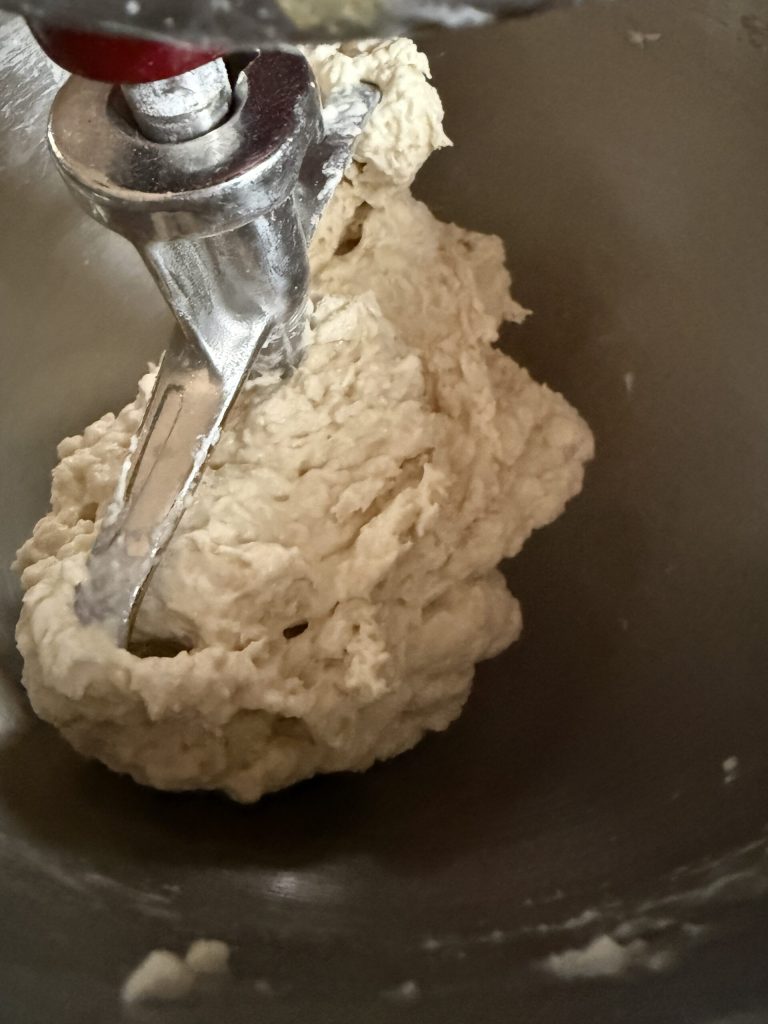
Sure, it’s okay if you add everything together, but in my experience, the final result is better following this method.
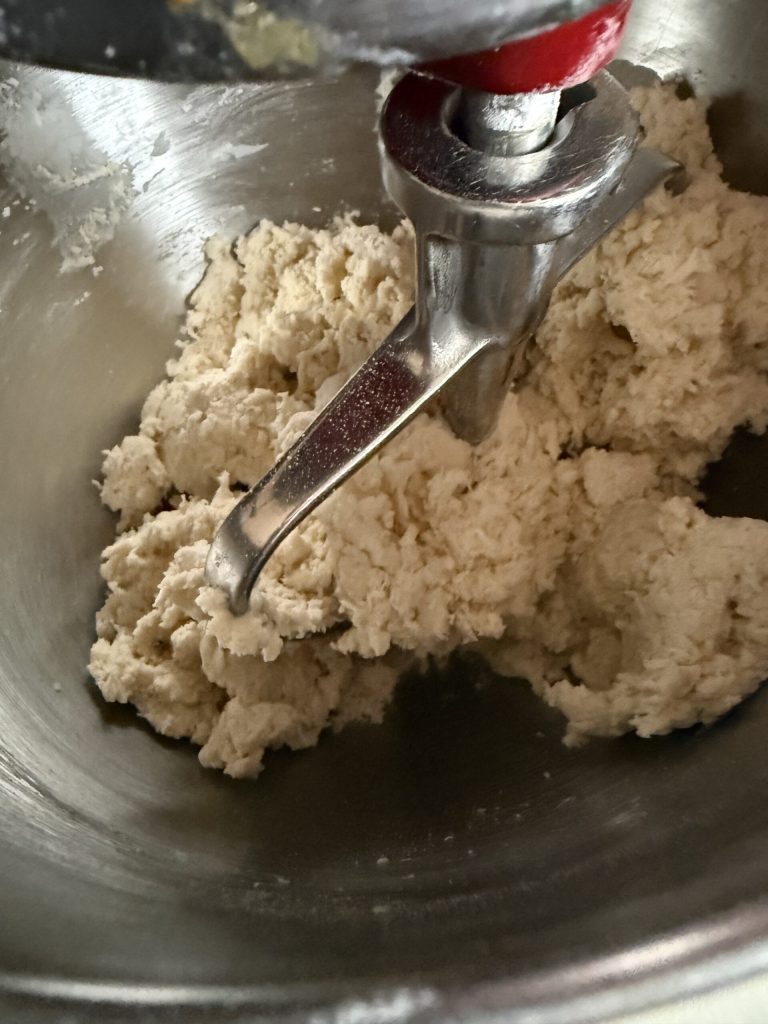
When the dough starts to come together, replace the paddle with the dough hook. Allow the dough to knead and then add the oil gradually. Only after it is completely absorbed, add the salt and wait for the dough to come together again, becoming elastic and compact. Then transfer the dough to the work board.
Of course, this entire process can be achieved using just a bowl and a spoon, following the same steps.
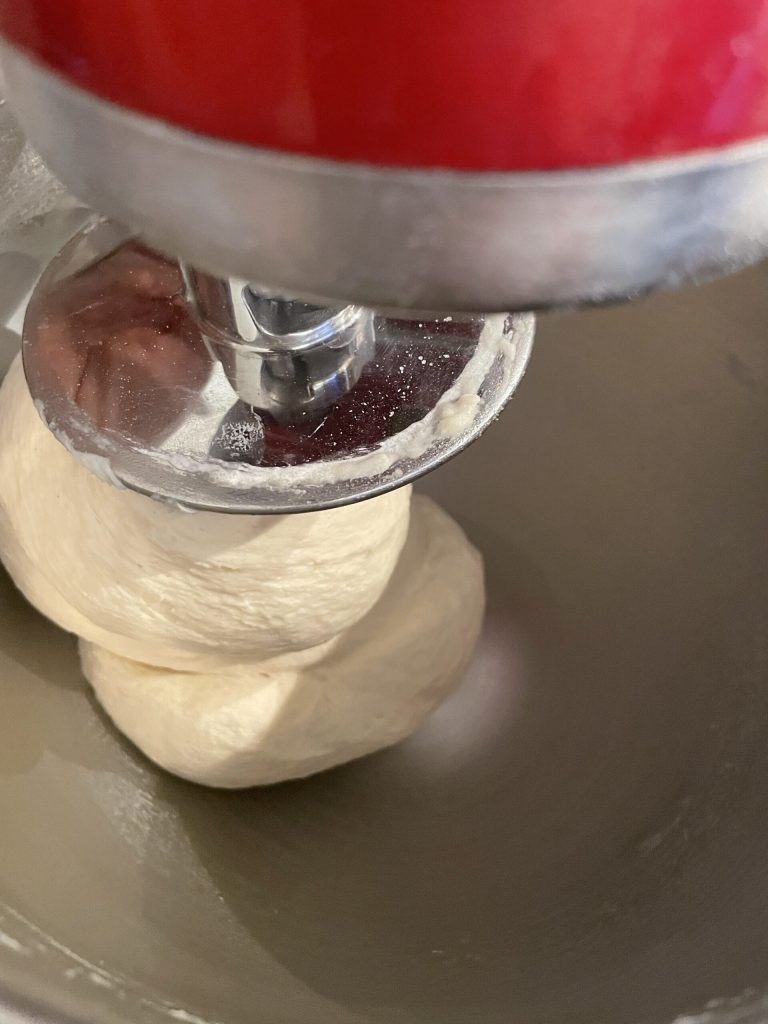
Lightly dust the work board with flour and shape the dough into a smooth, taut, and shiny ball. Cover the dough with a bowl and let it rest for at least 30 minutes, up to a maximum of 45 minutes.
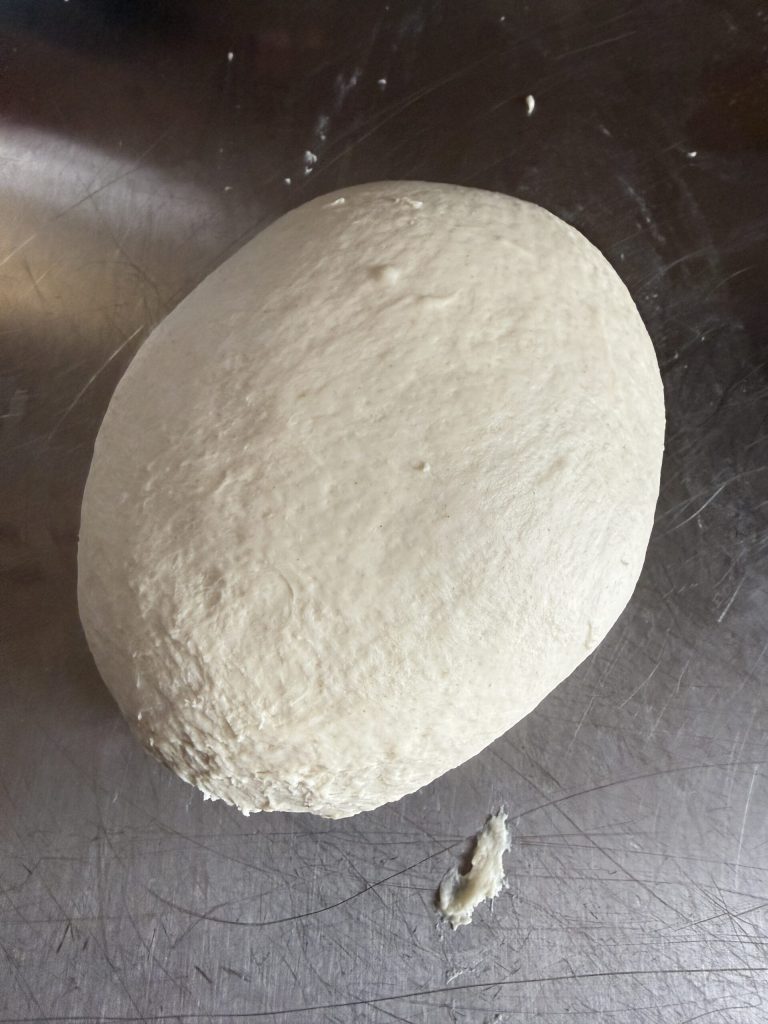
With a dough scraper, divide the dough into two parts, ensuring one portion is slightly smaller than the other.
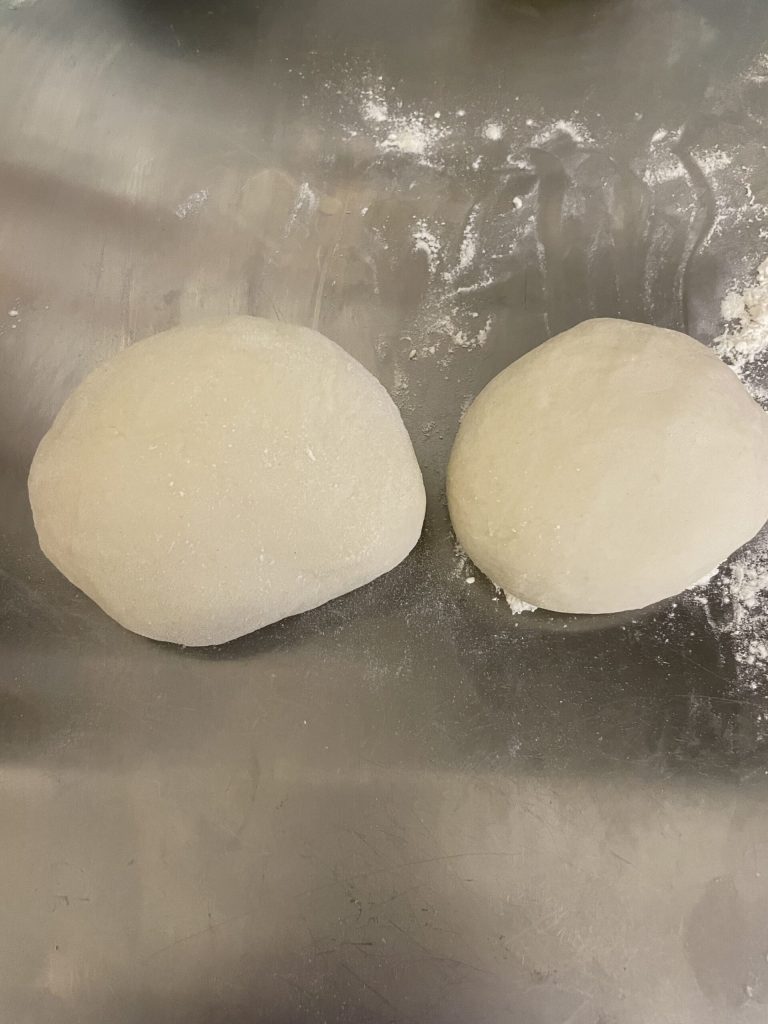
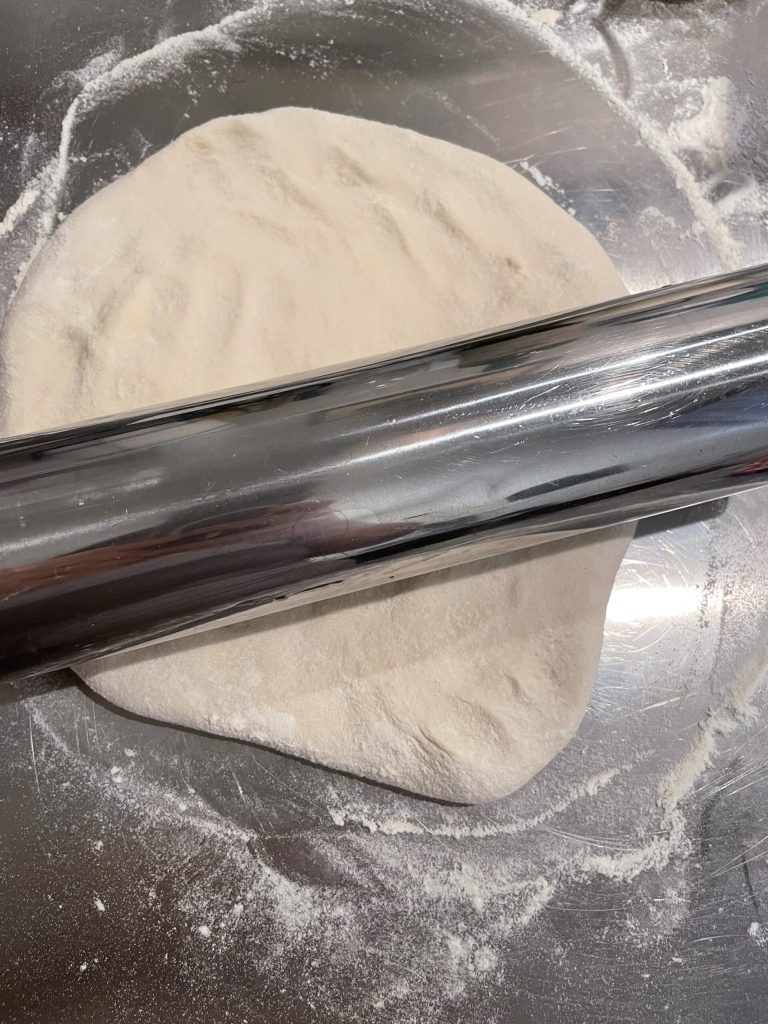
Take the larger dough ball and lightly dust the work board with flour. With the help of a rolling pin, roll it out gently, aiming for the thinnest possible layer, almost transparent. This step is crucial for achieving a light and crispy focaccia, similar to those from focaccerias, and allows the cheese to be distributed evenly during baking.
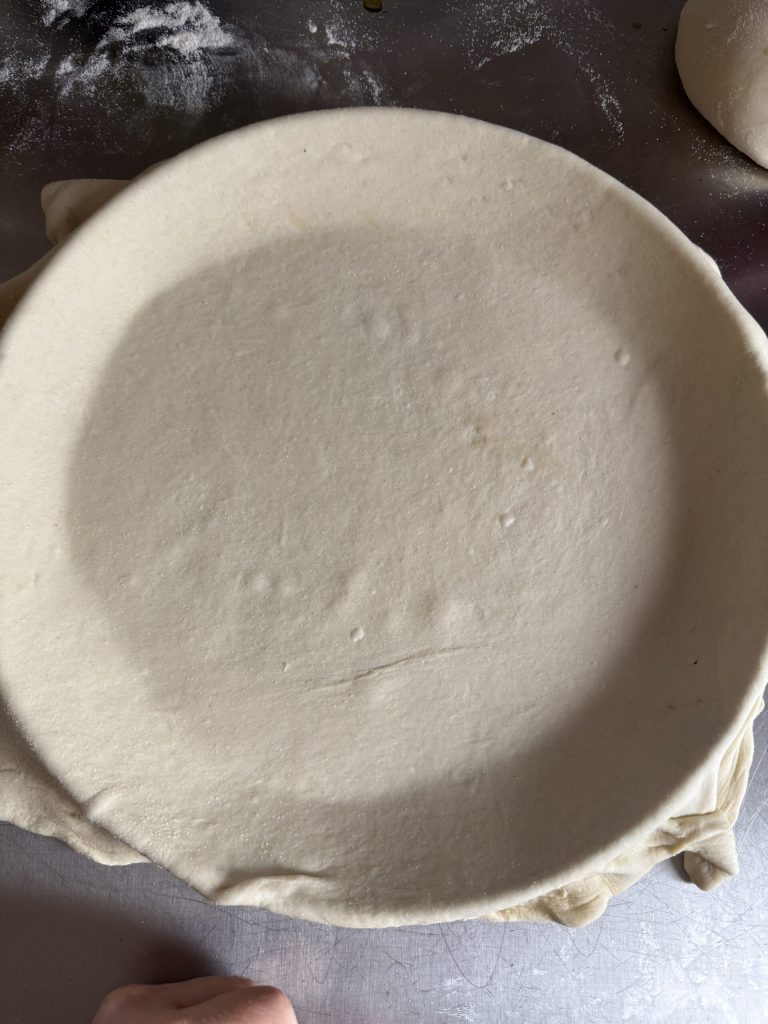
Once the dough is rolled out, transfer it to the previously well-greased baking pan; you can use a kitchen brush to distribute the oil evenly, so the focaccia won’t stick. The dough will overhang the edges considerably: do not trim it immediately, as it will be needed later for creating an effective seal.
Take the crescenza and cut it into uniform square pieces. Distribute the pieces on the dough’s surface in a circular and uniform manner, trying to cover the entire surface to ensure a balanced stuffing.
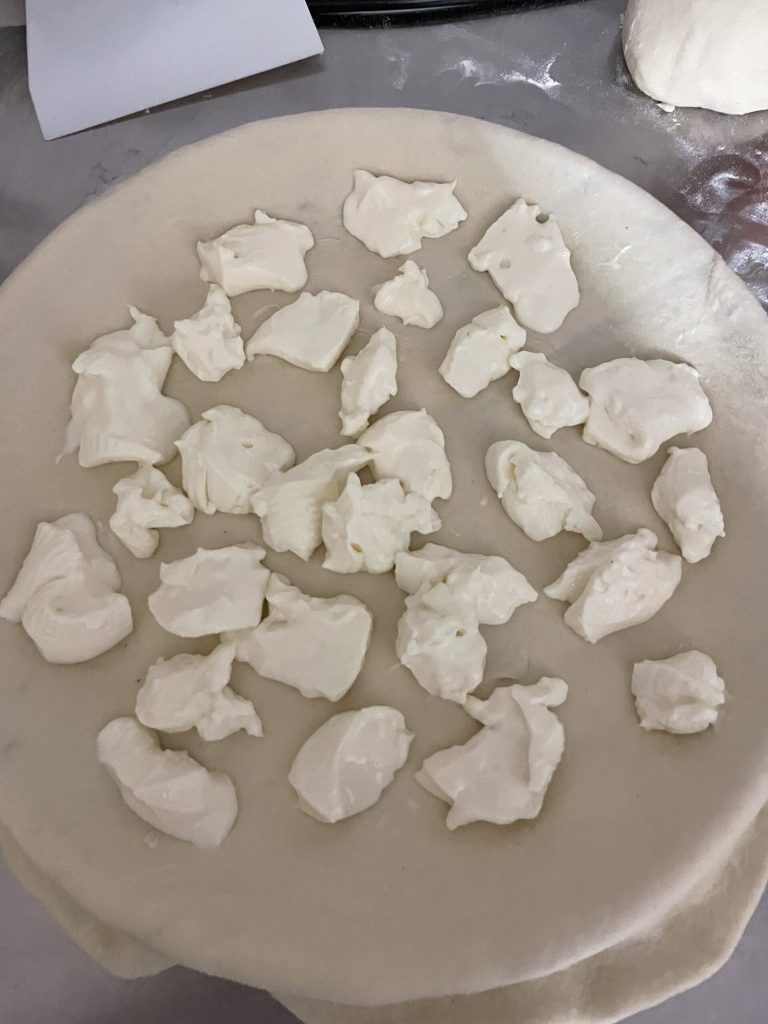
Roll out the smaller dough ball aiming for the thinnest possible layer, almost a transparent veil. Place it over the already stuffed part, sealing the edges well.
With a pastry wheel, trim the excess dough: only around 1 cm should overhang. Fold this edge inward and create a well-sealed border to ensure the filling stays inside during baking.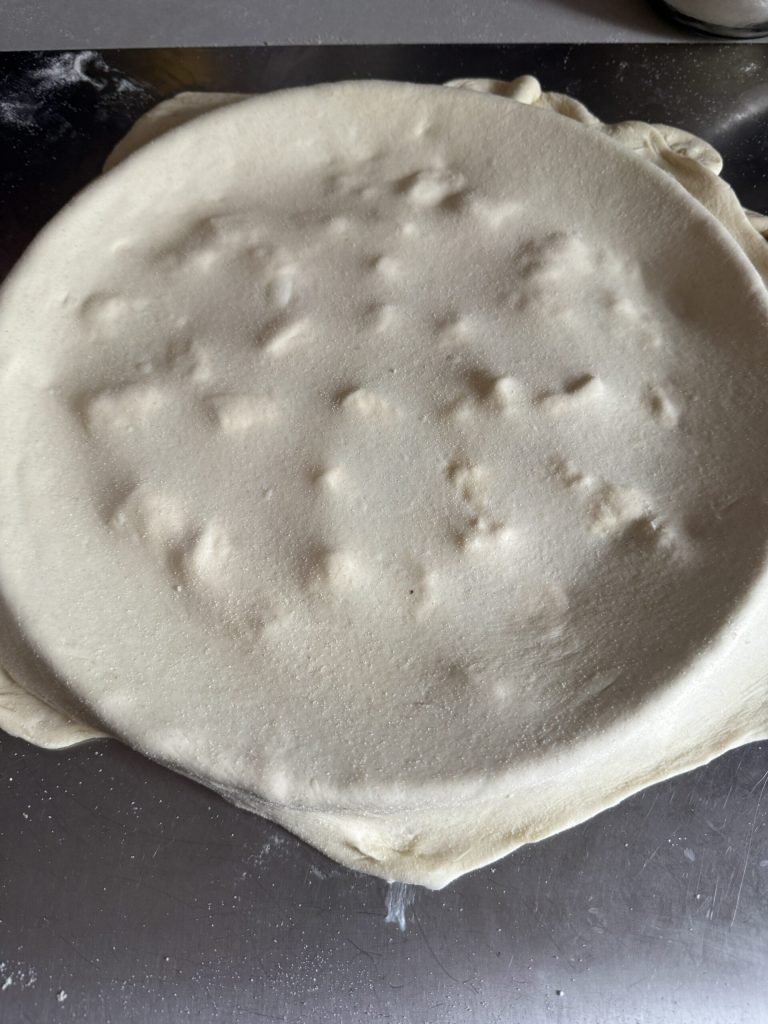
At this point, it’s important to make holes to allow steam to vent during baking. Tradition dictates pinching with fingers, slightly enlarging each hole. At least 7-8 holes are needed, distributed evenly over the focaccia’s surface, to ensure even baking and keep the filling soft inside.
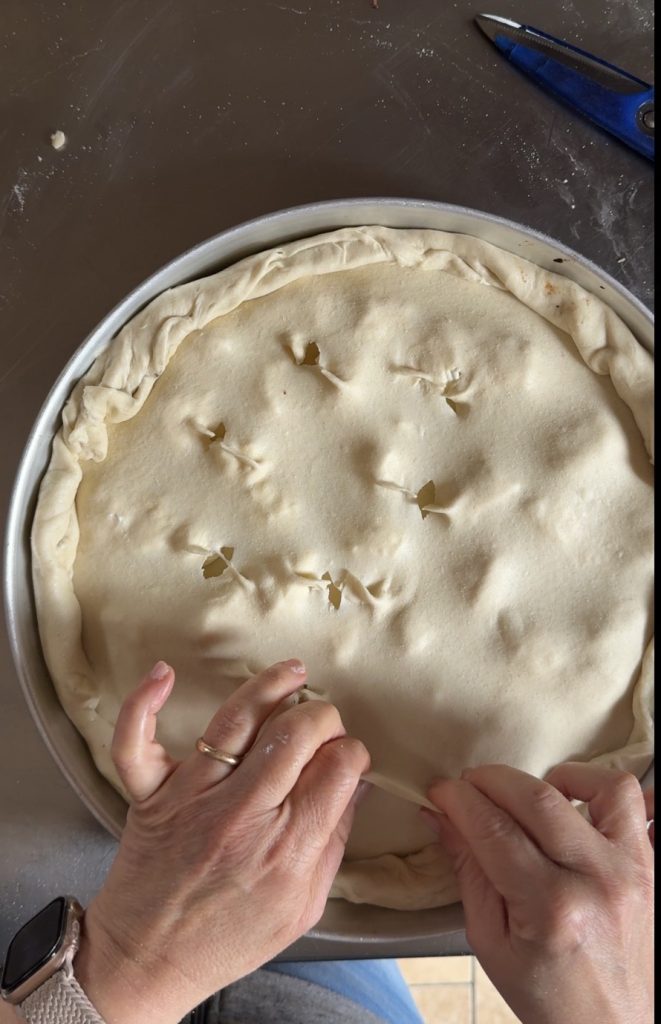
The last step before baking is crucial to enhance the flavor and saltiness of the focaccia.
In a kitchen bottle or a small bowl, emulsify water and oil. With a brush, spread the brine over the entire surface of the focaccia. Finish with a pinch of salt, and your Liguria cheese focaccia will be ready for the oven.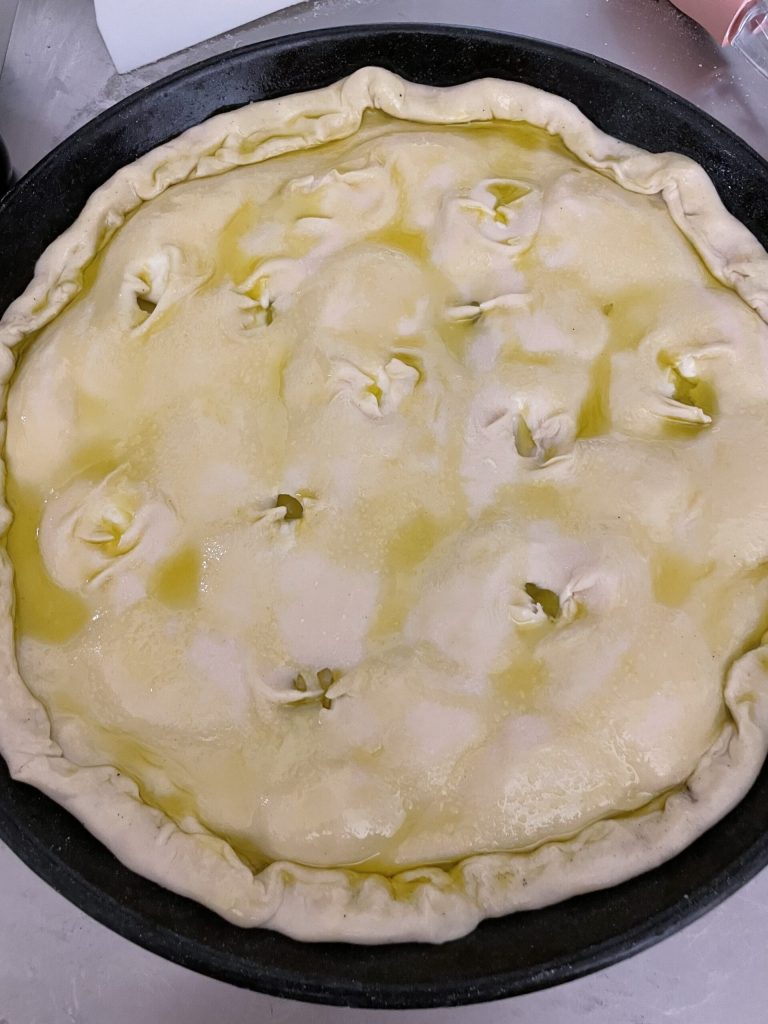
Preheat the oven to 240°C (464°F) in static mode. Once hot, place the focaccia inside and let it bake for at least 15 minutes.
If you have a pizza stone, like I do, the contact area will reach a higher temperature, approximately 30% more, ensuring more even baking and a crispy base. For ovens without a stone or ones with slightly lower temperatures, it may take a few more minutes.
The focaccia will be ready when the surface is nicely golden and the crescenza perfectly melted. If a little cheese spills out, don’t worry: it’s normal and adds an irresistible taste.
Once out of the oven, drizzle with a thread of extra virgin olive oil, let it cool slightly, and enjoy it while still warm!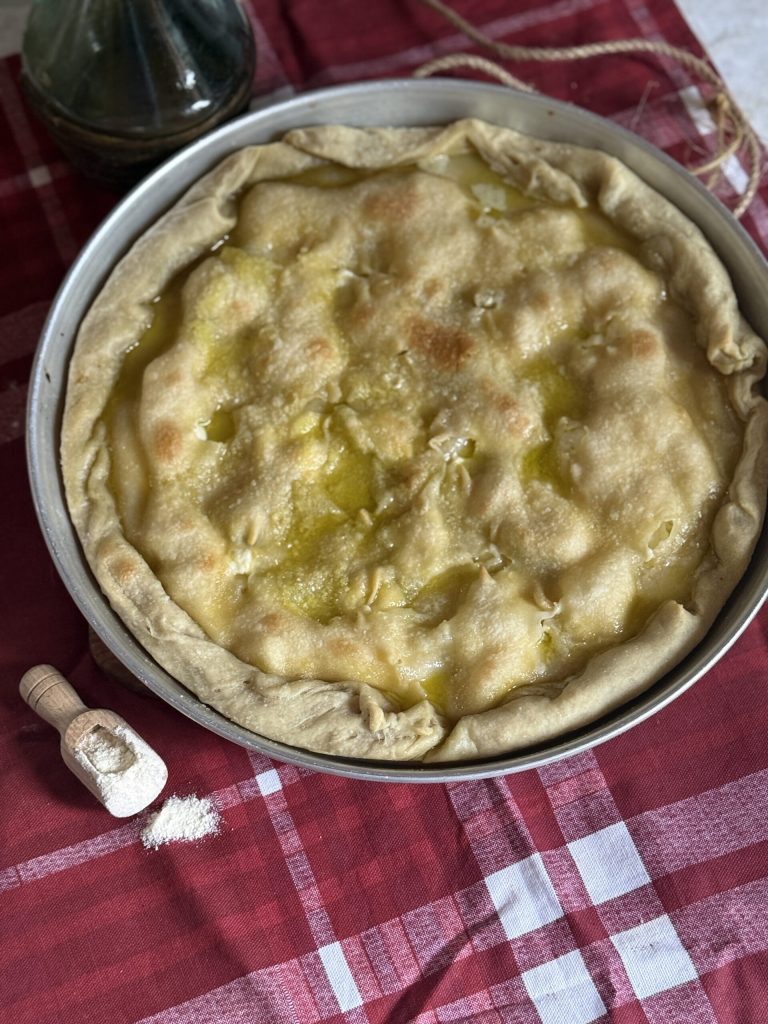
The Liguria cheese focaccia reaches its peak flavor when eaten slightly warm, right after baking. Therefore, I recommend baking it and eating it immediately. If there are leftovers, it surely lasts, covered, for a couple of days, but no more. If you liked it, follow me on Facebook and on Instagram!
FAQ
What cheese is used for Liguria cheese focaccia?
For this recipe, it is important not to use stracchino, which becomes too liquid during baking and tends to spill out excessively. The most suitable cheese is crescenza, which melts uniformly while maintaining a good structure.
As confirmed by the Recco focaccia masters, focaccerias use a specific type of crescenza, designed to withstand high oven temperatures. At home, we won’t have the same professional product, but by choosing a compact and quality crescenza, it’s possible to achieve a very similar result, both in flavor and consistency.How is Liguria cheese focaccia stored?
The Liguria cheese focaccia is best freshly baked, when it’s still warm and the cheese is stringy.
If there are leftovers, you can store it at room temperature for 1 day, covered with kitchen paper or a clean cloth to keep it soft. Avoid placing it in airtight containers while still warm, as the moisture can make it too soft.
To store it longer, you can cool it completely and then place it in food bags or airtight containers in the refrigerator, where it will last up to 2 days.
To enjoy it as if freshly made, you can warm it slightly in the oven at 180°C (356°F) for 5 minutes, to make the surface crispy again and the cheese soft.What is the difference between this focaccia and IGP Recco Focaccia?
The Recco Focaccia is an IGP product and can only be called that if prepared in Recco according to a precise specification. Our homemade version cannot use this name, but it is inspired by the tradition and tries to recreate a similar taste with readily available ingredients.
Although not the authentic version, this recipe allows for a light, stringy, and tasty focaccia, perfect for home preparation without long times or professional equipment.Can Liguria cheese focaccia be frozen?
Yes, you can freeze it after baking. Let it cool completely, wrap it in parchment paper and cling film or a food bag. To enjoy it as if freshly made, warm it in the oven at 180°C (356°F) for 5-7 minutes.
Can I use yeast in Liguria cheese focaccia?
No, this recipe doesn’t use any kind of yeast. It is designed to be quick and easy, still achieving a light and stringy focaccia, without long proving times.
