
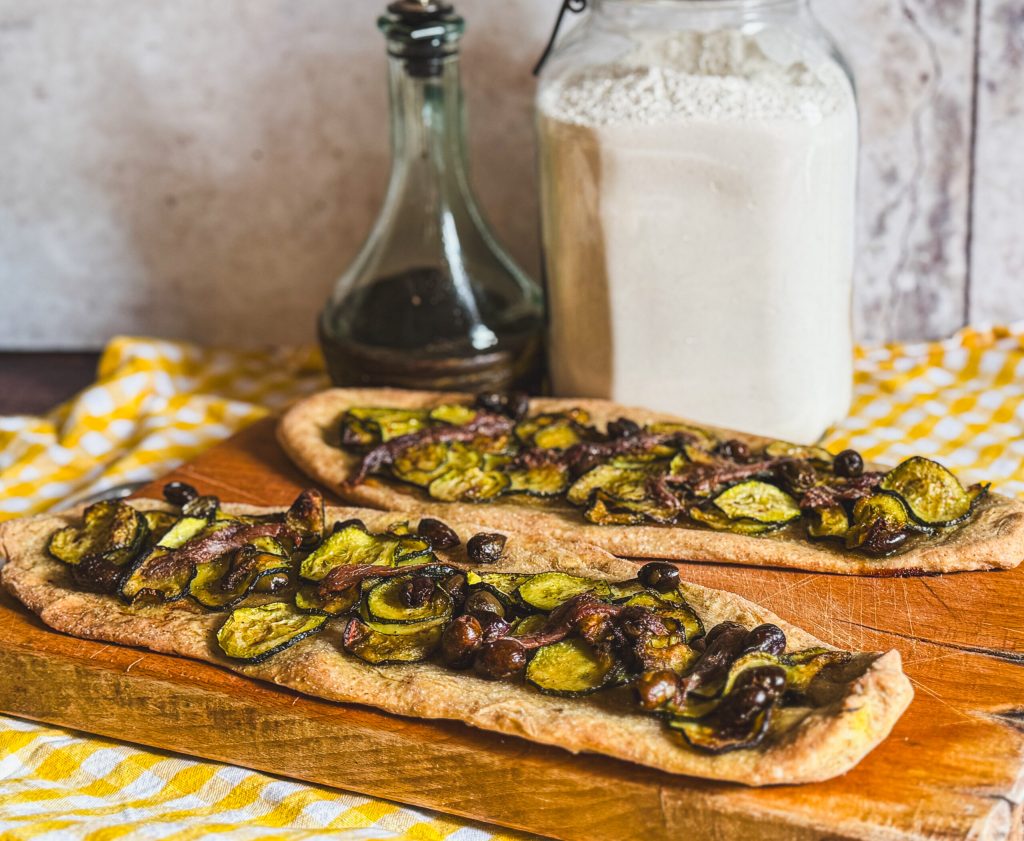
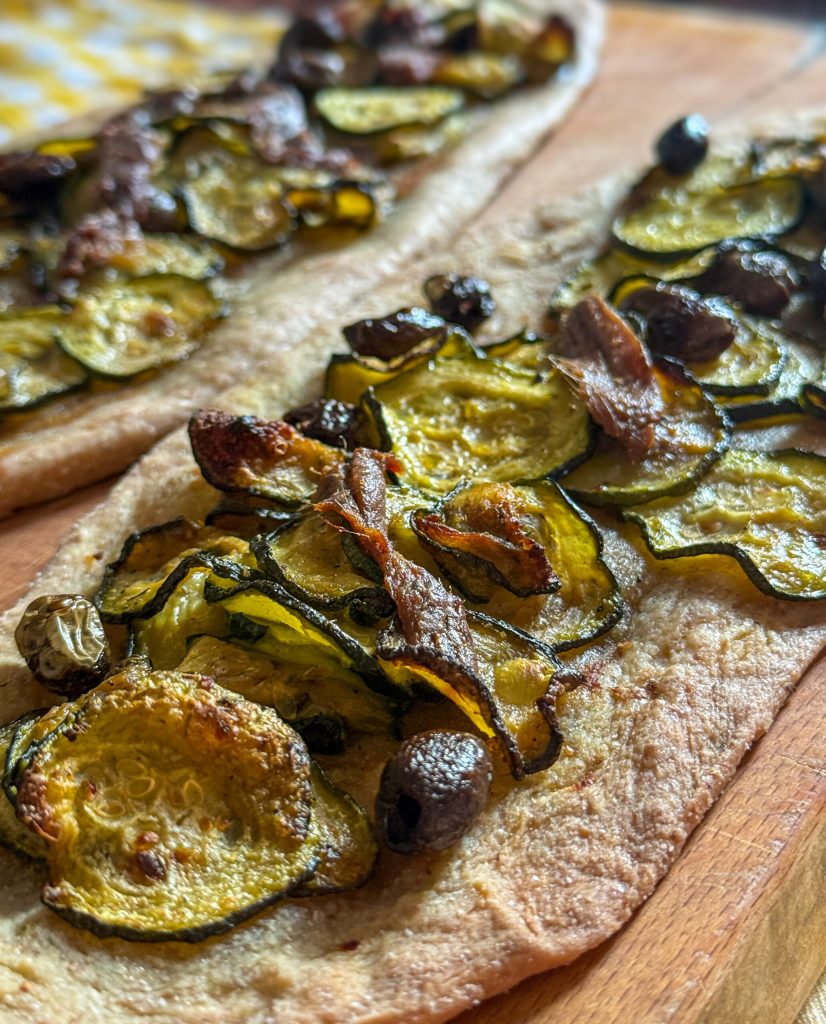
The Spanish Coca Without Yeast, Easy Focaccia and Pizza is a recipe that will surprise you: a flatbread similar to our pizza crust, but without cheese or meats, mainly topped with vegetables. Throughout Spain, there are a thousand variations, each with its special touch. My version is inspired by the coca de recapte, with zucchini, anchovies, and Taggiasca olives instead of onions, for a tasty and original result.
This recipe is quick and easy to prepare, allowing for creativity, and is perfect as a fancy appetizer or healthy snack. I made it with the Bimby TM31 for convenience, but a bowl and a pastry board are enough! At the end of the article, you can also discover the sweet gluten-free version made by my colleague Selene, for those who want to try all the versions of Spanish coca.
If you want to try other yeast-free recipes, check out these links.
- Difficulty: Very easy
- Cost: Very economical
- Rest time: 30 Minutes
- Preparation time: 15 Minutes
- Portions: 2 Pieces
- Cooking methods: Oven, Stovetop
- Cuisine: Spanish
- Seasonality: Summer, Autumn, Autumn, Winter, and Spring
Ingredients for Spanish Coca Without Yeast
Unlike pizza, Spanish coca contains no meats or cheese: it is mainly topped with fresh vegetables, making it a light and versatile dish. The version I propose is inspired by the coca de recapte, which in Catalan means “of recovery,” because it was traditionally filled with whatever was available.
For the dough, I chose type 1 flour from Molino Colombo, which gives a more rustic and fragrant flavor, but a simple all-purpose flour works well if you prefer a more neutral and softer result.
- 2 1/2 cups type 1 flour
- 5/8 cup water
- 1/4 cup extra virgin olive oil
- 1 tsp salt
- 3/4 lbs zucchini
- 1/4 cup Taggiasca olives
- 8 fillets anchovy fillets in oil
- 2 tbsps extra virgin olive oil
- to taste salt
- to taste pepper
Tools
- 1 Food Processor
- 1 Bowl
- 1 Pastry Board
- 1 Dough Scraper
- 1 Rolling Pin
- 1 Mandoline
- 1 Pan
- 1 Baking Tray
- 1 Parchment Paper
Steps
In the Bimby (or bowl) pour the chosen sifted flour to make this super easy recipe.
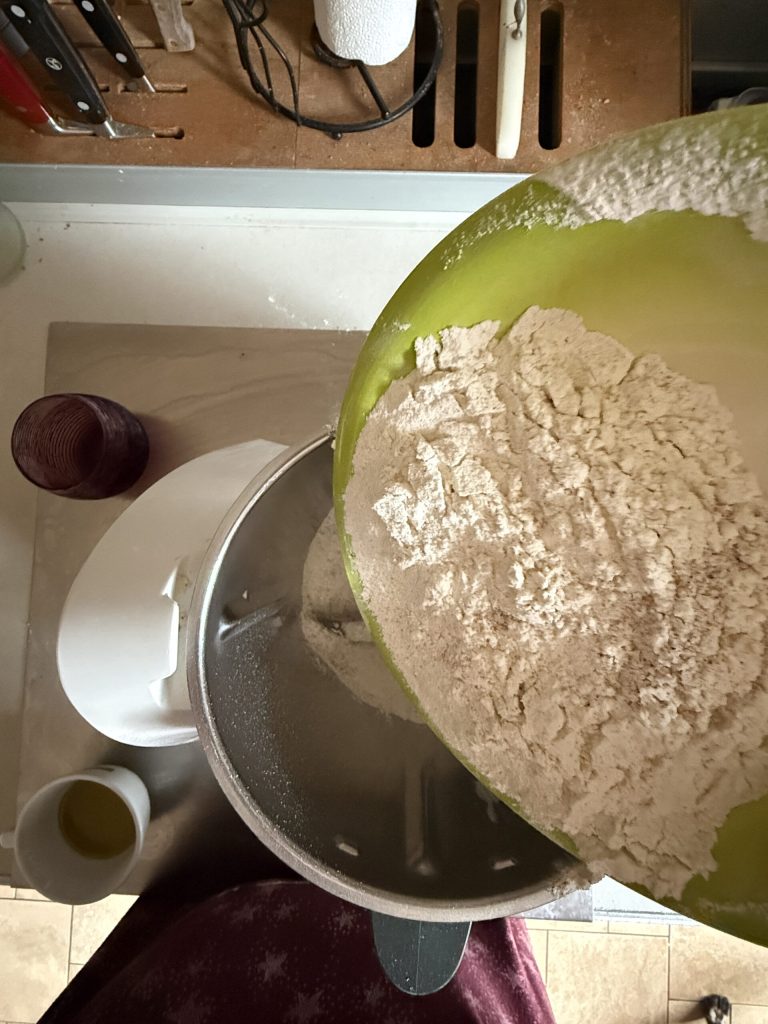
Add half the water and turn on the Bimby in kneading mode.
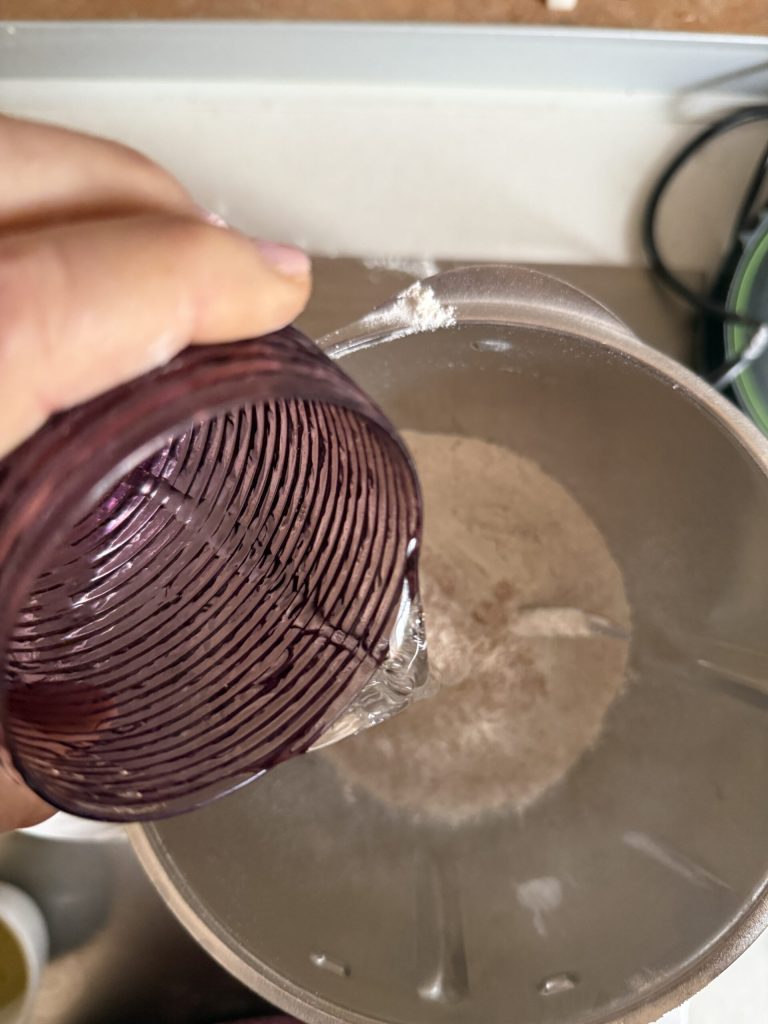
Once the flour has absorbed the water, add the remaining water through the lid hole while the Bimby is working. Knead for 3/4 minutes to create a compact mass.
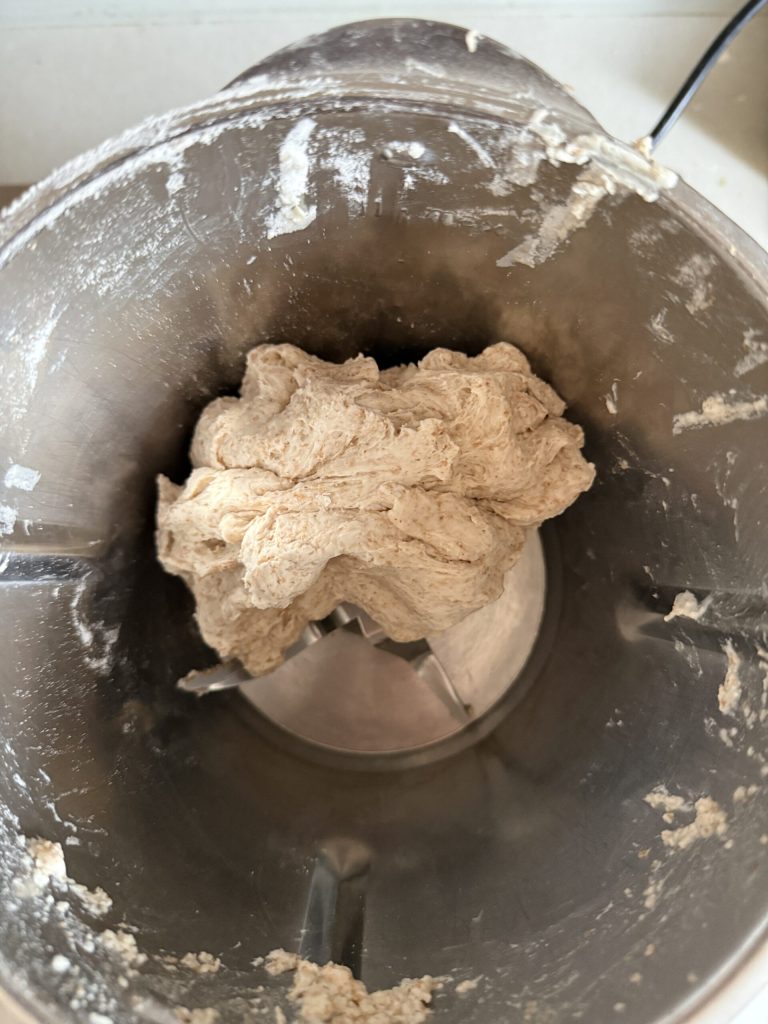
With the Bimby running, add the oil in two or three times, waiting for the dough to absorb it before adding more.
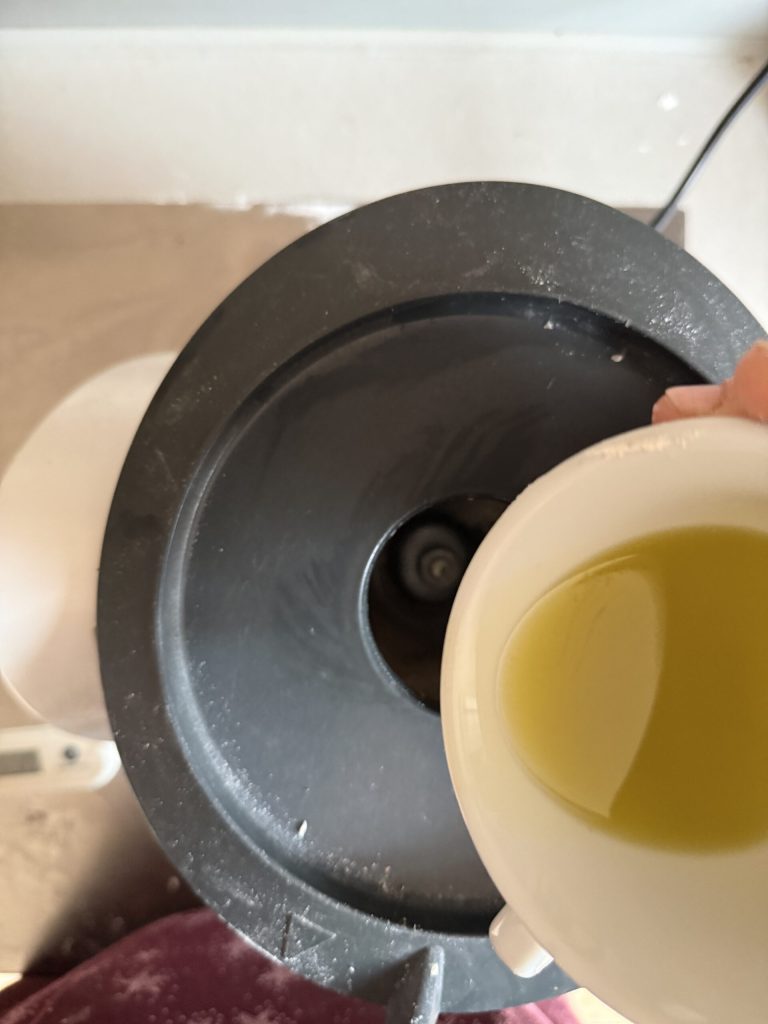
Once all the oil is absorbed, add the salt and mix until you get an elastic and well-rounded dough.
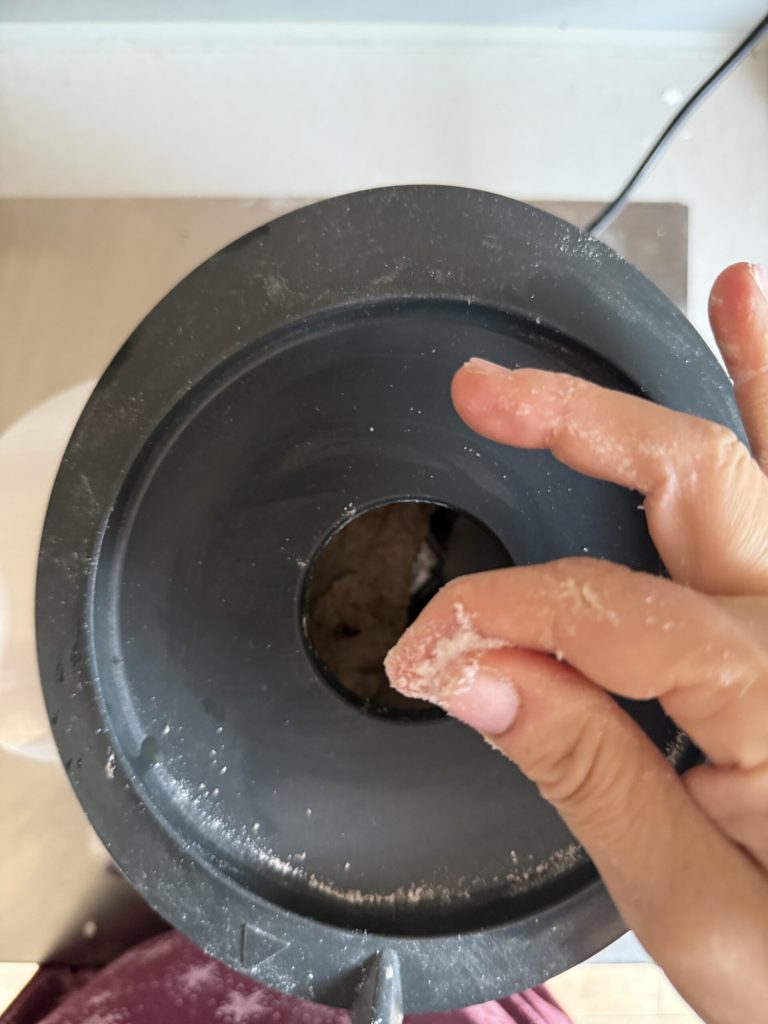
Transfer the dough onto a pastry board dusted with some semolina and knead it gently with slap and fold folds until it becomes elastic and non-sticky.
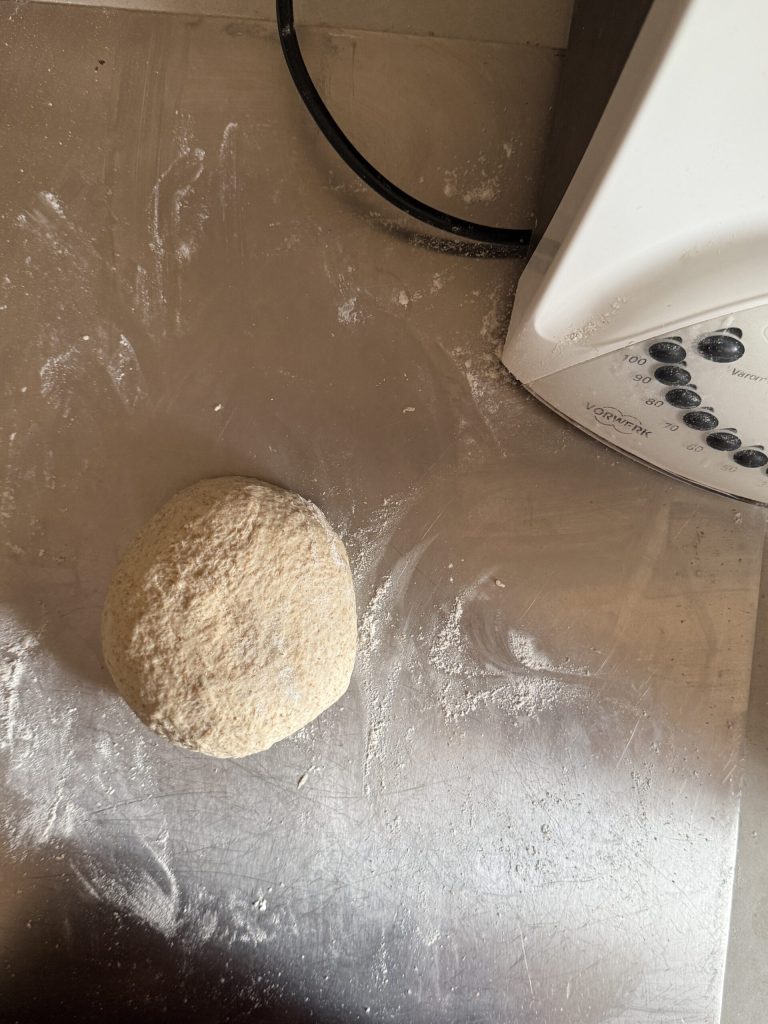
Shape the dough into a ball for the Spanish coca without yeast and let it rest covered. I simply covered it with a bowl, but it can also be wrapped in plastic wrap. The rest should last about half an hour.
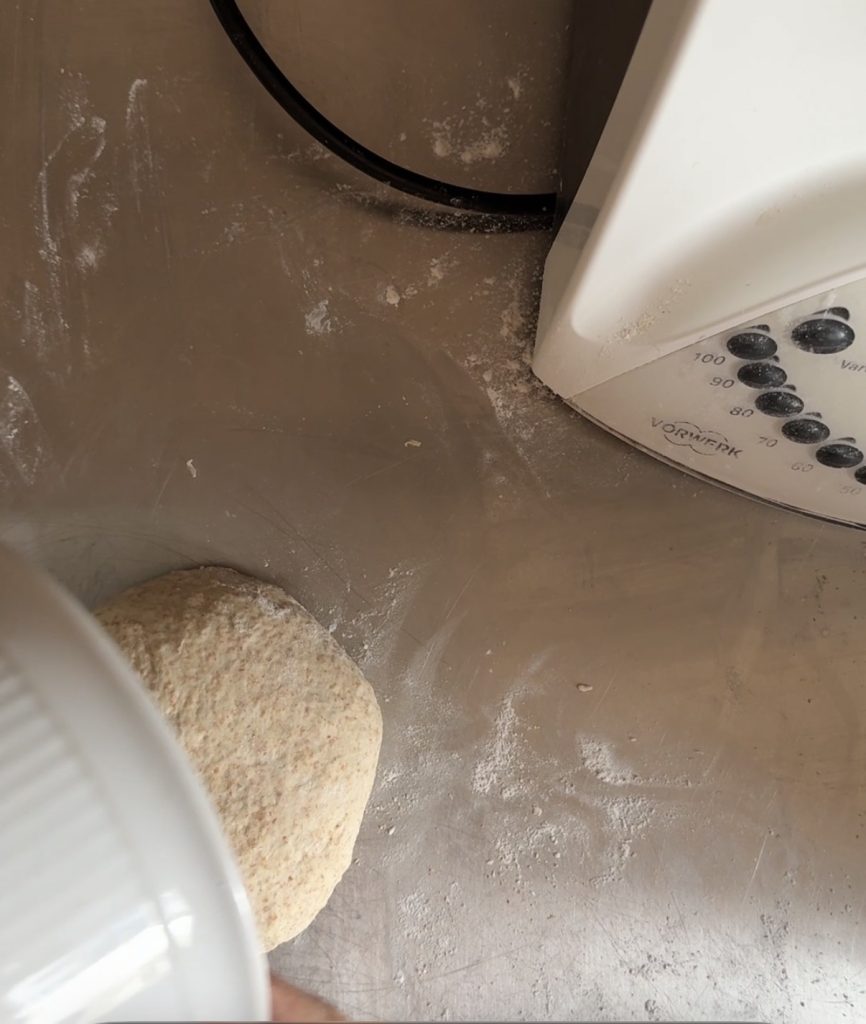
While the dough is resting, prepare the topping. Cut the zucchini into julienne or slices, depending on preference. I made them into slices with the mandoline to make them all uniform.
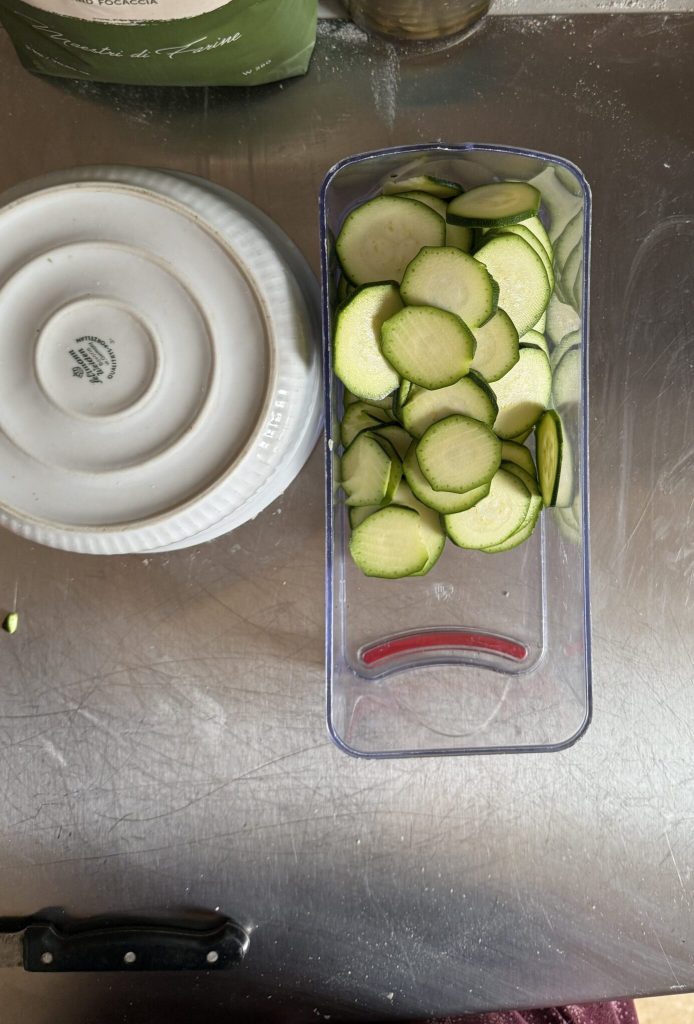
Pour about 1 tbsp of oil into a pan and add the zucchini. Turn on the stove at a moderate heat under the pan.
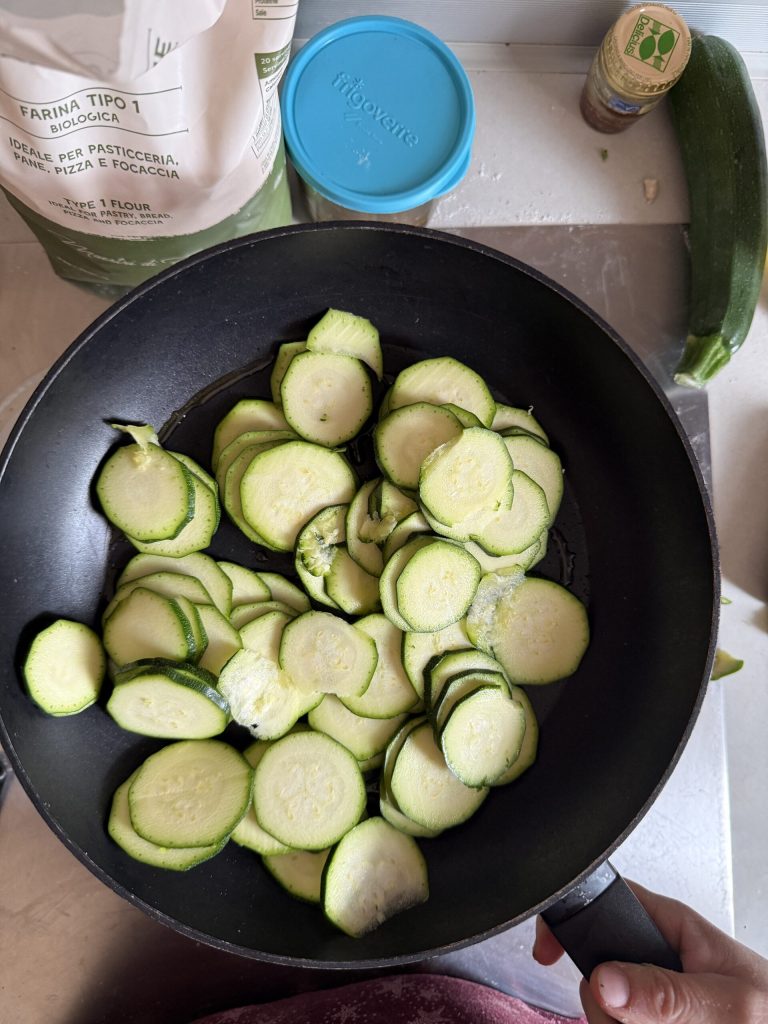
Season the zucchini with salt and pepper. I added garlic powder and a mix of vegetable spices which are optional. Cover with a lid and cook for about ten minutes.
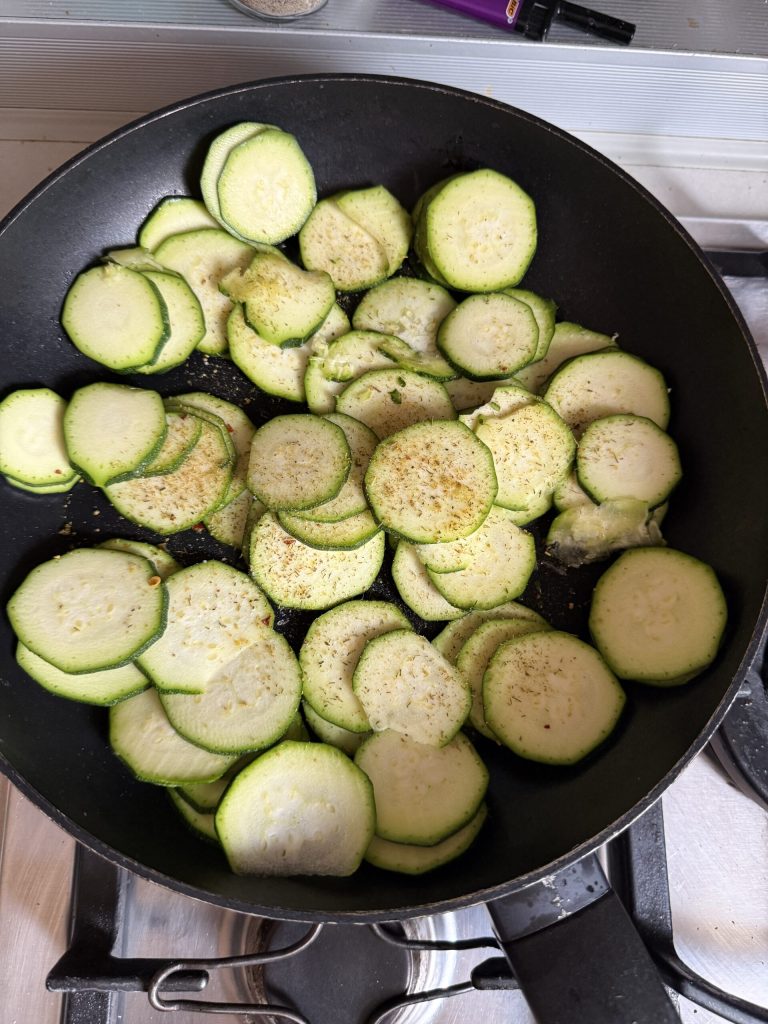
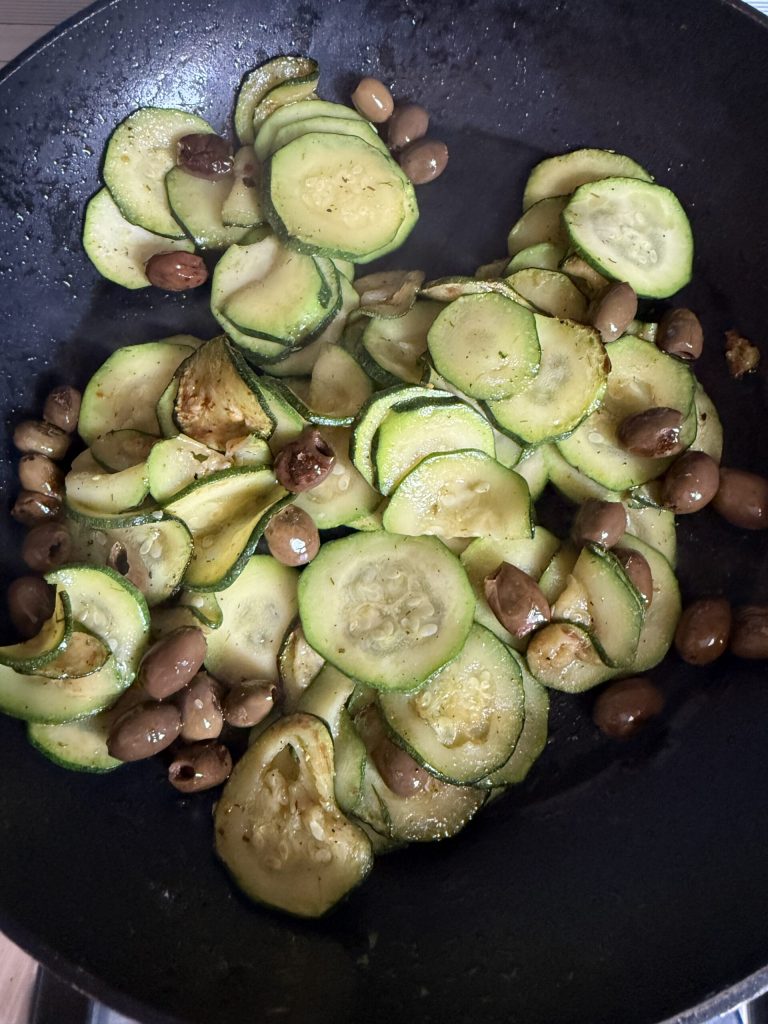
As soon as the zucchini are wilted, raise the heat and add the Taggiasca olives, stirring gently to evenly flavor all the vegetables. This step ensures that the topping is perfect for the Spanish coca without yeast, enhancing the flavor of the zucchini and olives. Once the zucchini are well browned, transfer them to a plate to cool.
While the zucchini cool, take back the Spanish coca without yeast dough, now soft and elastic, and divide it into two parts with a dough scraper, ready to be rolled out and filled.
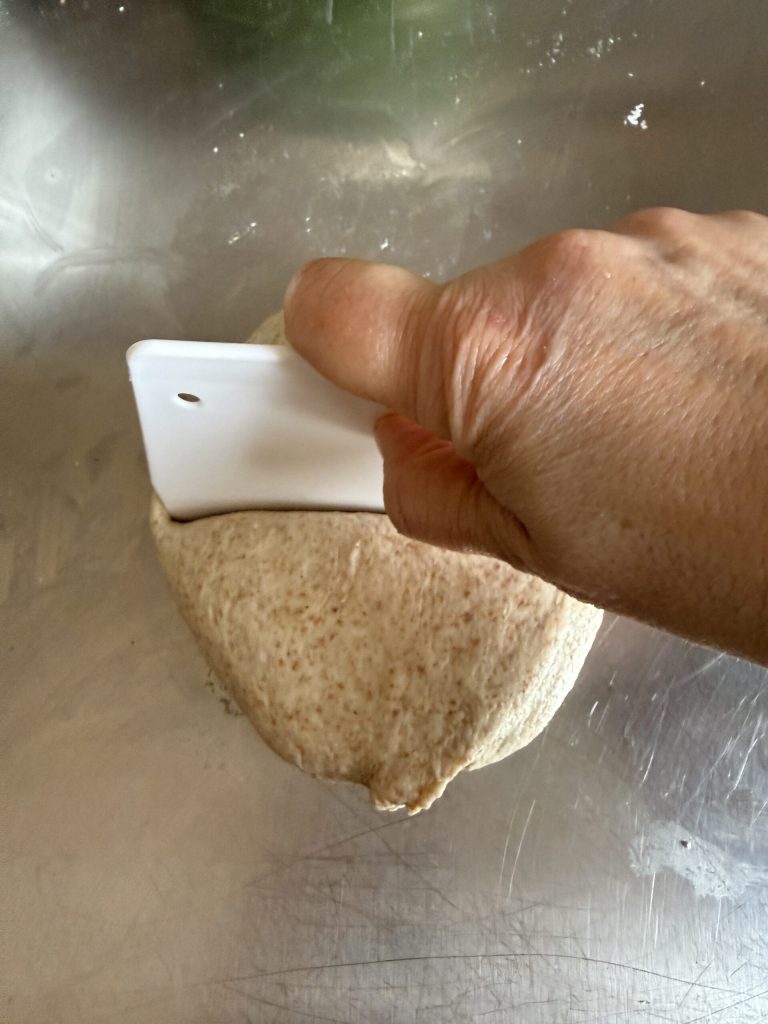
Dust the two parts of dough with some semolina and start shaping the Spanish coca without yeast by hand, slightly stretching each piece to give the desired shape.
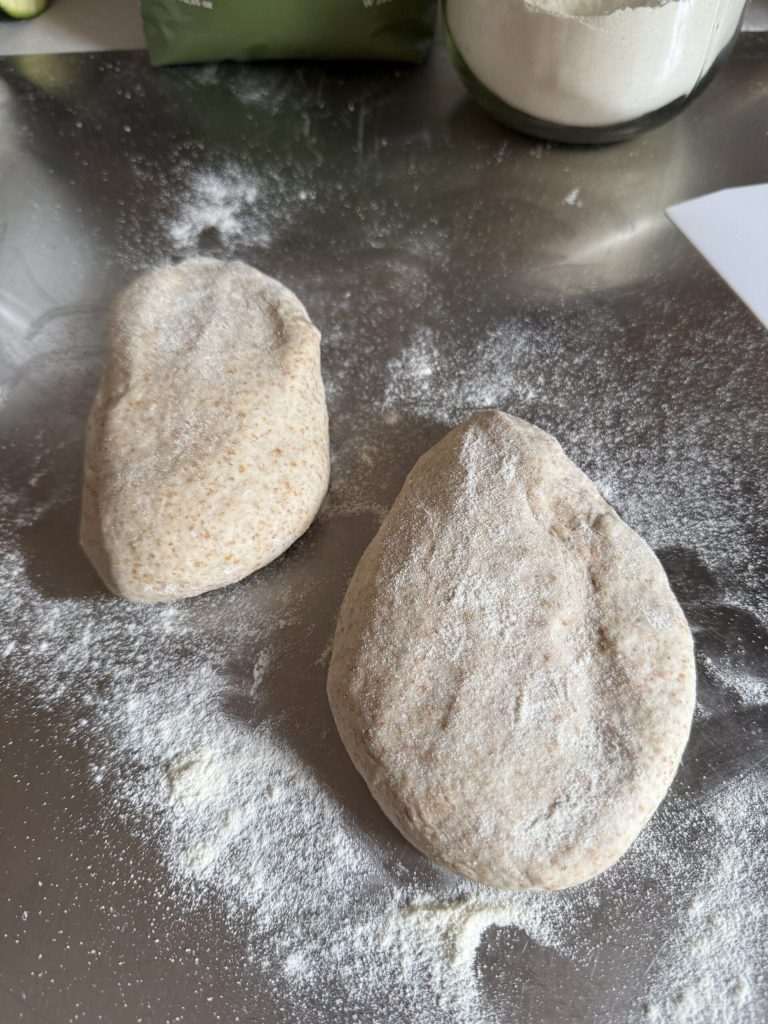
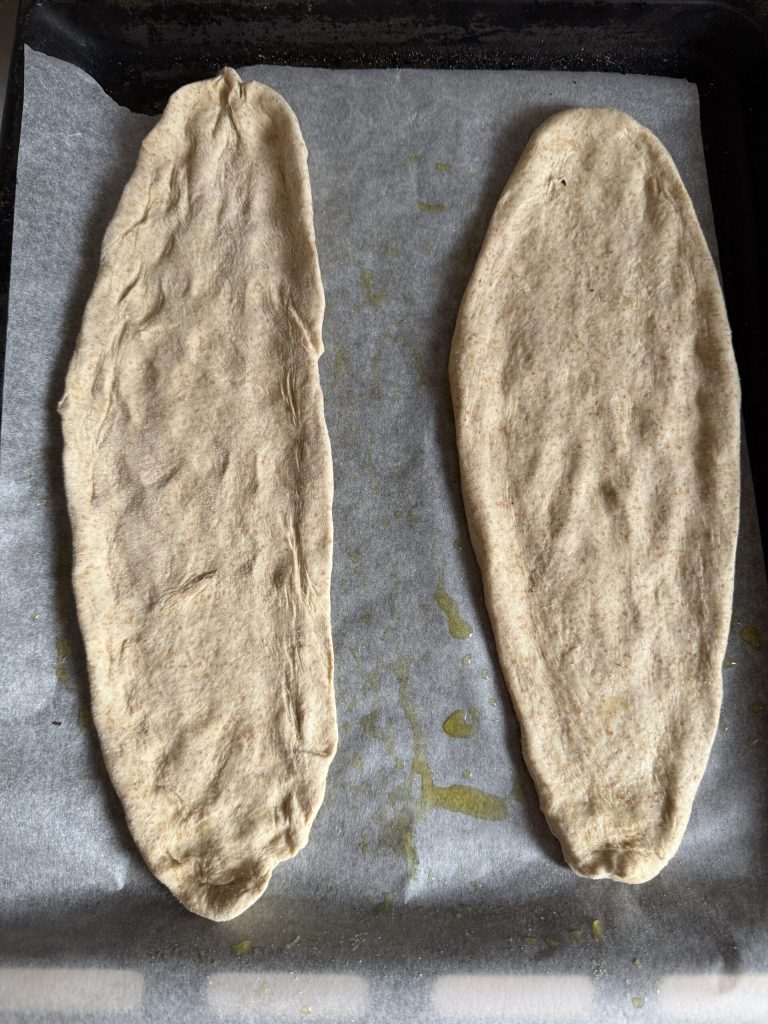
The typical shape of the Spanish coca without yeast resembles our pizza crust. With a rolling pin, roll out the two strips of dough, trying to keep them elongated. Slightly lift the edges with your fingers and close the ends, creating a sort of elongated boat, ready to hold the toppings.
Divide the filling into two parts and spread it over the two strips of dough, leaving a small free edge. Place 4 anchovy fillets on each Spanish coca and drizzle with the remaining oil. Since there are anchovies, I did not add salt, but nothing prevents you from doing so as you like.
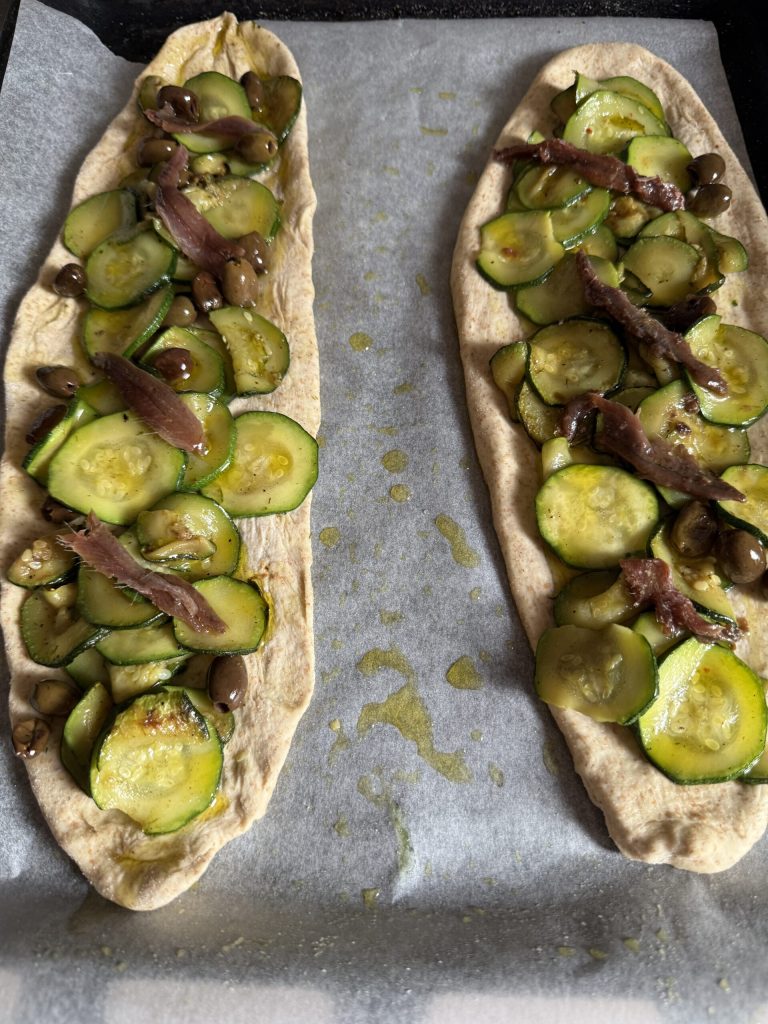
While filling, turn on the oven to 356°F in static mode and wait for it to reach temperature. When ready, bake the Spanish coca without yeast placing the tray in the middle of the oven for about 20 minutes. After this time, raise the temperature to 392°F and move the baking tray closer to the top of the oven, cooking for another 10 minutes or until achieving a light golden color of the dough. At this point, the Spanish coca without yeast is ready: remove from the oven and serve immediately!
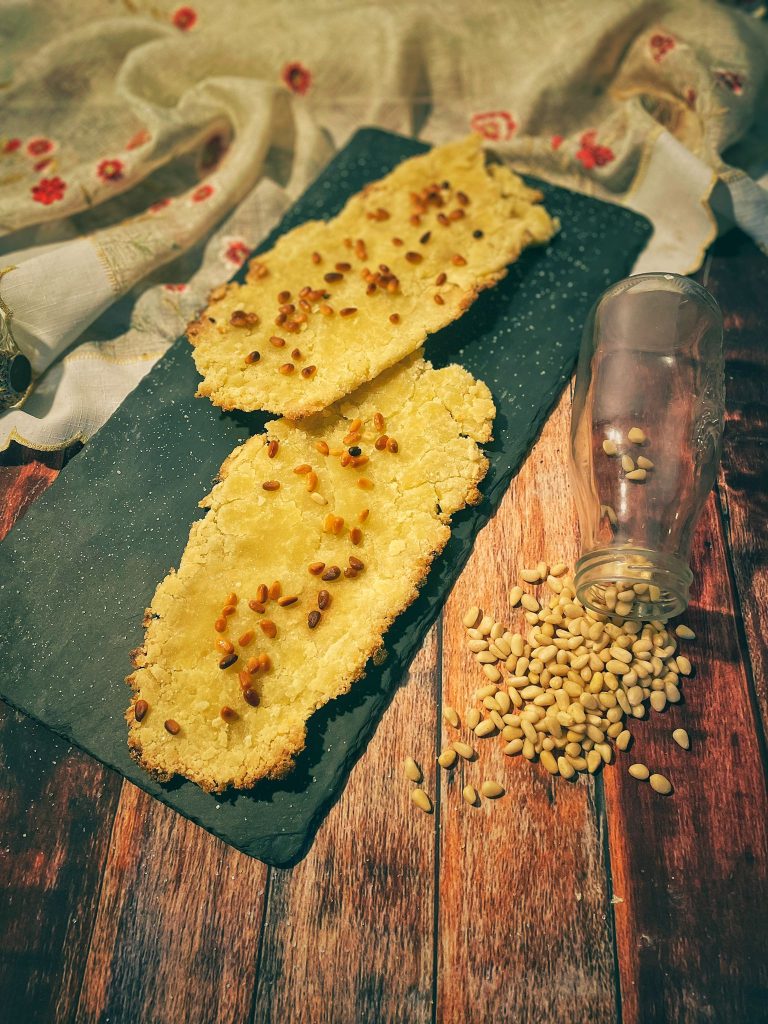
If you like sweet versions, the Spanish coca also exists in this form. It is usually topped with honey, pine nuts, or other nuts. My colleague Selene from ViaggiandoMangiando80 has created a gluten-free version, and to see the complete procedure click HERE. As with the savory coca, you can get creative with nuts, jams, or creams, following the same basic procedure. Hers is the traditional one with honey and pine nuts, but made with rice and carob flour.
Storage and Suggestions
The Spanish coca without yeast keeps well for 1-2 days at room temperature, covered or in an airtight container. If you prefer, you can warm it slightly before serving to restore its fragrance.
This recipe lends itself to many variations, following the spirit of the coca de recapte: you can change the vegetables based on the season or what you have at home, adding for example peppers, eggplants, or onions.
If you try your version or have doubts about the procedure, contact me on Instagram: you can find my profile HERE, and I will be happy to see your cocas or answer any questions.
FAQ (Questions and Answers)
What is Spanish Coca?
The Spanish coca is a flatbread typical of Spain, similar to our pizza crusts, which can be topped with different types of vegetables or sweet versions like honey and pine nuts.
Can you make Spanish coca without yeast?
Yes, the yeast-free version remains light and easy to prepare. The dough may be slightly denser, but baking makes it soft and delicious.
Can I use any type of flour for Spanish coca?
For a more rustic flavor, you can use type 1 flour, while all-purpose flour gives a softer and more neutral result. For the gluten-free sweet version, naturally gluten-free flours can be used.
What toppings can I put on Spanish coca?
Any seasonal vegetables you want! You can use peppers, onions, carrots, or any other vegetable. In the spirit of coca de recapte, any leftover vegetables in the fridge work great!
Is there a sweet version of Spanish coca?
It is kept in an airtight container at room temperature for 1–2 days. To keep it soft, it is advisable to warm it slightly before serving.
What is the difference between Spanish coca and pizza?
The main difference between Spanish coca and pizza is in the toppings: coca is generally topped with vegetables and, in some variations, with anchovies, but does not include dairy or meats. Pizza, on the other hand, almost always uses cheese and can include meats. The texture is also different: coca is a flatter and more rustic bread, often thought of as a simple, leftover dish.
How to store Spanish coca?
It is kept in an airtight container at room temperature for 1–2 days. To keep it soft, it is advisable to warm it slightly before serving.
