
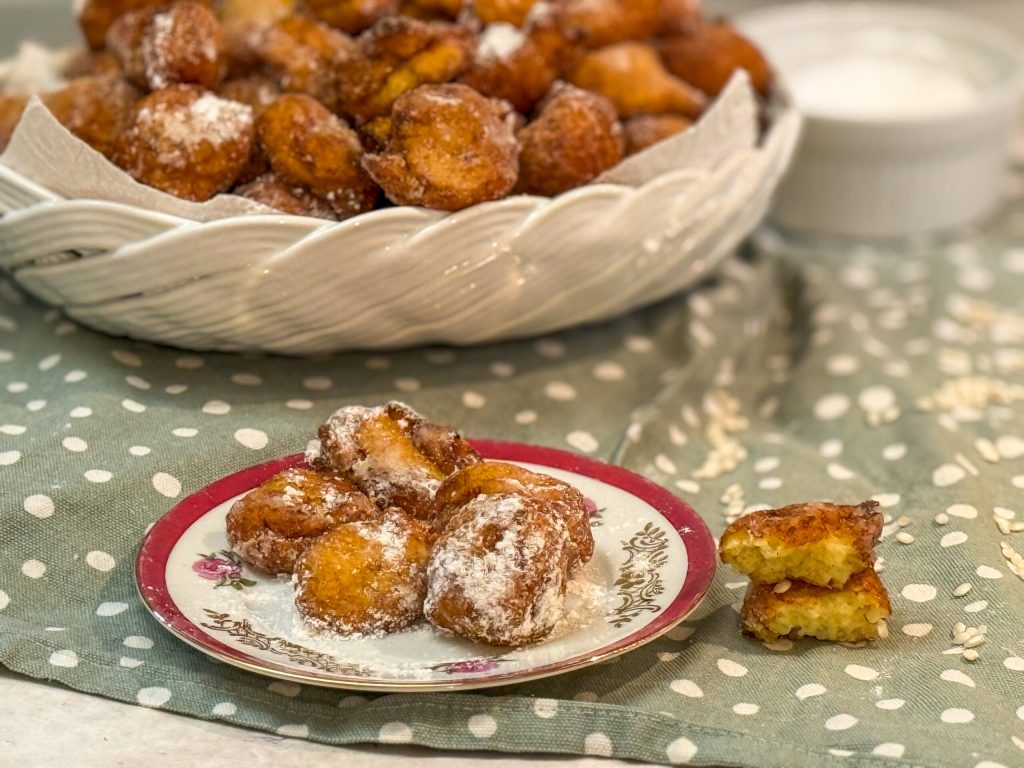
St. Joseph’s rice fritters are the traditional sweet for Father’s Day, March 19. This is the family recipe I used to make as a child with my mother and that I inherited from her. I only converted the quantities to grams the way I present the recipe here, because in the past everything was done “by eye,” as is common with mothers’ and grandmothers’ recipes. Like all traditional recipes, there are many variants: in Florence they are also eaten during the month before the celebration and there are real festivals dedicated to this sweet. This version of the rice fritters makes them very creamy, with a fluid consistency that wins you over at first bite, but I’ll also explain how to obtain a texture where the rice grains are well defined. It is essential to choose the right type of rice, which I will indicate in the ingredients, and don’t forget the sugar trick: dipping them when they are just cooled makes them even more irresistible. St. Joseph’s rice fritters are an irresistible dessert, perfect to enjoy after dinner or as an afternoon snack, and one disappears after another, immediately bringing to mind the flavors of my childhood and home cooking.
For other Tuscan sweets linked to particular occasions, take a look here!
- Difficulty: Easy
- Cost: Low cost
- Rest time: 12 Hours
- Preparation time: 1 Hour
- Cooking time: 40 Minutes
- Portions: 6People
- Cooking methods: Frying
- Cuisine: Italian Regional
- Region: Tuscany
- Seasonality: Father's Day, Spring
Ingredients
For St. Joseph’s rice fritters the type of rice is truly fundamental, just like for my Tuscan creamy rice puddings. You need a small-grain rice suitable for sweets, such as Originario, Baldo or Roma. Usually, besides the name on the package, the recommended use is also indicated: always choose the one for sweets or sweet risottos so you will obtain fritters that are creamy, soft and with well-defined grains. By following this little tip, the base of the recipe will be perfect and will guarantee a delicious result, just like the rice puddings you know and love.
Another ingredient that links these fritters to rice puddings and Tuscan sweets in general is Vin Santo. It adds that aromatic and slightly sweet touch that completes the rice flavor and makes the fritters even more irresistible, giving them that characteristic scent that immediately recalls home cooking and traditional celebrations.
- 2 cups rice (Originario)
- 4.25 cups partially skimmed milk
- 1 bean vanilla
- 4 eggs (large)
- 3 tbsp granulated sugar
- 3 tbsp all-purpose flour
- 1 piece blood orange (juice)
- 1 piece orange (zest)
- 1 piece lemon (zest)
- 2 tbsp Vin Santo
- 1 tsp salt
- 0.33 cup granulated sugar
- 0.58 cup powdered sugar
Tools
- 1 High-sided saucepan
- 1 Cutting board
- 1 Bowl large
- 1 Food processor
- 1 Thermometer
- 1 Frying pan/pot
- 1 Skimmer
- 1 Grater
Steps
Preparing St. Joseph’s rice fritters is not difficult, but it requires some time and patience because the rice must be cooked the evening before. This step allows the grains to absorb the liquids and cool, creating the perfect base for the batter.
The evening before, bring about 4.25 cups (1 liter) of milk to a boil (I use partially skimmed milk) with a pinch of salt and the split vanilla bean.
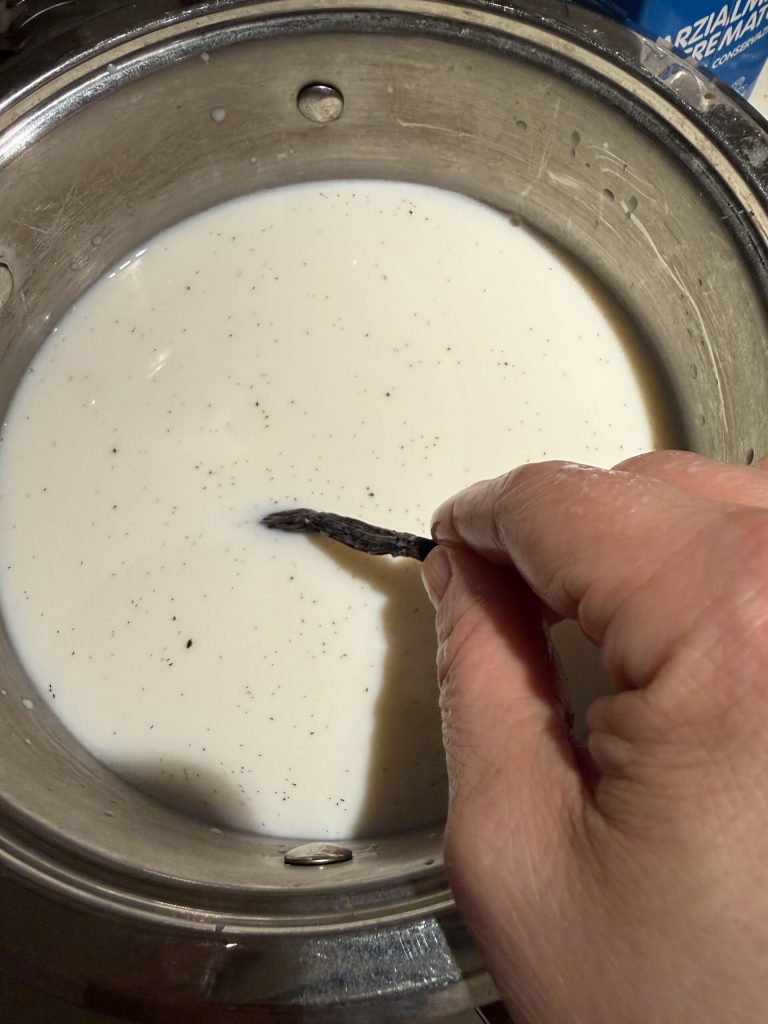
When the milk is hot and steamy, almost at a boil, add the rice. Let it cook, stirring often, because as it cooks it tends to stick to the bottom.
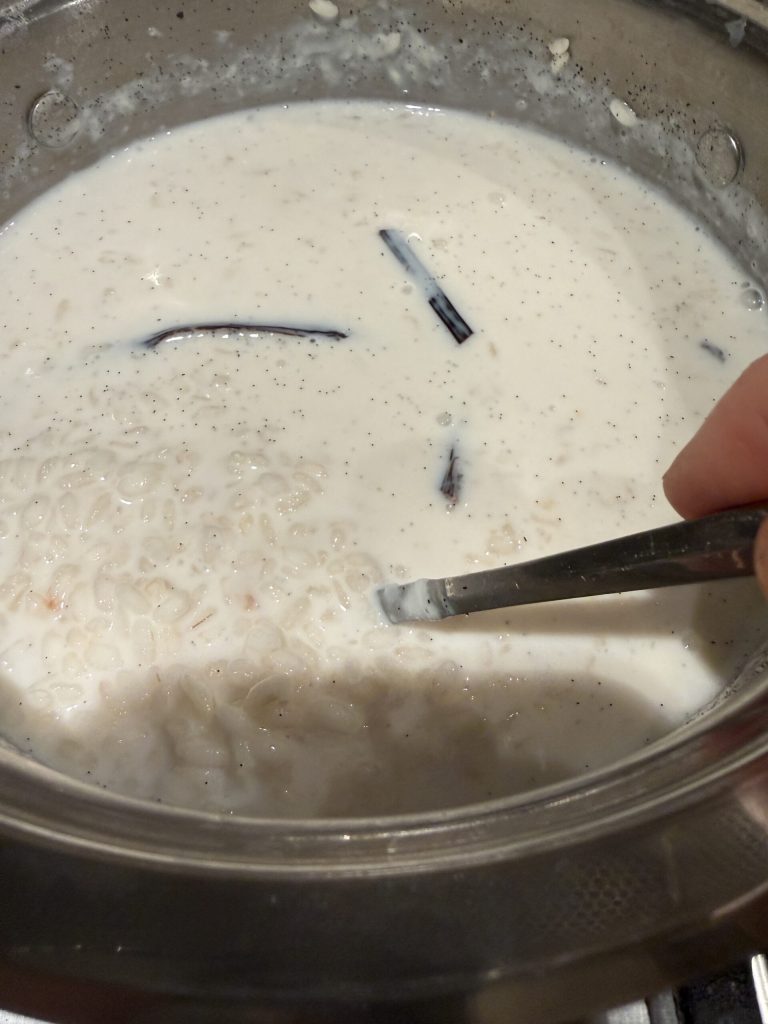
Keep stirring and you’ll see the rice absorb the milk and swell. It will be ready when the grains break apart and all the milk has been absorbed.
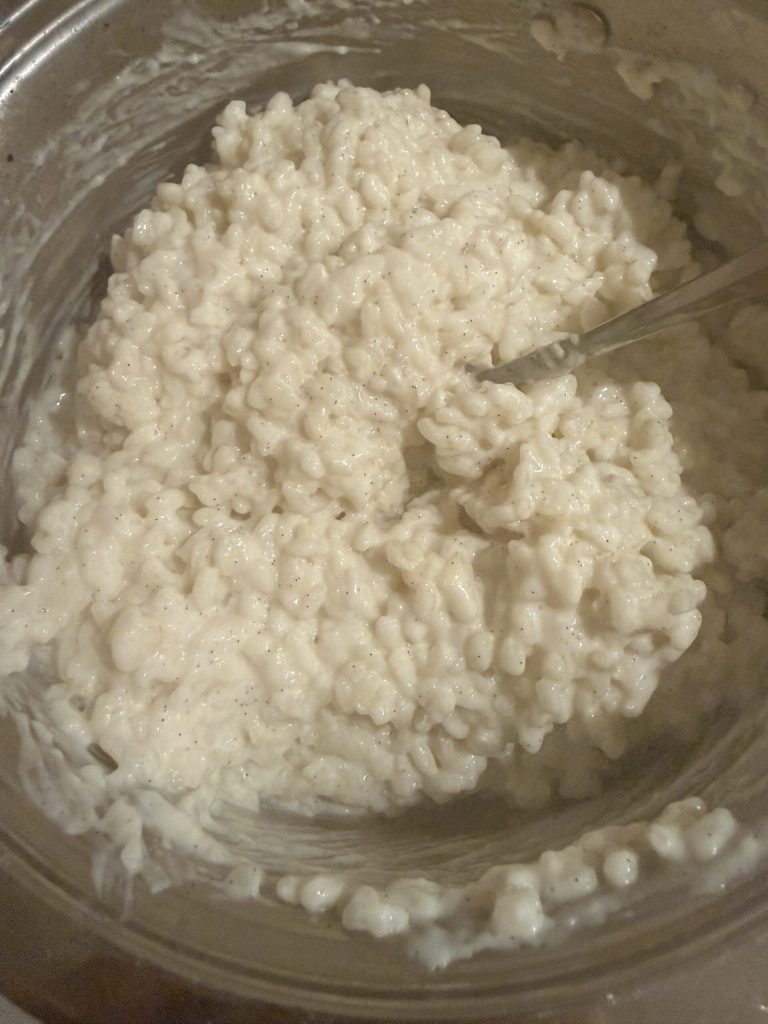
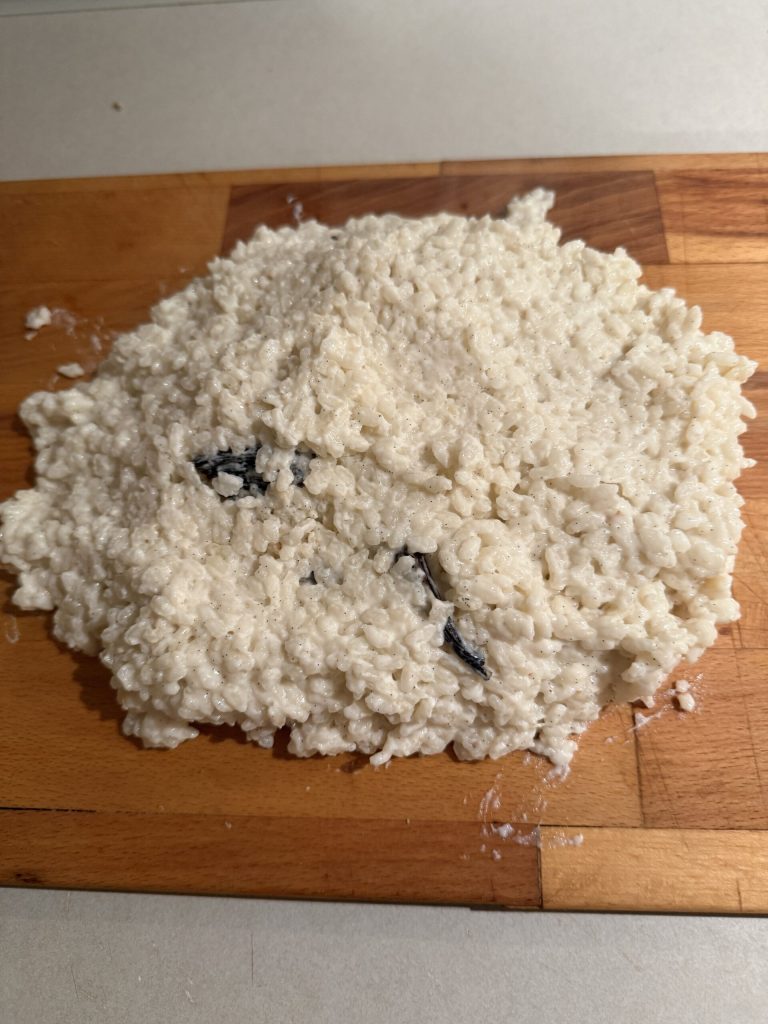
Traditionally – just as my mother did and I do – the rice is poured onto a clean, dry cutting board and shaped into a dome, then left to rest covered with a kitchen towel overnight. Like my mother, I don’t remove the vanilla bean; I leave it in the rice so it continues to release its aroma during the resting time. Alternatively, you can transfer the rice to a bowl and cover it with a towel, but not clingfilm, otherwise condensation forms. I prepare it the evening before making the fritters so that the base is perfect for the next day.
The next morning it’s time to make the batter and fry. You can do it by hand, traditionally, using a bowl and a little elbow grease. I used my Thermomix, but you can use any food processor.
Crack the eggs into the bowl or processor and add the sugar. Blend or whisk until completely combined and homogeneous.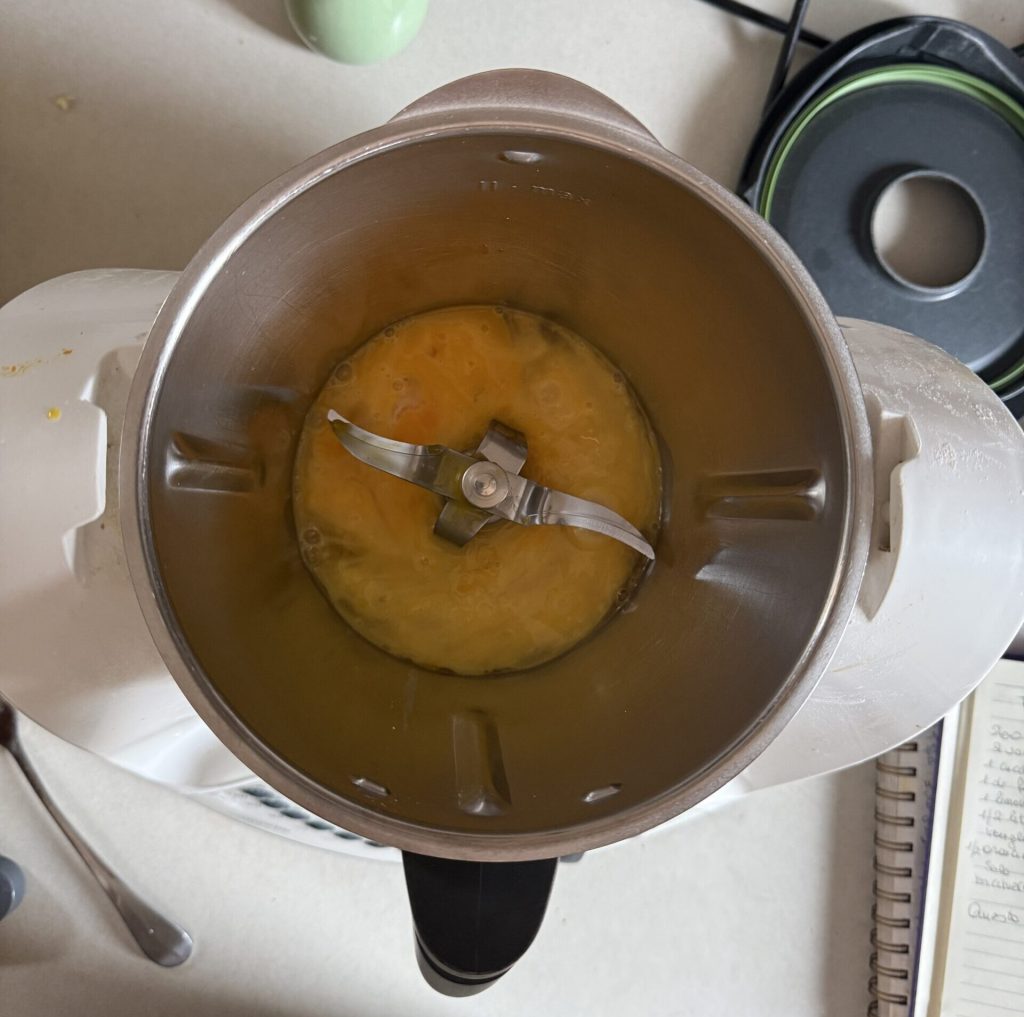
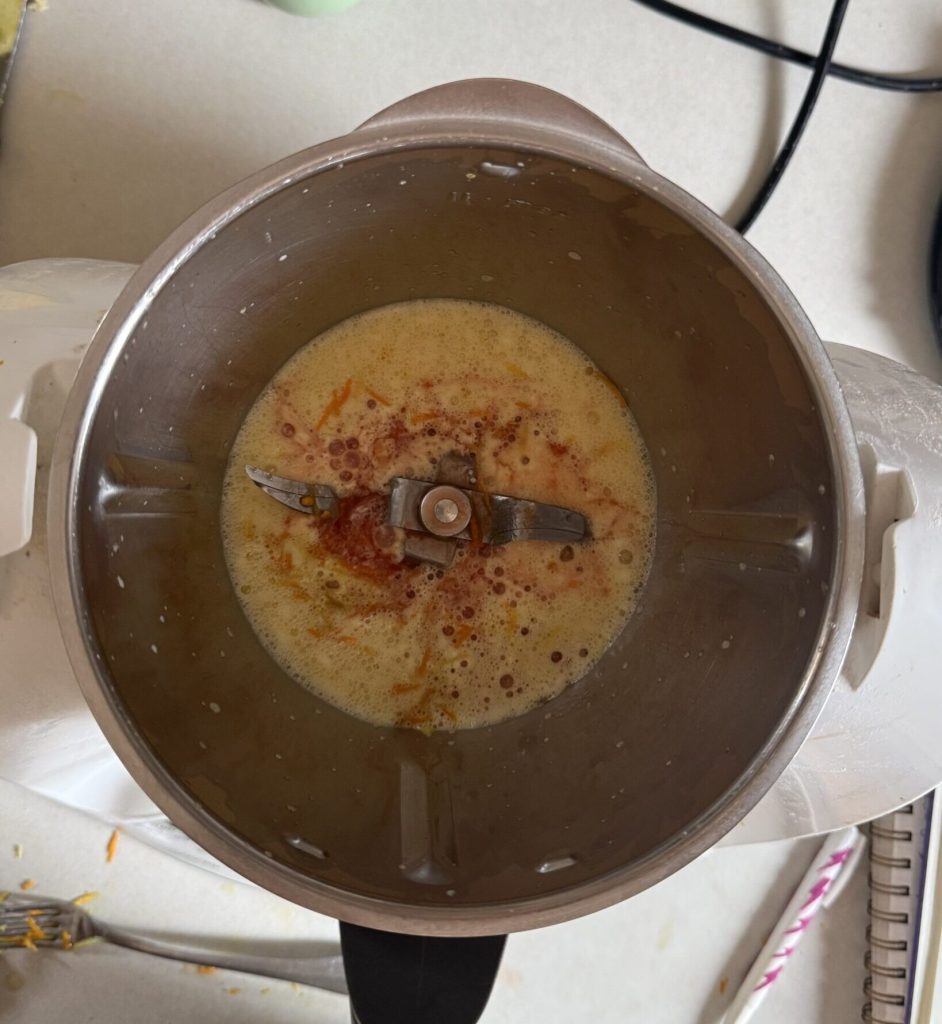
Squeeze the juice of a blood orange and finely grate the zest of a lemon and an orange. Add everything to the egg-and-sugar mixture and blend until the flavors are well incorporated.
Take the rice cooked the previous evening, which will have firmed up. Break it up by hand into the processor bowl or a bowl.
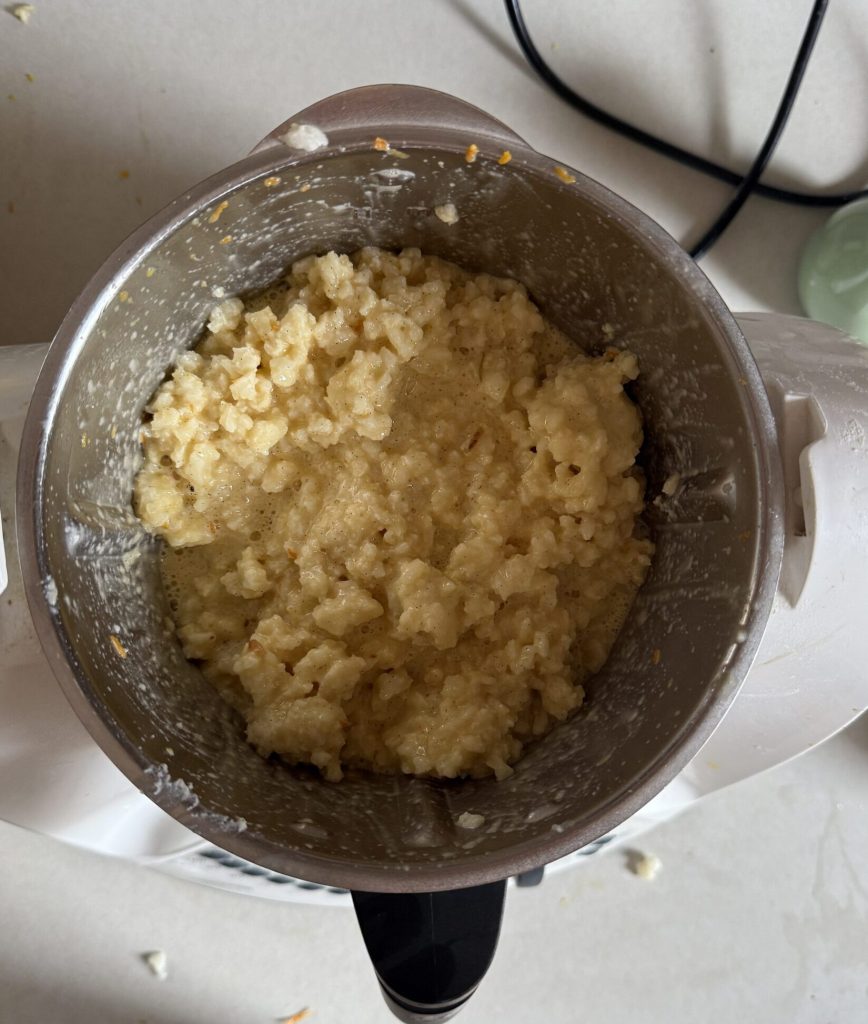
In the food processor, blend the rice together with the other ingredients until you obtain a homogeneous batter. This is the delicate step: the more you blend it, the creamier the fritters will be; the less you blend, the more the grains will remain whole and have texture. With the Thermomix I blended on speed 5 for 1 minute.
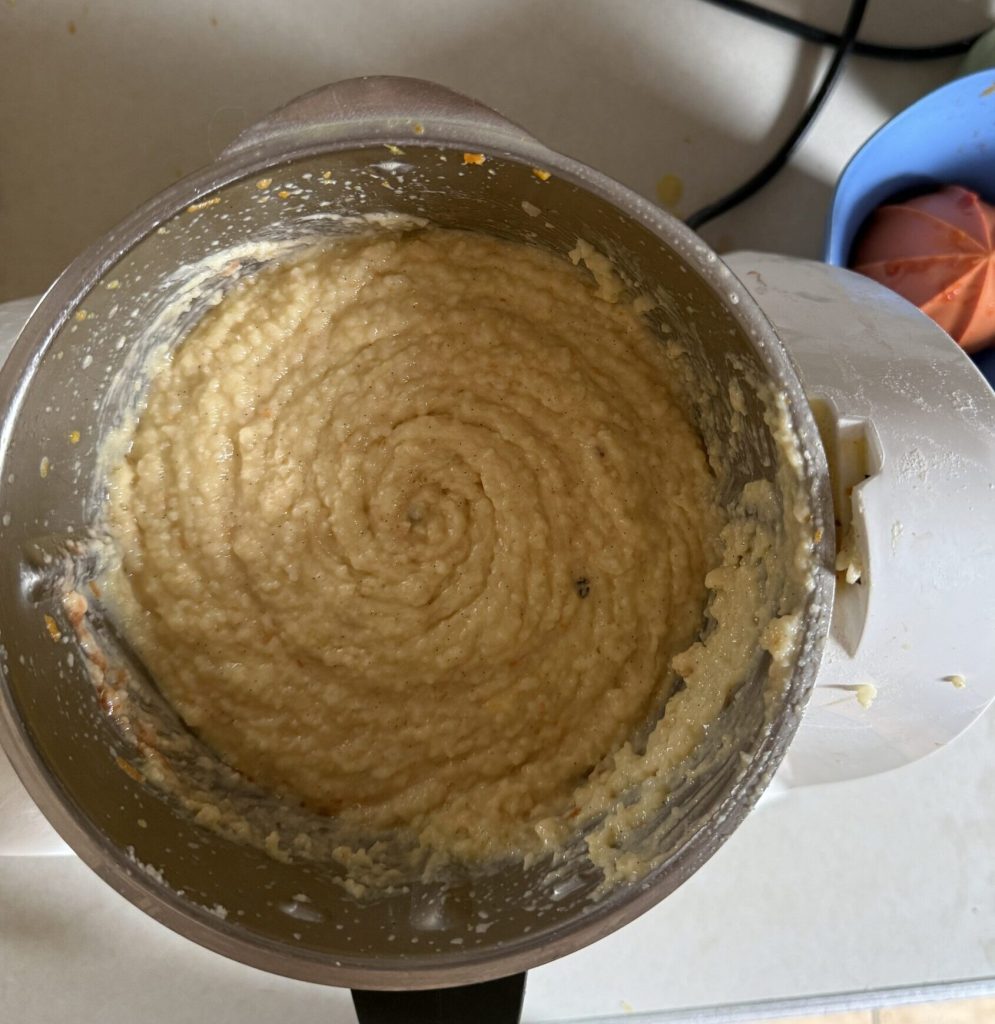
Add the flour to the mixture and mix well. Then add the Vin Santo and fold it in gently. I used the reverse function on the Thermomix so the ingredients don’t break down. If your processor doesn’t have that function, transfer everything to a bowl and mix with a spatula.
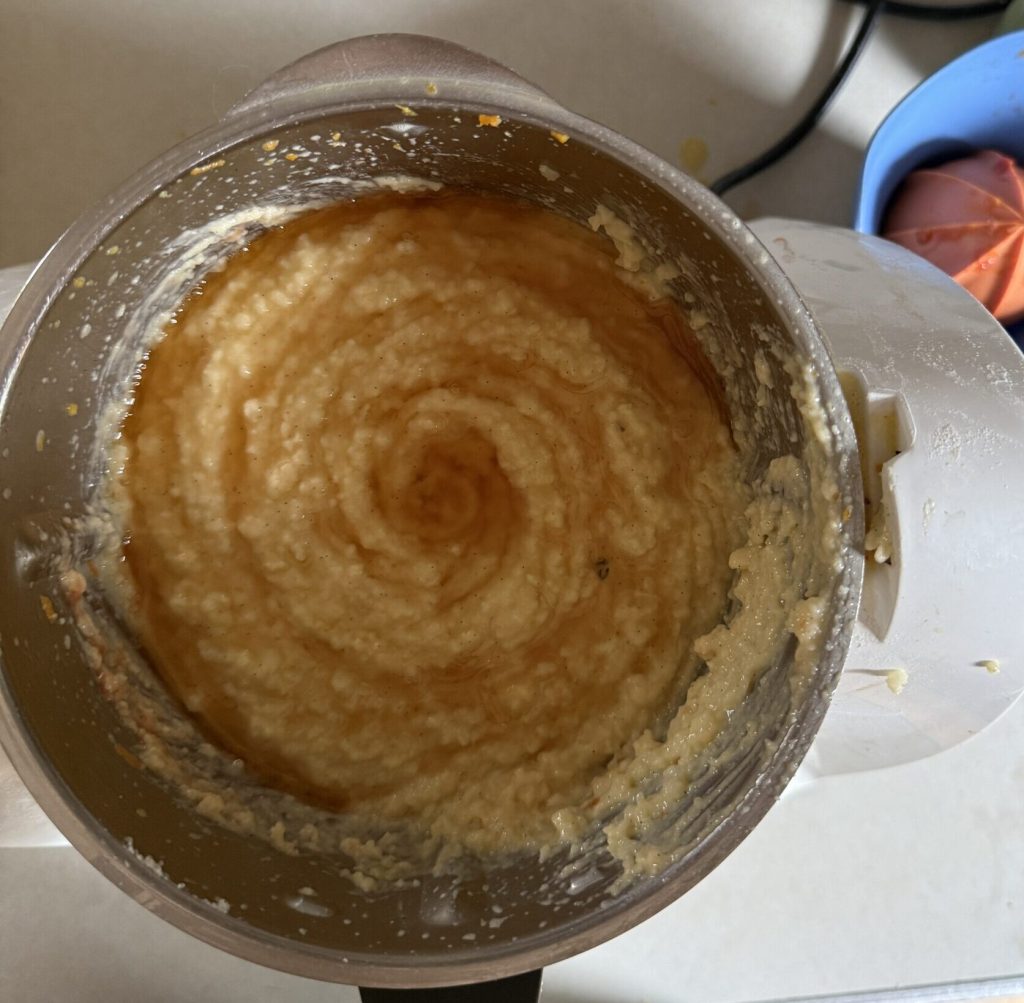
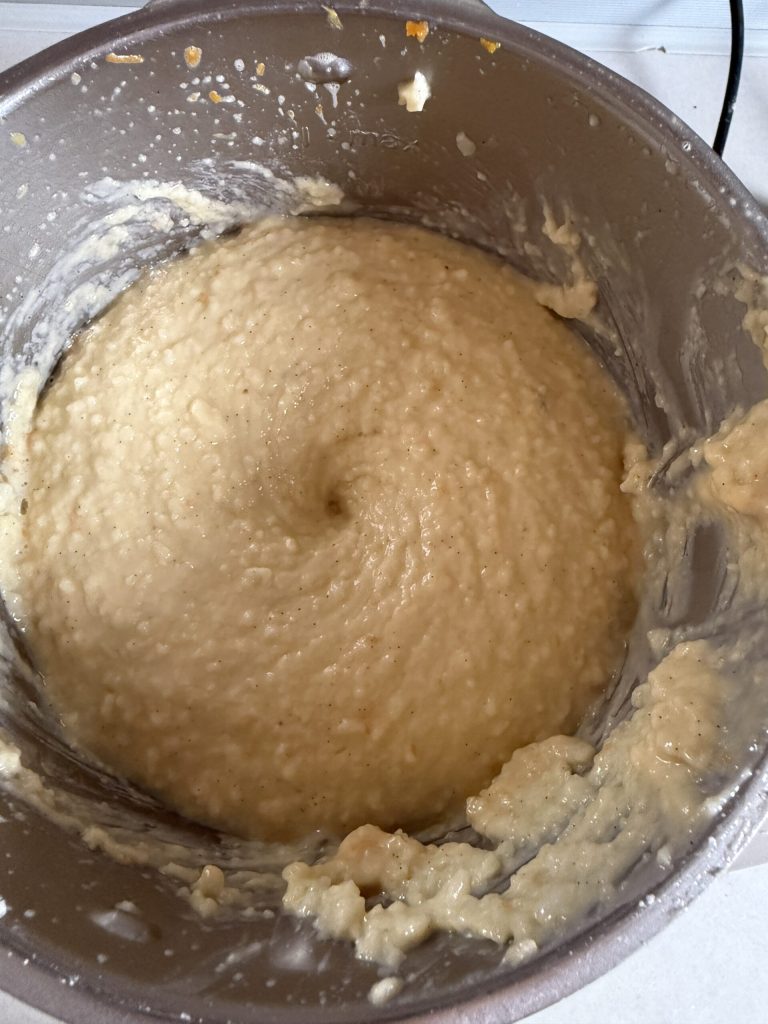
The batter is ready! Transfer it to a bowl, get a tablespoon and a teaspoon, and get ready for frying!
Heat about 2 liters (roughly 8.5 cups / 68 fl oz) of peanut oil in a pot over medium heat. Check the temperature with a probe thermometer: it should reach 347°F, perfect for frying the fritters without burning them.
Tip without a thermometer: dip the tip of a wooden spoon into the oil; if small bubbles form around the spoon, the oil is ready.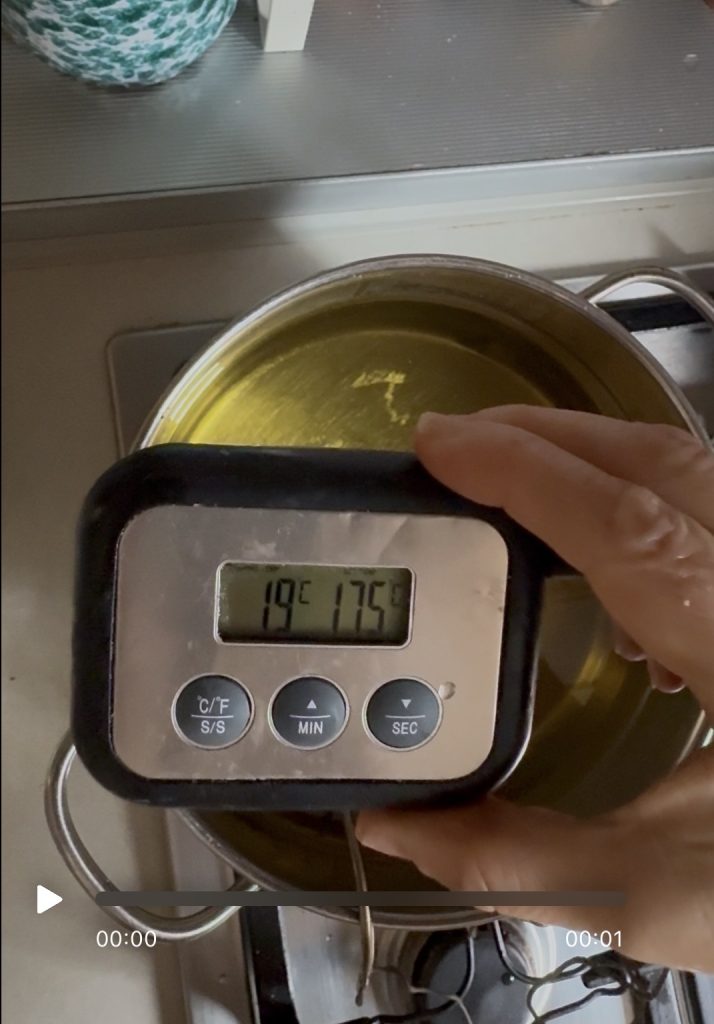
When the oil is ready, take half a tablespoon of batter and slide it into the oil using a teaspoon. Fry few fritters at a time (about 6–7) and brown them on all sides. As you remove the first ones, add more batter so you always have fritters cooking.
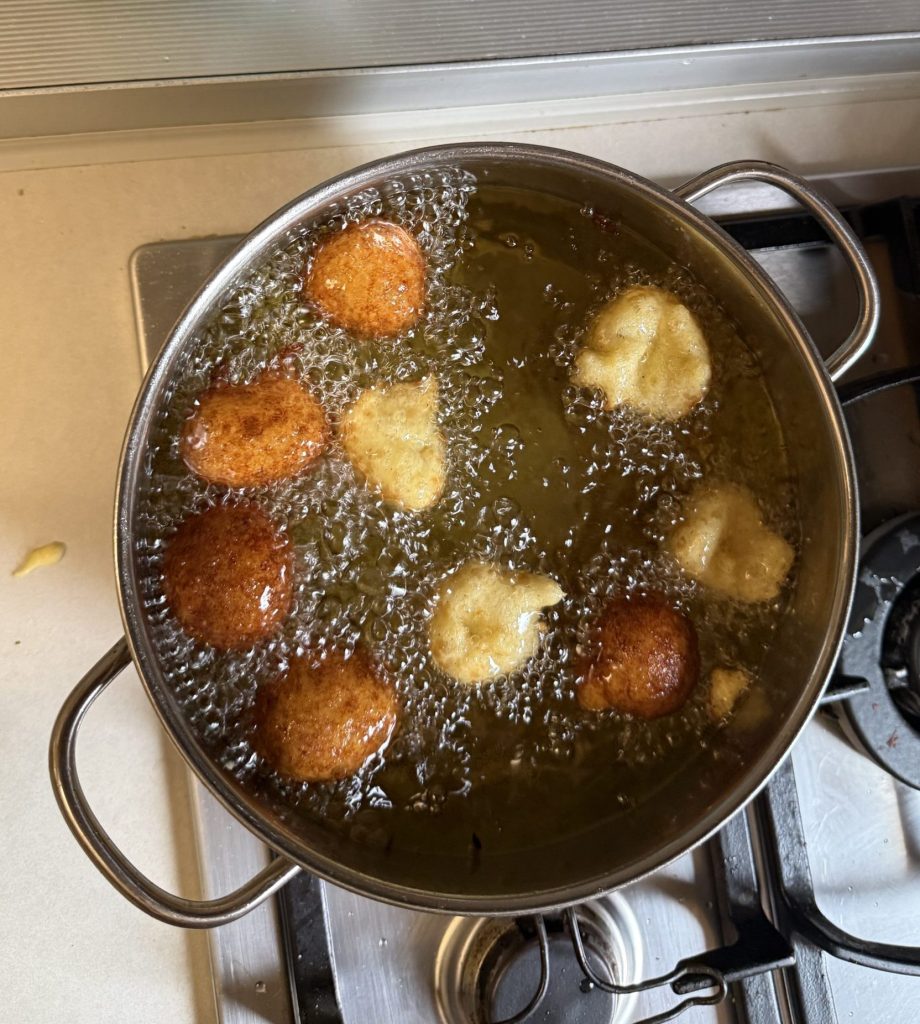
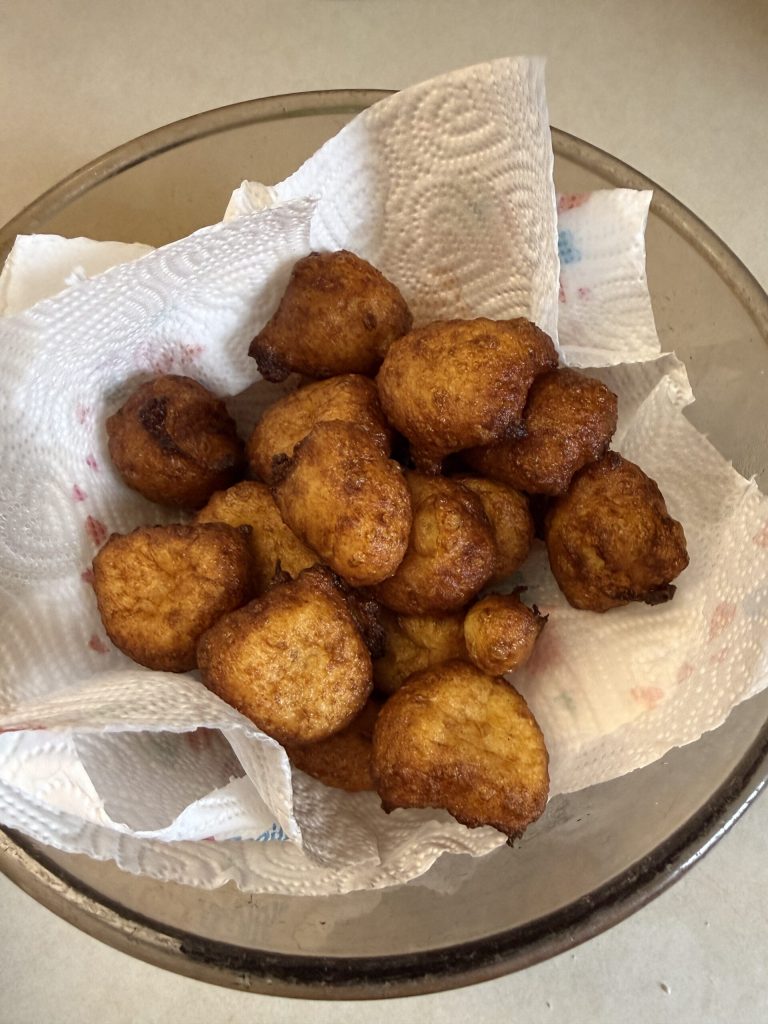
As they cook, transfer the fritters with a skimmer to a plate or bowl lined with paper towels. If you stack layers, cover each layer with more paper. Continue until all the batter is used, then turn off the oil. I got two full bowls.
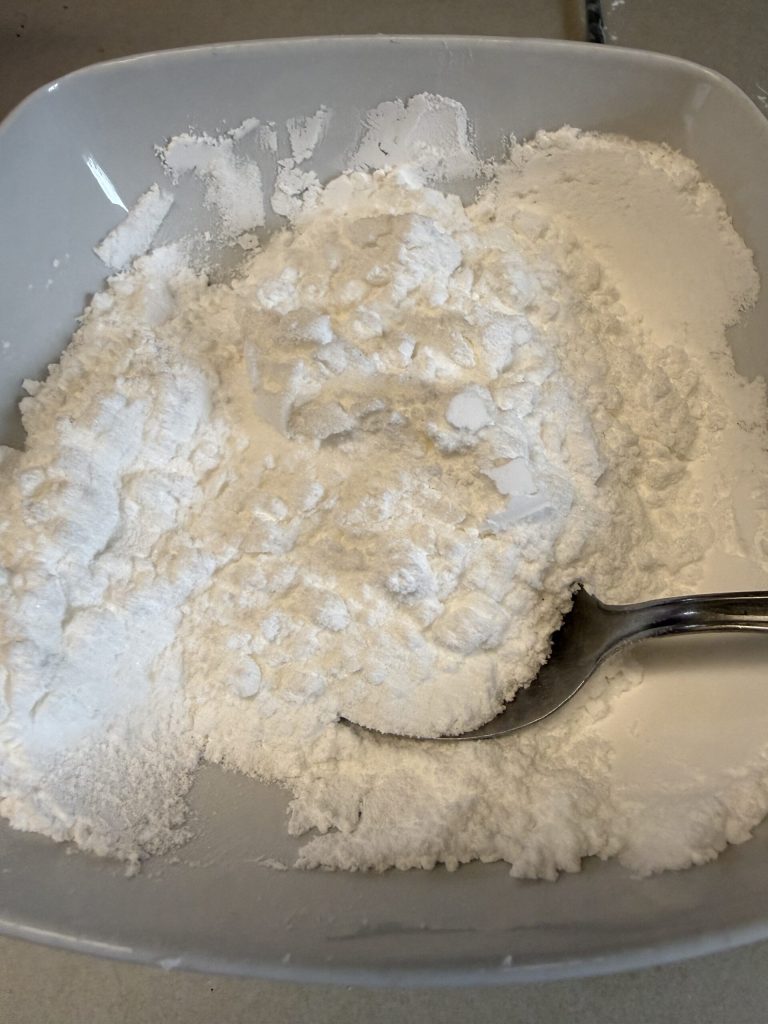
As my mother did, I always prepare a mix of granulated sugar and powdered sugar for the fritters.
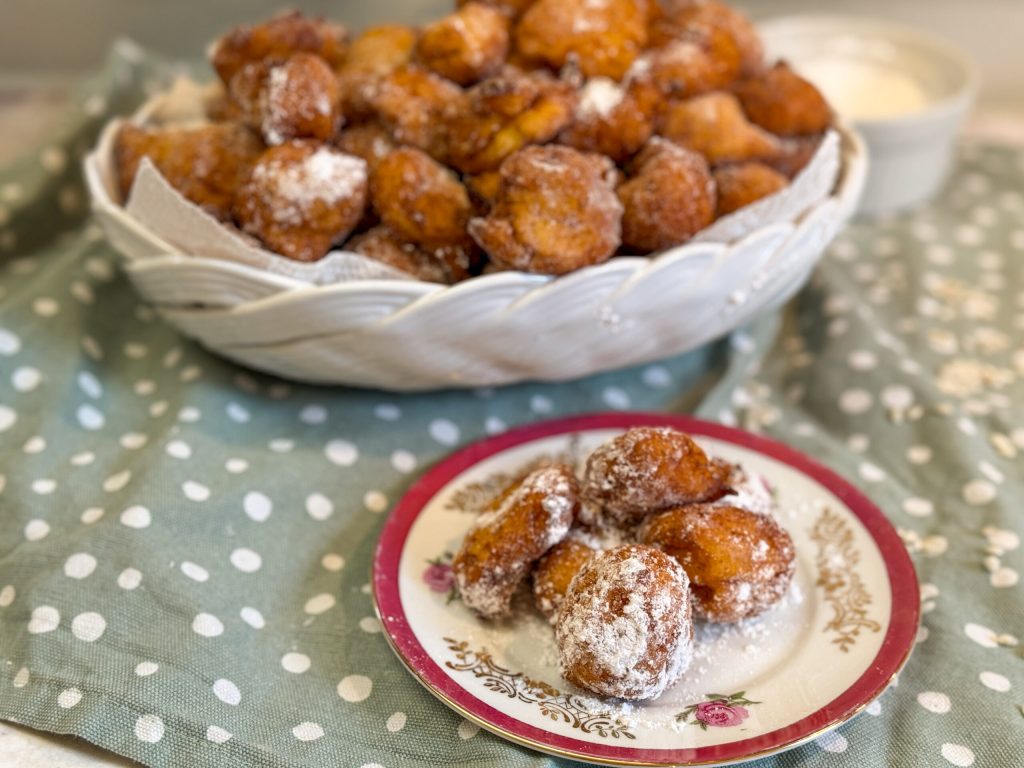
Wait for the fritters to cool, then roll them in the sugar mix and arrange them on a serving platter. Some people dunk them at the table into a small bowl of sugar (my dad loved this ritual!).
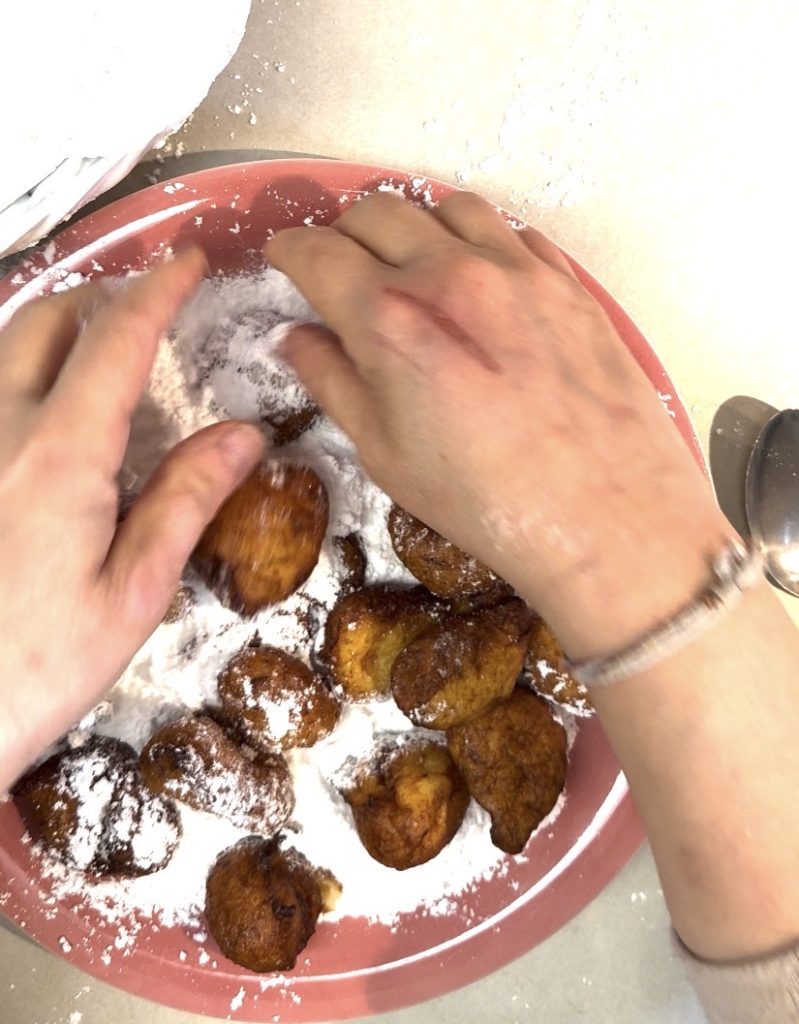
The St. Joseph’s rice fritters, made in my family’s style, are ready to celebrate all the dads… they’ll disappear in no time!
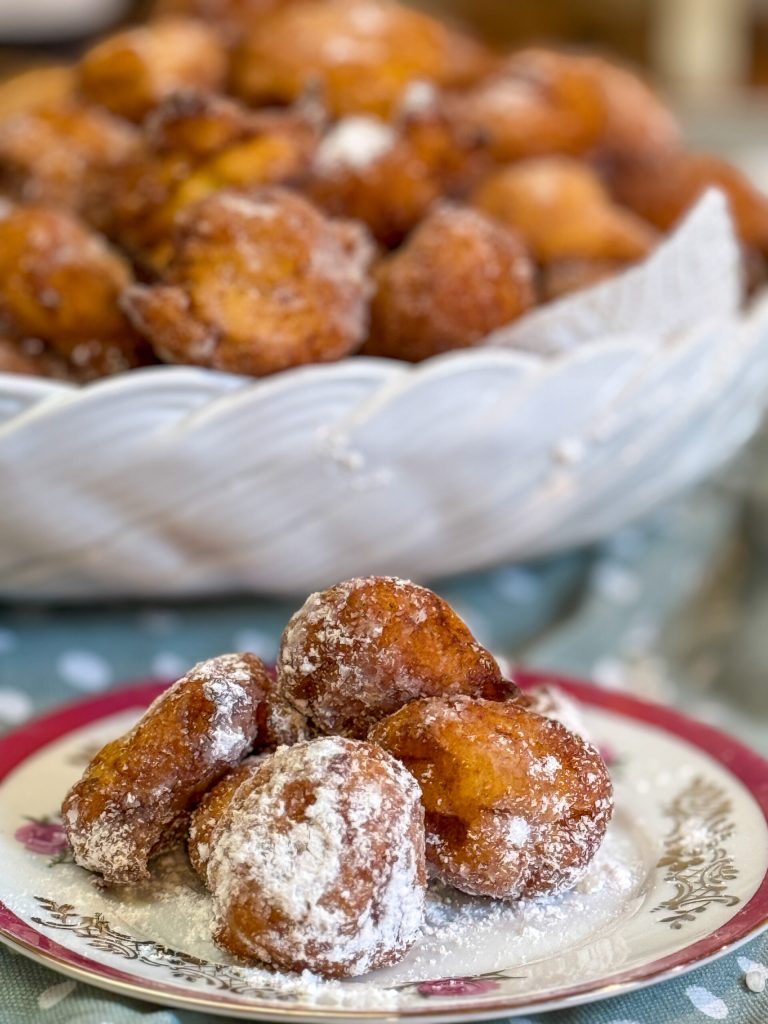
St. Joseph’s rice fritters are best just made, when they are still soft and fragrant. If any are left over, you can keep them at room temperature for one day, covered with a kitchen towel or in a container that is not completely closed. Avoid refrigeration, because humidity tends to make them hard. Before serving, you can roll them in sugar again so they return to being as tasty as freshly fried.
FAQ (Questions and Answers)
Which rice is used for St. Joseph’s fritters?
To prepare St. Joseph’s rice fritters it is important to use a small-grain rice suitable for sweets. The most recommended are Originario, Baldo or Roma. Usually the package also indicates the recommended use: choose the one suitable for sweets or sweet risottos, so you’ll get soft and creamy fritters with well-cooked grains.
Why is the rice for the fritters cooked in milk?
Cooking the rice in milk makes the fritter base more soft, fragrant and creamy. During cooking the grains absorb the milk and the aromas, creating the typical texture of rice fritters.
Can the fritters be prepared in advance?
Yes. The fritters can be prepared even the day before. In fact, many find them even better the day after because they have had time to absorb the sugar and become even softer and more delicious. Simply store them at room temperature, covered with a kitchen towel or in a container that is not completely closed.
How can I tell if the oil is ready to fry the fritters?
The ideal temperature is about 347°F. If you don’t have a thermometer, dip the tip of a wooden spoon into the oil: if small bubbles form around the spoon, the oil is ready.
Are St. Joseph’s rice fritters gluten-free?
The traditional recipe is not gluten-free because flour is present in the batter. However, it’s possible to try substituting it with a gluten-free flour suitable for desserts. In this case the texture may change slightly.
Can St. Joseph’s rice fritters be made vegan?
The traditional recipe is not vegan, as it contains milk and eggs. You can experiment by replacing milk with a plant-based milk and eggs with vegan alternatives, but the result will be different from the classic family recipe, though not necessarily less tasty. If you try a vegan version, write to me on Instagram to tell me how you made them: I’d love to see your version!
How do you shape St. Joseph’s rice fritters?
To shape the fritters, take half a tablespoon of batter and slide it into the hot oil using a teaspoon. Fry a few fritters at a time and turn them until evenly golden. As you remove the first ones, add more batter so you always have fritters cooking.
