
Grandma’s Zabaglione Recipe
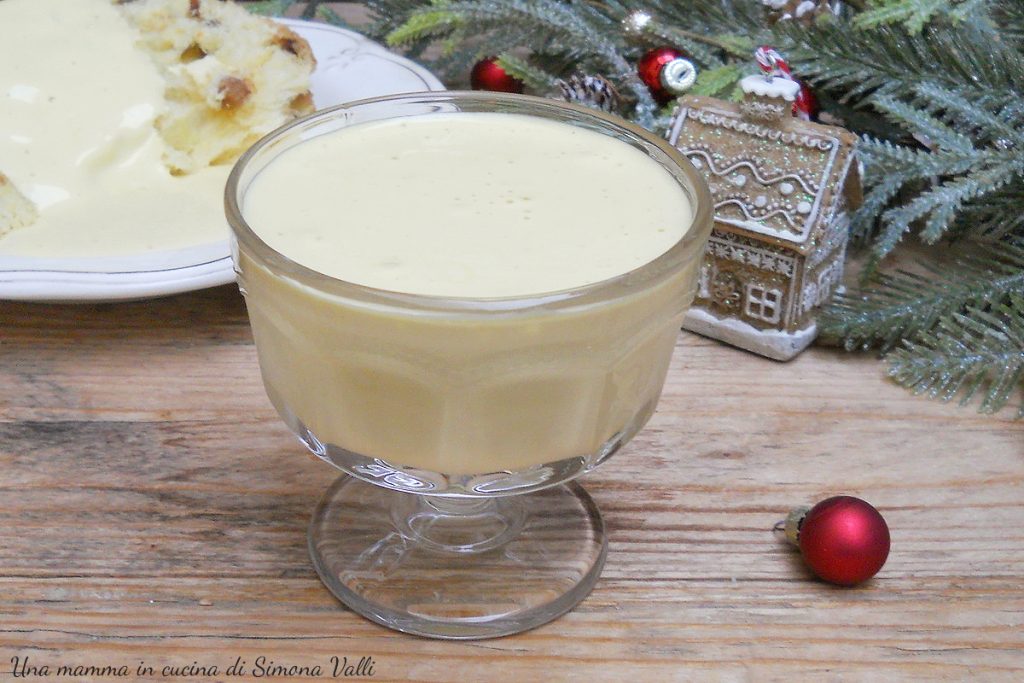
Zabaglione or zabajone is a sweet, frothy cream made of egg yolks, sugar, and Marsala, a liqueur that can be fully or partially replaced by Moscato, a sweet and aromatic white wine, or other fortified wines like Madeira or Port.
Zabaglione is a perfect cream to pair with pandoro and panettone. I often prepare it in a version similar to classic pastry cream that you can find on the blog as zabaglione cream or I make the Massari’s zabaglione cream, absolutely fantastic.
The recipe I propose today was made in our house many years ago. I remember perfectly my grandmother preparing it in a double boiler, whisking it with a manual whisk and measuring the Marsala with half an eggshell; the recipe is very simple: for each yolk, she added a tablespoon of sugar and half an eggshell of liqueur.
Its origins are uncertain; many legends tell its story, but what is certain is that its preparation is linked to popular tradition, like the beaten egg with sugar. Over time, it has given rise to similar-tasting liqueurs well known in Italy, such as Vov and Zabov. Usually, zabaglione is served with cat’s tongues, a light and very simple cookie made to use up the leftover egg whites.
Try my zabaglione-based recipes:
- Difficulty: Easy
- Cost: Economical
- Preparation time: 5 Minutes
- Portions: 3 People
- Cooking methods: Double Boiler
- Cuisine: Italian
- Seasonality: Fall, Winter, and Spring, All Seasons
- Energy 245.33 (Kcal)
- Carbohydrates 35.33 (g) of which sugars 35.33 (g)
- Proteins 4.21 (g)
- Fat 7.76 (g) of which saturated 3.36 (g)of which unsaturated 4.42 (g)
- Fibers 0.00 (g)
- Sodium 11.73 (mg)
Indicative values for a portion of 80 g processed in an automated way starting from the nutritional information available on the CREA* and FoodData Central** databases. It is not food and / or nutritional advice.
* CREATES Food and Nutrition Research Center: https://www.crea.gov.it/alimenti-e-nutrizione https://www.alimentinutrizione.it ** U.S. Department of Agriculture, Agricultural Research Service. FoodData Central, 2019. https://fdc.nal.usda.gov
Ingredients
- 4 egg yolks (from medium eggs about 2.8 oz or 2.8 oz of pasteurized yolks)
- 4 tablespoons sugar (2.8 oz)
- 4 tablespoons Marsala (2.8 oz – you can replace it with Moscato, Madeira, Port, Vinsanto)
Tools
- 1 Electric whisk
- 1 Saucepan
- 1 Bowl made of heat-resistant steel or glass
- 1 Thermometer only needed if using fresh eggs
Procedure
Separate the yolks from the whites. Since the whites are not used, place them in a small bowl, cover with cling film, and put them in the fridge for up to 48 hours. You can use them to make cookies or other desserts.
Put two fingers of water in a saucepan and place it on the stove. Bring the water to a boil, then lower the heat. While whisking the zabaglione, the water should not boil but gently simmer and not touch the container you will place on top.
Place the yolks in a heat-resistant steel or glass bowl, add the sugar, and start whisking the mixture with the electric whisk. When the cream begins to thicken, becoming light and frothy, place the bowl on the saucepan and gradually add the Marsala while continuing to whisk the mixture with the electric whisk.
Adding the Marsala will make the mixture more fluid. Don’t worry, this is normal. Continue to whisk it, and it will regain body and frothiness. It will take about 8-10 minutes to achieve a firm and velvety cream.
If you are not using pasteurized eggs, make sure to bring the mixture to 158-162°F (70-72°C) for 30-40 seconds. You will usually reach this temperature with this method, but to be sure, I prefer measuring the temperature.
The grandma’s zabaglione recipe is ready. If cooked sufficiently, it will remain beautifully frothy for a few hours without showing any liquid traces at the bottom. Serve it with a hazelnut cake or a slice of panettone.
Advice
Storage
The grandma’s zabaglione recipe can be stored for a few hours, remaining firm without showing any liquid traces at the bottom.
