
The history of Peru is undoubtedly linked to the Inca.
The history of the Incas and the Kingdom of Cuzco begins in the 13th century, then Francisco Pizarro captured Atahualpa in 1535, bringing an end to the Inca Empire and moving the capital to Lima.
The independence of Peru is one of the many chapters of the Spanish-American wars of independence, which began in 1808 and ended in 1829, seeing the Spanish monarchy clash with the emerging Latin American states demanding independence.
Following Peru’s independence, the rest of Latin America also gained independence; this occurred between 1811 and 1903.
More recently, from 1980 to 2000, Peru’s history was mainly characterized by the conflict between the Peruvian state and two leftist armed groups, the Túpac Amaru Revolutionary Movement and the Shining Path, which aimed to overthrow the Peruvian political system and establish socialism through armed struggle.
Compared to other Andean and South American countries in general, Peru is distinguished by the abundance and grandeur of its archaeological sites.
The mere mention of Machu Picchu brings glory, but there are many others, such as the mysterious Nazca lines, Sipan, and Chan Chan, that reveal the sophistication achieved by pre-Inca civilizations.
Unlike other countries near the equator, not all regions of Peru have a tropical climate.
The high Andean mountains determine a great climatic diversity among the different regions.
In general, it can be said that the best period for a trip to Peru is from May to October, coinciding with the dry season.
Peruvian cuisine is among the most varied in the world, incorporating at least 5,000 years of pre-Inca, Inca, colonial, and republican history.
Not only does the country grow a wide variety of fruits and vegetables, but these are available all year round.
In the last decade of the 20th century, Peruvian cuisine began to gain popularity outside of Peru.
Peruvian gastronomy is consistently awarded internationally, and its chefs often achieve international prestige.
Today, ceviche, pollo a la brasa, and chifa dishes are the most popular representatives of Peruvian cuisine.
But after trying espetinho de coraçao de frango in Brazil, I couldn’t help but choose a Peruvian counterpart: Anticuchos, skewers made with cow hearts, speared on bamboo sticks if possible, marinated “Peruvian style” in a sauce of onion, garlic, oregano, pepper, cumin, aji Panca (Peruvian chili paste) and wine vinegar, skewers then grilled or cooked in a pan.
Anticuchos are widely consumed in South American countries, especially in Peru and Bolivia.
A traditional dish dating back to the colonial era linked to the procession of the Lord of Miracles, a ceremony continuing throughout the month of October.
The name “anticucho” could derive from the Quechua word “Anccu” and Aymara “janchi,” meaning tendon, muscle; the Quechua word “cucho or kucho,” however, refers to the action of cutting.
Originally, the Incas used llama or alpaca meat, but with the Spaniards’ arrival in Peru, beef heart was added, speared on bamboo sticks.
The Spaniards discarded the offal, which was then given to the slaves, who treated the available foods with a mixture of spices and aromas before cooking them over the coals.
That’s how they “created” Peruvian skewers.
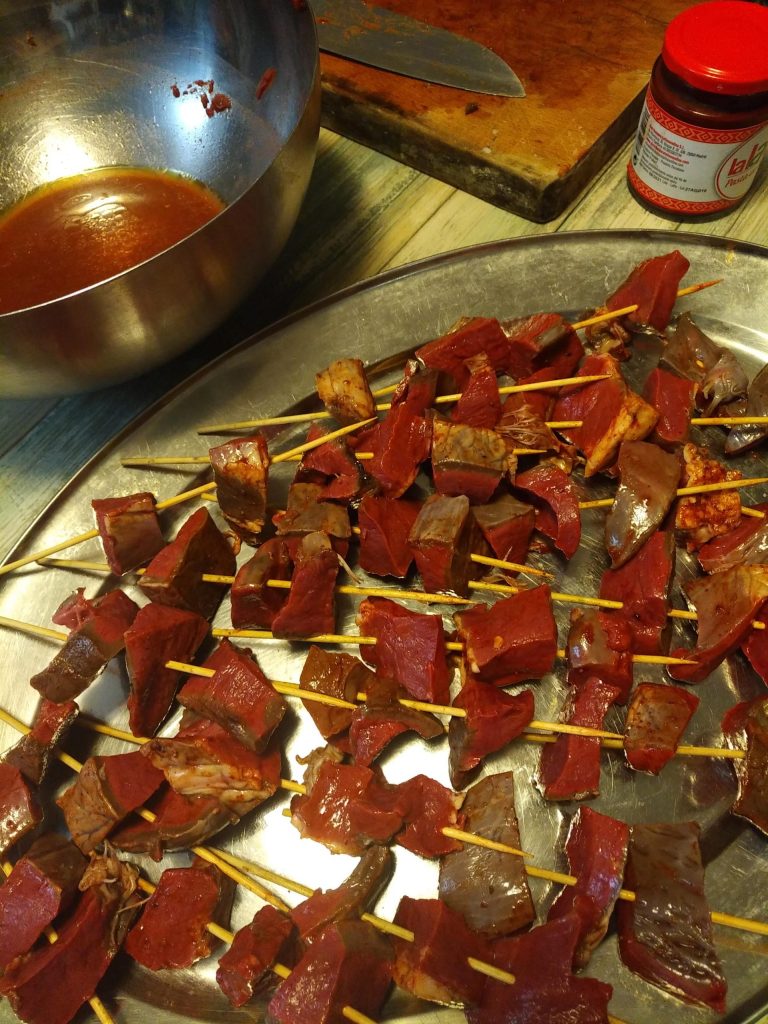
Unlike our skewers, the meat is not cut into cubes but into slices that are speared flat on the stick to facilitate cooking.
The side dish that usually accompanies these skewers is made up of grilled or boiled potatoes (or papas a la huancaína), but it’s often possible to find whole or sliced corn cobs.
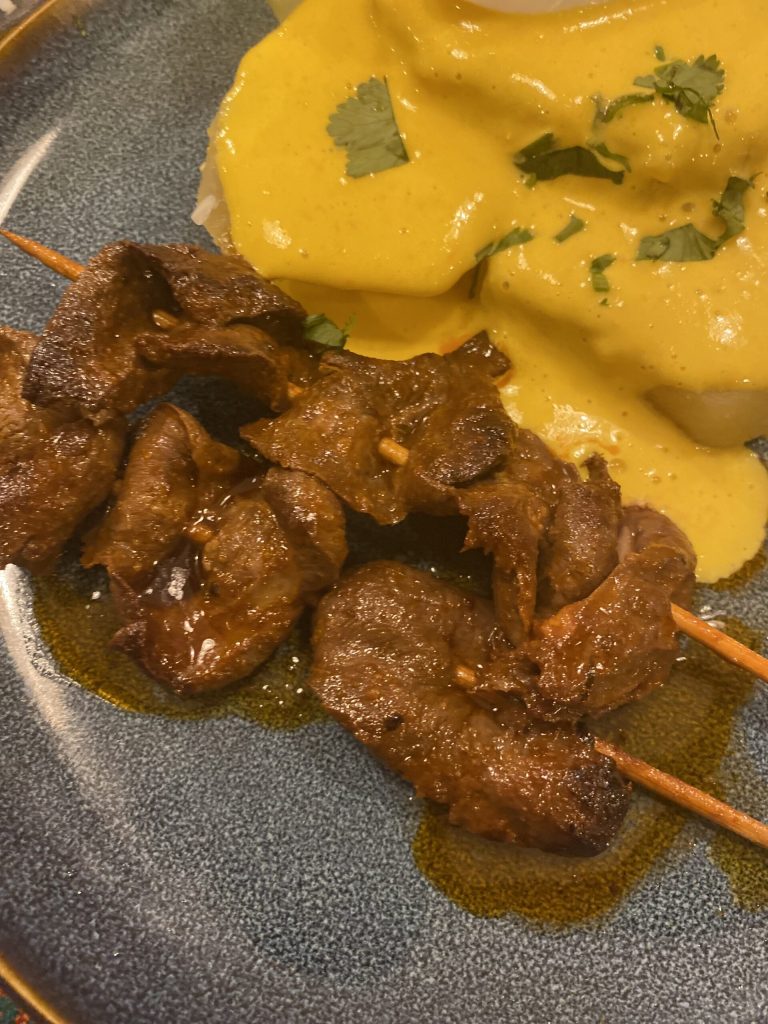
In the picture, those tasted at the Peruvian restaurant “Brisas Peruanas” on Corso Maurizio Quadrio 4r in Genoa, with which I had the pleasure of collaborating.
Accompanied by papas a la huancaína, or boiled potatoes served with a sauce based on aji amarillo.
- Difficulty: Very easy
- Cost: Very cheap
- Rest time: 12 Hours
- Preparation time: 10 Minutes
- Portions: 8 people
- Cooking methods: Grill
- Cuisine: Peruvian
- Seasonality: All seasons
Ingredients for Anticuchos:
- 2.2 lbs beef heart (cleaned of all veins and fat)
- 3 cloves garlic
- 1 cup red wine vinegar
- 1 1/4 aji panca molido
- to taste cumin
- to taste salt and pepper
- to taste olive oil
Tools for Anticuchos:
- Skewers bamboo
Preparation of Anticuchos:
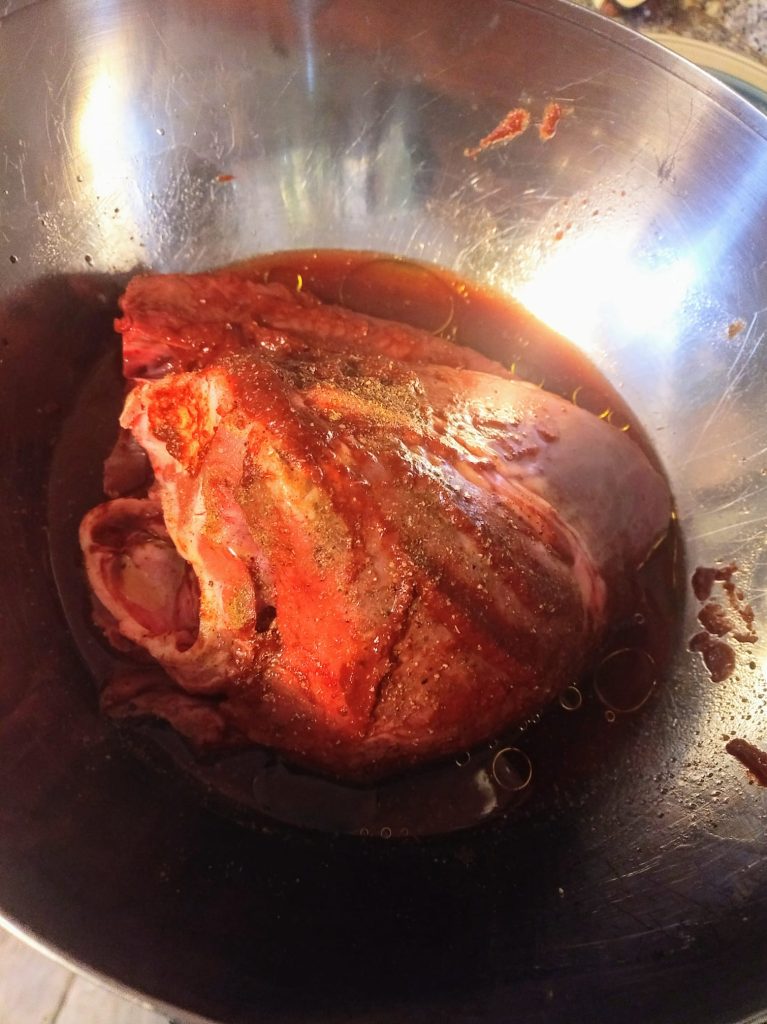
In a large bowl, mix the crushed garlic, pepper, and cumin with the heart and let it rest for 1 hour. After this time, add the aji Panca, vinegar, and oil. Let it rest for at least 2 hours (or overnight).
Add salt and start skewering 3 pieces per skewer. Skewer so that the pieces remain flat against the skewer.
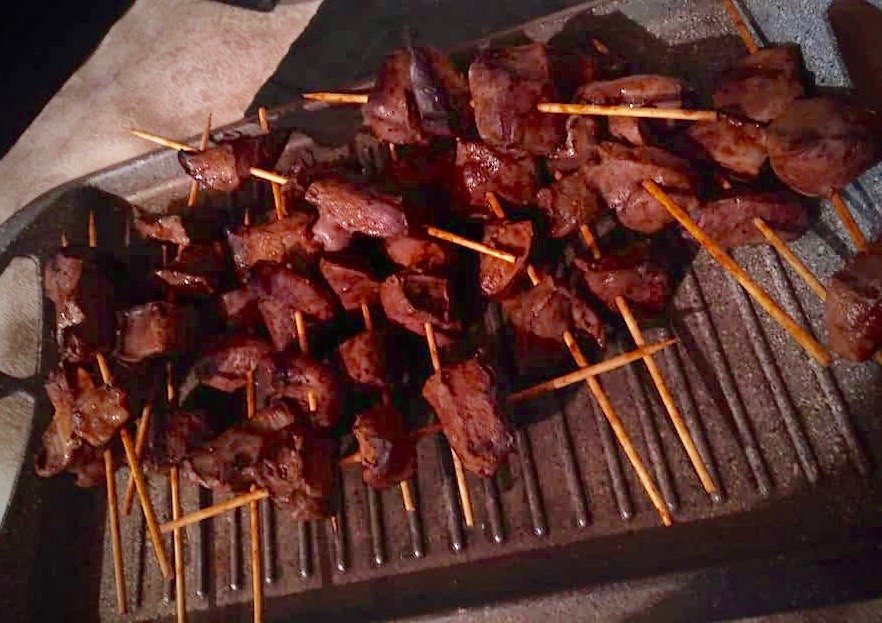
Heat the grill on high heat, and cook on both sides, basting them with the marinade each time they are turned (you can use a bundle of corn leaves to apply the seasoning for more flavor).
Cooking should be about 5 minutes per side.
Serve with boiled potatoes, corn on the cob, and salsa Criolla (onion, lime, olive oil, chili peppers).

This is my final version:
The Machu Picchu Travel Guide to better discover Peru.
You can buy Salsa de Aji Panca online as well.
What can I substitute for aji panca?
If you can’t find aji panca, alternatively take some red peppers, as dark as possible, bake at 340 degrees Fahrenheit for 15-20 minutes, remove the skin and blend.
What do they drink in Peru?
The area of Pisco–Nazca is famous for wine cultivation.
Their more expensive vintages compare well against Chilean imports.
Most Peruvian beers are made by Backus, currently owned by SAB Miller.
When drinking in bars or restaurants, be aware that the Peruvian “Happy Hour” is a bit different from most other countries.
The prices of drinks displayed on the walls will be slightly lower than normal.
The real difference is that you will be served two drinks instead of one, according to the listed price.How are papas a la huancaína prepared?
The Huancaína sauce is made by grinding or blending yellow chili – aji amarillo – with milk, oil, and fresh cheese, and it’s generally served over boiled potatoes.
Other preparations of the sauce include the addition of lemon juice, biscuits, garlic, and onion. There are also variations with other types of chili, like rocoto.
In its classic presentation, the potatoes, accompanied by hard-boiled eggs and black olives, can be arranged on lettuce leaves.
